


Got something you want to sell, but no idea how to actually take payments on your own website?
You don’t need to hire a developer or spend thousands of dollars to get started. With WordPress and WooCommerce, you can build a fully functional online store in about an hour, for just a few dollars a month, and without writing a single line of code.
In this guide, we’ll show you exactly how to set up your online store, add products, accept payments, and start selling.
Why Choose WooCommerce for Your Online Store?
If you’re new to WordPress, WooCommerce is a free eCommerce plugin that you install on your WordPress website. It adds all the features you need to turn a regular WordPress site into a fully functional online store, including product listings, shopping carts, checkout, and payment options.
It’s no wonder why WooCommerce is the most popular eCommerce platform in the world. It gives you complete ownership of your store and its content. You can easily extend its features with plugins. Unlike other platforms, you don’t pay platform fees on top of what your payment processor charges.
WooCommerce is especially useful if you’re selling physical products that need to be shipped. You can create shipping zones, offer different delivery options, calculate shipping costs, and even set up rules based on factors like order weight or destination.
If you’re planning to sell digital downloads or online courses, then you can follow our dedicated step-by-step guides.
Follow this tutorial rigorously. By the end, you’ll have product pages, a shopping cart, secure checkout, payment processing, and shipping options set up, and your store will be ready to accept its first order.
Step 1. Get Your Store Online
To start your online store with WordPress and WooCommerce, you’ll need a domain name and web hosting.
Your web host stores your website files, while your domain name is the web address customers will use to find your store (for example, yourstore.com).
After testing dozens of WordPress hosting providers, we recommend Bluehost or Hostinger for beginners.
Both of them are affordable and include a free domain name for the first year, a free SSL certificate, and WordPress pre-installed.
Alternatively, if you need a managed WordPress host with plans tuned for WooCommerce stores, then Levamo is a great option. It handles performance, updates, and security, making it the right pick if you’d rather not deal with the technical side of running a website.
Once you’ve signed up for your preferred hosting account, connect your domain name and log in to your WordPress dashboard. If you’re using another host, then see our guide on how to install WordPress.
Step 2. Set Up WooCommerce
If your hosting plan didn’t pre-install WooCommerce, then you can install it like any other plugin. See our guide on how to install a WordPress plugin for help.
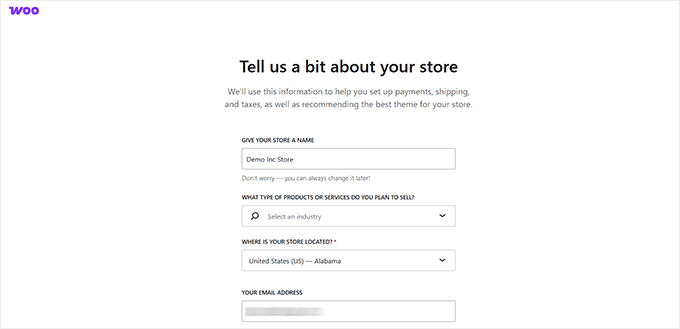
Follow the wizard to enter your store details, including your business information and store location. WooCommerce will also create a few pages that are essential to an eCommerce store, like Shop, Cart, Checkout, and My Account pages automatically.
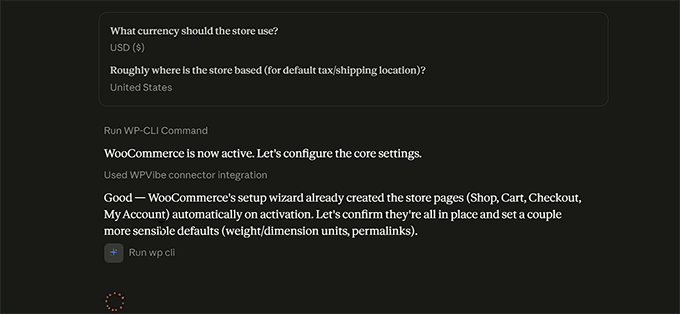
Alternatively, you can have AI set up your WooCommerce store for you.
All you have to do is to connect your AI assistant, like ChatGPT or Claude, to WordPress using the WPVibe plugin. Then, ask AI to set up your online store in plain English.
When WooCommerce recommends additional extensions, you can install the ones you need or click ‘Skip this step’ and add them later.
Your WooCommerce store is now ready to use. For a detailed walkthrough of every setting, see our complete WooCommerce made simple guide.
Step 3. Design Your Store
Next, you’ll need to make your eCommerce store look stunning by installing a free WordPress theme. On the free WordPress.org repository, you can find more than 3,000 eCommerce based themes.
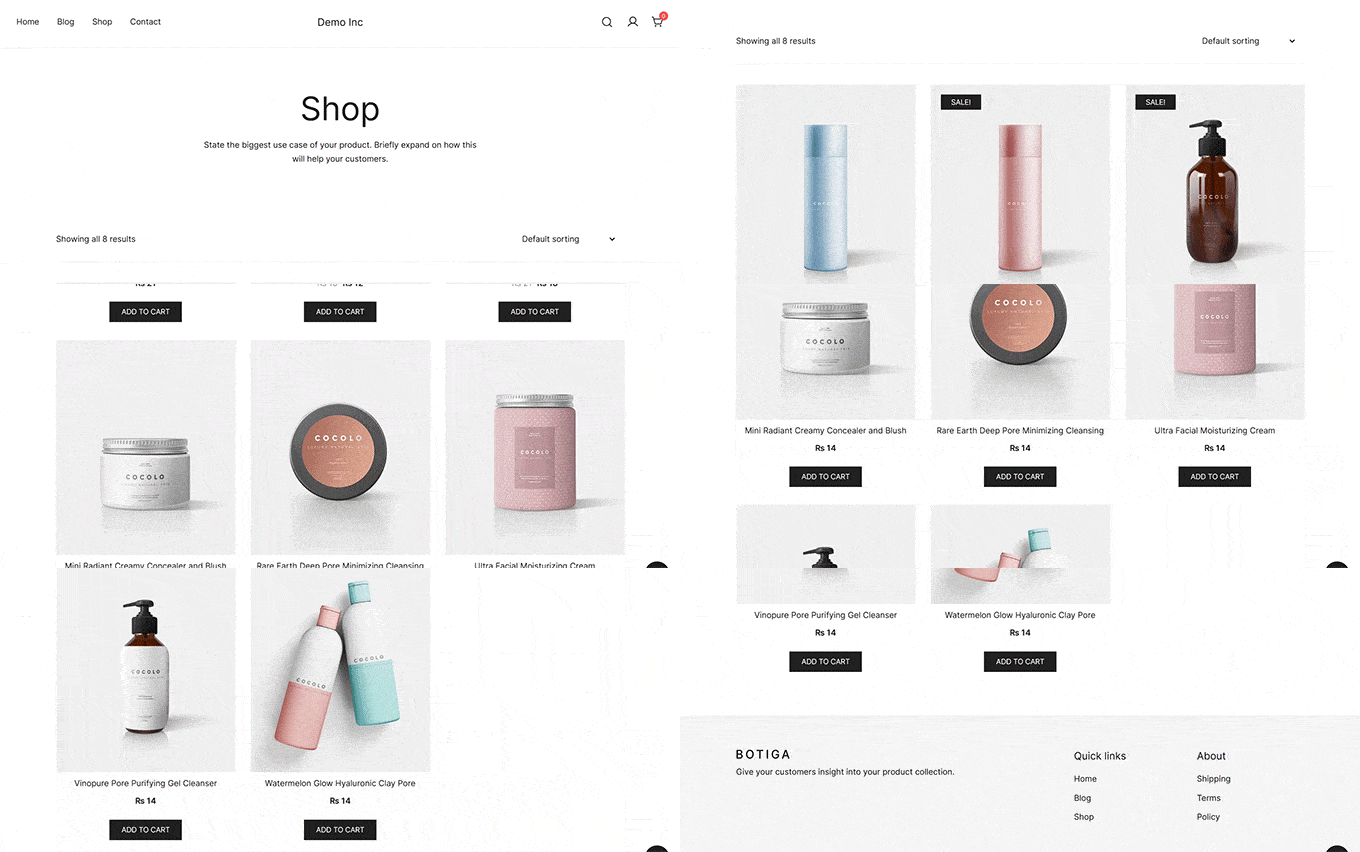
We recommend the free Botiga theme, which is built specific to WooCommerce stores. It comes with professionally designed starter sites, so you can import a full store layout instead of building each page yourself.
Install and activate Botiga by navigating to Appearance » Themes. After activation, click the ‘Let’s Get Started’ button, enter your website name, and select a starter site.
We used the Beauty starter site, which is the one included with the free theme.
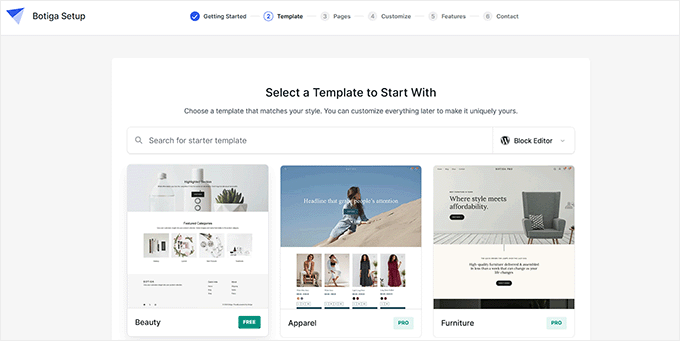
Before importing, you can select which pages to include, customize your colors and typography, and enable any recommended features.
Once the import is complete, replace the demo content with your own logo, images, and branding. You should also update your homepage to feature your best-selling or newest products.
Review everything before publishing to make sure your store’s design reflects your brand.
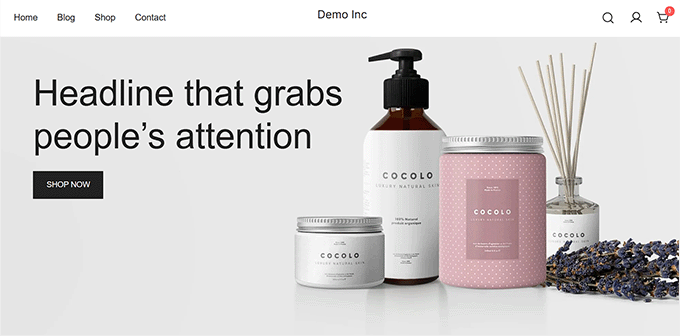
Finally, preview your store on a phone and tablet to confirm that your homepage, product pages, and checkout look great on every screen.
Step 4. Add Your Products
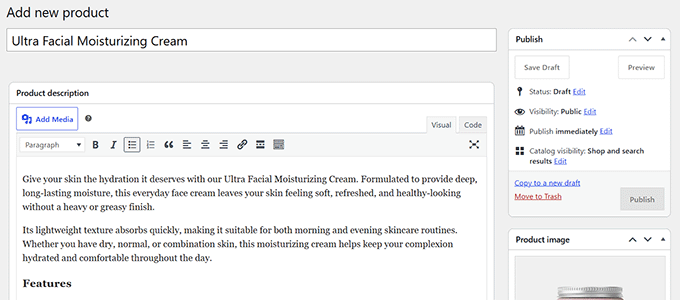
Once you’ve set up a WordPress theme and customized its appearance, it’s time to add products to your store. Simply go to Products » Add New Product in your WordPress dashboard.
Start by adding a clear product title and description that tell shoppers what you’re selling and why they should buy it.
AI can give you a head start by writing product titles and descriptions. But don’t publish the AI-generated text as-is. Review it carefully, add specific details about your product, and highlight the features that matter most to your customers.
This makes your product pages more useful and can also help them get discovered in search engines and AI search.
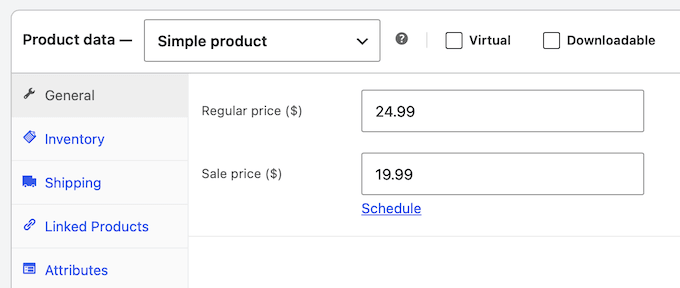
Next, choose your ‘Product Type’ by scrolling down to the Product Data section.
Most stores should use ‘Simple Product,’ while ‘Variable Product’ is best for items with different sizes, colors, or other options. Then, enter your product price.
If you want WooCommerce to track inventory automatically, enable ‘Stock Management’ and enter your stock quantity.
Adding an SKU is optional but recommended, since it makes it easier to track individual products in your orders and inventory reports.
Finally, upload a high-quality product image and any additional gallery images. Then, assign your product to one or more categories to keep your store organized. You can also use AI to generate descriptive alt text for your product images.
When you’re finished, click ‘Publish.’ Then repeat these steps for the rest of your products.
Step 5. Set Up Checkout
Before customers can place an order, you need to configure a few important checkout settings. This includes choosing how customers will pay, setting up taxes, and deciding how you’ll handle shipping.
Accept Payments
To get paid for your products, go to WooCommerce » Settings » Payments and enable the payment methods you want to offer.
WooPayments is the easiest option because it’s WooCommerce’s own payment solution and takes credit and debit cards without sending customers to another site.
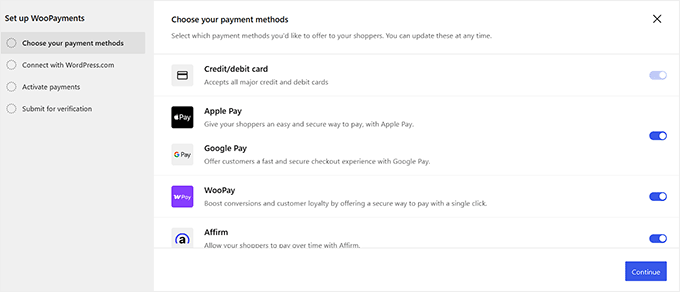
If it isn’t available in your country, then you can connect another gateway like Stripe or PayPal. You’ll need to sign in to your payment provider’s account during setup, or create one if you don’t already have it.
Configure Taxes
WooCommerce hides its tax settings until you turn them on, so go to WooCommerce » Settings » General, scroll down to the ‘Enable taxes’ option, and check the box.
Save your changes, and the Tax tab will appear.
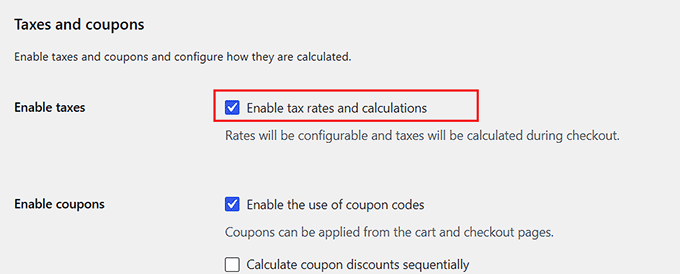
Open that tab to choose how WooCommerce calculates and displays tax at checkout.
You can select if your product prices include tax, how WooCommerce calculates tax at checkout, and whether your store displays prices with or without tax.
For most beginners, we recommend using the free WooCommerce Tax extension, which automatically calculates tax based on your customer’s location.
Please note that this extension requires you to connect a free WordPress.com account to calculate real-time rates.
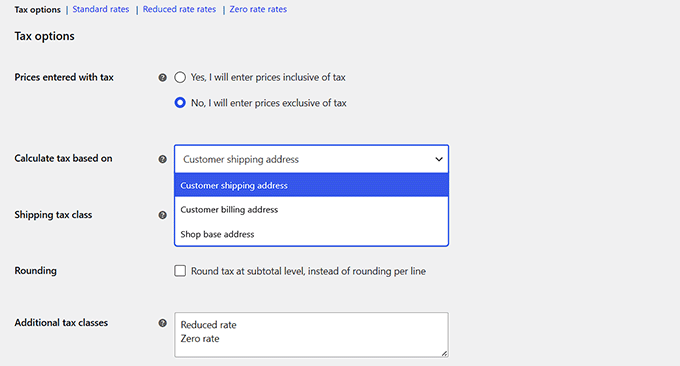
Before launching your store, make sure your tax settings comply with your local regulations. You can also see our tutorial on collecting taxes for Stripe payments to learn more.
Set Up Shipping
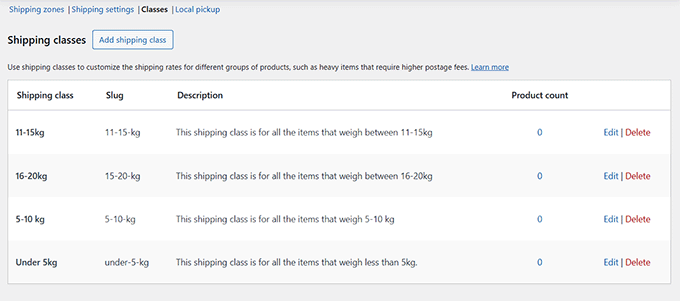
With your tax settings saved, switch to the Shipping tab and create shipping zones for the locations you deliver to.
Then, choose the shipping methods you want to offer, such as Free Shipping, Flat Rate, or Local Pickup.
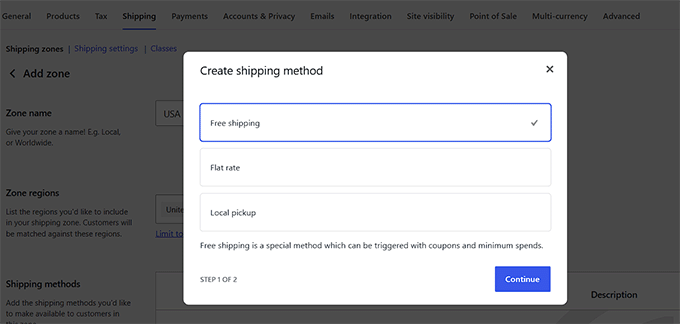
If your shipping costs vary based on the order, you can also create shipping rules. For example, you can charge different rates based on the order weight, destination, or cart total.
If you plan to use weight-based or carrier-calculated shipping, then make sure you’ve added your products’ weights and dimensions.
For step-by-step instructions, see our guide on setting up weight-based shipping in WooCommerce.
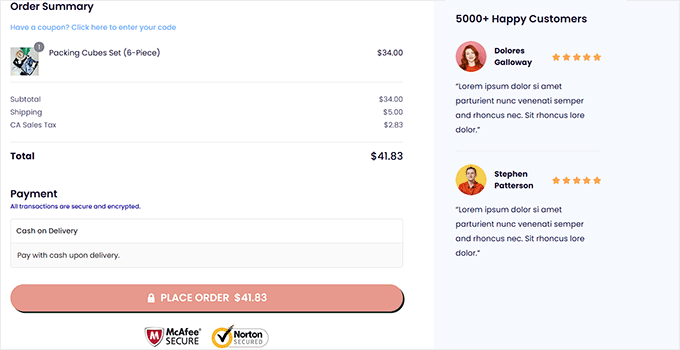
Once everything is configured, turn on your payment gateway’s test mode and place a test order yourself. Add a product to the cart, go through checkout, and confirm the order appears under WooCommerce » Orders.
This is where you’ll catch a shipping zone that doesn’t cover a customer’s address, or a tax rate that never applied.
Increase Sales with Checkout Optimization (Optional)
Getting customers to checkout is only half the job. A few checkout optimizations can help you close more sales and increase the value of each order.
- Show upsells and cross-sells to recommend related or premium products. WooCommerce includes these features by default.
- Offer one-page checkout so customers can complete their purchase on a single page.
- Add order bumps to encourage shoppers to include complementary products before placing their order.
- Enable express checkout with payment methods like Apple Pay and Google Pay for a faster checkout experience.
You can set up these checkout optimizations separately, but that often means using multiple plugins. If you want everything in one place, FunnelKit lets you create a custom checkout with features like order bumps, one-click upsells, and express checkout built in. To learn more, see our guide on creating a faster WooCommerce checkout.
Step 6. Prepare Your Store for Launch
Your store is almost ready to launch. Before you open the doors, run through these final checks to make sure everything works smoothly for your customers.
Optimize Your Store for SEO and AI Search
To help shoppers find your products through search engines and AI tools, you’ll want to make sure your store is properly optimized for search.
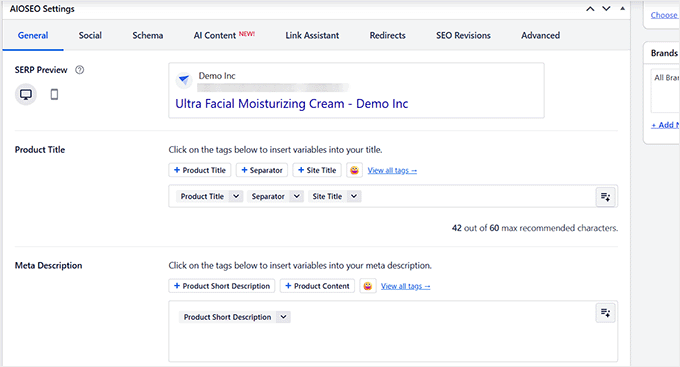
We recommend the All in One SEO plugin because it makes WooCommerce SEO much easier. It helps you optimize SEO titles and meta descriptions and generate product schema as well.
For a complete walkthrough, see our WooCommerce SEO guide.
Speed Up and Protect Your Store
A fast store gives shoppers a better experience and can also help your search rankings. Start by compressing your product images and enabling caching to reduce page load times.
You can also use Cloudflare to improve your store’s speed and add an extra layer of security.
Finally, protect your hard work with automatic backups. If something goes wrong, you’ll be able to quickly restore your store and get back up and running.
For more tips, see our tutorial on speeding up WooCommerce.
Build Customer Trust
Before launching, make sure your store includes important trust signals such as product reviews, a contact page, and clear shipping, return, and refund policies.
You can also display trust badges, such as Secure Checkout, SSL Secured, or Satisfaction Guaranteed, to reassure customers that your store is safe and reliable.
Track Your Store’s Performance
Set up tracking now, so that from day one you can see how customers find your products, what they buy, and where they leave the checkout process.
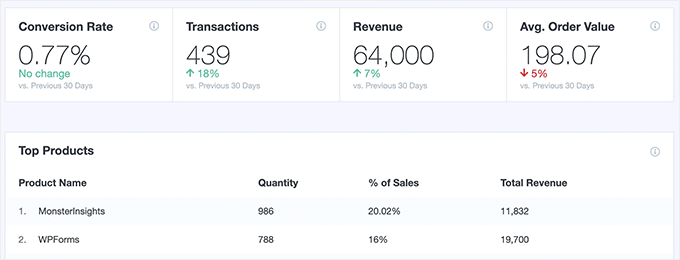
Google Analytics gives you these insights so you can improve your store over time. If setting it up sounds overwhelming, then we recommend the free MonsterInsights plugin.
It helps you set up the basic Google Analytics tracking for you. You can upgrade to the paid plan to unlock advanced eCommerce tracking features.
To set it up, take a look at our guide on WooCommerce conversion tracking.
Step 7. Get Your First Customers
Launching your store is just the beginning. You’ll also need to get it in front of the right people. Here are four simple ways to attract your first customers.
- Build an email list so you have a direct way to reach people who are interested in your products. Add an email signup form to your store and offer a reason to subscribe, such as a first-order discount or early access to new products.
- Promote your store on social media by sharing new products, customer stories, tutorials, and short videos. You can also add your store to Facebook so shoppers can buy directly from your posts.
- Create a launch offer with a limited-time discount, free shipping, or a free gift. WooCommerce’s built-in coupon feature makes it easy to run your first promotion.
- Publish helpful content such as buying guides, tutorials, FAQs, and product comparisons. This can bring long-term traffic from search engines and AI search while helping shoppers make informed buying decisions.
FAQs About Starting an Online Store
Can I start an online store for free?
Some eCommerce platforms offer limited free trials so you can get started without paying, but you’ll eventually need to sign up for a paid subscription once the trial period ends.
WooCommerce itself is completely free open-source software, but you’ll still need a domain name and a web hosting plan to get your store online, which do carry small upfront costs.
How much does it cost to start an online store?
The cost of starting an online store depends on your plan and budget. By using our exclusive link, you can launch your shop with Bluehost for just $2.99 per month while relying on free plugins and themes to keep your initial setup costs extra low.
We always recommend starting small and spending more on premium tools only as your business grows.
Can I create an online store without shipping products?
Yes. For example, you can use specialized dropshipping plugins to handle inventory, build an Amazon affiliate store to earn referral commissions, or run an online marketplace where other sellers handle their own order fulfillment.
Do I need to know how to code to run a WooCommerce store?
No. Everything in this guide, from initial setup to site design and payment processing, is done entirely through easy point-and-click settings and friendly plugins, so you never need to write a single line of code.
Video Tutorial
If you would rather watch than read, our video tutorial shows how to start an online store from beginning to end:
We hope this guide helped you learn how to start an online store. You may also want to see our actionable tips to drive traffic to your new store or our eCommerce launch checklist.
If you liked this article, then please subscribe to our YouTube Channel for WordPress video tutorials. You can also find us on Twitter and Facebook.




Chandra
Great article!! Very useful for beginners
WPBeginner Support
Thank you, glad you found our article helpful
Admin
Dawn Groves
Folks, when I posted this article link in linkedin, the caption for the image was “How to start an online store in 2019” You might want to update that.
WPBeginner Support
Thank you for letting us know
Admin
Leah
I would like to set up my art gallery with just a Buy it Now button from PayPal. Is this possible or do I have to use WooCommerce?
WPBeginner Support
For single items you could do that, WooCommerce gives you more tools for showing and tracking purchases on your site.
Admin
Medha
Great tutorial! I’m in the process of setting up an e-commerce business but don’t have my branding / business name yet.
In the meantime I want to start a blog to start building my audience.
If I start the blog with a particular name and domain name, and then decide to launch the business under another name – will this cause me a big issue in future?
Thanks,
Medha
WPBeginner Support
Long term it should not cause an issue but in the short term, you may see a drop in visitors.
Admin
Phillip
When I use your affiliate link to purchase hosting from Bluehost with wordpress and woocommerce is this a wordpress.org or a wordpress.com site? Thanks.
WPBeginner Support
You would be creating a WordPress.org site
Admin
Steve
Hi, nice tutorial, but…
I am looking to create an online showroom (for antiques, second-hand furniture etc.) but do NOT want a shopping cart – I don’t want people to be able to order online.
I have read that this can be called catalog mode…
Do you have any views (or experience) of how this can be achieved?
Thanks
WPBeginner Support
For creating a catalog, you would want to take a look at our How to Create a Product Catalog article here:
https://www.wpbeginner.com/plugins/how-to-create-a-product-catalog-in-wordpress-without-a-shopping-cart/
Admin
Elias
This is a great tutorial. I’m curious about setting up a platform for mobile users and if that’s a whole different animal. I’m looking to launch a merch Store but would like to have the option to have mobile support as well
WPBeginner Support
As long as your theme does not have issues on mobile browsers this should also work for mobile devices.
Admin
Deanna
I love the information you provided. I’m interested in starting an Online Store to sell products and I would like to sell my own Courses. Can that be done on one website?
WPBeginner Support
You can certainly sell courses on your site, we would normally recommend using an LMS plugin for your courses. For some recommended LMS plugins you could take a look at our list here:
https://www.wpbeginner.com/plugins/best-wordpress-lms-plugins-compared/
Admin
Kel
Thank you very much for the update. Was a bit confused and I thought having an online store would be expensive, a lot of work and demanding, after reading. However, with the screenshots and explanation provided it seems a lot more easier.
Thank you very much for the information.
WPBeginner Support
Glad our article was able to simplify the process for you
Admin
jyoti
Impressive blog.
WPBeginner Support
Thank you
Admin
Alan
I’m new and am eager to get started. I have a domain and FatCow is my hosting service. Can WooCommerce work with it? I am intending to promote both digital and material content/products. Anything else I should do…besides study WPBeginner…:)
WPBeginner Support
WooCommerce should work on any hosting provider, for now our recommendation is to go through our articles and take a look at the WooCommerce documentation on WooCommerce’s site
Admin
Sharon
Where do the actual products come from?
WPBeginner Support
Either yourself or if you’re creating an affiliate store you could take a look at our article here: https://www.wpbeginner.com/wp-tutorials/how-to-build-an-amazon-affiliate-store-using-wordpress/
Admin
John james
Great for beginners ,iam a 77 year old man I love business this was great for me
I want to open an on line store at this time I continue to learn .
We will talk iam just about ready
Thank you JJ
WPBeginner Support
Thank you, glad our article could be helpful
Admin
Kunthea Johnson
Thank you for the in depth post. I’m getting ready to switch my ecommerce site from weebly to WordPress woocommerce.
I currently have my hosting on hostgator.
I have a couple of questions.
1. Should I use WordPress. Com or WordPress. Org as recommended by other bloggers?
2. Are the instructions in this blog valid for hostgator?
Thanks in advance
WPBeginner Support
If you are signing up on HostGator your site would be a WordPress.org site. Our instructions should work on any host other than the installation steps as hosts can have different installation tools for WordPress.
Admin
Chris
Very impactful, I really learnt a lot.
WPBeginner Support
Thank you, glad our article could be helpful
Admin
Mathukutty P. V.
Great post giving all reqd information step by step. Your posts are free tutorials.
WPBeginner Support
Thank you, glad you like our free tutorials
Admin
Chris H
Thanks for providing this information. I definitely have a better idea of how to set this up on my own.
WPBeginner Support
You’re welcome, glad our guide could be helpful
Admin
Netshifhefhe Unarine
I am really impressed by WordPress I thought that to make an online store would be hard but it’s easy after reading this article whereby I learnt that I can setup the website in 30 minutes and how to install Woocommerce which is the heart of online store.Thanks for the information.
WPBeginner Support
You’re welcome, glad our article could be helpful
Admin
Marty Langenberg
Thanks for this detailed guide.
With your help, I set up my WP site in 2017 through BlueHost.
I have just added the WooCommerce Plugin as I try to set up a way of directly selling my ebooks.
I was able to upload a PDF file for one of my books but not a .mobi (for Kindle) file. The error message said that type of file could not be uploaded for security reasons.
Am I doing something wrong or do I need a different plugin?
Thanks for your interest and support.
WPBeginner Support
For fixing that error, you would want to take a look at our guide here: https://www.wpbeginner.com/wp-tutorials/how-to-add-additional-file-types-to-be-uploaded-in-wordpress/
Admin
Nema Supply
Thanks for sharing…
WPBeginner Support
Thanks for reading our article
Admin
Cody
Am I able to accept credit card numbers without having to process payment online? I would much rather use my Square to type in the credit card credentials and charge that way, then ship to my customers.
WPBeginner Support
Unless I hear otherwise, we don’t have a method we would recommend for setting that up.
Admin
Harish Kumar
great stuff, I willing to start an online store but I am facing some difficulties on that because I don’t have complete knowledge about the business, now I got a great knowledge, keep doing this great work and keep sharing with us.
WPBeginner Support
Glad our guide could be helpful
Admin
Vince Comfort
Awesome post. This is really helpful. So simple that even a 7 year old can set this up.
A little tip here for those who may not be able to accept payments through Paypal and Stripe.
Go to your add new plugin page and search for “payment gateway [Your country]. Replace [Your country] with your country.
Now, make sure you research about the plugin you choose. Always ensure it is compatible with your installed wordpress version.
Thank you
WPBeginner Support
Thanks for sharing your recommendation
Admin
Sac Jac
Hello Dear,
Thanks for sharing kind of article, It really nice and big article and as a Blogger, I can understand your efforts :).
It will also help me for my E-Commerce website where having multiple products
Thanks Again!
WPBeginner Support
You’re welcome, glad you like our content
Admin
Christina Blue
Hi, this convinced me to bite the bullet and get a site. I followed your link and paid for an account, got my website name, created my password and logged in but I’m not getting the “You will be greeted with a popup informing you that WordPress with WooCommerce is pre-installed on your website.” I waited another hour in case something wasn’t set up yet. I also verified that my receipt states WooCommerce included. Now I’m completely at a loss…
WPBeginner Support
You can reach out to BlueHost and check with them, there is a chance that your browser or a browser addon prevented the popup from appearing.
Admin
Samuel Smart
But when i check the hosting price for Bluehost as you rightly said. The Price d total price outside extra packages was 179.40 dollars
WPBeginner Support
BlueHost does have multiple plan options so if you select a different plan that could change your pricing. At the moment BlueHost is also having the payment upfront rather than a monthly fee which may be part of the confusion.
Admin
Calvin
I tried to do a Shopify account but when I got to the billing section it required only a Credit Card. The problem is I’m a student and I don’t have a credit card. I do however have a Paypal account and debit cards. Does WordPress/Woocommerce also require only credit card payments for billing purposes or are there alternative options I can explore?
Thanks, and also great video!
WPBeginner Support
WooCommerce starts as a free plugin with paid addons, for the cost of WordPress it would depend on the hosting provider you use for what’s available.
Admin
Vinz
Hi, on setting up the payment by selecting Paypal standard, is it a personal or business paypal account? I asked because my paypal is a personal account. Can it be used in my online shop to accept payment by paypal and credit cards? Do I have to have a paypal business account.? If yes, then I will have to go tjrough the whole hassle of a business/company registration process, business name, incorporation, company bank account, etc… please advise.
WPBeginner Support
Unless I hear otherwise, Paypal business is required for receiving payments
Admin
Linda Wills
Came to this post looking for an answer and knowing of WPBeginner’s positive reputation. Couldn’t find the answer so …
I’m using WooCommerce, I keep being asked to connect my store to my wordpress.com account. I have one, but don’t use it as our blogs are on the .org site.
Do I need to do this? It seems odd to me, but I’m no tech expert!
WPBeginner Support
WooCommerce is requesting that as that is how they are handling keeping their extensions updated. While not required, it is recommended.
Admin
Beca
-Is this the same if I use Siteground instead of Bluehost?
-Can I manage my website/online shop with a mobile device or only a desktop computer?
Thank you!
WPBeginner Support
The installation steps for WordPress would be different but you could do the other steps the same. Yes you should be able to edit the site from mobile or computer as you would with any WordPress site
Admin
Lama
Hello,
When I reached step 3, I changed the URLs as shown but no I cant access Wordpress Admin page! Please, help!
The error is:
“Not Found
The requested URL /404.html was not found on this server.
Additionally, a 404 Not Found error was encountered while trying to use an ErrorDocument to handle the request.
WPBeginner Support
You may not have an SSL certificate active at the moment if you tried to change to https and can no longer reach your admin area. You would want to start by reaching out to your hosting provider to have them ensure your SSL certificate is active for your site.
Admin
Zuryna
Can I follow this guide if I want a blog and and online store to be on the same site?
WPBeginner Support
You certainly can
Admin
Nook
Wow! That’s awsome!
I’m setting my Etsy shop, but it is not ready yet.
I just want to maie sure that I understand the cost of having a website vias Wordpress+Woocommerce = 6.95$/month?
Or does Woocommerce has other fees? I can’t see if they are on their website.
Because if this is less expensive than Etsy, I would switch right away.
Thank you
WPBeginner Support
Unless you want to purchase one of their paid addons, WooCommerce does not have any extra fees to be used.
Admin
Alex
Nice post! I learned something new today.
WPBeginner Support
Glad our content could be helpful
Admin
Sarmad Alsaadi
This is a wonderful post that taught a lot on WooCommerce.
alex
nice post
WPBeginner Support
Thank you
Admin
Cheryl
Hi WPBeginner,
May I ask a question.
I have a site using Wordpress – barely used in five years because I detest it.
Domain is hosted on Siteground.
I would like to do a clean set up of a new site using same domain name.
Is this possible?
Where do I start?
Regards Cheryl
WPBeginner Support
You would want to take a look at the first two steps in our article here: https://www.wpbeginner.com/wp-tutorials/how-to-permanently-delete-a-wordpress-site-from-internet/
Admin
Vanessa Gomez
Dear Wpbeginner team,
Thank you so much for such wonderful material, I cannot wait to start my ecommerce website.
Unfortunately, I did not find/read Wpbeginners before buying the domain, web hosting and SSL certificate, otherwise I would have done it thorugh Bluehost since it seems pretty userfriendly.
I have one question, do you have a tuttorial that I can follow (something just like this) when my website works with print on demand? becuase I do not have to deal myself with shipments or inventory, etc. Or which would be the right process to follow?
Thank you so much in advance!!
Best Regards,
Vanessa
WPBeginner Support
We do not have a tutorial at the moment for that purpose.
Admin
CraftNShop
Good and well-researched blog.
WPBeginner Support
Thank you
Admin
Tyrone
How is your WPB discount better than the current discount prices? Seem like the month to month with the same comparison is cheaper straight from bluehost. right now $4.45 a month gets me more for the money. unlimited sites and unlimited storage which is not included in 6.95. just one site and 100G. — is there somethings I am missing?
WPBeginner Support
BlueHost has multiple types of hosting, you may be looking at the standard shared hosting with that pricing.
Admin
Christian
Hi
I would lige to know if there is a standard setup for taxes and transport in all counties , so the customer will be able to calculate the actual price for buying the goods ?
Best regards
Christian
WPBeginner Support
There are a few different methods to set this up, if you reach out to WooCommerce with how you would like it specifically they should be able to let you know which method would work best for you.
Admin
Romanik
thanks,I need to read it again to understand
WPBeginner Support
Glad our guide could be helpful
Admin
Larry
Hi
Great tutorials. Do some of the theme templates allow for pages of informational content plus a eCommerce store? Any advice on setting up a dropshipping site. Thanks for your time
WPBeginner Support
Yes, most themes are able to accommodate pages as well as a store. For dropshipping you may want to take a look at WooCommerce and their dropshipping addon: https://www.wpbeginner.com/beginners-guide/make-money-online/#create-a-dropshipping-store
Admin
Monica
Hi,
your bluehost link doesn’t work. I clicked on it to get your discount pricing but there’s nothing on the landing page. Help!
Thank you for your awesome tutorials!
Monica
WPBeginner Support
At the moment, there should be a large green button on the left-hand side once your browser finishes loading the BlueHost site. If you mean you can’t get to the BlueHost site you may want to try a private/incognito browser to see if the issue could be caused by a browser addon
Admin
Sonia
I would like to start my blog with my online store… Is this possible?
WPBeginner Support
You certainly could, you would normally want to set a posts page under Settings>Reading to specify what page your blog will be on
Admin
DHAIRYA ARORA
its so good i like the way you give so nice tutorials
WPBeginner Support
Hey Dhairya,
Thanks. We are glad you found these tutorials helpful.
Admin
Linda
I have looked online and on Wordpress, but I can’t find anything that gives me good info on the differences between Wordpress Premium and Business. I just posted a previous question, which may help inform this one.
On my site, I want to provide lots of information (health-related) as well as the products. There will be about 20 products. Most people will be interested in about 4 or 5 of them. There is a huge price jump between Premium and Business. Thank you again for your help.
WPBeginner Support
Hi Linda,
You are probably comparing WordPress.com packages. Please see our guide on the difference between self hosted WordPress.org vs free WordPress.com blog.
Admin
Trina
How much does it cost per month for the ecommerce store? I am confused about the pricing you listed.
Silver
Hello, I am from Nigeria. I will like to know if I can choose Nigeria as my store location.
WPBeginner Support
Hi Silver,
Yes you can.
Admin
David Price
I want to start a blog and an e commerce store which should l start first. I was thinking the blog first.
WPBeginner Support
Hi David,
You can do that, or you can start both of them together.
Admin
Preety
Hello,
First of all, I would like to thank the entire team for helping us out with such insightful information about each and everything related to WordPress.
Now having said that, I have few queries and I request you to please guide me through.
I am from India and I already have a Personal Blog and it’s on Wordpress platform (hosted by Bluehost)
Now I am willing to start a small business and it comprises of services related to Digital Marketing and also that of a Clothing brand.
<< I wish to know if I need to get a new website for the same or I can convert my personal blog into the Online Store.
<<Does all these features hold good in India and How to connect it to amazon.in
<<Also, can I add "Call to action" button and "payment option" in my personal blog.
<< How much I will be charged yearly and whats the validity period.
Please let me know, Thank you.
WPBeginner Support
Hi Preety,
Your business website and online store can be on your personal domain name if you are using your personal brand as your business identity. However, many businesses choose a suitable business name and then build it as a separate brand. In that case, you will need a new domain name and website.
Most of the tutorial would work fine for Indian users.
Yes you can add call to action buttons and payment options in your personal blog as well.
Admin