


When I first wanted to start selling online, I immediately searched for free eCommerce platforms. At the time, I didn’t have much money to invest, so anything with “no upfront cost” felt like the right choice.
But I quickly learned that many of these platforms aren’t truly free forever. Instead of charging a monthly fee, some restrict key features or take a percentage of every sale as a platform transaction fee. This adds up fast.
That’s why I started testing different platforms to see which ones actually make sense when you’re on a budget.
I discovered a better approach: using an affordable or free platform where you only pay for essentials like hosting or a low monthly rate. No matter how many products you sell, this keeps more of your earnings in your pocket.
In this guide, I’ll share the best affordable and free eCommerce platforms I’d personally use to launch a store without overspending.
My Verdict: Best Affordable and Free eCommerce Platforms
In a hurry and don’t have time to read? No problem, here’s a quick overview of my favorite affordable and free eCommerce platforms:
| # | Platforms | Best For | Pricing |
|---|---|---|---|
| 🥇 | WooCommerce | All in one solution – full control and unlimited store growth | Free |
| 🥈 | Wix | Building a fully hosted eCommerce store + beginners | $29/month + Free |
| 🥉 | BuyNow Plus | Adding “buy now” buttons | Free |
| 4 | Hostinger AI Website Builder | Quick AI-powered store creation with built-in marketing | $2.99/month |
| 5 | Shopify | Selling physical products + integrated shipping solutions | $25/month + Free trial |
| 6 | BigCommerce | Enterprise stores | $29.95/month + Free trial |
| 7 | BigCartel | Simple online store for artists and makers | $15/month + Free |
What to Look for in “Free” eCommerce Platforms
As I mentioned earlier, “free” in the eCommerce world can mean different things. In this list, I have included three main types of platforms to help you find the right fit:
- Completely Free Software: Open-source platforms like WooCommerce are free to download and use, though you will need to pay for hosting.
- Freemium Tools: Platforms like Wix or Big Cartel offer a basic free plan. However, you often need to upgrade to accept payments or unlock advanced features.
- Premium Tools with Free Trials: Powerful solutions like Shopify or BigCommerce are not free forever. But they offer free trials so you can build your store before paying.
It is also important to watch out for hidden costs.
Some platforms charge a platform transaction fee (a percentage of every sale) on top of standard credit card processing fees (charged by banks or Stripe/PayPal). Others might require you to pay for extra addons or extensions.
At first, these fees might seem small. But as your store grows, they can add up fast.
💥 Related Post: If you want to learn more, check out this guide on the real cost of building eCommerce websites.
That is why I think it is smarter to go with an eCommerce platform that has predictable expenses.
Paying a small, flat monthly fee often saves you money in the long run compared to giving up a cut of your sales.
How I Test and Review Free eCommerce Platforms
Now that we’ve covered why “free” usually isn’t really free, let’s talk about how I evaluate the platforms themselves.
When I test eCommerce platforms, I focus on finding the ones that let you get started without breaking the bank, while still giving you everything you need to sell online successfully. Here’s what I look at:
- Features: Does it give you everything you need to manage products, process payments, and handle shipping? Are there any important tools missing that you might need as your business grows?
- Ease of Use: How simple is it to set up your store from scratch? Can you easily manage daily operations, like updating products, fulfilling orders, or checking sales, without getting lost in technical details?
- Customization and Design: Can you make your store look like your brand, with flexible templates, themes, and design options? Does it allow you to tweak layouts, colors, and fonts without needing advanced coding skills?
- Scalability: Will the platform support your growth? For example, can it handle more products, higher traffic, or more complex features as your store expands, or will you need to switch platforms later?
- Integration and Compatibility: How well does it connect with other third-party tools you might use, such as email marketing, CRM, and accounting software?
- User Feedback: What do real users say about it? Are there common complaints about glitches, limited features, or customer support? This helps give a realistic picture of what using the platform day to day will be like.
By looking at these factors, I can recommend platforms that are not only affordable but also practical and reliable for building a store that lasts.
Why Trust WPBeginner?
WPBeginner is made up of a team of experts with years of experience in WordPress, eCommerce, SEO, online marketing, hosting, and more.
When it comes to recommending the best affordable and free eCommerce platforms, we prioritize tools that are beginner-friendly, scalable, and optimized for online success.
Our team has thoroughly tested each platform to provide reliable recommendations tailored to small businesses, startups, and entrepreneurs.
We have also recommended tools like WooCommerce, which we have tested regularly to build eCommerce stores.
To learn more, see our editorial process.
That being said, let’s look at my picks of the best affordable and free eCommerce platforms.
1. WooCommerce: Best for Full Control and Unlimited Store Growth
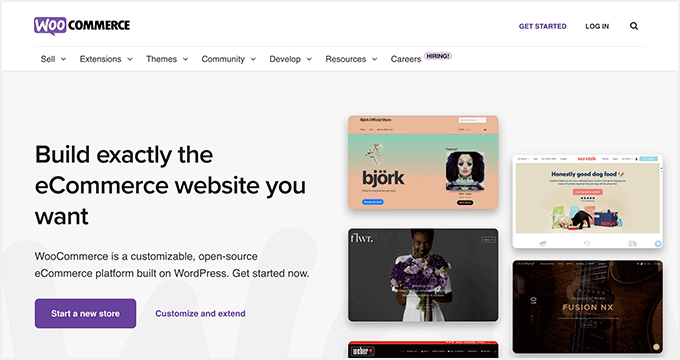
WooCommerce is the best all-in-one eCommerce plugin for selling any type of product.
It’s a completely free open-source platform that you can download and run on any web hosting provider.
My Experience with WooCommerce
I’ve tested WooCommerce on numerous demo sites and consistently found it very beginner-friendly. It’s also a favorite among our team at WPBeginner. To learn more about our experience, see our WooCommerce review.
One of the key advantages of WooCommerce is its intuitive interface, which makes it accessible for everyone. Store owners can easily add products, manage inventory, set pricing, and process orders without requiring advanced technical knowledge.
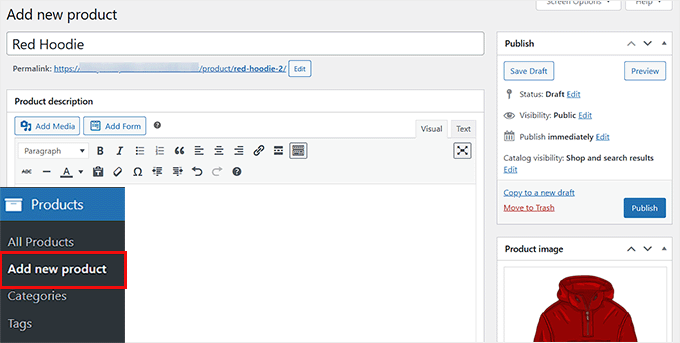
Its product management features also include options for product variations, such as sizes and colors, and advanced inventory tracking so you can stay organized and ensure smooth operations.
Other than that, WooCommerce offers a wide range of shipping and payment options. You can offer free shipping, flat-rate shipping, or real-time shipping calculations through integrations with USPS, FedEx, and UPS.
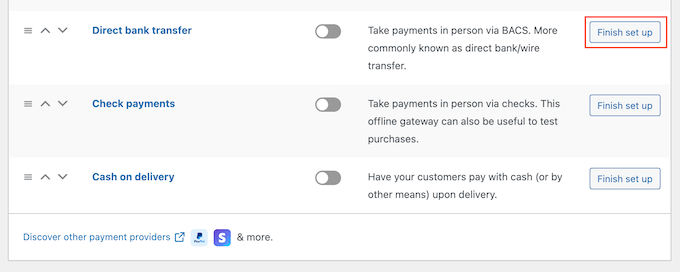
Additionally, you can integrate it with multiple payment gateways, including PayPal, Stripe, and direct bank transfers.
During my testing, I discovered that you can even connect WooCommerce with advanced reporting tools like MonsterInsights to track sales, customer behavior, and inventory trends to make informed decisions about your business.
For details, see our tutorial on how to set up WooCommerce conversion tracking.
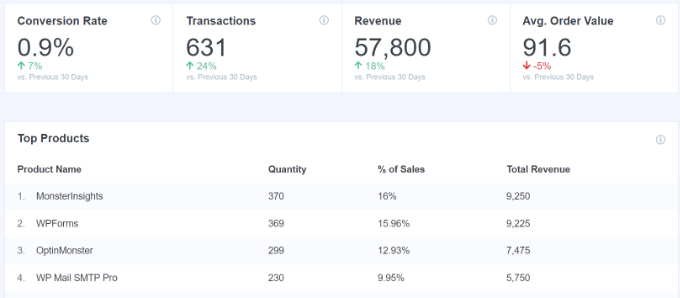
However, since WooCommerce doesn’t provide hosting, you’ll need to buy web hosting and a domain name to ensure that your website can be accessed by users worldwide.
I recommend using either Bluehost or SiteGround. They are both among the largest hosting companies in the world and are officially recommended by WooCommerce.
Bluehost is even offering WPBeginner users a free domain name + SSL certificate and a generous 83% discount on hosting. Basically, you can get started for $1.99 per month!
→ Claim This Exclusive Bluehost Deal ←
✅ Pros of WooCommerce:
- Quick setup process, even for beginners
- Complete control and ownership with a self-hosted platform
- An extensive theme library designed for WooCommerce
- Thousands of plugins for added functionality
- Supports all product types (physical, digital, memberships, dropshipping)
- Unlimited products with no transaction fees
- SEO-friendly structure with easy integration for SEO plugins
❌ Cons of WooCommerce:
- Requires separate hosting and domain purchase
- Ongoing maintenance responsibilities (hosting upgrades, security, optimization)
Why I recommend WooCommerce: If you are just starting out, then WooCommerce is the best solution for you. It is free, offers amazing features, and doesn’t charge any transaction fees.
To help beginners get started, we have the most detailed WooCommerce tutorial on the web that helps you build an eCommerce website with WooCommerce.
2. Wix: Best for Beginners That Need Fully Hosted eCommerce
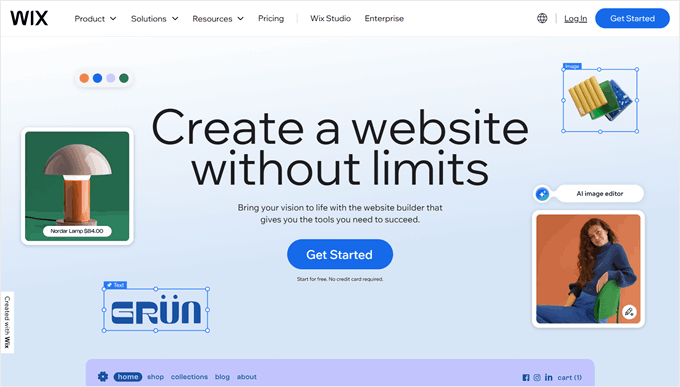
Wix is one of the most popular website builders in the world, and it’s an excellent choice if you want a balance of ease-of-use and professional eCommerce features.
Unlike WooCommerce, Wix is a fully managed platform, which means you don’t have to handle things like hosting, security, or software updates yourself. Everything is taken care of for you in the background, so you can focus on running your store instead of managing the technical side.
My Experience with Wix
I discovered that you can start building your site for free using Wix’s drag-and-drop editor and choose from over 900 professionally designed templates.
This makes it easy to create a polished, on-brand store, even if you’ve never built a website before.
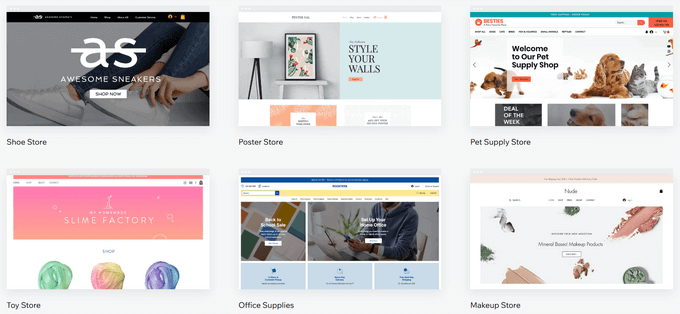
I love that Wix also includes an AI website builder that can generate a personalized site for you based on a few simple questions about your business. This can help you launch faster without worrying about design details.
However, I found a major limitation during my testing. You cannot accept online payments on the free plan.
To actually sell products and take money from customers, you must upgrade to the Core plan. This costs $29 per month. But it does unlock secure payments, product management, and checkout tools.
On the plus side, you’ll also get access to built-in marketing tools and the ability to sell across marketplaces and social media, helping you expand your reach beyond your website.
✅ Pros of Wix:
- Supports both physical and digital product sales
- 900+ professional themes and design templates available
- Built-in checkout, inventory, shipping, and tax management
- Fully managed platform, so hosting, security, and updates are taken care of
- Free plan available to get started
- Mobile-responsive designs included
❌ Cons of Wix:
- Free plan cannot accept payments (must upgrade to sell)
- eCommerce features only available on paid plans (starting at $29/month)
- You have to pay a standard transaction fee on all sales (e.g. 2.9% + $0.30 per transaction)
Why I recommend Wix: This is a great option for beginners who are looking to start their eCommerce business. Wix is user-friendly and has premade templates and marketing tools, making it a great choice.
3. BuyNow Plus: Best for Adding Simple “Buy Now” Buttons

BuyNow Plus is not a full eCommerce platform. Instead, it lets you create “buy now” buttons that you can add on any website, social media pages, or other online platforms.
This makes it a great option if you don’t need all the advanced features of a full-blown online store.
My Experience with BuyNow Plus
Upon research, I realized that, unlike full-fledged eCommerce systems that require setting up entire stores, BuyNow Plus focuses solely on allowing direct sales through customizable buttons.
This makes it an excellent choice for creators, freelancers, and small business owners who need a lightweight tool to start accepting payments online.

Plus, I find the platform is particularly ideal for those who want to sell directly through social media, email campaigns, or landing pages.
For example, if you are promoting a product on Instagram or Facebook, you can generate a “buy now” button link with BuyNow Plus and share it with your audience.
This eliminates the need for setting up complex checkout pages or redirecting customers to a separate storefront, allowing for faster transactions. However, keep in mind that you will need a free Stripe account in order to use BuyNow Plus.
✅ Pros of BuyNow Plus:
- Handles recurring payments without customer accounts required
- Easy integration across social media, websites, and email campaigns
- Unlimited product selling capacity
- Quick setup with simple “buy now” button creation
- No monthly fees – only pay when you sell
- Works well for digital products and services
❌ Cons of BuyNowPlus:
- No additional features like inventory management or store builder
- Total cost includes a 2% platform fee plus standard Stripe processing fees
- Lacks comprehensive eCommerce store functionality
Why I recommend BuyNow Plus: This is the perfect solution if you don’t want to create a full-fledged online store and just want to add a payment button for your products or services.
💡 Alternative: If you’re looking for a BuyNow Plus alternative, I also recommend WP Simple Pay. It allows you to easily add Stripe payment forms and buttons anywhere on your WordPress site. Plus, there’s a free version of the plugin.
4. Hostinger AI Website Builder: Best Value for AI Store Creation
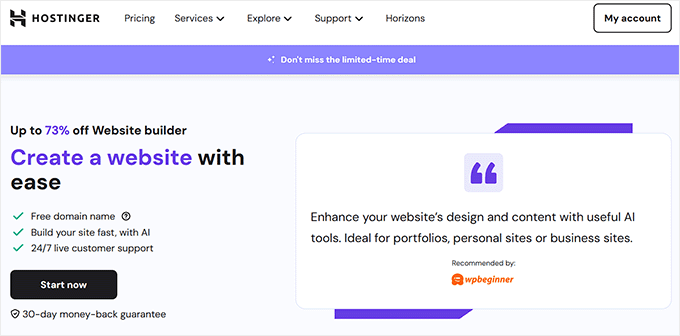
Hostinger AI Website Builder is an all-in-one eCommerce solution designed for users who want to build and launch a professional online store quickly — with no coding required.
What makes this platform stand out is its powerful use of AI.
My Experience with Hostinger AI Website Builder
During my testing, I found that Hostinger can automatically generate complete storefronts based on a simple business description, including product pages, a checkout process, and even marketing content like product descriptions and email campaigns.
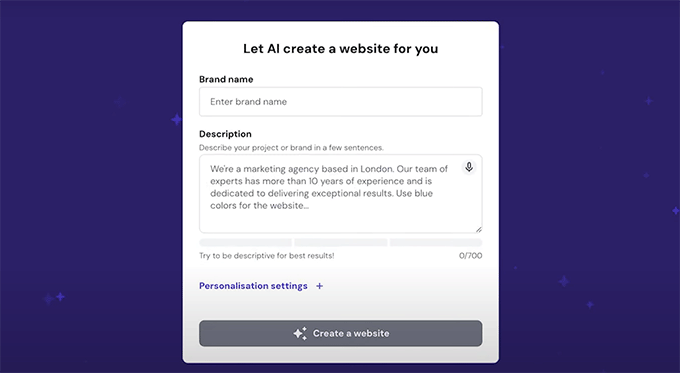
This significantly speeds up the setup process, making it an excellent choice for business owners launching their first store or anyone looking to go live fast without needing technical skills.
The platform includes a smart grid system that keeps your site design clean and responsive across devices.
It also offers built-in support for up to 500 products and over 100 payment methods, which makes it suitable for small to medium-sized stores.

I was also impressed by the built-in marketing tools, such as Hostinger Email Marketing (Reach), which can generate campaign emails using AI. Combined with zero transaction fees, this adds a lot of value for store owners trying to keep costs low.
Plus, it has seamless mobile editing, letting you make changes directly from your phone, which is ideal for busy entrepreneurs on the go.
✅ Pros of Hostinger AI Website Builder:
- AI tools simplify store creation and content generation
- No transaction fees
- Easy drag-and-drop editor with responsive design
- Built-in email marketing features (Hostinger Reach)
- 24/7 multilingual customer support
- Free domain name included
❌ Cons of Hostinger AI Website Builder:
- Limited to Hostinger’s own ecosystem (no third-party app marketplace)
- Free domain and email only last for the first year
Why I recommend Hostinger AI Website Builder: If you’re looking for a quick, beginner-friendly way to launch a professional online store without paying monthly transaction fees, then Hostinger is a great choice. Its AI-powered tools and simple editor make it especially useful for solo entrepreneurs and small businesses starting on a tight budget.
5. Shopify: Best for Selling Physical Products with Integrated Shipping Solutions
Shopify is designed for small to medium-sized businesses that want to launch and scale their online stores with ease.
It’s also fully hosted so that drastically simplifies the setup process.
My Experience with Shopify
I find that this eCommerce plaftorm is best for selling physical products because of its secure payment processing and integrated shipping solutions.
It’s known for its user-friendly interface and extensive range of customizable themes. I also love its wide range of third-party integrations.
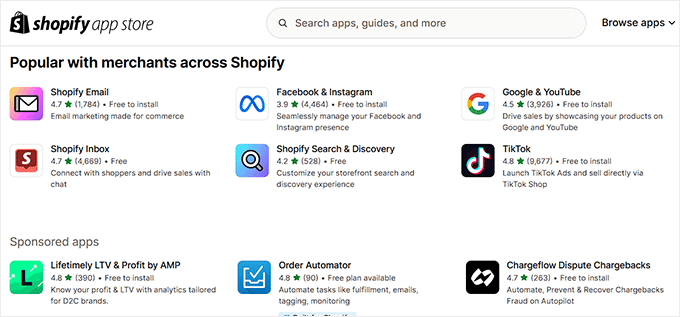
Shopify even provides powerful inventory management tools, making it easy to track stock levels and fulfill orders efficiently.
However, you need to watch out for extra fees. Shopify charges an additional 2% platform transaction fee on every sale.
The only way to remove this fee is to use their own payment gateway, Shopify Payments. If you prefer using PayPal or a different bank option, you will have to pay that extra 2%.
✅ Pros of Shopify:
- Extensive app marketplace for additional features and functionality
- Comprehensive 24/7 support via live chat, phone, email, and Twitter
- Built-in Shopify Payments at competitive rates (2.9% + 30¢)
- Professional templates and mobile-responsive designs
- Integrated shipping solutions and label printing
- Strong SEO and marketing tools included
❌ Cons of Shopify:
- Additional 2% platform transaction fee (unless you use Shopify Payments)
- Very short 3-day free trial period
- Less flexibility than self-hosted solutions
Why I recommend Shopify: It is an ideal platform for users who want to quickly launch an online store without needing technical knowledge. It is also well-suited for small business owners.
💥 Related Post: For more details, see our comparison of Shopify vs WooCommerce.
6. BigCommerce: Best for Enterprise-Level Stores
BigCommerce is the ideal eCommerce platform for enterprise businesses and fast-growing online stores that need powerful features without the complexity.
It is an all-in-one, fully hosted solution that covers everything from secure web hosting and seamless payment processing to advanced inventory management.
My Experience with BigCommerce
When I was evaluating the platform, I discovered that BigCommerce also offers a plugin that integrates seamlessly with your existing WordPress site, allowing you to use both tools together.

BigCommerce includes essential tools like multi-channel selling, abandoned cart recovery, and reporting to help grow your store.
Plus, I love how you can easily list and sell products across multiple marketplaces, such as Amazon, eBay, Walmart, Facebook, and Instagram, all from one centralized dashboard.
While BigCommerce doesn’t offer a free plan, it provides a free trial so you can explore its features and set up your online business without paying anything.
✅ Pros of BigCommerce:
- No credit card required for free trial signup
- Free subdomain option (mystore.mybigcommerce.com) available
- Multiple built-in payment integrations (PayPal, Stripe, Authorize.net)
- Extensive third-party app marketplace for added functionality
- Professional pre-built templates and themes included
- Built-in SEO and marketing tools.
❌ Cons of BigCommerce:
- Short 15-day free trial period
- Restricted to BigCommerce’s ecosystem of apps and themes
Why I recommend BigCommerce: If you are looking for a powerful option that fully hosts your website, offers attractive templates, and integrates well with third-party tools, then you can opt for BigCommerce.
💥 Related Post: See our comparison of WooCommerce vs BigCommerce for more details.
7. Big Cartel: Best for Simple Stores for Artists and Makers

Big Cartel is a hosted eCommerce platform designed especially for artists and creatives.
It could be a great option for you if you want to have a store selling handmade goods or similar products.
My Experience with Big Cartel
Unlike some more complex platforms, Big Cartel offers a simple and straightforward setup process.
It also has a free plan for those just getting started, which allows users to list up to five products.
That said, paid plans provide more features, such as the ability to list more products (up to 500 on the highest plan), access to advanced customization options, and tools for managing inventory, promotions, and sales.
✅ Pros of Big Cartel:
- No transaction fees on free plan (only payment processor fees apply)
- Customizable free shop URL
- Quick and easy store setup with step-by-step guidance
- Real-time analytics and basic marketing tools included on free plan
- Perfect for artists and makers selling handmade products
- Limited payment options (Stripe/PayPal) keep things simple
❌ Cons of Big Cartel:
- Theme customization requires HTML editing skills
- Free plan has limited features (no inventory tracking or discount codes)
- Limited scalability for growing businesses
Why I recommend Big Cartel: It is a great choice for artists, crafters, and makers who are just starting to sell their handmade creations online. Big Cartel’s simple, gallery-style layout puts your products front and center without distracting bells and whistles.
Choosing the Best Free eCommerce Platform
So, which is the best free eCommerce platform for you? That depends on what you’re looking for.
If you want to start cheap and have full freedom to grow your business, then WooCommerce is the best option. The plugin is made for selling, and includes all the features you need to build a responsive store fast.
With over 100 payment gateways, plenty of SEO tools, and powerful analytics, it’s arguably the most robust eCommerce platform out there.
Using our exclusive Bluehost deal, you can get started for $1.99 per month. That’s less than a cup of coffee.
If you want to set up your store quickly, take a look at Wix. I discovered that it’s easy to use, you can start for free, and its eCommerce plan is affordable.
Unlike WooCommerce, Wix is a fully managed platform, so hosting, security, and updates are all handled for you, letting you focus entirely on running and growing your store.
FAQs: Best Affordable and Free eCommerce Platforms
Here are some questions that are frequently asked by our readers about affordable and free eCommerce platforms:
Which free eCommerce platform offers the best design options?
In my expert opinion, WooCommerce offers the most flexibility in design, especially when paired with WordPress themes. With thousands of free and premium themes available, you have complete control over the look and feel of your store.
Plus, you can customize the design further with plugins if needed, making it ideal for those who want full creative control.
On the other hand, Wix and Shopify also provide an excellent selection of customizable themes. Both are user-friendly with drag and drop editors, allowing for easy adjustments without needing coding skills.
What’s the difference between hosted and self-hosted eCommerce platforms?
Hosted eCommerce platforms are all-in-one solutions where the platform takes care of hosting, updates, security, and maintenance for you. Its popular examples include Wix, Shopify, and BigCommerce.
These platforms are easy to use, require little technical knowledge, and typically charge a monthly fee along with transaction costs.
Self-hosted eCommerce platforms like WooCommerce require you to manage hosting, domain, security, and updates yourself. While this offers more flexibility and customization, it also demands more work. You can choose your hosting provider and have complete control over your store, but you’ll need to handle more of the setup and maintenance.
Can I use these platforms for international selling?
Yes, you can use many free eCommerce platforms for international selling. They support multi-currency, international shipping, and various payment gateways, making it easy to sell globally.
However, some limitations may exist on certain free plans, so it’s important to review each platform’s features to ensure they meet your international selling needs.
How do free eCommerce platforms make money?
Free eCommerce platforms make money primarily through transaction fees, paid add-ons, and premium plans. They often charge a percentage of each sale or a fixed fee for payment processing. Additionally, they generate revenue by selling extra features like advanced themes, plugins, marketing tools, or hosting services. Some platforms also offer paid upgrades for more customization and support options.
I hope this article helped you learn about the best free eCommerce platforms to get started with. Now, you may want to check out these other helpful eCommerce guides:
Related Guides to eCommerce Platforms
- WordPress eCommerce Setup Guide for Beginners (7 Product Types)
- How To Properly Set Up eCommerce Tracking In WordPress
- Is WordPress Good for eCommerce? (Pros and Cons)
- eCommerce Website Maintenance Tips – How to Maintain Your Store
- How to Speed Up Your eCommerce Website (Proven Tips)
- Profitable Ecommerce Business Ideas for WordPress (Expert Pick)
- The Ultimate eCommerce Launch Checklist for WordPress
If you liked this article, then please subscribe to our YouTube Channel for WordPress video tutorials. You can also find us on Twitter and Facebook.



Jiří Vaněk
Thank you for the excellent list of services that can be used for ecommerce and for the comparison. Besides WordPress and WooCommerce, I only have experience with Shopify. I’d definitely like to expand my knowledge and try out some of the other services in the ecommerce space. So far, I’ve only been using WordPress and Woo because Shopify didn’t give me as much freedom in deciding on features. Perhaps these other services will be better in that regard, and I’m eager to explore them further.
Mrteesurez
Bigcommerce and Shopify are seems to be recommendable after Woocomerce, the best ever, and also for if you can not afford to buy hosting plan and custom domain, although you will not have full control over the store but it will just get you started and sell your products online.
Thanks for this head to head ecommerce platforms comparisons.
WPBeginner Support
You’re welcome
Admin
Moinuddin Waheed
woocommerce is the best option for e-commerce websites.
This is a powerful tool with all the features and options to make awesome online store.
since it is a plugin and works on top of WordPress, it becomes easy for wordpress users to work with same set of wordpress knowledge and scale.
It comes with integrations with lots of important services.
Appreciate the efforts to make a comparative analysis of all the options.
Kathie
Want to get more informed on the options and this was a great start❣️
Thank you!
WPBeginner Support
You’re welcome!
Admin
Kiran Patil
Very Informative .
WPBeginner Support
Thank you
Admin