


You can spend hours posting healthy recipes on Instagram, but most of those followers will never book a discovery call. Relying on social media means your nutrition business is at the mercy of algorithm changes that can hide your expertise from the people who need it most.
At WPBeginner, we have helped over 2 million users start their own websites and build successful online businesses. We know that a professional site is the only way to build real trust and turn casual visitors into paying clients.
The good news is that you can build a high-quality site even if you have never created one before. In this guide, I will walk you through every step to launch your online nutrition business website so you can start attracting more clients right away. 📈
Tools You Will Need to Build an Online Nutrition Business Site
- Domain Name – Your website’s address on the internet, like nutritioncoach.com.
- Web Hosting – The place where your website files are stored.
- WordPress – The best website builder platform.
- SeedProd – Use the best drag-and-drop builder to create your site design in minutes. It includes an AI website generator that can build a custom nutrition site for you in under 60 seconds.
- MemberPress – The most powerful membership plugin to sell online courses and meal plans. It makes it easy to protect your expert nutrition content and build a recurring income.
Why Create a Website for Your Nutrition Business?
If you’re a dietitian or nutritionist, then having a WordPress website for your business is a smart move for lots of reasons.
It’s more than just an online presence. It makes it easy for potential clients to find you, trust you, and reach out.
Overall, a website allows you to showcase your services, qualifications, and success stories in a professional way. You have full control over your personal brand and can highlight your expertise.
Plus, it lets you connect with people beyond your local area. You can reach a larger audience, offer online coaching, or sell nutrition plans.
Without a website, you risk losing clients to competitors who are easier to find online.
How to Start an Online Nutrition Business Website
First, you will need to choose a website builder for your website. In my experience, WordPress is the best platform for the job.
It offers an easy-to-use interface, endless customization options, and the ability to scale as you grow, which is a great option even if you’re new to website building.
Plus, WordPress allows you to install tools made for nutrition websites. For example, you can use plugins to add meal plan templates, online course platforms for nutrition programs, and client consultation forms.
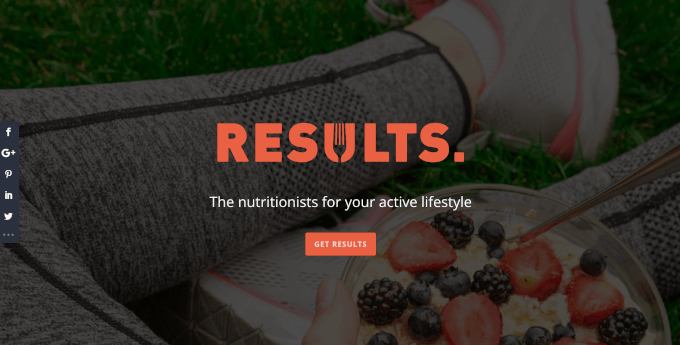
There are excellent recipe plugins, too, if you want to create content around healthy meals and their recipes.
Before we start, it’s important to note that there are 2 types of WordPress software, so you’ll want to make sure you pick the right one for your business.
WordPress.com is a hosted blogging platform. On the other hand, WordPress.org is a self-hosted WordPress. It gives you full control, and it is what you will need to create your nutrition site.
For a detailed comparison, you can check out our guide on WordPress.com vs. WordPress.org.
While building your site is a key step, you may face some challenges along the way. But don’t worry, I will walk you through each step. Here are the steps I will cover in the following sections:
- Step 1. Plan Your Nutrition Business Website
- Step 2. Set Up Hosting, Domain, and WordPress
- Step 3. Create Your Nutrition Business Website
- Step 4. Find and Use the Perfect Nutrition Website Theme
- Step 5. Customize the Homepage to Reflect Your Brand
- Step 6. Add a Service Page to Promote Your Online Nutrition Consultation Services
- Step 7. Offer Subscriber-Only Online Courses
- Step 8. Set Up a Nutrition Blog to Show Expertise and Attract Clients
- Step 9. Build Trust with Testimonials and Qualifications
- Step 10. Allow Clients to Contact You
- Step 11. Adjust the Navigation Menu
- Bonus Tips: How to Grow Your New Nutrition Business Website
- How to Start an Online Nutrition Business Website FAQs
- Next Steps to Grow Your Online Nutrition Business
Ready? Let’s get started!
Step 1. Plan Your Nutrition Business Website
Before diving into the technical details, it’s important to plan your site. To set yourself up for success, you need to plan three key things: target audience, site goal, and user experience.
🧐 Know Your Audience
Think about who you’re trying to reach – whether it’s people looking for meal plans, nutrition coaching, healthy recipes, or all of the above.
Understanding your target audience is important because it shapes everything from your website’s design to the content you create.
To help with your brainstorming process, you can ask yourself these questions:
- What are your users’ main goals? Are they seeking health advice, managing a health condition, or improving their performance?
- Who are you targeting? Are they busy professionals, parents, athletes, or people with specific dietary needs?
- What challenges do they face? Are they looking for meal options, weight loss tips, or performance nutrition?
- What tone works best? Should your site be friendly and casual or more professional and expert-driven?
By answering these, you’ll start to form a clearer picture of your target audience – often called a ‘customer persona.’ This persona helps you understand their needs, goals, and preferences, which will guide your site and content strategy.
For more details, you can check out our full guide on how to choose a target audience.
🎯 Set a Goal for Your Site
Next, you should consider your website’s main goal. Are you aiming to educate visitors about healthy living, run a nutrition-related online store, offer consultations, or provide all these services in one place?
However, do note that your website should reflect what you offer and cater to your audience’s needs.
Consider these options based on your goal:
- If you offer consultations, you can include booking forms or integrate a calendar so clients can easily schedule time with you.
- If your goal is to educate, then adding blog posts, guides, or even online courses to share valuable information with your audience is the way to go.
- If you’re selling products, you’ll need to make sure you have a clear, easy-to-navigate shop section where visitors can browse and buy.
A clear purpose will help your site stay focused, making it easier to serve your audience and achieve your business goals.
⭐ Make Your Site Easy to Use
When visitors land on your site, what will they need? How can you make their journey easy and enjoyable?
Here are some things to consider for a better user experience:
- Organize your site clearly. You can use categories like ‘Meal Plans,’ ‘Consultations,’ and ‘Recipes’ so visitors can easily find what they’re looking for.
- Use clear calls-to-action (CTA). You can include buttons or links with clear instructions, such as ‘Book a Consultation’ or ‘View Meal Plans’, to help visitors take the next step.
- Keep navigation simple. You’ll want to make sure your navigation menu is easy to use and leads visitors directly to the information they need.
Now, you can take your time to plan out these foundational elements. Ultimately, this will set you up for success and make sure your site becomes a helpful, engaging resource for your audience.
For more tips and tricks, see our guide on how to improve user experience.
Once you have your site carefully planned, you’re ready for the next step.
Step 2. Set Up Hosting, Domain, and WordPress
Setting up a WordPress website for your nutrition business can be simple and straightforward. You’ll begin by getting a domain name and a web hosting service.
A domain name is like your online street address. It’s what clients type into their browsers to find you, like smoothiecentral.com or fitfoodhub.com.
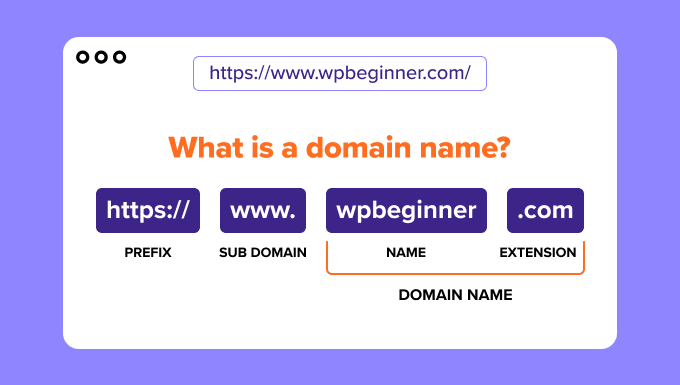
On the other hand, web hosting is where your website “lives” on the internet. We’ve picked some of the best WordPress hosting options to make this easy for your nutrition site.
Even though WordPress is free, hosting and domain names are the areas where you might spend some money. Typically, domain names cost around $15 to $20 per year, and hosting usually starts around $8 per month, which can add up along with other business expenses.
Here’s the upside: Bluehost offers our readers a free domain name and a huge discount on web hosting. They are a leading hosting company and are officially recommended by WordPress.org.
Plus, they include a free SSL certificate, which is crucial for securely handling client information online.

To get started, simply click the button below to take advantage of the deal, starting as low as $2.99 a month (price varies by plan).
🧑💻 Alternative: If you want to offer memberships on your nutrition website (which I will talk about in Step 7), then I recommend Rapyd Cloud.
Their WordPress hosting is built to handle high traffic and multiple users at once. This makes it a strong choice for membership platforms, online courses, and community-driven websites where performance really matters.
Next up, you’ll need to visit the Bluehost site and click the ‘Get Started Now’ button.
On the pricing page, the ‘Starter’ or ‘Business’ plan should serve you well, as these plans cover all the basics for your site. Or you can choose the ‘eCommerce Essentials’ plan, which includes WooCommerce auto-install and other eCommerce features.
After selecting a plan, then click ‘Choose Plan.’

Next, you’ll want to choose a domain name that’s easy to remember and related to your business.
If your preferred name is unavailable, then consider including your location or a specific service focus like “health” or “wellness.”
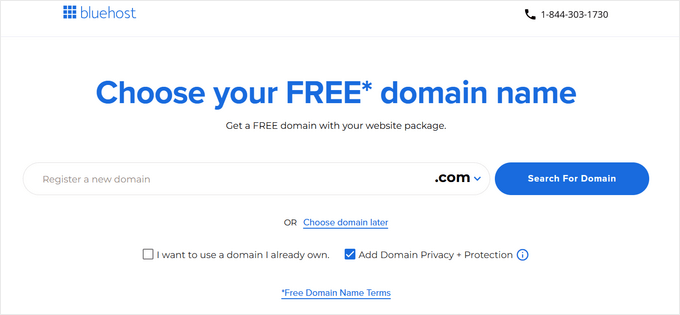
After choosing your domain, you can continue to the checkout page and provide your account details, such as your name and email address.
Finally, go ahead and enter your payment information to complete the setup.

Once done, you should receive a welcome email from Bluehost with instructions on how to log in to your control panel, where you can manage your website and install WordPress.
And with that, you’re ready to start building your nutrition business website.
Step 3. Create Your Nutrition Business Website
Bluehost makes creating a nutrition business website easy with automatic WordPress installation. When you sign up through our link, WordPress is automatically installed on your chosen domain.
If you want to create an additional WordPress site, then you’ll want to navigate to the Websites tab in your Bluehost dashboard.
Then, simply click on the ‘Add Site’ button to get started.
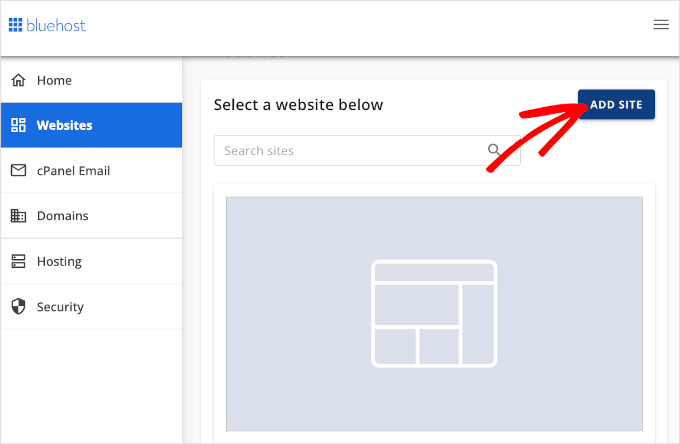
The Bluehost wizard will guide you through the setup process, which includes customizing your website title, choosing your domain name, and setting up the website.
After completing the Bluehost WordPress setup wizard, simply hit ‘Complete Setup.’
You’ll then be directed to the site admin area.
You can also visit your WordPress dashboard anytime by typing yoursite.com/wp-admin/ in your browser. Just don’t forget to replace ‘yoursite.com’ with your domain name.
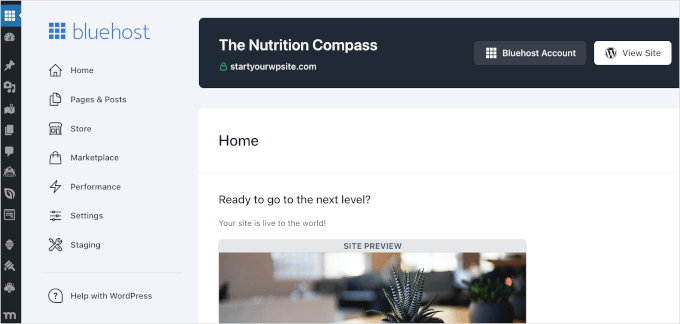
If you’re using a different hosting provider, you can check out our guide on installing WordPress with major hosting providers.
Step 4. Find and Use the Perfect Nutrition Website Theme
Now that your website is set up, it’s time to make it look amazing with the perfect theme. A WordPress theme is like a “skin” that controls the general appearance of your website.
A well-chosen theme can really highlight your nutrition business and create a good user experience.
You can start by exploring the WordPress theme directory. It’s full of free themes that are easy to install directly from your WordPress dashboard.
Simply navigate to ‘Appearance’ and then ‘Themes’ to start browsing. Look for clean and modern themes. You can also use the filter feature to find themes specifically designed for health and wellness.
If you don’t know where to start, then feel free to check out our expert picks of the best WordPress themes for recipe blogs.
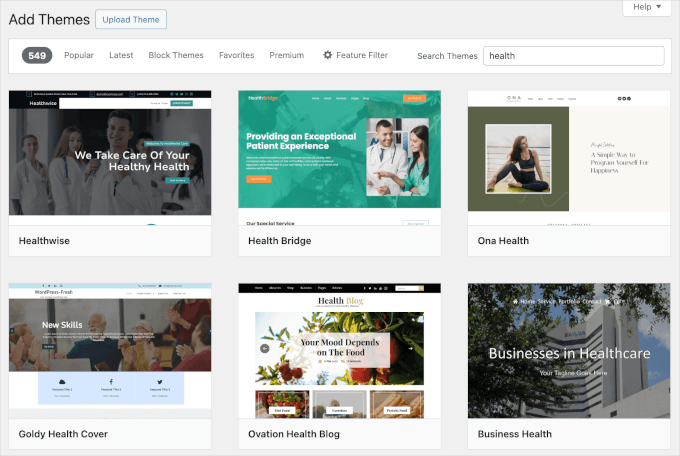
Alternatively, our list of the best medical and health WordPress themes might be a good start if your business is related to wellness, healthcare services, or nutrition coaching.
If you have a specific look in mind and a budget to invest in, then you might want to check out premium theme marketplaces like ThemeIsle or Elegant Themes.
These platforms offer a wide variety of beautifully crafted themes with advanced features that can help set your website apart. A premium theme often comes with support and updates, giving you peace of mind.
Another great option is SeedProd, the best drag and drop WordPress website builder. It is an AI-powered tool that makes design easy.
With SeedProd’s AI Website Builder, you can generate a complete custom website in less than 60 seconds. Just describe your business, choose your industry, and the AI automatically creates full custom designs for you. Note that you will need a SeedProd Pro plan to access these AI features.
We use SeedProd on our partner websites like WPForms and Charitable to build high-converting landing pages. To read more about our experience, see our complete SeedProd review.
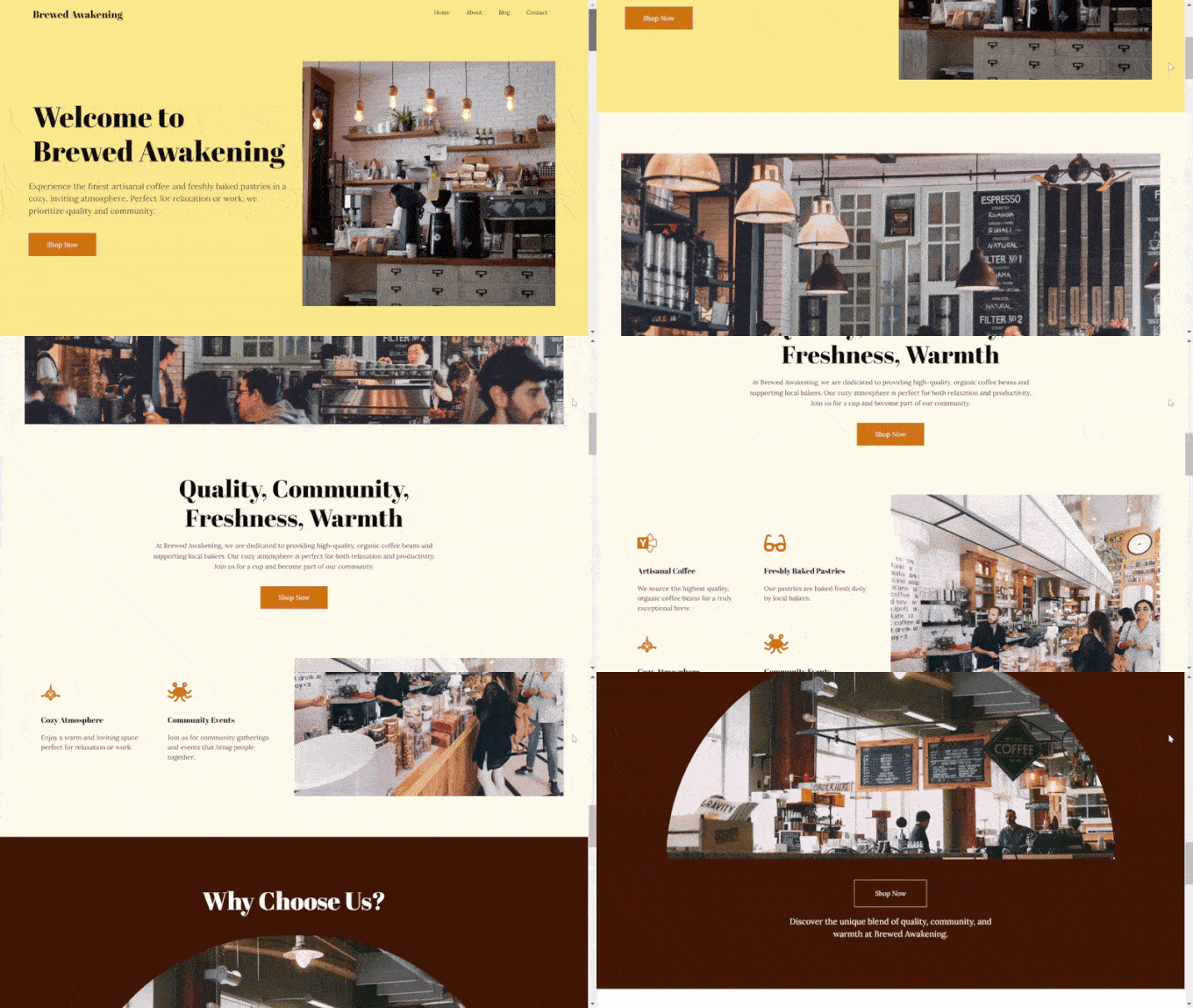
If you prefer a more hands-on starting point, SeedProd also offers a library of pre-made, fully customizable site kits and templates.
Once you’ve found a theme you love, installing it is simple:
- If you’re using a theme from the WordPress directory, just click ‘Activate’ after installing it. For detailed step-by-step instructions, you can go through our beginner’s guide on how to install a WordPress theme.
- For premium themes, you’ll typically upload the theme file in your dashboard’s ‘Themes’ area and then activate it.
- With SeedProd, you can play around with its visual drag-and-drop builder to apply your design changes effortlessly. For details, see our complete SeedProd review.
Choosing the right theme is an exciting part of building your website, so you can take your time exploring your options to find the one that best represents your vision.
A well-designed theme will not only boost your site’s appearance but also improve user experience. It encourages visitors to stick around and learn more about your nutrition expertise.
Step 5. Customize the Homepage to Reflect Your Brand
Your homepage is the digital storefront of your nutrition business, so it’s important to make it welcoming and informative. Customizing this central hub will make sure that visitors instantly understand what your brand stands for and what you offer.
In this stage, you’ll first want to define which one of your pages is your home page.

Now, WordPress provides 2 default content types: posts and pages.
Typically, posts are used to create articles and blogs. So, ideally, you’ll want your posts page to be your WordPress blog page.
To do this, you first need to create two empty pages. Go to Pages » Add New in your WordPress dashboard and create a page named ‘Home’ and another named ‘Blog’.
Once those are published, navigate to Settings » Reading.
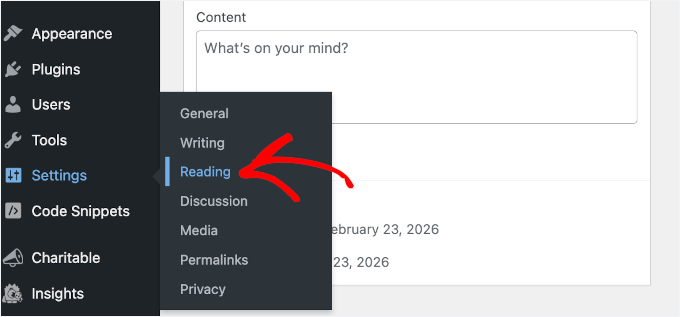
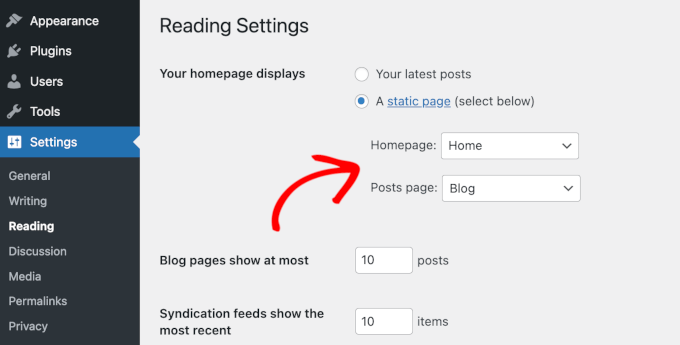
For ‘Your homepage displays,’ you’ll need to enable ‘A static page (select below)’ to set up your home and post pages.
After that, simply open the dropdown next to ‘Homepage’ and ‘Posts page.’ Then, you’ll want to choose the relevant option for each dropdown menu.
There are more configuration settings here. For example, you can set up how many blog posts and RSS (Really Simple Syndication or Rich Site Summary) feeds to show on one page.
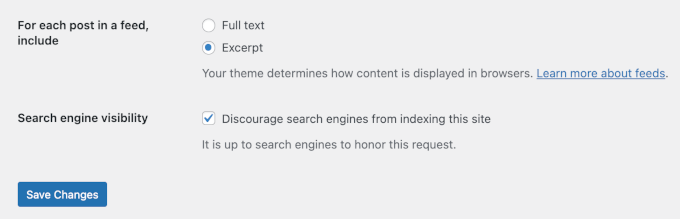
If you scroll down the panel, you can choose to show the full version or just the excerpt for each post.
Then, you’ll see the ‘Search engine visibility’ option. This allows search engines like Google to crawl and index your website, which means your site will get listed on Google.
However, since you are building a new site, I recommend checking this box to hide it from search engines for now. Just remember to uncheck it when you are ready to launch, so people can find you.
That’s it – you’ve set up and configured your site’s homepage.
Don’t forget to hit the ‘Save Changes’ button to store your new settings.
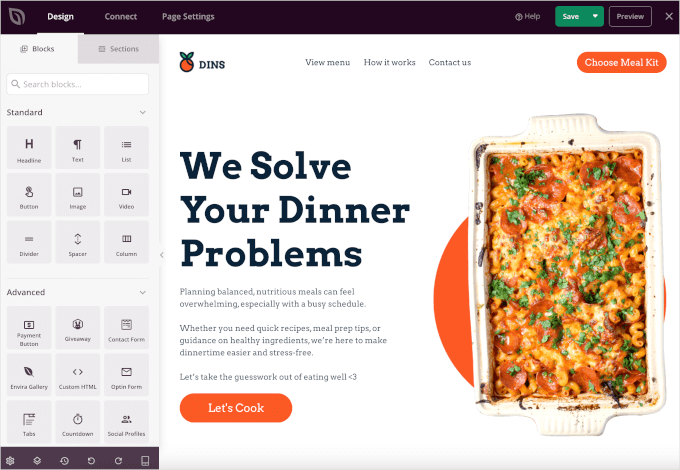
You can now start customizing your homepage through the WordPress block editor or the SeedProd builder interface. This will highly depend on which theme you use.
For more information, you can go through our detailed guide on how to create a custom homepage.
🧑💻 Expert Tip: If you’re using SeedProd‘s page template or starter theme, then designing your homepage is a breeze. With its drag-and-drop functionality, you can effortlessly create a layout that matches your brand’s personality and vision.
You can even create an entire website with AI in just a few clicks.
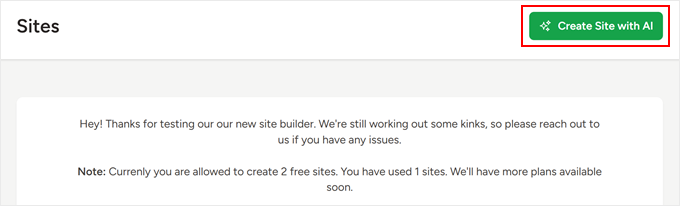
Don’t forget to include essential details like social media links to connect with your audience.
A clear call to action that encourages visitors to take the next step is important, too. Here are some ideas for goals that need powerful call-to-action buttons:
- Browsing your services
Once you’re happy with the design, go ahead and publish it. Then, you’ll want to see how it looks on different devices, making sure your website is responsive and visually appealing on both desktop and mobile.
Step 6. Add a Service Page to Promote Your Online Nutrition Consultation Services
Adding a service or pricing page helps visitors understand what you offer, how they can work with you, and the costs involved. On your service page, you should clearly explain the consultation options you provide, whether it’s one-on-one sessions or group consultations.
The more information you give, the easier it will be for clients to make decisions.
To create a service page, you can start by creating a new page on your WordPress site. Simply navigate to Pages » Add New Page and then, in the content editor, you can write the page title and description.
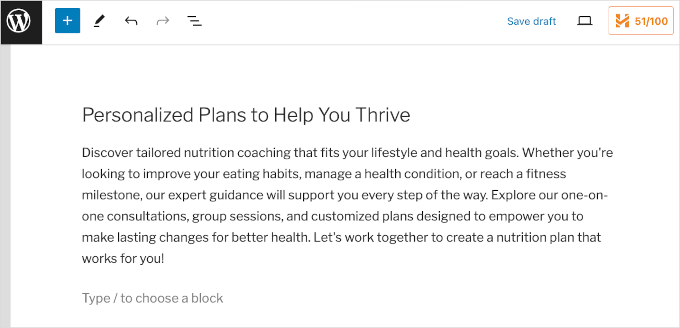
💡 Note: Since you are offering health advice, it is smart to include a medical disclaimer on your service page stating that your coaching is not a substitute for professional medical advice. This helps protect your business.
Once done, you’ll add a pricing table. For more information, you can see our guide on how to add beautiful pricing tables in WordPress.
You should also consider using a plugin like MemberPress.
MemberPress is the best membership plugin for WordPress to sell courses, meal plans, and create members-only nutrition content. We use MemberPress on WPBeginner to power our free video membership site. To read more about our experience, see our complete MemberPress review.
It lets you easily create a members-only area on your site so you can offer exclusive content or sell plans.
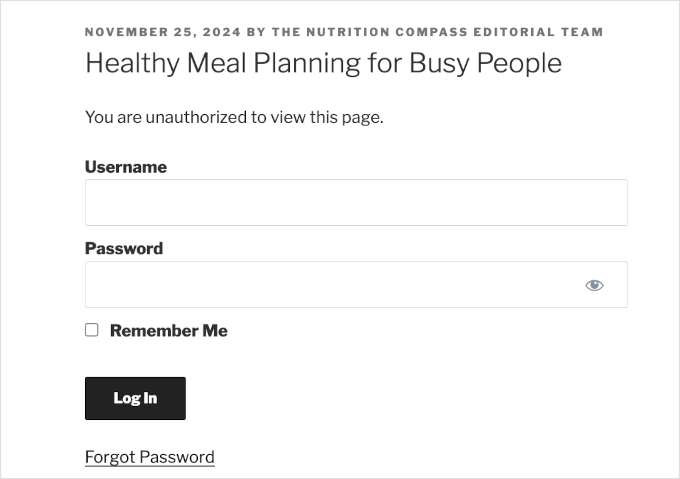
By providing this content behind a paywall, you’re offering even more value and making it easy to manage subscriptions and payments.
For more information, you’ll want to check out our ultimate guide on creating a membership website.
Step 7. Offer Subscriber-Only Online Courses
I also recommend offering online courses to add even more value for your clients and increase the revenue from your nutrition website.
For example, you could create an exclusive course on “Healthy Meal Planning for Busy People” or “Understanding Macronutrients: A Beginner’s Guide.”
Another idea might be “Nutrition for Weight Loss” or a more specialized course like “Managing Diabetes with Diet.”
These courses can help your subscribers learn more about nutrition and give them the tools they need to make healthier choices.
With the MemberPress CoachKit add-on, you can easily create and manage these courses.
It also lets you create one-on-one coaching sessions, so you can give your clients personal attention and tailored advice. All of which makes it simple for your subscribers to learn at their own pace.
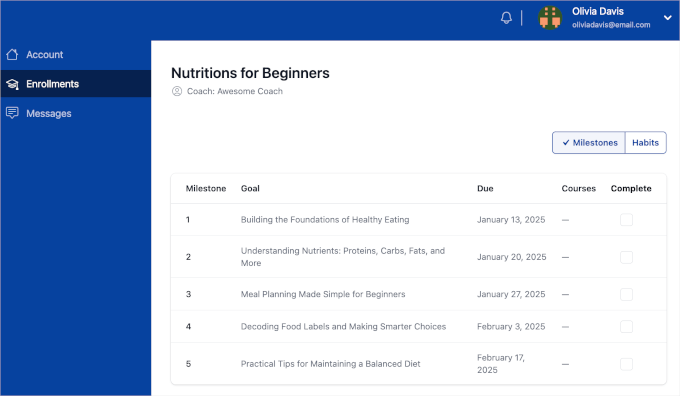
Plus, with the ChatGPT integration, you can generate course outlines in seconds and use the Courses add-on to build full online nutrition courses from them.
For detailed instructions, you can read our guide on how to create and sell online courses with WordPress.
Step 8. Set Up a Nutrition Blog to Show Expertise and Attract Clients
A nutrition blog is a great place to share tips and recipes. But beyond that, it’s your secret weapon for improving SEO and driving more traffic.
When done right, a blog can also build trust, grow your audience, and showcase your expertise. Plus, it’s a great way to connect with people who share your passion for healthy living.
Now, coming up with fresh ideas can feel tricky, but you can always start with the questions your clients ask most often. Then, for every question you research, you’ll want to check out the ‘People also Ask’ section on Google search results.
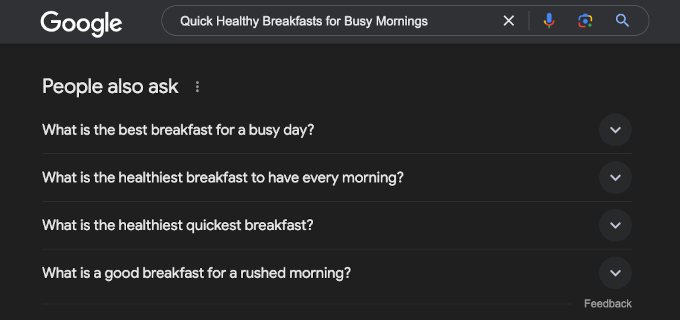
For example, you might want to write about “Quick Healthy Breakfasts for Busy Mornings” or “How to Read Food Labels Like a Pro.” Seasonal topics like “Holiday Meal Swaps for a Healthier You” are also great ideas.
To boost your SEO, I recommend doing some simple keyword research to find the exact phrases people are searching for online.
A great tool for this is LowFruits, the best keyword research tool for WordPress. It helps you find low-competition keywords that you can rank for, so you can drive organic traffic to your site faster.
For more information, you can read our guide on how to do keyword research for your WordPress blog.
There are more tips and tricks to do this. To learn them all, you can check out our guide on how to quickly generate blog ideas. Then, I recommend keeping a running list of ideas so you’re never scrambling for your next post.
Once you have blog post ideas, the next step is to develop these ideas into well-written pieces. If you’re not sure where to start, here’s a simple structure:
- Grab attention with a relatable introduction.
- Share helpful tips or actionable steps.
- Wrap it up with a takeaway or a call to action.
For a detailed guide, just check out our tutorial on how to create blog post outlines and how to write great blog posts that stand out.
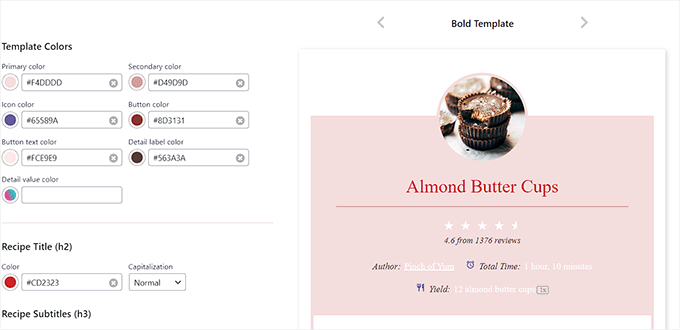
If you’re also sharing nutritious recipes on your food blog, then I recommend using WP Tasty, the best recipe plugin for WordPress. It allows you to design attractive recipes that stand out on your blog.
For more information about the food blogging plugin, see our detailed WP Tasty review.
You can even add professional nutrition facts labels using Nutrifox, the best nutrition label maker for WordPress.
It’s a great tool that automatically calculates values based on your ingredients. You simply paste your recipe ingredients into the tool, and it gives you a code to display a professional label on your site.
For example, adding a label to a recipe can help diabetics track their sugar intake and make informed choices. See our full Nutrifox review for details.
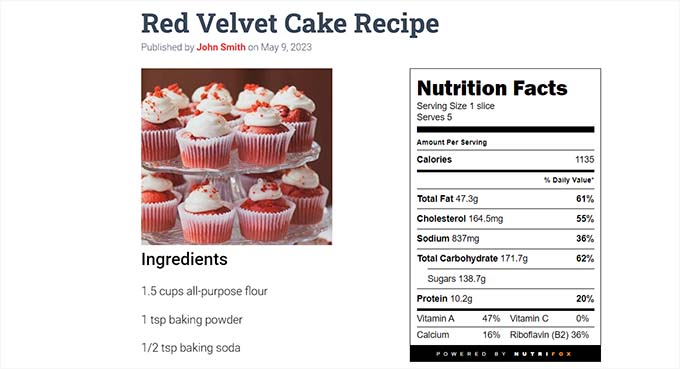
To help you get started, you can go through our guide on how to display nutrition facts labels in WordPress.
Step 9. Build Trust with Testimonials and Qualifications
Client testimonials play a key role in building trust with your audience. Strong testimonials act as social proof, helping to build trust with visitors and increase your chances of converting them into customers.
If you want to create a beautiful, fully customizable page with a testimonials section, then I recommend SeedProd.
SeedProd is one of the top drag-and-drop AI page builders for WordPress, trusted by over 1 million websites. It also offers 90 pre-made blocks and more than 350 templates, making it easy to design custom pages and add rotating testimonials to your site.
To get started, if you haven’t already installed SeedProd in Step 4, you will need to create an account and install the plugin. If you already have SeedProd installed from the previous step, you can skip the installation and go straight to the SeedProd » Pages screen.
First, create an account on the SeedProd website. You can click the button to sign up, pick a plan, and complete the checkout process.
💡 Note: There’s a free SeedProd version, but we’ll be using the Pro version for this guide. SeedProd Pro has a ready-made Testimonials block and might work with the email marketing service of your choice.
Upon registration, you’ll have your own SeedProd account dashboard, where you can download your zip file and access your license key.
From here, let’s install and activate the SeedProd plugin.
In your WordPress dashboard, go to Plugins » Add Plugin.
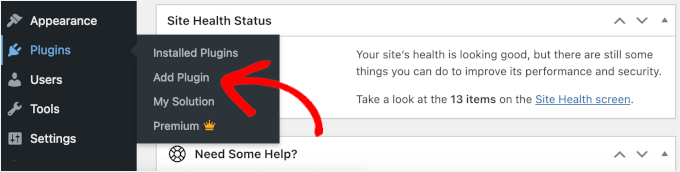
Next, you can click ‘Upload Plugin.’
In the file uploader, click ‘Choose File’ to upload your SeedProd zip file, and then click the ‘Install Now’ button.
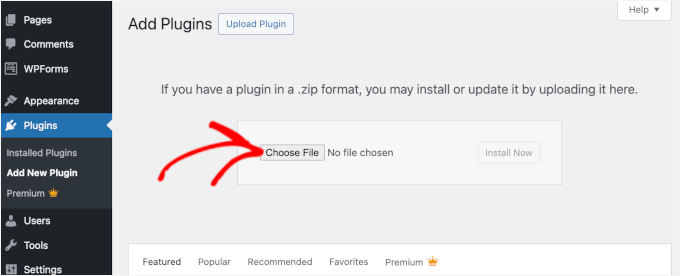
Don’t forget to click ‘Activate’ once installation finishes. If you need help, you can see our guide on how to install a WordPress plugin.
After that, let’s head over to SeedProd » Settings to verify your SeedProd license key. You can find this in your account on the SeedProd website.
Once entered, just click ‘Verify Key’ to confirm.
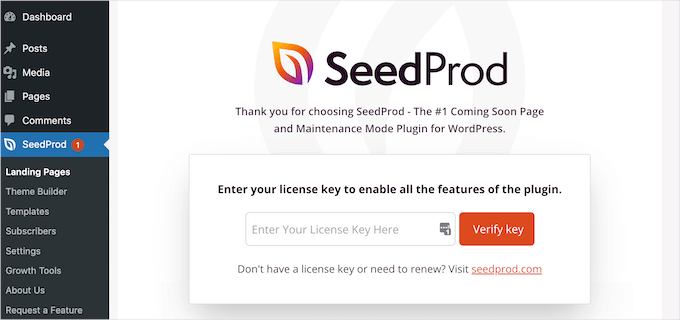
Now, you can go to SeedProd » Pages and click the ‘Add New Landing Page’ button to create a new page layout.
When you see the template page, just hover over the one you like, then click the checkmark to select it. But you can always choose the blank template if you prefer to start from scratch.
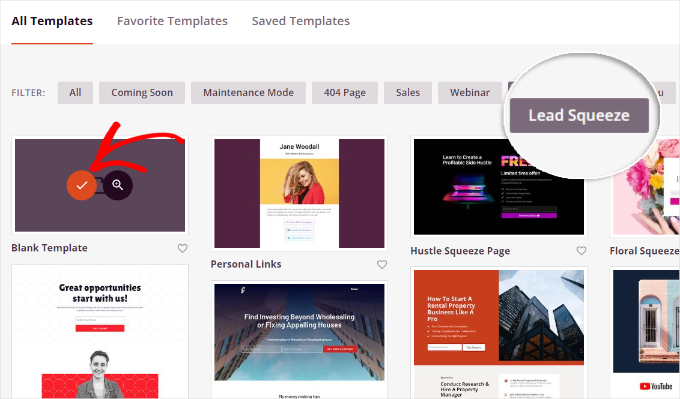
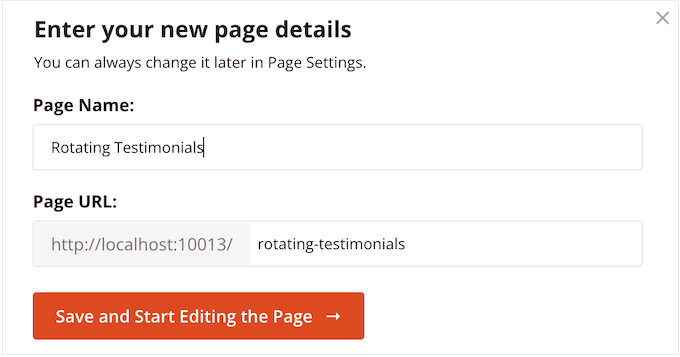
After that, you can give the page a name and a custom URL.
Click ‘Save and Start Editing the Page’ to enter SeedProd’s drag-and-drop editor.
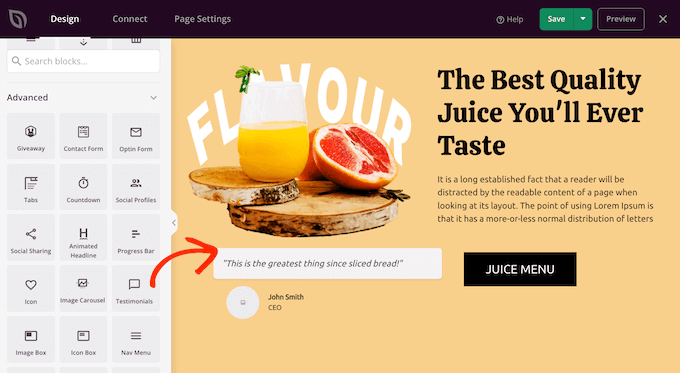
To add a testimonial section, simply drag the Testimonials block from the left-hand menu onto your page.
If you want to make the testimonials section rotate, then you’ll need to add more testimonials. Simply click ‘Add Testimonial’ and repeat the customization process for each one.
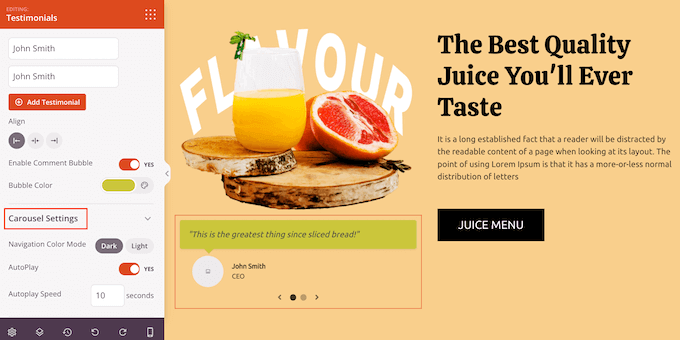
Once you’ve added a few testimonials, you can rotate them automatically.
To do this, you’ll need to click on ‘Carousel Settings’ to change the color scheme, slider speed, and whether the testimonials should scroll automatically.
For details, you can go to our guide on how to add rotating testimonials in WordPress.
Similarly, showcasing your qualifications, like a nutrition degree, helps establish credibility and trustworthiness. When potential clients see that you have the proper training and expertise, they’re more likely to trust your advice and services.
So, it’s important to add these credentials to your website. Some of the good placements to add this are on your About page, in a dedicated ‘Credential’ section, or even alongside your testimonials.
The good news is that you can easily create a section on the page to highlight your qualifications.
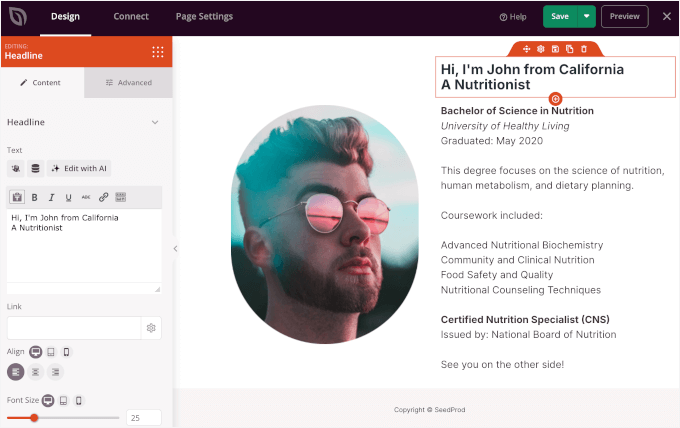
For a step-by-step guide, check the section on editing a page in our ultimate guide on how to edit a WordPress website.
Step 10. Allow Clients to Contact You
An online contact form is a must-have for any nutrition business website. It’s a simple yet powerful tool that allows clients and potential customers to reach out with inquiries, feedback, or service requests without any hassle.
By embedding a form on your site, you also make sure that customer communications are streamlined and stored in one place rather than scattered across email threads.
To set up an easy-to-use contact form, I recommend WPForms. It is the best drag-and-drop WordPress form builder that lets you create booking forms and nutrition surveys for your business without writing code.
We use WPForms on WPBeginner for our contact forms, annual surveys, and solution center submissions. To read more about our experience, see our complete WPForms review.
To get started, let’s sign up for a WPForms account. On the WPForms website, click ‘Get WPForms Now,’ select a plan, and follow the on-screen instructions to complete checkout.
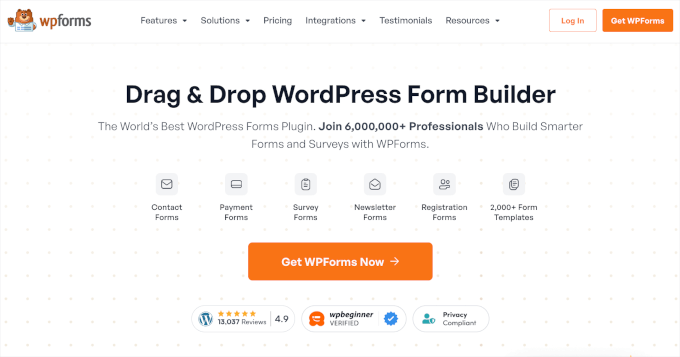
💡 Note: There’s also a free version of WPForms with a simple contact form template. But upgrading to WPForms Pro unlocks more advanced features like email marketing integrations, the ability to create conversational forms, and access to all add-ons.
After signing up for WPForms, you’ll get access to your WPForms account dashboard. This is where you can find your license key and download the plugin zip file.
Next, you can install and activate WPForms.
To do this, go to Plugins » Add New in your WordPress dashboard.
On the next screen, click ‘Upload Plugin’ at the top.
Then, click ‘Choose File,’ select the WPForms zip file from your computer, and click ‘Install Now.’
Once the installation is complete, make sure to click ‘Activate.’ If you need help, then you can go through our guide on how to install a WordPress plugin.
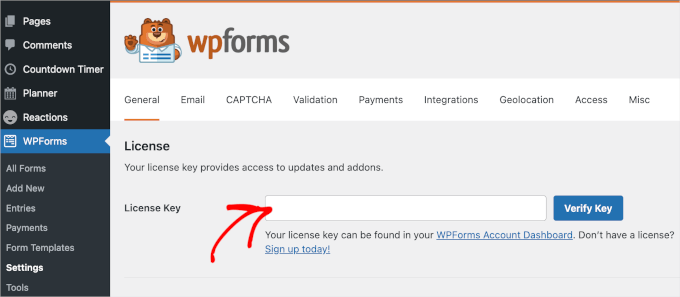
From here, let’s go to WPForms » Settings to verify your license key.
Simply paste your key into the respective field and click the ‘Verify Key’ button.
With that done, you’re ready to create your contact form.
To build your form, you can start by choosing from 2,000+ ready-made templates to collect the exact info you need. Once you’ve picked a template, WPForms will take you to its beginner-friendly drag-and-drop builder.
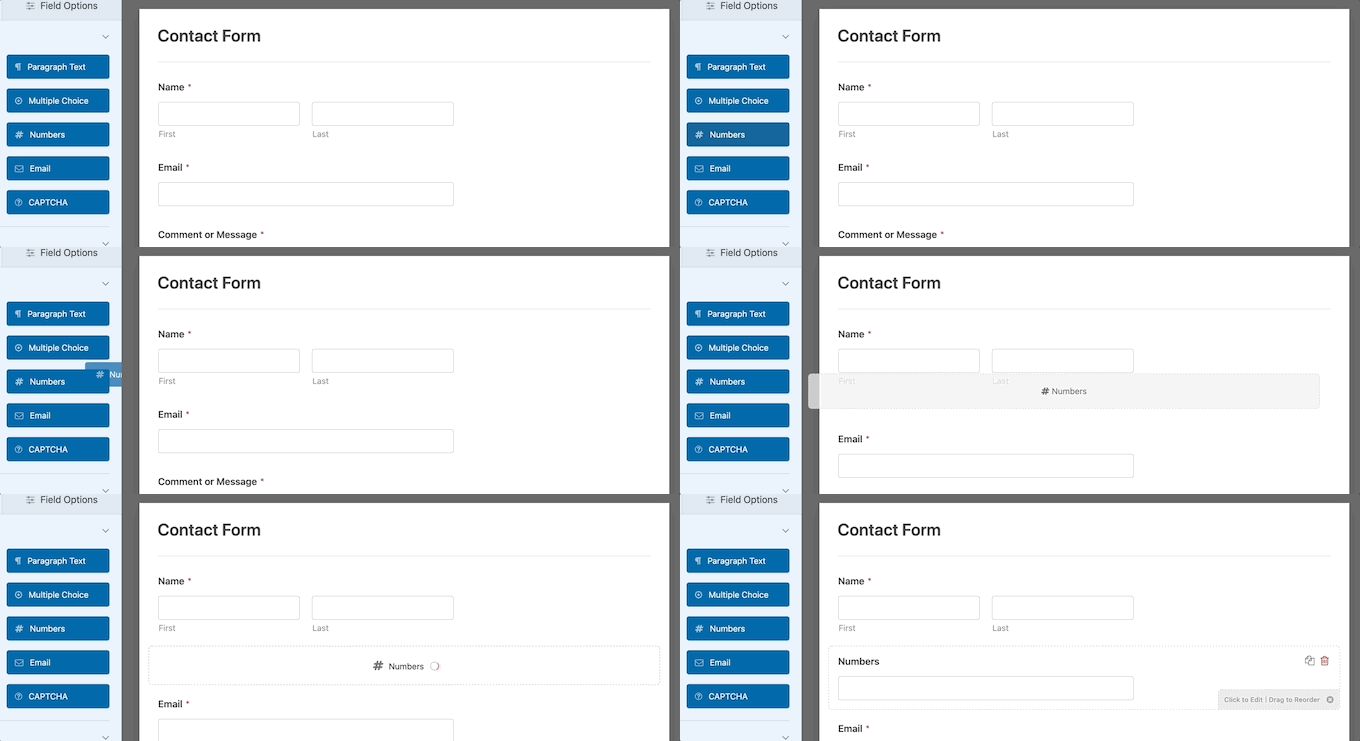
Or, if you’re not sure where to start, WPForms Pro also offers an AI-powered form builder that can generate a custom form for you in seconds. Just describe what you need, and it builds the form automatically.
You can then customize the form fields to gather the information you need, like names, email addresses, and maybe a space for messages or specific questions.
Please note that you want to make sure you are collecting enough information to provide meaningful responses, but keep the form short and sweet to reduce form abandonment.
🛑 Important: If you plan to ask for sensitive health information in your forms, make sure your storage methods comply with privacy laws like HIPAA.
You’ll also want to make sure to set up notifications, so you get alerts whenever someone fills out the form. This way, you can respond promptly and show your clients that you value their communication.
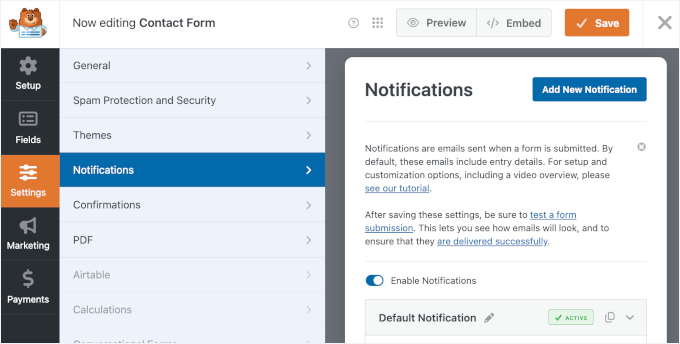
Once you are happy with your form, click the ‘Save’ button, and you’re ready to add the form to your website so clients can use it.
For more information, you can check out our guide on how to create a contact form in WordPress.
Providing a business phone number is another great way to allow potential clients to reach you easily and directly. It also separates professional and personal calls, keeping you organized.
With modern phone services like Nextiva, you can manage calls, voicemails, and even text messages from one platform.
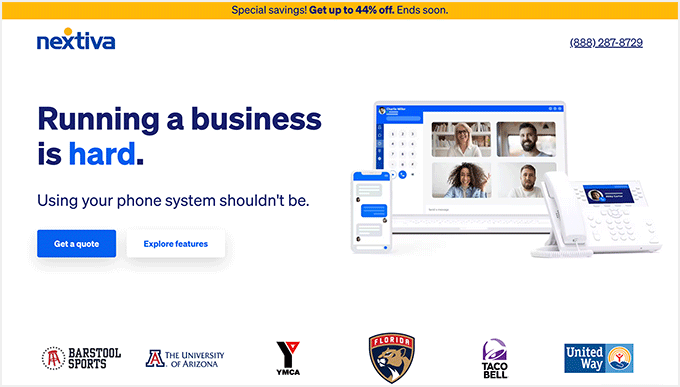
We use Nextiva at WPBeginner for our business phone service, and in our experience, it’s the best virtual business phone system for both features and pricing.
If you want more information, feel free to read our extensive Nextiva review.
Step 11. Adjust the Navigation Menu
Once you’ve added content to your nutrition website, you’ll want to set up a clear navigation menu to help visitors easily navigate your pages and posts.
No matter which theme you’re using, WordPress makes it simple to create menus and sub-menus for your site by going to Appearance » Menus.
A well-organized menu helps visitors find the information they’re looking for, whether it’s your services, blog posts, or contact details.
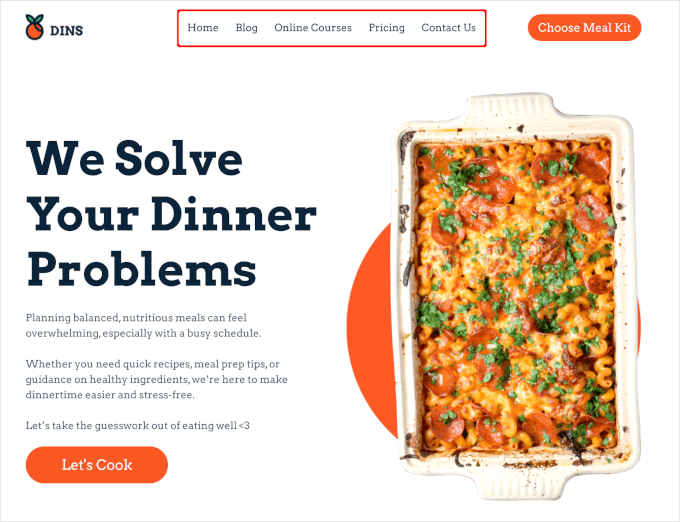
To keep your site easy to navigate, you’ll want to arrange your menu items in logical order.
For a complete walkthrough, you can check out our beginner’s guide on how to add a navigation menu in WordPress.
Bonus Tips: How to Grow Your New Nutrition Business Website
Starting your nutrition business website is just the first step. Growing it takes consistent effort, smart strategies, and the right tools. With the right approach, you can reach a bigger audience and build your brand.
Here are some tips to help you expand your reach and grow your business:
- ⚡ Monitor and Improve Site Speed: A fast website keeps visitors happy and helps SEO. Use tools like Google PageSpeed Insights to track your site’s performance and speed. A faster site can lead to better engagement and more conversions.
- 📨 Email Marketing: Building an email list is key for staying connected with your audience and turning leads into loyal clients. Send out email newsletters, updates, and helpful content to keep your subscribers engaged and coming back for more.
🌐 Optimize Your Site for SEO: To do this, you’ll need AIOSEO, the best SEO plugin for WordPress. It is the most comprehensive toolkit to improve your nutrition site’s search engine rankings. We use AIOSEO on WPBeginner for our own search engine optimization. To read more about our experience, see our complete AIOSEO review.
🧲 Use a Lead Generation Tool: If you offer consultation services online, then you should try OptinMonster. It is the best conversion optimization tool for turning your nutrition website traffic into paying clients. We use OptinMonster on WPBeginner for our popups, slide-ins, and header banners. To read more about our experience, see our complete OptinMonster review.
How to Start an Online Nutrition Business Website FAQs
You’ve now learned how to start your online nutrition business, but you might still have some questions. To help you out, we’ve put together answers to some of the most common FAQs.
How do you start an online nutrition consultation service?
To start an online nutrition consultation service, set up a simple WordPress site that highlights your services, qualifications, and experience. Plus, use tools for video calls, add an online booking system, and set up payment options so that clients can easily schedule and pay.
How much should I charge for a nutrition plan?
The price of a nutrition plan can vary based on your experience and what’s included in the plan. Most plans range from $50 to $300 or more. But you can double-check what other nutritionists are charging and find a rate that matches your value.
How do I market myself as a nutritionist?
Start by building your online presence with social media, sharing useful content, and writing a blog or email newsletter. To get your name out there, it’s also a good idea to team up with other health professionals, join health forums, and get involved in local communities.
How do I start a nutrition blog?
To build a nutrition blog, you’ll need to choose a niche you’re passionate about and know well, then pick a blogging platform. The next step is to start writing helpful blog posts and engaging with your readers through comments and social media.
Just make sure your posts are optimized for search engines for better results.
How do I get nutrition clients through my website?
You can use your website to attract clients by clearly listing your services, sharing helpful nutrition content, and adding strong calls to action like “Book a Consultation” or “Get a Custom Plan.”
Adding contact forms, online booking, and testimonials also makes it easier for visitors to trust you and reach out directly.
Next Steps to Grow Your Online Nutrition Business
That’s all there is to it! I hope this article has helped you start your online nutrition business website.
Next up, you might want to check out our guides on:
- How to Add a Forum in WordPress
- How to Create Your Own Private Community with WordPress
- How to Run Members-Only Events in WordPress
- How to Use a Video Membership Site to Grow an Email List
- Best WordPress LMS Plugins Compared
If you liked this article, then please subscribe to our YouTube Channel for WordPress video tutorials. You can also find us on Twitter and Facebook.


Have a question or suggestion? Please leave a comment to start the discussion.