


Etsy is a fantastic marketplace for selling creative and handmade products, but there’s a point where it can start to feel restrictive.
I’ve heard the same frustrations over and over again from Etsy store owners: high fees, limited customization, and the constant fear that Etsy could change its policies at any point.
So, what’s the solution? Building your own Etsy-like store with WordPress!
With WordPress, you can customize every detail of your shop, keep more of your profits, and build a successful brand on your own terms.
In this guide, I’ll cover two approaches. I’ll show you how to set up a brand new, Etsy-like shop with WordPress, and how to migrate an existing Etsy store to WordPress (so you don’t lose all the work you’ve already put into your online business).
I’m covering a lot of ground in this article, so use the quick links below to jump to the section you want to learn more about first:
- Etsy vs WordPress – Which One Is Better?
- How to Create an Etsy-Like Store with WordPress
- What You Need Before Creating Your Store
- Step 1: Get Web Hosting
- Step 2: Install WordPress and WooCommerce on Your Web Hosting
- Step 3: Choosing an Etsy-like WordPress Theme for Your Store
- Step 4: Start Building Fresh or Migrate Your Etsy Shop
- Step 5: Finalize Your WooCommerce Setup
- Bonus Tools to Boost Sales and Keep Your Store Secure
- Frequently Asked Questions About Building an Etsy-Like WordPress Store
- Additional Resources: Keep Learning
Etsy vs WordPress – Which One Is Better?
Etsy is an online marketplace for creative folks. People often use Etsy to sell handmade goods, personalized designs, jewellery, and clothing. It has become a specialized place for these kinds of products.
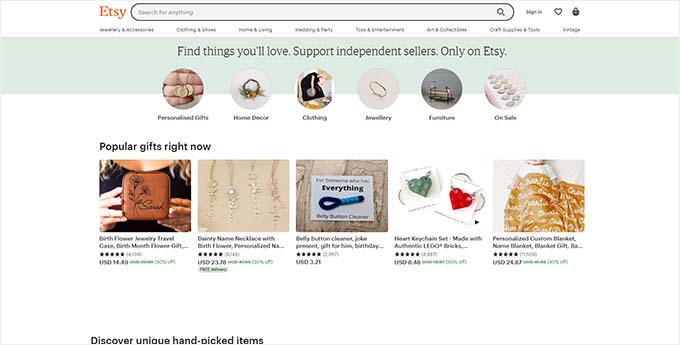
Etsy is a fantastic platform for getting your shop off the ground quickly. It’s easy to use, has built-in traffic, and a large, established customer base.
However, as your business grows, you might find that Etsy doesn’t give you the flexibility and control you need.
By contrast, WordPress is the world’s most popular website builder. It lets you create almost any kind of website imaginable, including full-fledged eCommerce stores if you use a plugin like WooCommerce.
With WordPress, you’re not limited by platform restrictions, and you have the freedom to build a unique brand identity. While it takes a little more effort to set up, WordPress is the Etsy alternative with the most long-term benefits for sellers.
To help you decide which platform is right for you, here’s a quick side-by-side comparison of WordPress vs. Etsy:
| Etsy | WordPress (with WooCommerce) | |
|---|---|---|
| Ease of Use | Very easy, quick setup | Moderate, requires some upfront effort |
| Control | Limited, with lots of platform restrictions | Complete freedom |
| Branding | Limited customization options | Complete control over your brand |
| Fees | Listing, transaction, and payment processing fees | Hosting and domain costs, plus potential theme and plugin fees |
| Marketing | Limited integrated marketing tools, such as Etsy ads | Full control over your SEO and marketing |
| Customers | Built-in audience of existing Etsy users | Need to find and build your own audience |
| SEO | Limited SEO control | Complete SEO freedom |
Essentially, I recommend:
- Etsy if you’re starting from scratch and want a simple, easy-to-use platform.
- WordPress if you want total control over your branding, marketing, and the customer experience. Although there’s a bigger learning curve compared to Etsy, WordPress is a great option if you’re serious about growing an online business in the long term.
Have you made your decision? Keep reading if you want to build your store with WordPress.
How to Create an Etsy-Like Store with WordPress
Now, I’m going to show you exactly how to build an Etsy-like store with WordPress.
Keep in mind that I’ll be covering how to do this completely from scratch, but I’ll also show you how to migrate a pre-existing store from Etsy.
The first few steps are identical, so don’t worry about that just yet. I’ll let you know when the process goes in different directions.
But first, here’s a quick preview of what you’ll need to move forward.
What You Need Before Creating Your Store
Before you can start building your new store, you’ll need to complete a few essential steps first.
These steps are required no matter whether you’re starting from scratch or migrating from an existing Etsy store:
- A domain name. You’ll want to choose a name that’s memorable, easy to spell, and reflects your brand. I also recommend checking if the name is available on social media platforms. Securing a consistent brand name across the web will save you a lot of time later on.
- A website hosting account. This is where your shop’s files will be stored. A reliable hosting provider can ensure your site is always online and accessible to customers.
- SSL Certificate. This creates a secure connection between your shop and your customers, protecting sensitive information like payment details. It’s essential for building trust and accepting payments on your website.
- WooCommerce. This is a free eCommerce plugin that you can use to sell unlimited physical and digital products online. It essentially adds all the eCommerce features that WordPress doesn’t include by default.
Not sure where to start? I recommend SiteGround for WooCommerce:
They’re a reliable and affordable hosting provider, officially recommended by WooCommerce itself. They’ve consistently impressed us with their fast performance and excellent customer support.
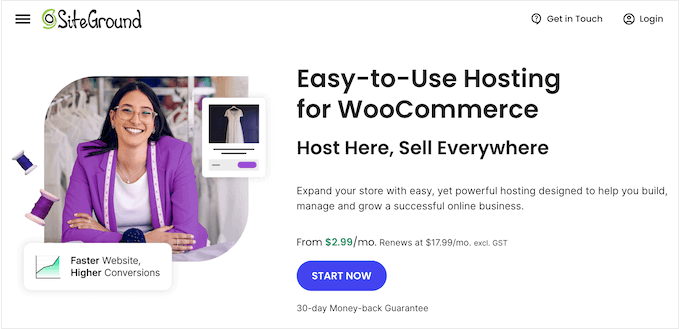
⭐ We actually host WPBeginner and several of our partner sites on SiteGround. To learn more about our experiences with this popular hosting platform, check out our SiteGround review.
SiteGround offers everything you need to build your online store. You get a free SSL, professional email, and a free domain registration for the first year.
You also get daily backups, which are critical for an online store because if something goes wrong, you won’t lose important customer and order data.
Additionally, SiteGround includes a free Content Delivery Network (CDN) to speed up your site, ensuring a smooth and fast shopping experience for your customers.
For more options, see our pick of the best WooCommerce hosting.
Step 1: Get Web Hosting
The first step is to buy hosting for your WooCommerce store. Once again, you must complete all these steps, whether you’re migrating from Etsy or setting up a brand-new store.
To get started, you can visit the SiteGround website and click the ‘Start Now’ button.
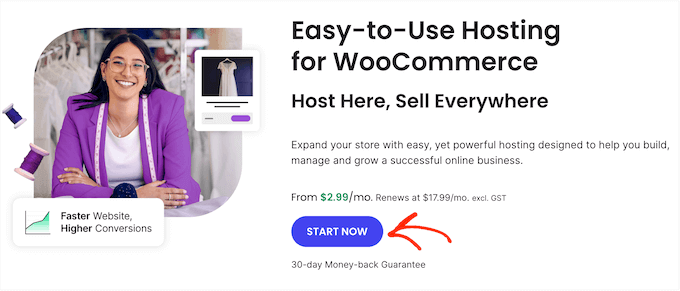
This takes you to the pricing page, where you can choose a hosting plan.
Don’t worry about picking the perfect plan right now. SiteGround’s StartUp plan comes with an SSL certificate and WooCommerce already installed.
It’s a great place to start, and you can always upgrade later if your store gets lots of visitors.
In my experience, it’s much better to start small and scale up as your business grows than to overspend on features you don’t need yet.
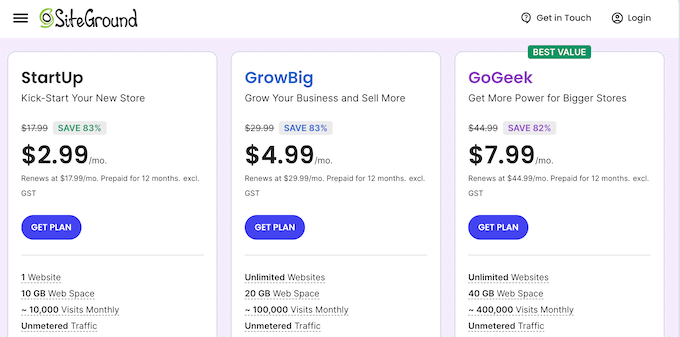
After choosing a plan, go ahead and click ‘Get Plan.’
Next, it’s time to choose a domain name for your Etsy-like store.
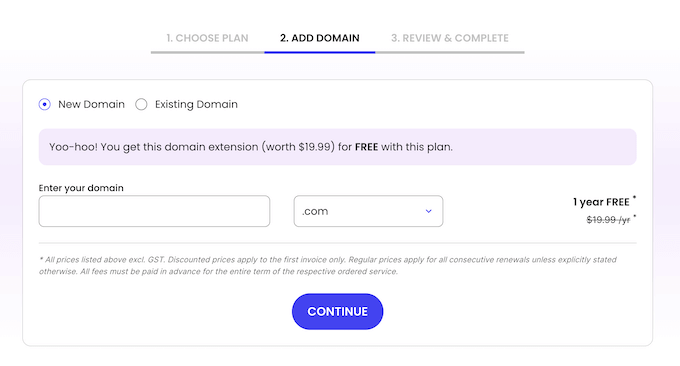
A strong domain name is essential for helping shoppers find your site without any confusion.
💡 Need help choosing a domain name? Then check out our guide on how to choose the perfect domain name for your website.
When choosing a domain name, pay attention to how much this domain will cost you after the first year. You’ll need to factor this amount into your budget.
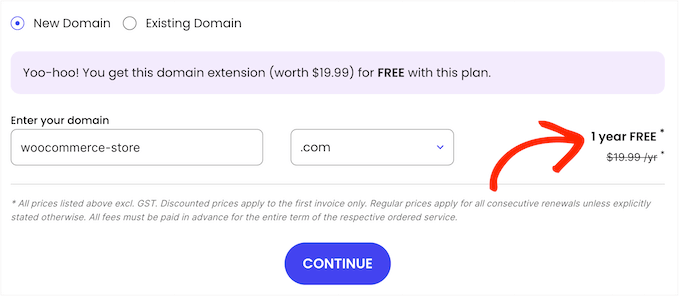
After choosing a domain name, go ahead and click the ‘Continue’ button.
SiteGround will now ask for your account information, such as your name and email address.
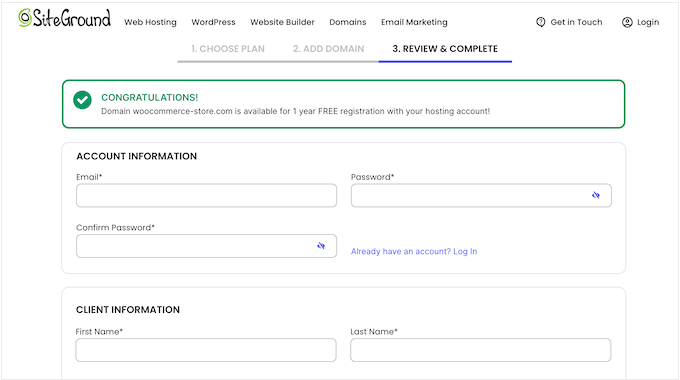
After adding this information, scroll to the ‘Extra Services’ section and make sure ‘Domain Registration’ is selected.
If it isn’t, then you’ll need to select it.
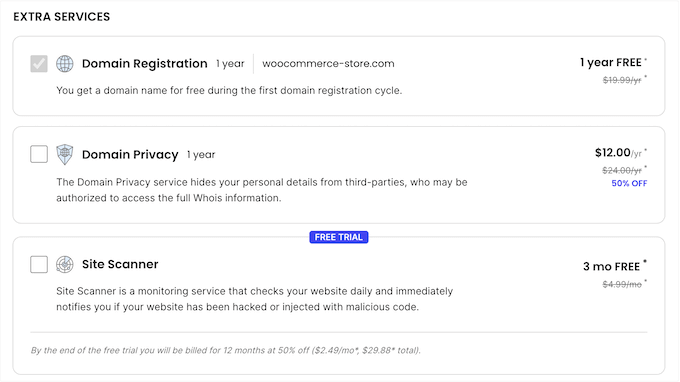
You’ll also get a chance to buy some optional extras. My advice is to skip these for now. You can always add more features later if you need them.
After entering your payment details and purchasing your hosting, you’ll get an email with instructions on how to log into Site Tools, which is your web hosting control panel.
This is the dashboard where you can manage your site, including setting up email notifications and asking for WordPress support.
Step 2: Install WordPress and WooCommerce on Your Web Hosting
When you sign up with SiteGround using our link, it’s easy to install WordPress and WooCommerce on your site.
Simply log in to the Site Tools dashboard with the username and password you created when signing up for SiteGround.
Here, select ‘WordPress’ then ‘Install and Manage’ from the left-hand menu.
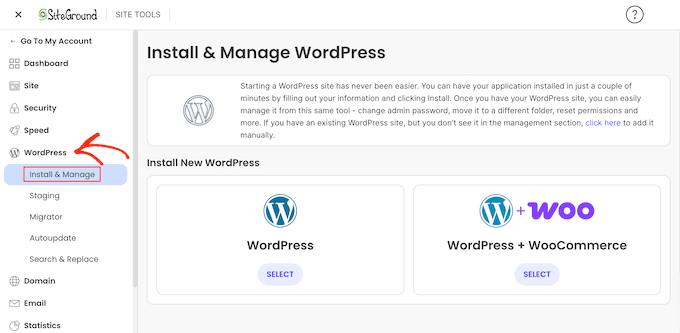
On this screen, find the ‘WordPress + Woo’ section.
In this section, click ‘Select.’
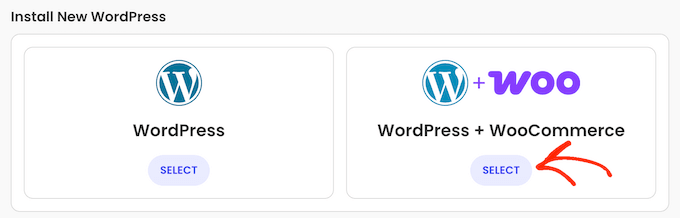
You’ll now see some extra fields that you can configure, such as selecting the domain where you want to install WordPress and WooCommerce.
You’ll also need to enter the username, password, and email address you want to use to manage your new store.

When you’re happy with the information you’ve entered, click the ‘Install’ button. In a few minutes, your new store will be ready to go.
You can now log into the WordPress dashboard by heading to yoursite.com/wp-admin/ directly in your web browser.
💡 It’s a good idea to bookmark yoursite.com/wp-admin/ in your browser. Trust me, you’ll be visiting this page a lot!
Are you using a different WordPress website host, such as Bluehost, Hostinger, or HostGator? See our complete guide on how to install WordPress, which covers all the top hosting providers.
Depending on your choice of hosting provider, you may need to install and set up WooCommerce manually. For a detailed step-by-step walkthrough, see our guide on WooCommerce made simple.
You’re now ready to start building your Etsy-style store.
Step 3: Choosing an Etsy-like WordPress Theme for Your Store
Unlike Etsy, WooCommerce gives you full control over your store’s appearance. This is essential for establishing your own brand and making a strong first impression with shoppers.
Your website’s look and feel are determined by its WordPress theme.
By default, every WordPress site starts with a basic theme. If you visit your new site, it will look something like this:
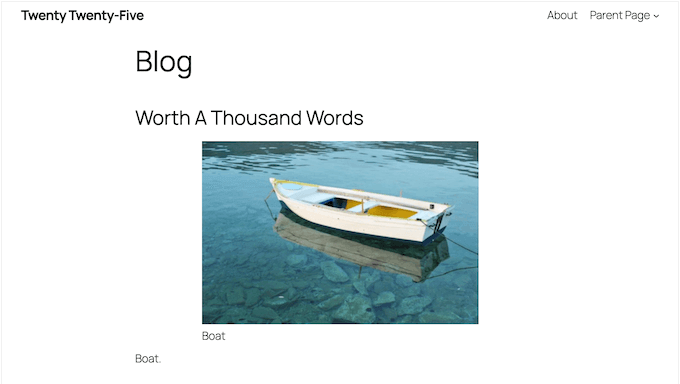
This is pretty basic, so you’ll typically want to replace it with a theme that better suits your brand and your goals for the store.
The good news is that there are thousands of free and premium themes to choose from. For example, you can install any of the popular WordPress themes and customize them according to your preferences.

When selecting a theme for your online store, you’ll want something that captures the essence of your brand and the products you sell.
That might be cozy handmade crafts, bold personalized gifts, vintage-inspired jewelry, or anything in between.
With so many themes to choose from, it’s easy to feel overwhelmed.
To make things easier, we’ve hand-picked the best WooCommerce WordPress themes that you can use on your store.
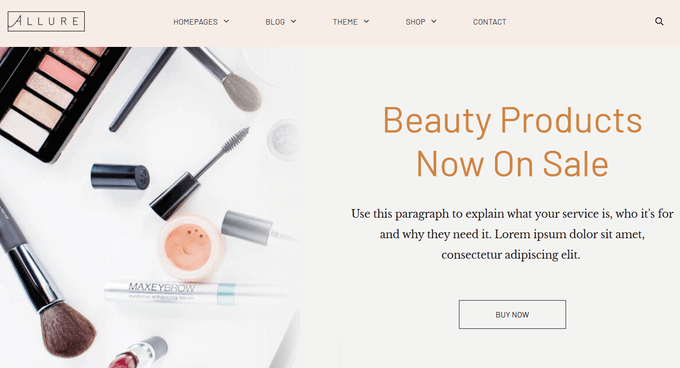
The list contains both free and paid WordPress themes.
Every theme on the list is also mobile-friendly. This is incredibly important, as our eCommerce statistics show that 76% of shoppers have made a purchase from their mobile phone. You don’t want to miss out on all those sales.
I can’t guarantee you’ll find a theme that looks exactly like the Etsy website. However, you should be able to find a theme that looks similar. Plus, you can customize your chosen theme to more closely resemble your creative vision.
Most of this customization happens in the WordPress theme customizer, which lets you change colors, fonts, layouts, and more with a live preview.
For a complete walkthrough, see our guide on how to use the WordPress theme customizer.
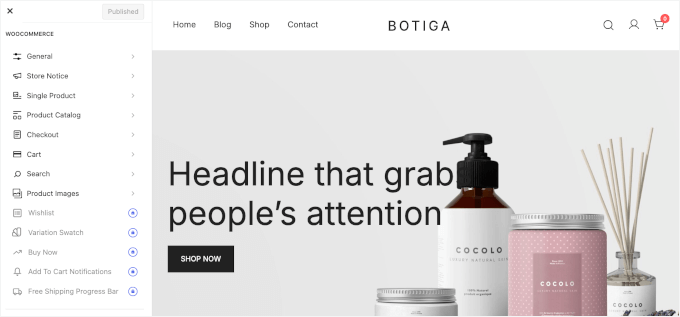
Or, if you end up using a block theme, you’ll need to learn how to use the full site editor.
And don’t worry if you’re not tech-savvy – installing a theme is super easy! Just follow our step-by-step guide, and your store will look great in minutes.
⭐ Need more guidance? Then see our beginner’s guide on how to choose the perfect WordPress theme for your website.
Another option for designing your store is using a website and landing page builder like SeedProd.
SeedProd is a powerful drag-and-drop builder that’s incredibly popular and easy to use.
We’ve used it to build most of our partner websites, including Duplicator, WPForms, and WP Charitable.

With SeedProd, you can create stunning landing pages, homepages, and even entire websites.
It also comes with ready-made templates designed specifically for WooCommerce stores.
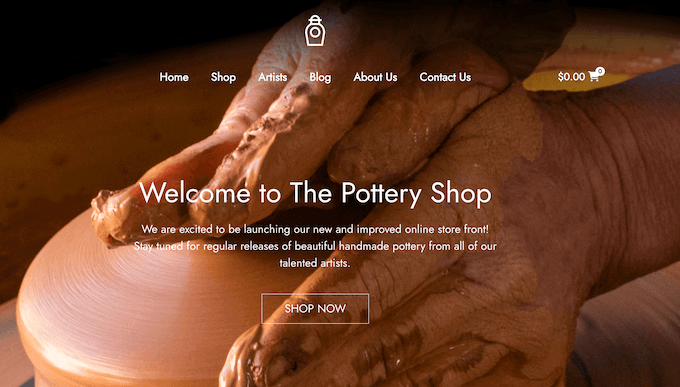
Alternatively, SeedProd has an AI builder that can create a custom website in just a few seconds. For details on how to use it, just see our guide on how to make a WordPress website using AI.
Step 4: Start Building Fresh or Migrate Your Etsy Shop
🚨 Important Note: Choose Your Path ❗
The next steps will vary depending on whether you’re setting up a brand new store or migrating an existing one from Etsy.
Keep reading if you’re starting a new store, or jump to Method 2 if you need to migrate your Etsy store.
Method 1: Start Fresh with WordPress + WooCommerce
If you’re starting from scratch, then you can start adding items to your online store right away.
To add your first item in WooCommerce, navigate to your WordPress dashboard, then go to Products » Add New.
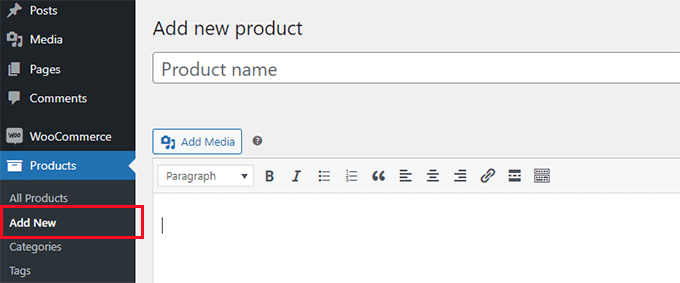
You’ll start by adding a title and a detailed product description.
Then, in the right-hand column, you can add product categories, tags, and images. I recommend uploading high-resolution photos so customers can get a clear look at what they’re buying.
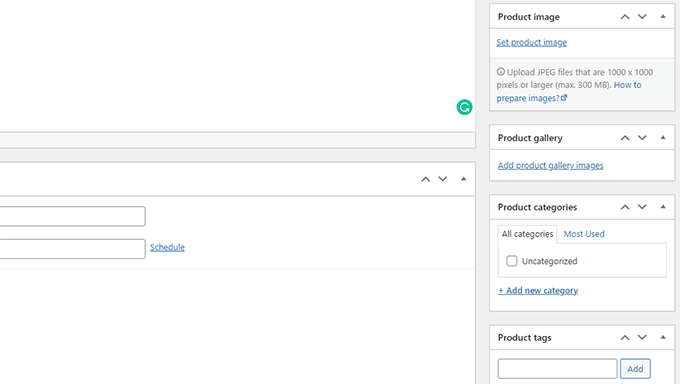
Below the description area, you’ll see the ‘Product Data’ box.
From here, you can set product price, inventory, shipping, and other attributes.
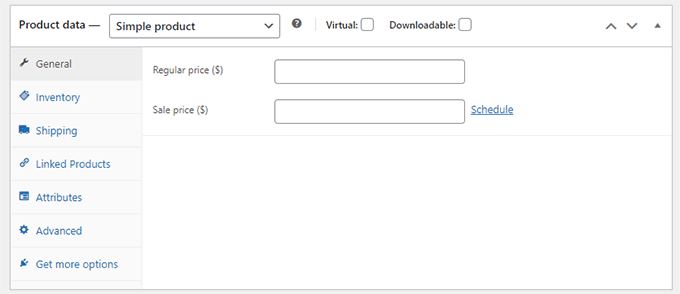
Don’t worry about getting everything perfect on the first try, since you can always edit your products later.
Once you’re happy with all the product information you’ve entered, you can click the ‘Publish’ button to make the product live on your website.
Just repeat this process for all the products you want to add.
For more details, see our WooCommerce tutorial.
Method 2: Import Your Existing Etsy Shop
Do you already have an Etsy store and want to move it to WordPress? Many users find themselves in this situation, looking for more control and flexibility over their online shop.
In this section, I’ll show you how to easily import your existing Etsy shop data directly into your new WordPress website. This will save you a lot of time and effort, so you can get your new store up and running quickly.
To do this, you can simply export your Etsy listing data as a CSV file. You can then upload that file to WooCommerce. However, this method has a few limitations you need to know about:
Missing Digital Products
Any digital products you export from Etsy will appear as physical products in WooCommerce. It’s a common issue, but it’s easy to fix.
After importing your products, you’ll need to go into your WooCommerce dashboard and mark each product as either ‘Virtual’ or ‘Downloadable.’ I’ll cover this in more detail later in this article, but it’s something to keep in mind.
Missing Product Images
When an Etsy product has multiple images, none of those images get imported. This happens because WooCommerce expects all image URLs to be in a single column. However, Etsy puts each image URL in its own separate column.
Don’t worry, there’s a simple workaround for this.
After you export your CSV file from Etsy, you’ll need to open the file in a spreadsheet program like Google Sheets or Microsoft Excel. Then, look for a column that contains all the links for your product images.
You can then combine all the image URLs into the same cell, separated by commas. This ensures WooCommerce sees all the images associated with that product.
Don’t forget to delete any empty columns when you’re finished.
⭐ Pro Tip: Before you start the import process, it’s smart to back up your WordPress site. You never know when something might go wrong, and it’s better to be safe than sorry.
If you’re happy to go ahead, then the first step is exporting your product listings from Etsy. Head over to your Etsy store and sign in to your account, if you’re not already.
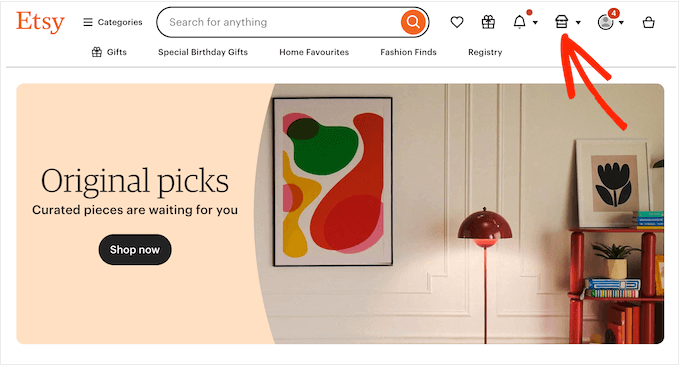
In the toolbar, click the Shop Manager icon.
In the left-hand menu, select ‘Settings.’
Then, choose the ‘Download Data’ tab.
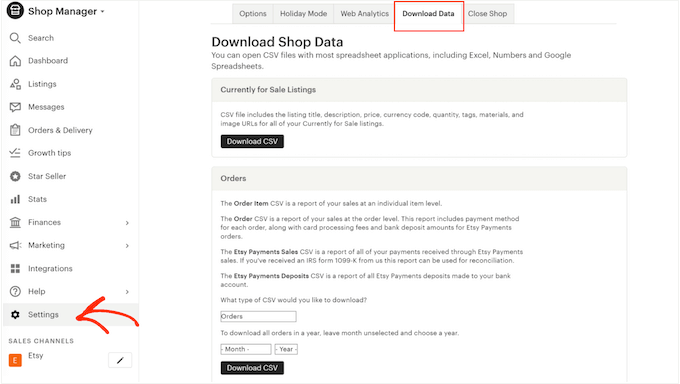
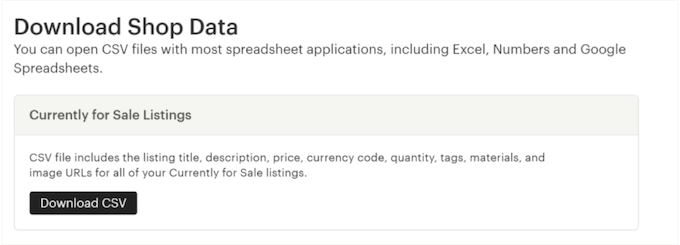
Under ‘Currently for Sale Listings,’ select ‘Download CSV.’
Etsy will now create a CSV file containing each product’s title, description, price, currency code, and other important details.
After exporting your CSV file from Etsy, I recommend opening it to make sure everything is formatted correctly.
As I mentioned earlier, if a product has multiple images, then be sure to combine all those image URLs into a single column. Also, make sure to separate each URL with a comma.
This simple step will ensure all your product images get imported correctly into WooCommerce.
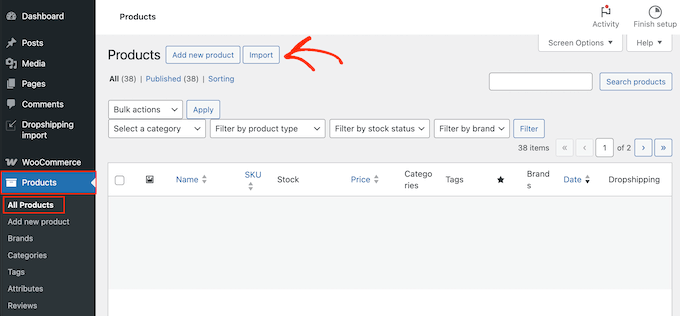
When you’re happy with how the file is set up, go to Products » All Products in your WordPress dashboard.
Here, click the ‘Import’ button.
Next, click ‘Choose File’ and select the CSV file you exported from Etsy.
After that, click on ‘Continue.’
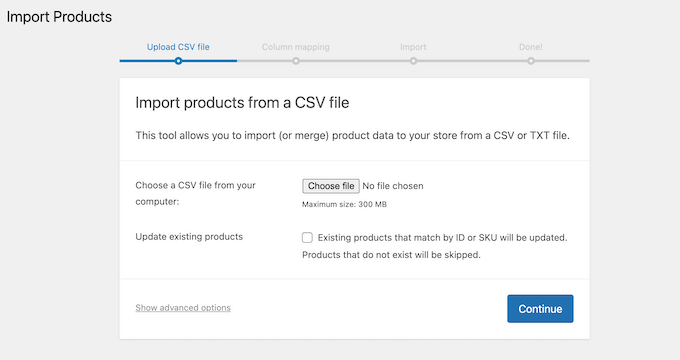
First, WooCommerce will quickly check your file to make sure it’s in a compatible format.
After that, you’ll be taken to the ‘Column mapping’ screen. Here, you’ll need to match the data from your CSV file to the product fields in WooCommerce.
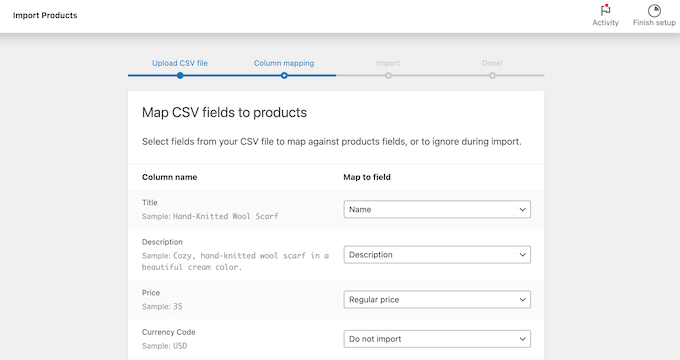
Since you reviewed the CSV file beforehand, this mapping process should go smoothly. However, it’s still important to check each mapping carefully.
A small mistake here can cause all sorts of problems, so I always double-check everything before moving on.
If you find an issue with a column’s mapping, it’s easy to fix. Just open the dropdown menu for that field and select a different value from the list.
When you’re ready, click on ‘Run the importer.’
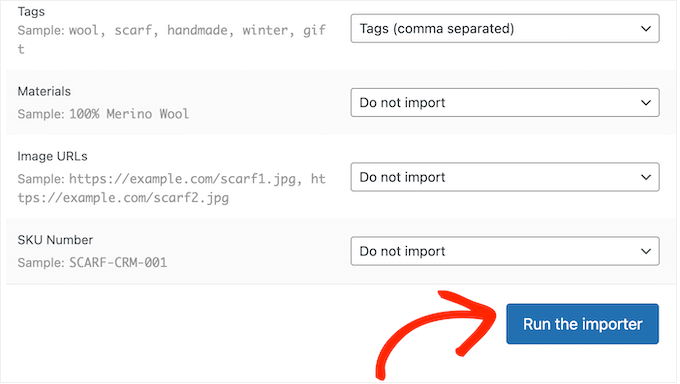
WooCommerce will now run the importer for you.
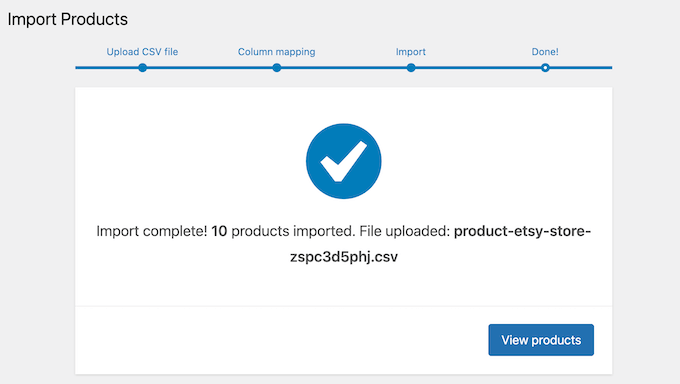
Once it’s finished, it’s a good idea to quickly review these newly imported products. To do this, click the ‘View Products’ button.
This takes you to the Products » All Products screen, where you can see all your imported products.
To make changes to any item, click on its ‘Edit’ button.
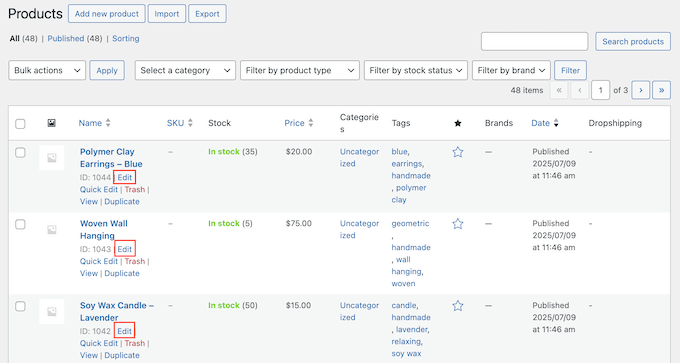
This will open the product for editing.
As I mentioned before, WooCommerce will import your digital products as physical items by default.
To fix this, just open the product for editing and scroll down to the ‘Product data’ box. Here, check the box next to either ‘Virtual’ or ‘Downloadable.’
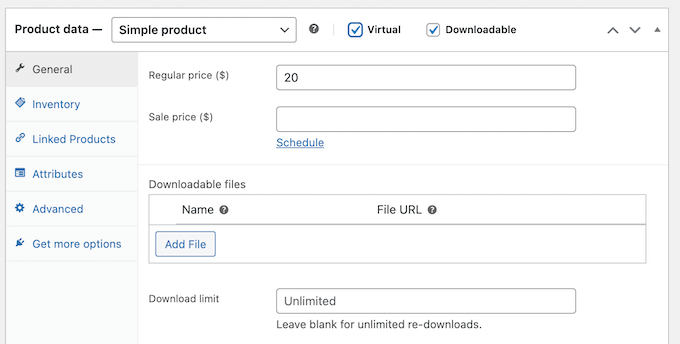
These two product types are similar, but there are a few key differences:
- A virtual product is anything that doesn’t need to be shipped, such as a custom logo design service or a ticket to an online workshop.
- A downloadable product is a specific file that the customer gets after purchase. For example, an eBook, a digital art print, or a PDF sewing pattern are all downloadable products.
Here’s the important part: a product can be both virtual and downloadable. A downloadable PDF pattern is also a virtual product because you don’t need to ship it to the customer.
Step 5: Finalize Your WooCommerce Setup
When you’re finished adding all your products to your new online store, the most time-consuming part is finished. But you’ll still need to manage some additional details.
You’ll need to set up things like payment gateways, sales tax, and more.
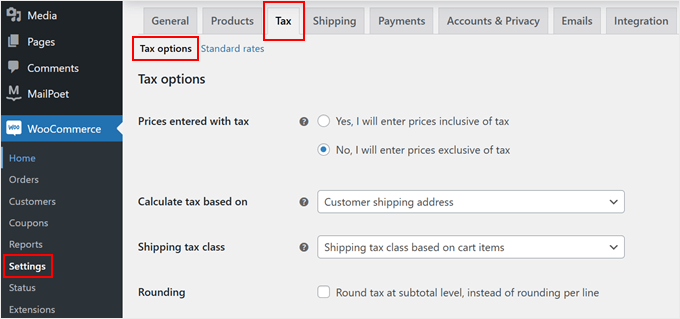
These final steps vary a lot from store to store, but you can get detailed instructions on completing them in our step-by-step WooCommerce tutorial.
Bonus Tools to Boost Sales and Keep Your Store Secure
I love that WordPress gives me complete control over my online store. This means I can customize it exactly how I want with the help of thousands of powerful WordPress plugins.
Think of plugins as apps for your WordPress website. I use them to add new features to my site, like contact forms, Google Analytics, and so much more.
With over 60,000 plugins in the official WordPress.org repository alone, you can find a plugin for almost anything.
However, with so many options, choosing the right plugins for your store can feel overwhelming. To help you out, here’s my list of the top plugins every online store needs.
Growth – Attracting Customers and Increasing Sales
Launching my online store was just the first step. To attract customers and get sales, I’ve found it’s essential to focus on marketing and optimization.
That said, here are my top plugins for setting your store up for success:
- WPForms Lite: I use this beginner-friendly plugin to add contact forms to my WordPress site. It makes it super simple for customers to reach out to me with questions or issues.
- All in One SEO Lite: This is my go-to plugin for improving my WordPress SEO and getting more visitors from search engines like Google.
- MonsterInsights (Free): I use this to track all my important visitor stats with Google Analytics. It gives me valuable insights into my store’s performance and shopper behavior.
- OptinMonster Lite: I rely on this plugin to create engaging popups that boost sales and increase customer engagement. It’s also my favorite way to build an email list full of loyal subscribers.
- FunnelKit: Finally, this plugin lets me easily create sales funnels, add upsells to my shopping cart, and automate my marketing efforts to drive more sales and revenue
Security – Protecting Your Shoppers and Data
Online stores handle sensitive information, such as customer payment details, which makes them a prime target for hackers. Protecting your site is a non-negotiable when it comes to building trust with your audience.
Thankfully, I’ve found plenty of plugins that can dramatically improve site security, giving your customers the confidence they need to shop safely.
- Sucuri: I use this plugin to protect my website from malware, hacking, and brute force attacks, ensuring a safe and secure online shopping experience for my customers.
- MalCare: This plugin scans for malware and offers hack protection on my website, adding even more security for me and my audience’s data.
- Duplicator: I never launch a site without this free WordPress backup plugin.
There are also tons of plugins made specifically for WooCommerce.
You can see our list of the best free WooCommerce plugins to find useful tools for your store.
Frequently Asked Questions About Building an Etsy-Like WordPress Store
I know that setting up an Etsy-like store can feel a little overwhelming. You probably have a ton of questions about technical requirements, costs, and how to get started.
That’s why I’ve put together this FAQ section.
My goal is to give you clear, straightforward answers to the most common questions I hear from other store owners like you. Let’s dive in and get your questions answered!
Do I need coding skills to run a WordPress store?
No, you don’t! WordPress is designed to be user-friendly, even for beginners.
While knowing how to code can give you some extra customization options, it’s not required. With WordPress, I’ve found that you can create a beautiful, fully functional online store using themes, plugins, and drag-and-drop builders, all without touching a single line of code.
In fact, I started my first WordPress site with zero coding knowledge. With a little patience and the right tutorials, anyone can do it.
What happens to my Etsy reviews if I move to WordPress?
Unfortunately, you can’t directly transfer your reviews from Etsy to your new WordPress store. They will remain on the Etsy platform.
However, there are a couple of things you can do. I always recommend encouraging your Etsy customers to leave new reviews on your WordPress site. For example, you might offer them a discount on their next purchase if they post a review.
You can also showcase some of your best Etsy reviews on your new site as testimonials. It’s a great way to build trust with new visitors.
Which payment gateways can I use with WooCommerce?
WooCommerce is that it supports a huge range of payment gateways. The best choice for you will depend on your location, business needs, and customer preferences. However, some of the most reliable options I’ve used are Stripe, PayPal, Authorize.net, and Square.
How much does it really cost to run a WordPress store compared to Etsy?
The cost of running a WordPress store can vary a lot, but here’s a general breakdown of what you can expect to pay annually:
- Hosting: $35 – $360+
- Domain: $0 – $20
- Theme: $0 – $100+ (one-time)
- Plugins: $0 – $200+
Many payment gateways, like Stripe or PayPal, also still charge a transaction fee, which is typically around 2.9% + $0.30 per transaction. However, with WordPress, you’re free to choose the payment gateway that offers the best rates for your business.
By comparison, Etsy’s fees are primarily transaction and listing fees. Generally, you’ll be charged a transaction fee of 6.5% of the total price, including shipping and gift wrapping. Etsy also charges a $0.20 listing fee per item.
Those fees can quickly add up.
Can I keep selling on Etsy and WordPress at the same time?
Yes! There’s no rule that says you have to shut down your Etsy store.
In my experience, selling on both platforms is a great way to diversify your income streams. Just remember that managing two shops at once will require more time and effort on your part. For details, see our guide on how to add your Etsy store in WordPress.
The most important thing I’ve found is to keep your inventory synced between both platforms. If you don’t, you run the risk of overselling. This is a headache you definitely want to avoid.
To make this easier, you can use third-party services or plugins designed to automatically sync inventory between these two platforms, such as Etsy Integration For WooCommerce.
How do I choose the best theme for an Etsy-style store?
I recommend looking for a theme that has a clean design and a customizable layout, so you can update it to reflect your brand. You should also choose a theme that’s mobile-responsive and optimized for sales.
For more advice, check out my guide on how to select a WordPress theme. Alternatively, you can see my top pick of the best WooCommerce themes for specific recommendations.
Additional Resources: Keep Learning
If you’ve followed along, your Etsy-style store should now be live and ready for business.
To get the best results from your new store, it’s important to keep learning and building on your WordPress knowledge.
With that in mind, here are some useful free resources I personally recommend checking out on WPBeginner:
- WooCommerce SEO Made Easy. Want to improve your store’s search engine rankings? This ultimate guide shows you how to get more organic traffic and reach a wider audience.
- Best WooCommerce Plugins for Your Store (Most are FREE). I always refer to this guide when I want to add new features to my store to improve performance and boost my conversion rates.
- How to Setup WooCommerce Conversion Tracking. Want to know exactly how your store is performing? Learn how to track key metrics like sales, revenue, customer behavior, and conversion rates so you can optimize your store for success.
- How to Customize WooCommerce Checkout Page (The Easy Way). Find out how to optimize your checkout process to create a smooth, easy experience for your customers.
- Best WooCommerce CRM to Grow Your Store. I’ve found that using a good customer relationship management (CRM) system is crucial for improving customer service, increasing sales, and getting a better understanding of my audience.
I also have a little tip for you. You can use Google to find tutorials on our site. Just add ‘wpbeginner’ next to your search term, and you’ll find answers to all your WordPress questions.
I hope this article helped you move away from Etsy and create an Etsy-like store with WordPress. You may also want to see our expert pick of the best WooCommerce reporting and analytics plugins, or our tutorial on how to edit WooCommerce pages.
If you liked this article, then please subscribe to our YouTube Channel for WordPress video tutorials. You can also find us on Twitter and Facebook.


SaifZiya
Thanks for this ultimate guide. I believe it’s going to be helpful for me if I make up my mind towards creating an online store.