


You might have a packed event schedule on Facebook, but visitors on your WordPress site won’t know that unless you display those events directly on your pages.
A Facebook events feed solves this problem by pulling events directly from your Facebook Page and displaying them on your website automatically.
This guide walks you through the whole setup, from creating the required Facebook app to customizing your finished calendar.
You can use these quick links to navigate through the steps:
Step 1: Add a Facebook Event Plugin in WordPress
To display Facebook events in WordPress, you’ll need the Smash Balloon Facebook Feed plugin. This plugin lets you display your Facebook posts, photos, videos and albums directly on your WordPress website.
There’s also a free Smash Balloon Social Post Feed plugin that you can download from the official WordPress repository. However, you’ll need to upgrade to the Elite license ($149/year) to display Facebook events.
Once you have your license, you can install and activate the plugin. Our guide on how to install a WordPress plugin walks you through the process, step-by-step.
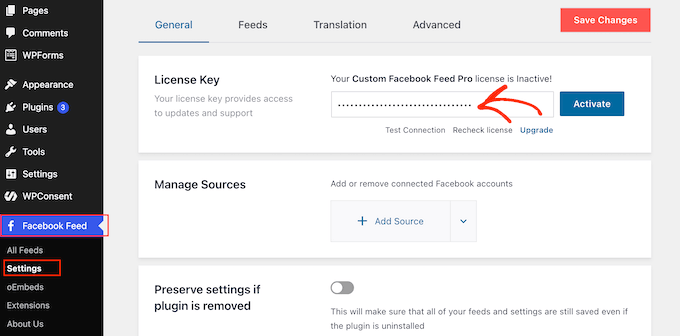
After activation, go to Facebook Feed » Settings, paste your key into the License Key field, and click Activate.
Step 2: Connect Facebook to WordPress and Create an Events Access Token
Facebook treats Page events as restricted data, so Smash Balloon can’t pull them automatically like standard posts. Instead, you’ll need to create a simple Facebook app, generate an access token, and add that token to the plugin.
Before you begin, make sure your personal Facebook account has admin access to the Facebook Page where your events are hosted. If you aren’t an admin, the setup will finish without showing an error, but your calendar will remain completely blank.
Register as a Meta Developer
To begin, go to the Meta for Developers site and click ‘Log In’ in the top right corner. You’ll need to sign in with the personal Facebook profile that manages your Page, because Facebook only lets individuals register as developers, not businesses.
If this is your first visit, then click on ‘Create New Account’ and follow the onscreen prompts.
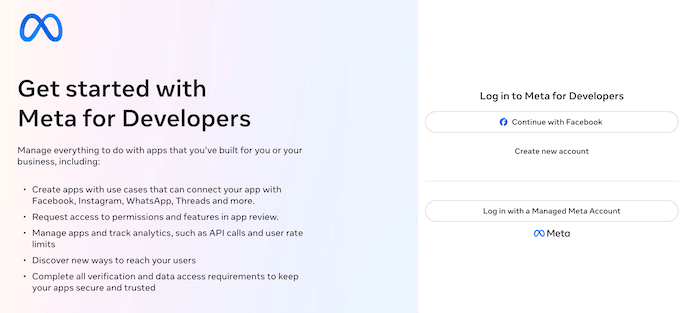
Facebook will ask you to accept the developer terms, verify your phone number via SMS, and confirm your email address. Once completed, Facebook will redirect you to the app dashboard.
Create Your Facebook App and Add Its Permissions
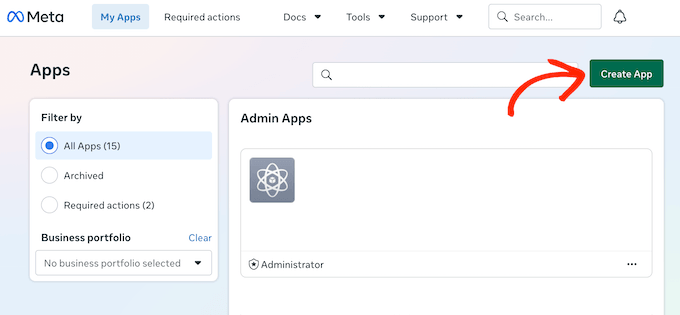
On the Apps page, click on ‘Create App’ in the top right corner.
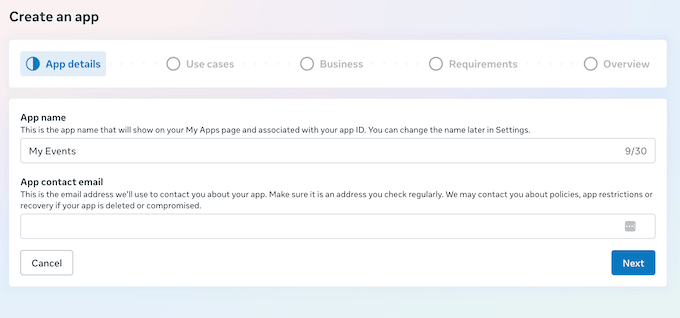
On the ‘App details’ screen, enter a name for your app and your contact email. The name is only visible to you, so something simple like My Events works fine.
Click Next to move on.
On the ‘Add use cases’ screen, select ‘Content management’ from the left-hand menu.
When it appears, choose ‘Manage everything on your Page.’
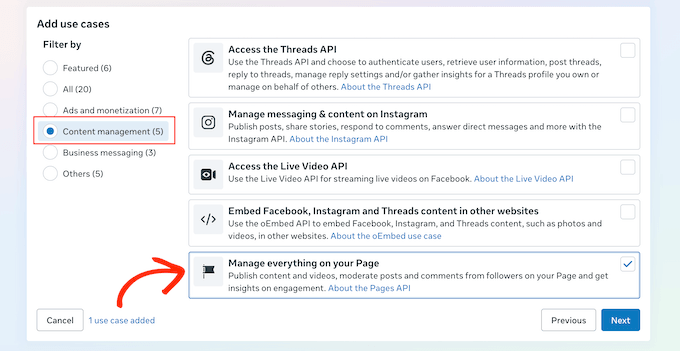
Click ‘Next.’
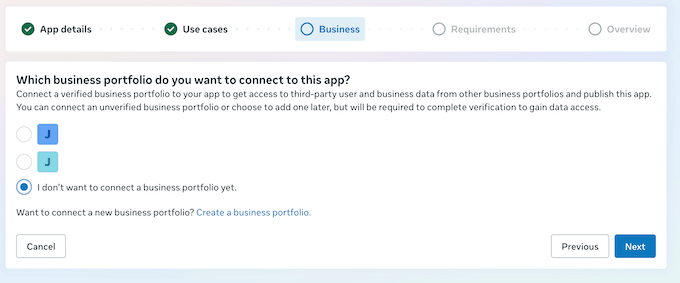
On the ‘Business’ screen, you can connect a business portfolio if you use one. Since this part is optional, you can also select ‘I don’t want to connect a business portfolio yet’ and click on ‘Next.’
On the Requirements screen, click ‘Next’ to confirm that no extra publishing requirements apply.
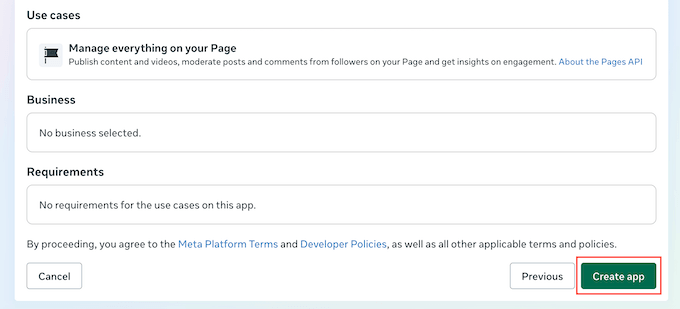
Finally, review your settings on the Overview screen and click ‘Create app.’
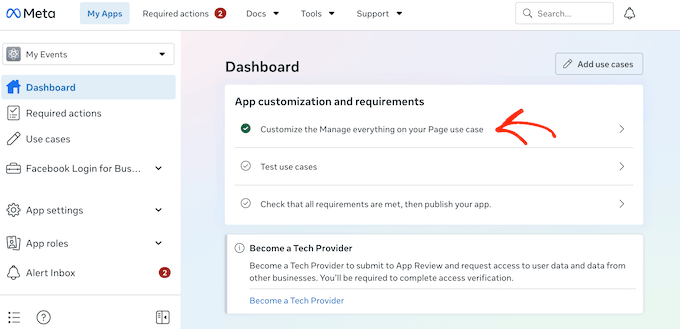
This opens your new app’s dashboard. From here, click on ‘Customize the Manage everything on your Page use case.’
On this page, you’ll notice that the pages_show_list and business_management permissions are already selected for you.
In the list, click ‘Add’ next to each of these permissions:
pages_read_user_contentpages_read_engagementpages_manage_engagement
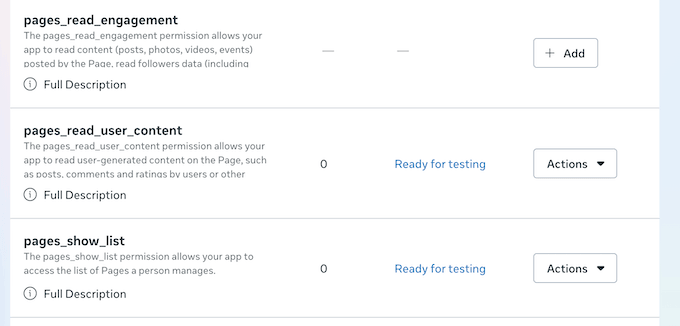
Once added, all three will display a ‘Ready for testing’ status.
Since displaying Facebook event feeds doesn’t require Facebook to review or publish your app, you can safely leave your app in development mode.
Generate Your Token and Connect Your Page
In your app’s left sidebar, go to App settings » Basic.
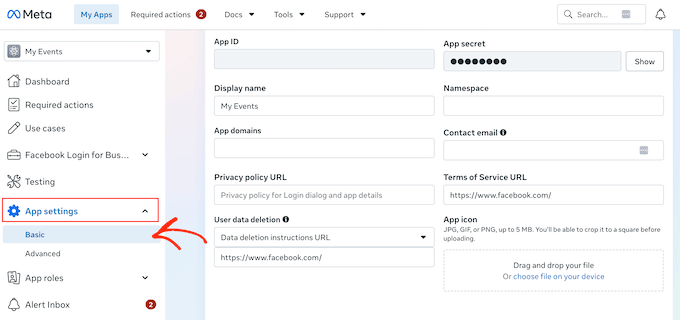
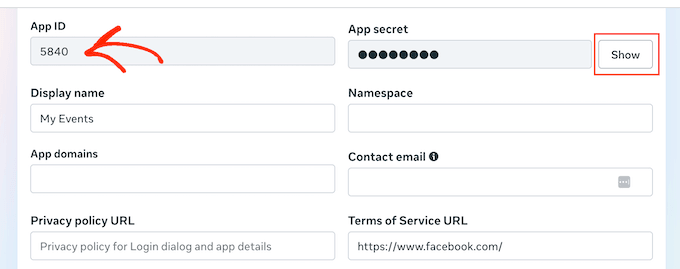
Here, you’ll find the ‘App ID’ and ‘App secret’ fields.
To reveal the secret, click on ‘Show’. You’ll need this information shortly, so keep this screen open.
In a new tab, open the Graph API Explorer, which is Facebook’s tool for testing what an app is allowed to read. If it isn’t already selected, open the ‘Meta App’ dropdown and choose the app you just created.
After that, open the ‘Add a Permission’ dropdown and select all five of these: business_management, pages_manage_engagement, pages_read_engagement, pages_read_user_content, and pages_show_list.
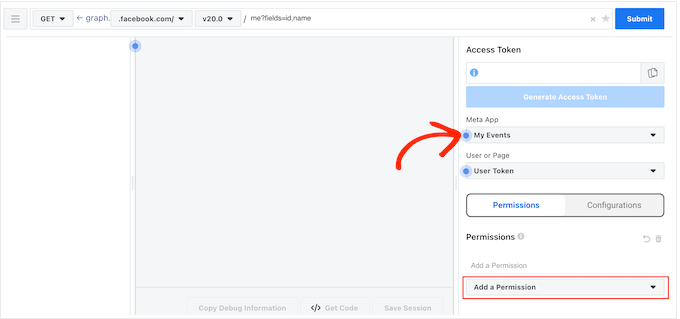
Once all five appear in the ‘Permissions’ list, click on ‘Generate Access Token’.
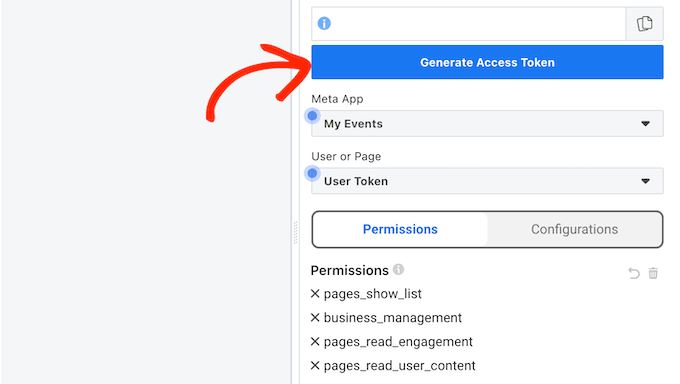
A Facebook login window will prompt you to confirm your account, so click Continue.
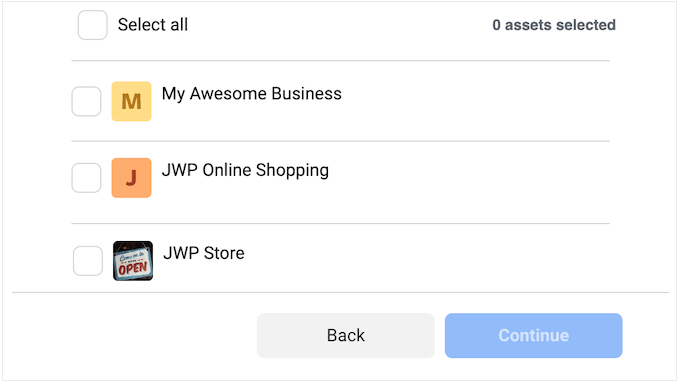
Facebook will then ask which Pages and Businesses your app is allowed to access. Choose the Page you want to display and click Continue.
Your new token will appear in the Access Token field. You can click the copy icon beside it to copy the text.
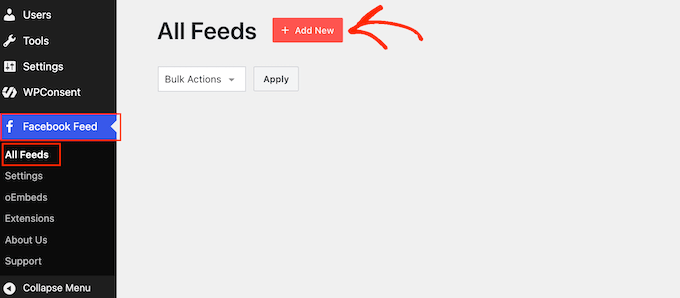
Because this temporary token only lasts about an hour, paste it into the Smash Balloon plugin straight away. Back in your WordPress dashboard, go to Facebook Feed » All Feeds and click Add New.
On the next screen, select the ‘Events’ feed type and click on ‘Next’.
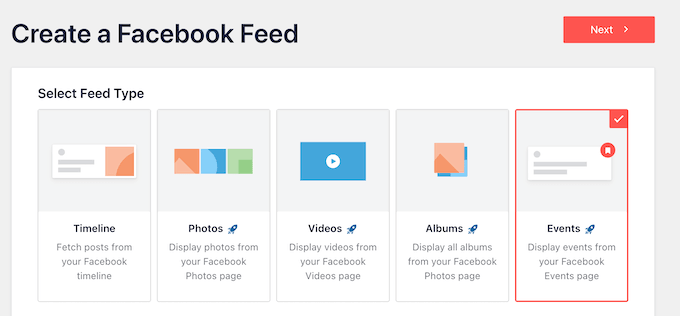
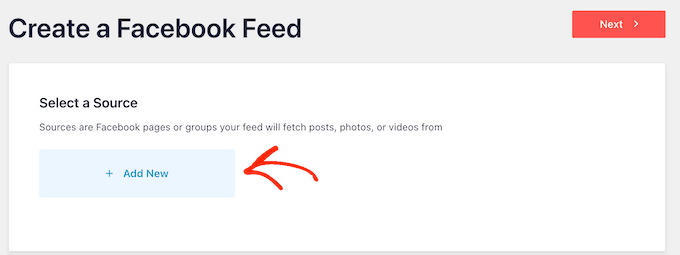
Since you don’t have an events source connected yet, the ‘Select a Source’ screen will be empty, so click Add New.
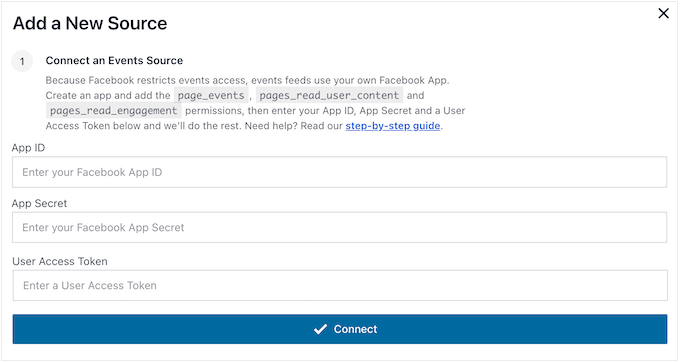
Paste your App ID, App Secret, and User Access Token into the corresponding fields, and then click Connect.
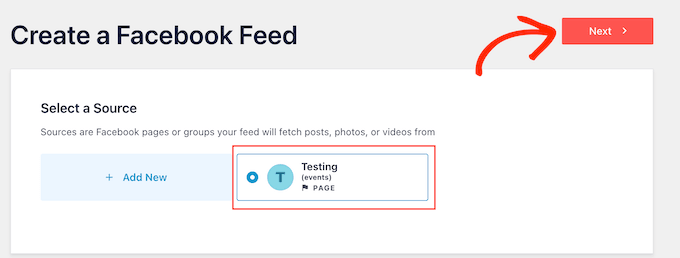
Once connected, the plugin will fetch the Facebook Pages you manage and display them in a list. Select the Page whose events you want to showcase and click Add.
Your Page will now appear as a connected events source. Select it on the ‘Select a Source’ screen and click Next to continue.
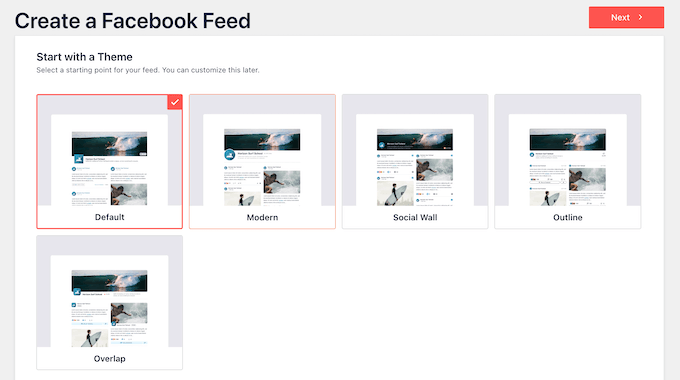
Select a layout template for your calendar and click Next.
We’re using the Default template for this guide, but every template is fully customizable.
Step 3: Customize Your Embedded Facebook Events Calendar
After creating your feed, you’ll be taken to the Smash Balloon customizer.
On the right-hand side, you will see a preview of your Facebook events calendar, while the left-hand side contains settings for customizing how those events appear on your site.
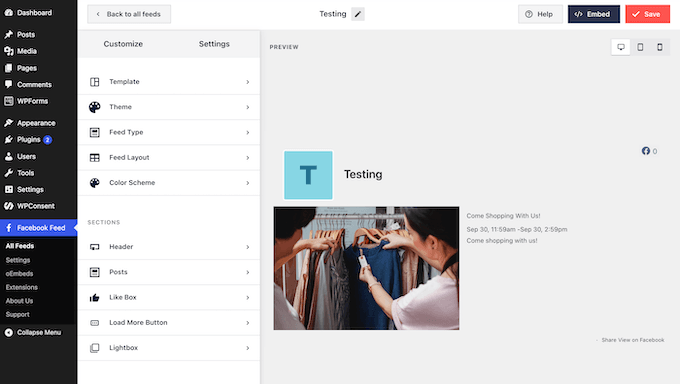
Most of these settings are straightforward, so we’ll focus on the ones that make the biggest impact on your calendar. To start, the Feed Layout panel controls its overall shape.
Here, you can choose between List, Masonry, and Carousel layouts. Masonry displays your events in a columned grid that adjusts naturally for varying card heights, while Carousel converts the calendar into an interactive slider that visitors can click through.
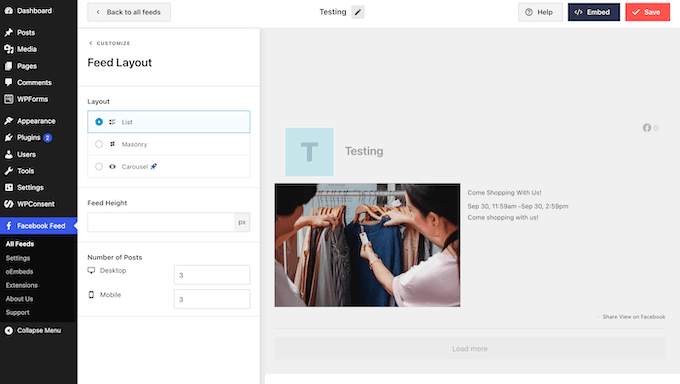
The same panel lets you adjust the feed height and set the ‘Number of Posts’ to display, with separate controls for desktop and mobile devices. Showing fewer posts on mobile keeps long schedules from cluttering small screens and burying the rest of your content.
As you make changes, the preview updates automatically. You can use the device buttons in the upper-right corner to see how your feed looks on desktop, tablet, and mobile devices.
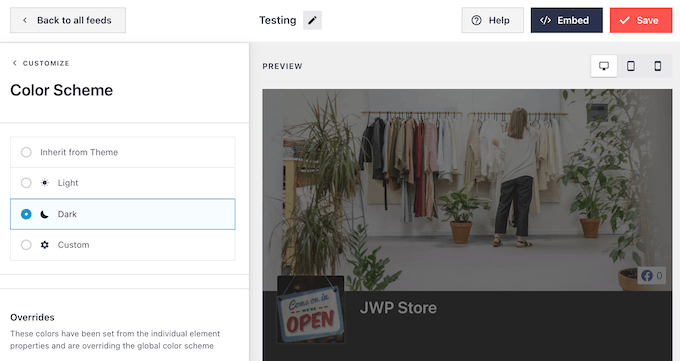
By default, the calendar inherits its colors from your WordPress theme. If you prefer a different look, you can select ‘Color Scheme’ from the left-hand menu and make your changes.
Further down, the Header settings manage the block that sits above your calendar and directs visitors to your Facebook Page.
From here, you can switch between a Visual and Text header, customize the title and bio copy, or turn the header off completely using the Enable toggle.
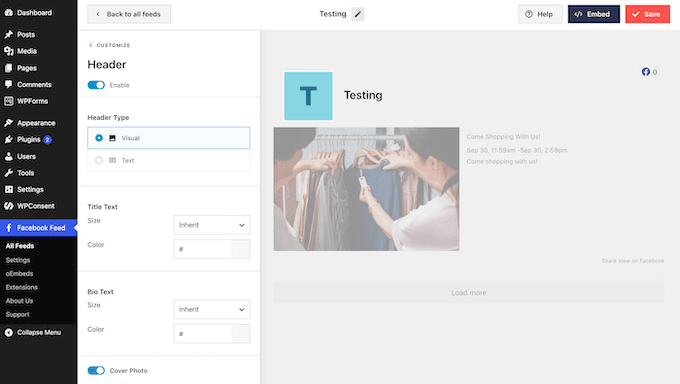
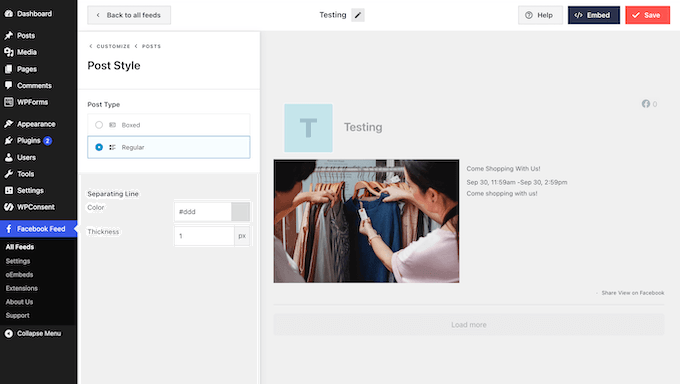
To change how each individual event looks, go to Posts » Post Style.
Under Post Type, choose Boxed to place each event inside its own padded card, or select Regular to separate events with a single dividing line.
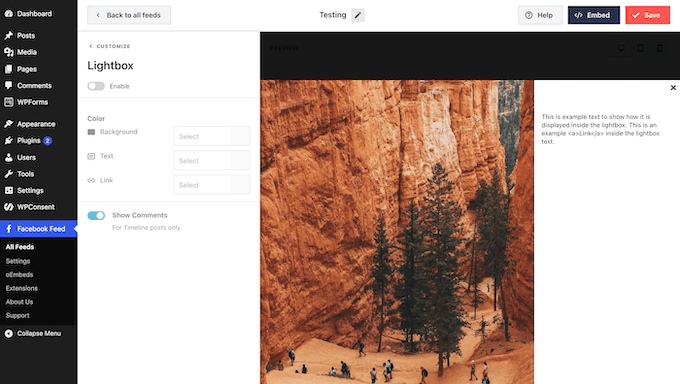
There is also a lightbox feature, which opens a popup over the page when someone clicks an event. This lets visitors browse your entire schedule without leaving your site.
That convenience does mean that fewer people may click through to your Facebook Page. If you prefer to send visitors straight to your Facebook Page, you can deactivate the lightbox using the Enable toggle.
When you’re happy with how the Facebook event calendar looks, don’t forget to click on ‘Save’ to store your changes. You’re now ready to add this feed to your WordPress website.
Step 4: Embed Your Facebook Event Calendar in WordPress
To add the Facebook event calendar, click the ‘Embed’ button at the top of the screen.
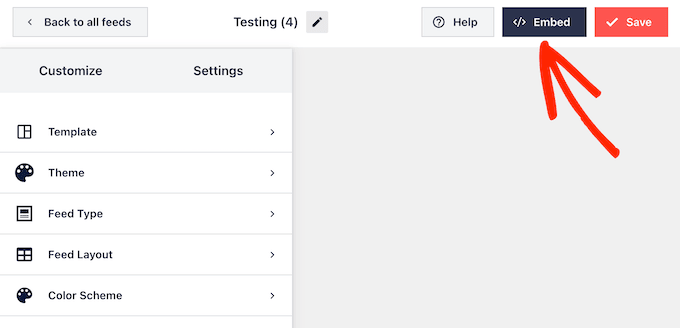
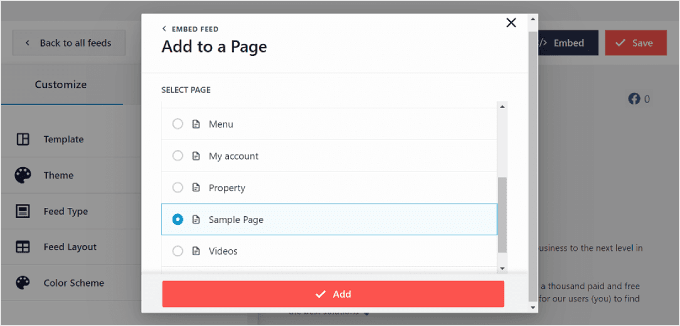
First, you can click ‘Add to a Page.’
Select the page where you want to publish the event calendar and click Add.
You will then be directed to the block editor.
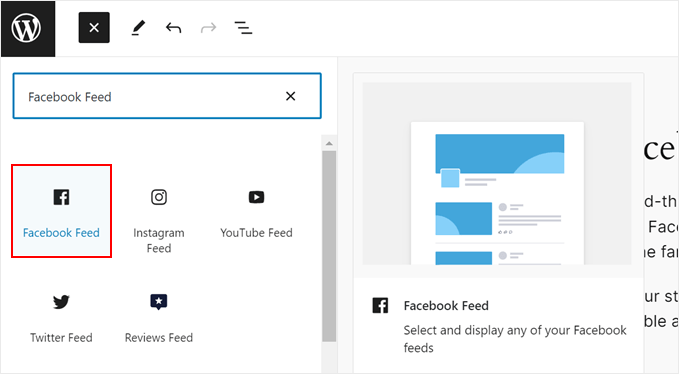
Here, go ahead and click the ‘+ Add Block’ button and find the ‘Facebook Feed’ block.
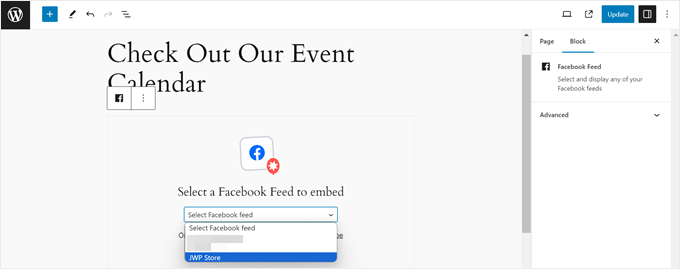
After that, open the dropdown in the block’s panel and select the events feed you created earlier.
The block will automatically update to show your event calendar.
The Embed popup also includes an ‘Add to a Widget’ option if you prefer placing your calendar in a widget area like a sidebar or footer. Additionally, it provides a shortcode that you can copy and paste anywhere the standard block isn’t supported.
After publishing the page, open it in an incognito or logged-out browser window to check whether your upcoming Facebook events are showing.
If the calendar loads but appears completely empty, double-check that your Facebook account has admin access to the Page, as outlined back in Step 2.
FAQs About Adding a Facebook Event Calendar in WordPress
How do I add Facebook events to a calendar?
You subscribe to them rather than copying them over manually. On your Page’s events calendar, locate the ‘Add to Calendar’ button. Right-clicking this button provides a link that you can paste into Google Calendar, Apple Calendar, or Outlook.
Keep in mind that subscribing is separate from embedding. A calendar subscription keeps your events synced inside your personal calendar app, whereas embedding them with a plugin like Smash Balloon displays that live schedule directly on your website for visitors to see.
What is the best event calendar plugin for WordPress?
If you want to host events directly on your site instead of pulling them from Facebook, Sugar Calendar is our top pick. It manages recurring events, takes bookings, and lets you sell tickets through Stripe or WooCommerce.
Since you host the events on your site, they keep working even if you stop posting to Facebook.
For a closer look, see our Sugar Calendar review or compare it against the alternatives in our roundup of the best WordPress calendar plugins.
We hope this article helped you learn how to add a Facebook event calendar in WordPress. You may also want to see our expert picks for the best WordPress Facebook plugins, or learn how to display your Facebook timeline in WordPress.
If you liked this article, then please subscribe to our YouTube Channel for WordPress video tutorials. You can also find us on Twitter and Facebook.


Moinuddin Waheed
Facebook has large resources base and it is one of the best platform to get quality traffic.
integrating Facebook event calendar with that of the website will definitely help in the acquisition of that large traffic into customers.
Thanks for detailed post on how to make Facebook calendar event.
Ahmed Omar
facebook is one of the important social media that can not be ignored, and this way it will be easy to import the events from facebook
great post with important details
Thank you
WPBeginner Support
You’re welcome
Admin
Lilja Níelsdóttir
I’m trying method 1: Add Facebook Events to Your Site Without a Plugin but it does not work. I can get the preview correct but when I publish or view the page it’s not transferred there, don’t get any information about events or anything on the page. It’s blank. Is this method still correct?
WPBeginner Support
Unless we hear otherwise, this method should still be working. Don’t forget to clear any caching on your site as a possible reason.
Admin
Lacey
“Something went wrong. Your change may not have been saved. Please try again. ”
Each time I try to edit the header.php file per the instructions, I get an error. Is this method still valid with all of the updates Facebook has made?
Pau
I tried the method 1 and a weird gray square under the footer appeared on my website, the facebook events are not there.
jon
Is there a way to just show the Facebook Event Interested button on a Wordpress site?
Michelle Platt
I found this very easy to follow. I’ve added many text widgets before. Do you have any idea why I can see it while I’m in WordPress (view my site) but not on my phone or any other computer? There’s not even a space for it in the sidebar. It’s simply not there. Again, I see it on my end and definitely saved it.
Ashiq hussain
Thanks for wordpress information helpful for me learn wordprss.
Awontis
Everything can be solved with plugins!