


Want to start a blog, but not sure which blogging platform to choose?
Most popular blogging platforms make getting started incredibly easy. The real differences only show up later, when you try to monetize, customize design, or move your content, and discover that your platform won’t let you.
After 17+ years of helping thousands of users start blogs, we’ve learned that picking the wrong platform on day one is the most common (and costly) mistake beginners make.
That’s why we re-test the top blogging platforms every year to compare new features and checking the real costs behind the “free” plans. Here are our 6 best blogging platforms for 2026, freshly re-evaluated, with honest recommendations for different use-cases.

Best Blogging Platforms Comparison – Quick Overview
| Platform | Cost | Skill Req. | Newsletters | eCommerce |
|---|---|---|---|---|
| WordPress | ~ $3/month | Low | Plugin | WooCommerce |
| Ghost | $15/month | Low | Built-in | Stripe |
| Substack | Free; 10% fee on paid subscribers | Zero | Built-in | Paid Subs |
| Medium | Free | Zero | Built-in | None |
| Wix | Free plan; paid from $17/month | Low | Built-in | Native |
| Squarespace | $10/month | Low | Built-in | Native |
How we Evaluate Blogging Platforms
Instead of creating a list of all the random blogging platforms, we focused on platforms that are widely trusted, beginner-friendly, and have a proven track record of helping people build successful blogs. We also ruled out platforms that are difficult to use, limit your ability to grow, or make it hard to move your content later.
When comparing blogging platforms, we looked at the following factors:
- Ease of Use: How easy it is to set up your blog, publish your first post, and manage your content without technical skills.
- Ownership & Portability: Whether you own your content and domain name, and how easy it is to export your blog if you decide to switch platforms.
- Design & Customization: The quality of the available themes and templates, along with how much you can customize your site’s design without writing code.
- SEO & Monetization: Whether the platform helps you grow your audience through SEO and / or supports monetization options like ads, memberships, newsletters, affiliate marketing, or selling products.
- Value for Money: The overall value of the free and paid plans, including which features are included and any long-term costs.
- Support & Community: The quality of the documentation, customer support, tutorials, and the size of the user community when you need help.
Here’s a quick look at the platforms we will review:
- 1. WordPress – Best Overall Blogging Platform
- 2. Ghost – Best for Professional Publishers and Paid Newsletters
- 3. Substack – Best for Newsletter-First Creators
- 4. Medium – Best for Reaching an Existing Audience
- 5. Wix – Best for All-in-One Business Websites With a Blog
- 6. Squarespace – Best for Beautiful Portfolio Websites
- Which Is the Best Blogging Platform?
- Frequently Asked Questions About Blogging Platforms
1. WordPress – Best Overall Blogging Platform
Testing process: We run WPBeginner blog and many of our other websites on WordPress, including membership sites, online stores, communities, and business websites.
| Best for | An all-around blogging & website platform that grows with you |
| Pricing | Free platform, ~$2–6/mo for hosting |
| Pros | • Free, open-source, and fully yours • 68,000+ plugins and thousands of themes • Excellent SEO, backed by powerful plugins • Has support for eCommerce, memberships, or business site |
| Cons | • Needs hosting and a domain • You handle updates and backups (easily automated) |
WordPress is the world’s most popular blogging and website building platform, powering over 40% of all websites. It’s also the platform we recommend to most readers because it offers the best balance of ease of use, flexibility, and long-term growth.
Whether you’re starting a personal blog, launching a company blog, or building a large online publication, WordPress can handle it.
That is why it’s trusted by well-known brands like TechCrunch, The Walt Disney Company, Sony Music, and, of course, WPBeginner.
Our Experience
Since WPBeginner has been running on WordPress for over 17 years, it’s the blogging platform we know best. We’ve used it to publish thousands of articles, grow our audience, and continuously improve our content strategy.
The biggest reason we keep recommending it is that it grows with your blog.
You can start with a simple blog today and add the features you need as your audience grows, whether that’s better SEO, email newsletters, sell courses, have private memberships, or even create an online store. You never have to switch to a different platform.
One feature we really like is the built-in block editor. It lets you create rich blog posts by simply adding and rearranging blocks for text, images, videos, buttons, galleries, and more.
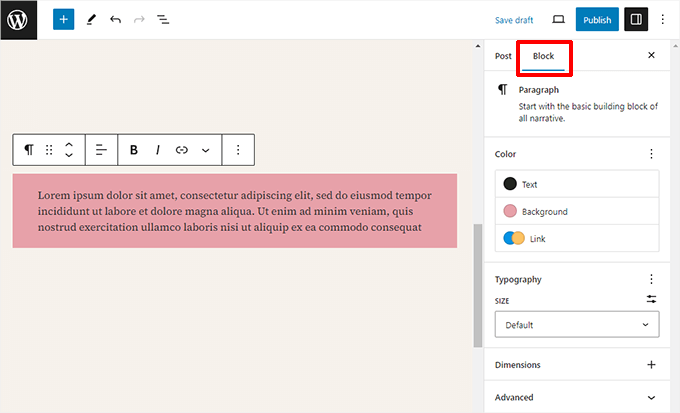
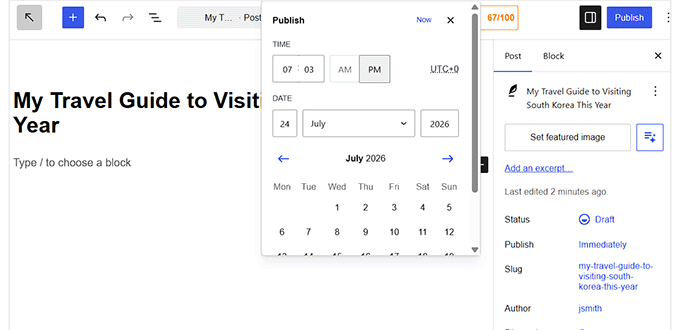
WordPress also supports the entire publishing workflow. You can save drafts, preview posts before publishing, schedule articles, and use revisions to restore earlier versions.
As our content library has grown, we’ve found WordPress just as easy to manage.
We use categories and tags to organize articles, while plugins help us optimize posts for SEO, recommend related content, grow our email list, and keep the comments section free of spam.
That flexibility also extends to monetization.
As your blog grows, you can add display ads, do affiliate marketing, sell memberships and online courses, create private communities, or even sell physical and digital products. The best part? Unlike other platforms, you keep 100% of what you earn, and there are no plan upgrades or platform approval needed.
Another advantage is the huge WordPress community. Whenever you get stuck, you can usually find a tutorial, official documentation, or forum discussion that helped us move forward.
The biggest trade-off is that WordPress.org is self-hosted, so you’ll need web hosting and a domain name. Plus, you’ll be responsible for updates, backups, and basic maintenance.
That might sound intimidating at first, but it really isn’t. Most beginner-friendly hosting providers let you install WordPress with just one click, and many also handle updates, backups, and security for you.
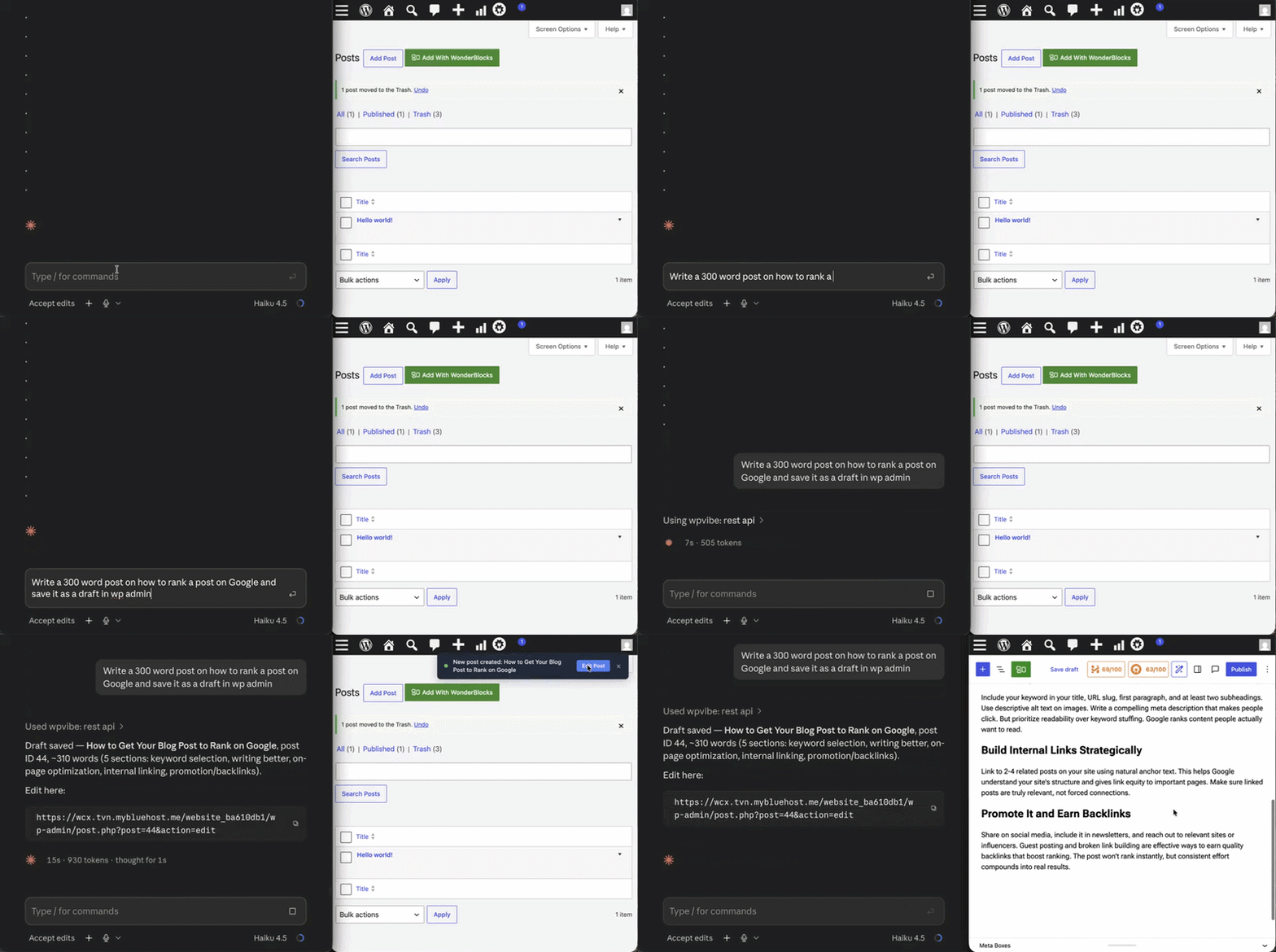
You can even connect WordPress with your preferred AI tool like Claude, ChatGPT, etc and build your site by simply prompting in the language you speak.
If you’d rather skip website maintenance altogether, then WordPress.com offers a hosted version of the same software. It also now includes plugin support on all paid plans, making it a much more affordable option than before.
Both platforms run the same WordPress software, so the main difference is whether you want to manage the hosting yourself or have it managed for you. You can also see our comparison of WordPress.com vs. WordPress.org to learn more.
2. Ghost – Best for Professional Publishers and Paid Newsletters
Testing process: We tested Ghost while researching this comparison, focusing on its writing experience, newsletter tools, memberships, and overall publishing workflow.
| Best for | Owning your publication while monetizing paid newsletters |
| Pricing | From $15/mo, or self-host for free |
| Pros | • Clean, distraction-free writing • Built-in newsletters, memberships, and paid subscriptions • Fast, lightweight performance • Native analytics and audience tools |
| Cons | • Smaller ecosystem than WordPress • Self-hosting is technical • Ghost Pro costs more than basic WordPress hosting • Paid plans cap your members, and pricing climbs as your list grows |
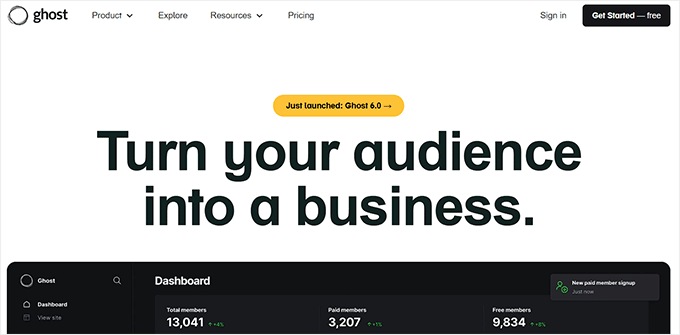
Ghost is a publishing platform built for writers who want to turn their content into a business.
Instead of trying to be an all-purpose website builder, it focuses on publishing, newsletters, and memberships, with all of those features built in from the start.
We recommend it for creators who want to grow a newsletter-first publication without relying on lots of third-party tools.
Our Experience
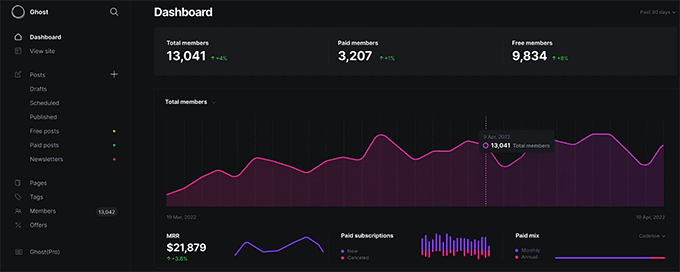
The first thing we noticed after signing up was how clean the Ghost dashboard felt.
Unlike WordPress, there aren’t dozens of settings competing for your attention. We were able to start writing almost immediately, which let us spend more time creating content instead of configuring our website.
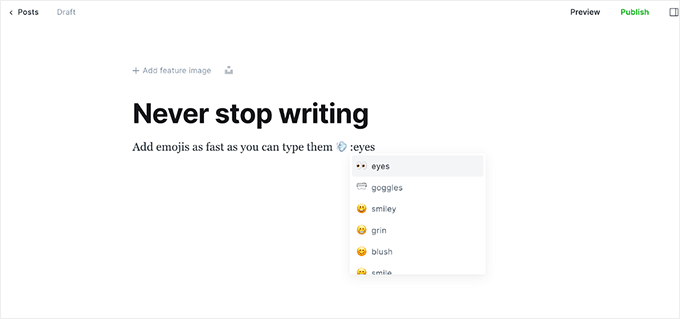
We especially enjoyed using the editor. It’s clean, responsive, and stays out of the way while you write. At the same time, it makes it easy to add images, videos, galleries, buttons, bookmarks, and other rich content without cluttering the interface.
Beyond the writing experience, what really makes Ghost stand out to us is that it gives you complete ownership of your publication.
You control your content, branding, and website, so you’re not locked into someone else’s platform as your audience grows.
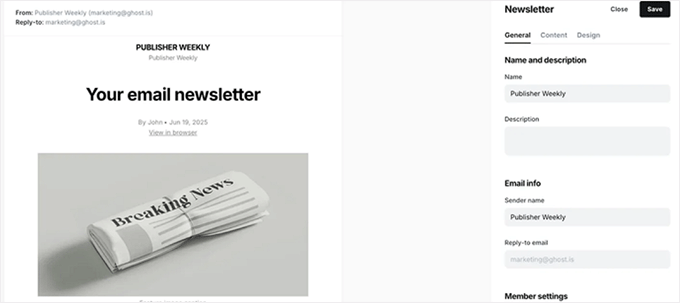
Ghost also includes newsletters and paid memberships out of the box. From the same dashboard, we could collect email subscribers, send newsletters, create members-only content, and accept recurring payments without installing extra plugins or connecting different services.
That meant we could build an audience first and then turn our newsletter or exclusive content into a recurring source of income when we were ready.
Even better, unlike Substack which we’ll cover later, Ghost doesn’t take a percentage of your revenue. Once you’ve covered your hosting or Ghost Pro subscription, the rest of your subscription income is yours to keep.
We also liked the built-in dashboard. Instead of switching between different analytics and email marketing tools, we could see our member growth, paid subscriptions, newsletter subscribers, engagement, and recurring revenue from one place.
With all that said, Ghost isn’t as flexible as WordPress. It has a smaller ecosystem of themes, plugins, and integrations, so it’s best suited for publishers who value a focused writing experience over unlimited customization.
And while you can self-host Ghost to save money, setting it up is much more technical than installing WordPress. For a simpler experience, you would need Ghost Pro, which handles the hosting and maintenance, though it comes at a higher monthly cost.
If you’re still deciding between the two platforms, then check out our detailed Ghost vs. WordPress comparison to see which one is right for your needs.
3. Substack – Best for Newsletter-First Creators
Testing process: We tested Substack for this comparison, including its writing experience, newsletter publishing, subscriber management, and paid subscription features.
| Best for | Writers who want to publish by email and start charging quickly |
| Pricing | Free, but 10% fee on paid subscriptions |
| Pros | • Free to start, no hosting needed • Costs you nothing until you start earning • Recommendations and the Substack app help you find new readers • Email delivery, paid subscriptions, and payments built in |
| Cons | • Takes 10% of paid subscriptions, plus processing fees • Limited design and customization • Built for subscribers first, search traffic second • Your growth is tied to Substack’s network |
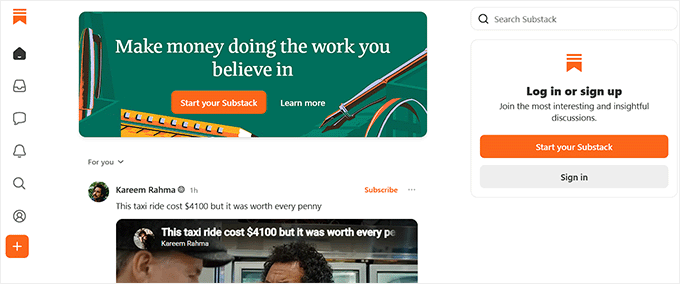
Substack is a publishing platform built around the email newsletter. Every post you write is emailed to your subscribers and published as a web page at the same time.
What makes it different from the other platforms on this list is that there’s nothing to set up. You sign up, name your publication, and start writing. There’s no hosting, no theme to choose, and no plugins to install.
We recommend it for content creators whose main goal is to build an email subscriber list and get paid for their writing as soon as possible.
Our Experience
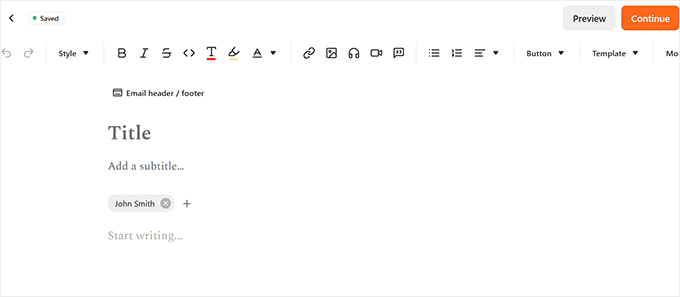
While testing Substack, one standout feature was that every post automatically doubles as an email newsletter.
Instead of using separate blogging and email marketing tools, you can write the content once and send it directly to subscribers.
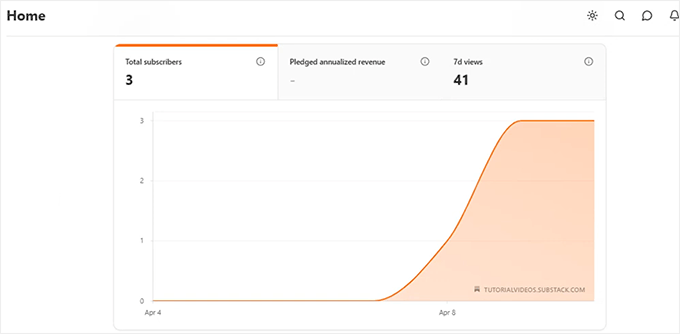
The subscriber dashboard is equally straightforward.
It gives you the option to import an existing email list or start collecting subscribers right away, which makes it easy to move an audience over or grow one from scratch.
Substack also helps with the hardest part of starting a blog, which is getting those first readers.
Other writers can recommend your publication to their subscribers, and your posts can be distributed to the Substack app and Notes. That built-in discovery is something a brand-new self-hosted blog simply doesn’t have on day one.
The trade-off is that convenience gets expensive later.
Substack takes 10% of every paid subscription, and payment processing fees come out on top of that. That’s a fine deal when you’re earning $100 a month. It’s a very different conversation at $10,000 a month, and there’s no plan you can upgrade to that removes the cut.
You’re also working inside someone else’s product. You can’t add features, redesign your site beyond a logo and colors, or control much of how your pages are structured for search engines. And while you can export your posts and subscriber list, the audience relationship largely lives on Substack’s network rather than on a site you own.
4. Medium – Best for Reaching an Existing Audience
Testing process: Some members of the WPBeginner team still publish essays and personal writing on Medium because it’s an easy way to reach readers without managing a website.
| Best for | Reaching an existing audience without running a site |
| Pricing | Free; optional Partner Program earnings |
| Pros | • Free, with no hosting or maintenance • Built-in audience helps you get discovered • Clean, distraction-free writing • Great for testing ideas and repurposing content |
| Cons | • Little control over design and branding • You don’t fully own your audience • Monetization limited to the Partner Program • Paywalled posts limit who can read your work |
Medium is a publishing network that thousands of writers post into, with a shared readership on top. It gives you access to an existing audience of readers who are already looking for interesting content.
You don’t build a website on Medium. You publish into an existing one, and readers discover you through the platform’s feeds, topics, and publications.
We recommend it for writers who care more about being read right now than about owning a long-term asset.
Our Experience
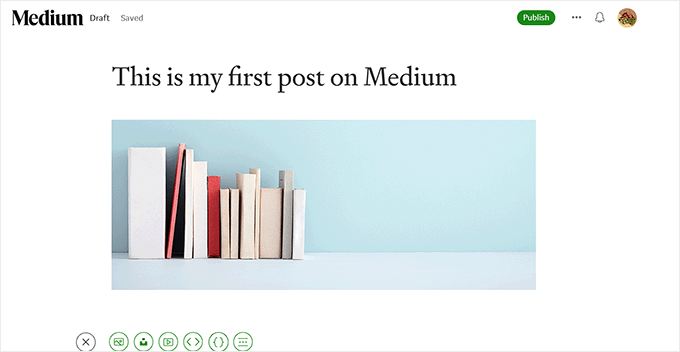
Medium has the best pure writing experience of any platform that we’ve tested so far.
The editor is a blank page. You start typing, and formatting options appear only when you highlight text or need them. There are no sidebars, settings panels, or notifications competing for your attention.
The published result looks good automatically. Typography, spacing, and mobile formatting are all handled for you, so a first-time writer’s post looks as polished as a professional’s.
The real benefit is its distribution.
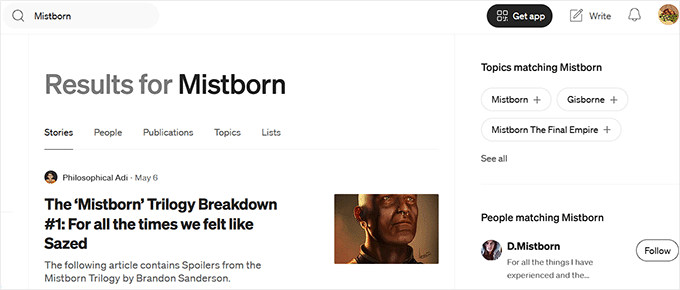
When we published a post, it could appear in the feeds of readers following that topic, without us doing any promotion. You can also submit your work to established publications on Medium, which puts it in front of an audience those editors have already built.
For a brand-new blog, that’s a meaningful head start. A self-hosted site earns its first hundred readers, but on Medium, some of them are already there.
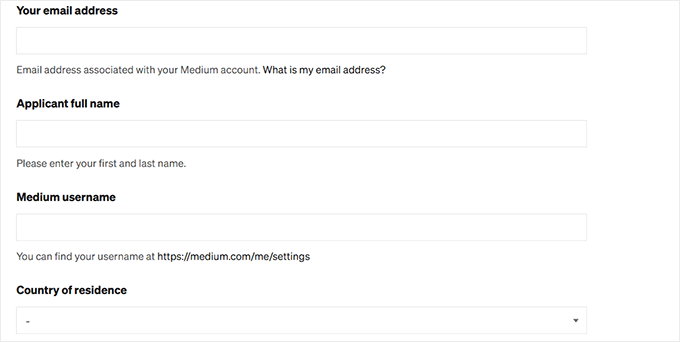
Medium also has a Partner Program that pays writers based on how much paying members read their work, and it can promote strong posts to a wider audience. You’ll need a minimum number of followers before you can join.
However, Medium isn’t the best choice if you want to build a long-term business.
On Medium, you’re building on rented land. Your posts live at a medium.com address, and new publications can no longer use a custom domain. If the platform changes how it distributes content or pays writers, your traffic and income change with it, and there’s nothing you can do about it.
Your monetization options are limited to what Medium offers.
You can’t freely add your own membership system, sell digital products, or customize the experience the way you can on a self-hosted website.
Our honest take is that Medium works best as a distribution channel rather than a home base. Many writers publish on their own WordPress site first, then republish a version on Medium to reach new readers. That way, you get the exposure without giving up ownership.
For more details, you can take a look at our WordPress vs. Medium comparison.
5. Wix – Best for All-in-One Business Websites With a Blog
Testing process: We focused on Wix’s AI website builder, blog features, templates, and built-in business tools.
| Best for | An all-in-one business website with a blog |
| Pricing | Free plan; premium from $17/mo |
| Pros | • Easy drag-and-drop builder • Professionally designed templates • AI builder speeds up setup • Built-in hosting, security, and marketing tools |
| Cons | • Blogging and SEO weaker than WordPress • Free plan caps storage at 500MB and bandwidth at 1GB • You can’t change your template once you pick one • Costs rise as you upgrade • Locked in, with no easy migration out |
Wix is one of the easiest website builders we’ve tested. It combines professionally designed templates, an intuitive drag-and-drop editor, and built-in business tools to help you create a professional-looking website without any coding.
We recommend it if your priority is building a beautiful website where blogging supports your business rather than being the main focus.
Our Experience
One of the things we liked most about Wix was how easy it was to start a blog. The setup process guided us through creating a website, and within a few minutes, we were ready to write and publish our first post.
The blog editor covers the fundamentals well: writing and formatting articles, organizing categories, and dropping in images and video. While they aren’t as advanced as WordPress, they’re more than capable of supporting a business blog.
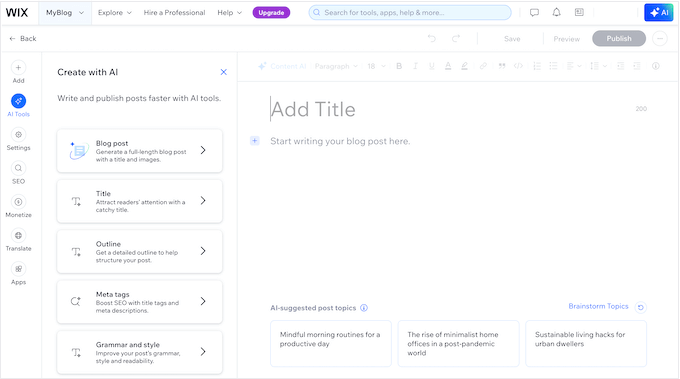
Wix’s AI website builder is the most interesting part. Answer a few questions about the type of blog we want, and it generates a whole site. It set up dashboard, recommended relevant built-in tools, and even created three sample blog posts based on the information we provided.
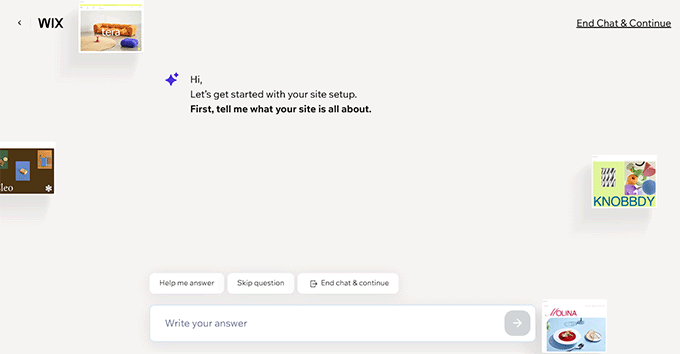
Even so, we noticed a couple of limitations. The AI website builder was a bit slow, and we couldn’t switch to another browser tab while it was generating our site.
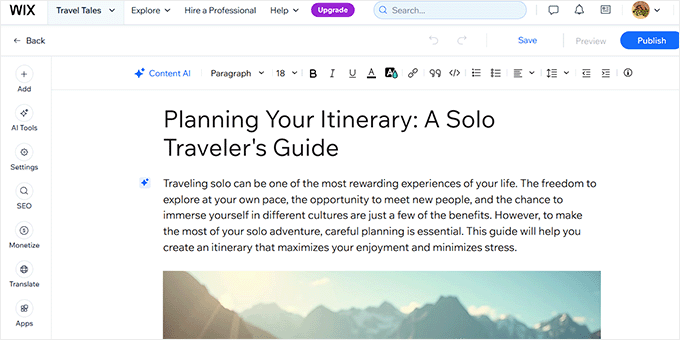
We also found that the AI-generated blog posts were quite thin, so we’d recommend rewriting and expanding them before publishing if you want them to perform well in search results.
As your blog grows, Wix also gives you several ways to monetize it.
You can display ads, create membership plans, promote affiliate products, or sell physical and digital products without installing additional tools.
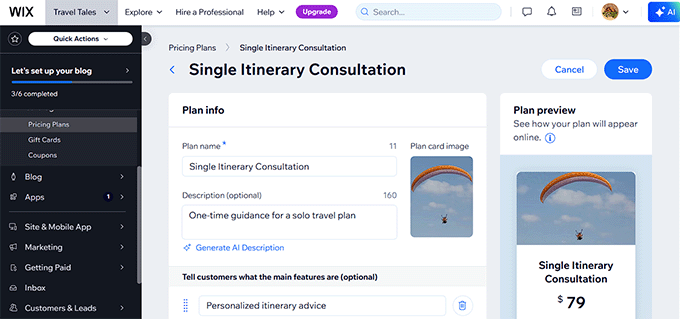
Still, Wix doesn’t offer the same blogging flexibility as WordPress. Its blogging features and SEO tools are more limited, so it’s a better fit if your blog supports your business instead of being the main focus of your website.
You should also remember that Wix is a closed platform. While that’s what makes it so beginner-friendly, it also means you’re committing to its ecosystem.
If you decide to move your website elsewhere in the future, then there’s no simple way to migrate everything, and your monthly costs can increase as you upgrade to higher-tier plans.
Overall, we think Wix is an excellent choice if you want an easy way to build a professional-looking website with a blog. For more details, you can check out our Wix vs WordPress review.
6. Squarespace – Best for Beautiful Portfolio Websites
Testing process: We tested Squarespace for this comparison, evaluating its templates, website builder, blogging features, and customization options.
| Best for | A beautiful, design-first website |
| Pricing | From $10/mo (billed annually) |
| Pros | • Beautiful, professionally designed templates • Easy-to-use visual editor • Great galleries and portfolio layouts • Built-in blogging, eCommerce, and marketing |
| Cons | • Blogging weaker than WordPress • Less SEO and customization control • Pricier than self-hosted WordPress |
Squarespace is a design-first website builder that makes it easy to create a professional-looking website. It’s quite popular among photographers and artists.
Their website templates are some of the best we’ve seen, making it an excellent choice if showcasing your work is more important than publishing lots of blog content.
Our Experience
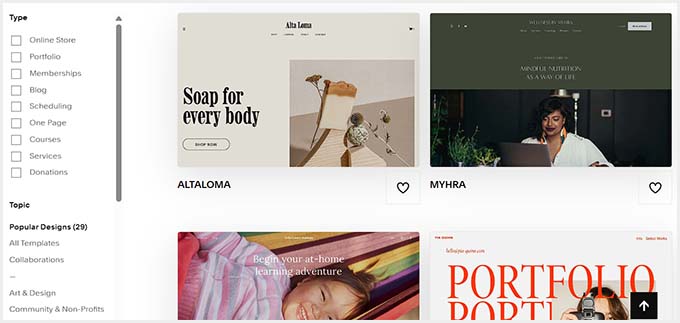
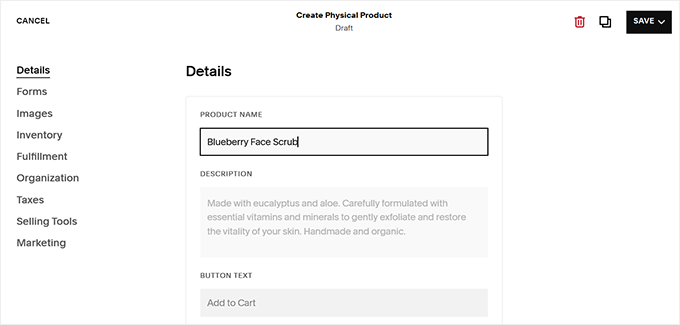
The first thing that caught our attention was the quality of Squarespace’s templates. We started with the Myhra template, and it gave our blog a polished, professional look right away.
Once we selected it, Squarespace quickly generated the website, so we could start replacing the demo content and publishing blog posts almost immediately.
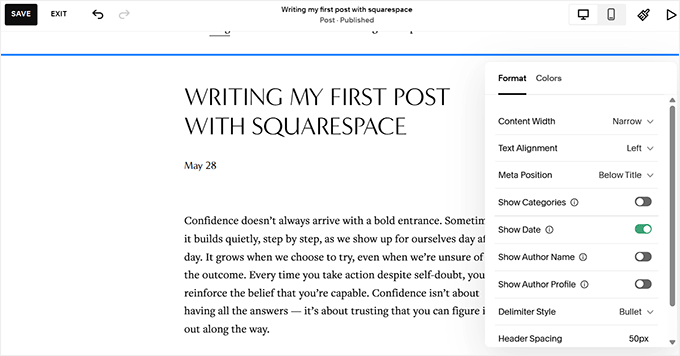
During testing, we found the blogging tools easy to use. We had no trouble writing posts, organizing content, and adding images, videos, and other media.
The editor felt straightforward, and the finished articles looked great on both desktop and mobile devices.
eCommerce features, email marketing, and analytics are built in as well.
That gives you room to grow the blog into a business over time by selling products, services, memberships, or online courses, without switching platforms.
Where Squarespace falls behind is long-term flexibility. While it’s a great platform for publishing a beautiful blog, you trade some blogging power, SEO flexibility, and ownership for that polished, all-in-one experience.
If your blog outgrows the platform, migrating to another platform isn’t nearly as smooth as moving a self-hosted site.
We still think Squarespace is a great option if you want a beautiful, design-focused website with a blog and don’t want to spend time on technical setup. For a more detailed comparison, you can also see our Squarespace vs WordPress comparison.
Which Is the Best Blogging Platform?
If you’re looking for the best blogging platform overall, then we recommend WordPress.
It’s easy enough for beginners to get started, yet powerful enough to grow with your website. Whether you want to publish a personal blog, business blog, build a business website, sell products, create online courses, or launch a membership site, WordPress gives you the flexibility to do it all.
Still, WordPress isn’t the right choice for everyone.
If you want a platform that’s built specifically for paid memberships, then Ghost is an excellent alternative. If you simply want the fastest way to start a newsletter, then Substack is a great place to begin.
For writers who only want to publish articles and reach an existing audience, Medium is worth considering.
And if your priority is creating a beautiful portfolio or business website with occasional blogging, then Wix or Squarespace may be a better fit.
Frequently Asked Questions About Blogging Platforms
Which is the best blogging platform for SEO?
WordPress is the best blogging platform for SEO. It includes built-in SEO-friendly features and works with powerful SEO plugins like All in One SEO, giving you much more control over your search rankings than most other platforms.
What platform do most bloggers use?
Most bloggers use WordPress. It powers over 40% of all websites, making it the world’s most popular blogging platform thanks to its flexibility, customization options, and large community. Many fortune 500 companies like Microsoft, Facebook, and others also use WordPress to power their business blogs.
How can I make my blog popular?
The best way to grow a blog is to consistently publish helpful content and promote it. Focus on solving your audience’s problems, optimize your content for SEO, and share it through email newsletters and social media. For more tips, see our guide on how to increase your blog traffic.
How long does it take for a blog to become popular?
Most blogs take several months to start growing. Many blogs start seeing steady traffic within 6-12 months, while significant growth often takes a few years of consistent publishing.
Is blogging dead because of AI?
No, blogging isn’t dead because of AI. People still search for helpful, trustworthy content every day. While AI can help you write faster, readers and search engines continue to value original experiences, expert insights, and useful advice that AI alone can’t provide.
We hope this article helped you find the best blogging platform for your needs. You may also want to see our ultimate WordPress SEO guide to improve your blog rankings.
If you liked this article, then please subscribe to our YouTube Channel for WordPress video tutorials. You can also find us on Twitter and Facebook.



Cloudi5
I found your write up really helpful, that I made a full note out of it. Thank you so much.
But if I may ask, for how long, how much posts do you have to write, or how much traffic does one need before one earns from the new blog?
WPBeginner Support
Sadly, with the number of factors involved in a site, there is no easy answer for a question like that and it can vary from person to person.
Admin
arvind
Hi
I find this website useful however, I also find it bias towards WordPress. Like at the top of the page list the blogging pros for each then the cons NOT WORDPRESS so they suck. Am I the only one who got that vibe? Guess I will keep poking around. Thank you xx
WPBeginner Support
Thank you for your feedback, we will certainly look into our wording for future articles and updates and we may have a bias as we use WordPress daily
Admin
Lor
I just created my blog yesterday using blogger platform…its easy to use and its free
Giaa
My friends and I wanted to start a blog just to see if we like it. The problem is the money, after reading the article it seems as though the free websites have major setbacks. Would it be worth the setbacks just to try it or should we just pay the money?
WPBeginner Support
Hi Giaa,
If you and your friends are serious about the project, then it is worth spending money on. You can start with free platforms but later it would be a headache to move your site to a self-hosted platform.
Admin
gary n. smith
Hello, Shalom: I want to cancel my subscription with Weebly. It is to difficult even at the start to use the system for blogging. I am a university student and our teacher wanted us to use Weebly in the free ad. Help. Could you give me a phone number or address were I can cancel. Today at 1:150PM on 11/7/2018 I signed up. Thank you, Gary.
WPBeginner Support
Hi Gary,
Please contact Weebly to cancel your subscription.
Admin
contacthp
Thank you so much for providing this information.
zikin
Choosing a Blogging Platform that is suitable for my blog is quite difficult. And I’m looking for it. Glad you share it. Thanks for the recommendations. This will also help others.
kyrie
wordpress is NOT easy!! If you understand computers and can set up a web page, it might be easy. For those of us who have NO concept of these platforms, it is beyond difficult. I spent hours on WordPress and was never able to successfully able to set up the website. The learning curve is VERY high!
WPBeginner Support
Hi Kyrie,
We understand. It can be frustrating for a beginner to try for the first time and fail. However, there is plenty of help available online and learning curve is becoming significantly lower as more web hosts now install WordPress automatically.
Admin
Mohammad Naurose
HI
wordpress is the best platform for blogging in my opinion not only fr blogging wordpress i getting improved day by day i was reading on wordpress offical webste that wordpress can handle easly more than 1 Lac products for online store. this is something impresses me alot.
ItsJustMe
Hey Guys, I disagree with your summary of Joomla….I have been working with Joomla from the beginning, it is extremely flexible, there are many free extensions available and as long as you work with developers/extensions from the JED (Joomla Extension Directory) the support is normally pretty good. Of course, there are some developers that do not respond, but I have found the same with WP. The possibilities with Joomla are far less restricted and it is much more easily customised if you are looking to personalise your site.
Pavani.Rajulapati
Hello!
I’m a student and I’m having passion towards writing. I can’t pay to the sites.so,can I get any suggestion to get a free of cost site? I wanted to exhibit my skill of writing stories!!!!!
WPBeginner Support
Hi Pavani,
You can get started with platforms like Blogger or WordPress.com. However, as your writings become popular you will soon feel the need for more features. This is why we recommend starting with WordPress.org. You will have to pay for hosting and a domain name (which is quite low cost for a starter blog) but you will have the freedom to do whatever you want.
Admin
Tapas
Hi, i am going to start my health and fitness blog website, which plartform will be good for me?
Scott Lankford
Medium is no longer “free” and so this part of your article very badly needs an update.
I recently wasted quite a lot of time buidling a blog on Medium, with the intention of “blogging my book.”
Belatedly discovered that my readers can only access three articles per month for free. After that it’s a $5 per month “membership” subscription. That would make the total cost of reading my book in blog form far, far in excess of the cost of an ordinary book. My intent was to put my book out there completely for free. So it’s a no go, and I’ve wasted tons of time for nothing.
On the upside, Medium looks completely amazing on a smartphone. My old reliable, Typepad, looks like crap on a smartphone. Sigh.
Still searching for “true blogging love” for free…
Varsity
Sir how can I start a website that I can upload music and videos for download and also have blog on it tell me the website that can host that type of site
Saranya
This Article is very useful for Beginner who want to start blogging .Thanks for Sharing.
Jason Avey
I am sorry to say this but wordrpress is rubbish, 98% of all the templates do not work, the previews show a nice theme but once you install it, it is very uncustomisable.
Weebly is the best.
jay
I want to start a blog that will later on have the capability of advertising and sponsorship later down the track. I wont be selling anything so no eCommerce requirement – what do you recommend?
Money is tight and monthly hosting costs isnt an option
WPBeginner Support
Hi Jay,
We will recommend self-hosted WordPress.org site as mentioned in the article.
Admin
Suresh Kuamr
Thanks For getting me inform as there are diffrent types of plate from each other easy to decide what i am looking for
durgaprasad
It was really very useful blog and my hearty thanks to u
Andrew Best
hello! thank you for this article. I want to set up an e-commerce website, would you recommend Wordpress or Magento?
thank you!
WPBeginner Support
Hi Andrew,
We will recommend WordPress and WooCommerce. For more details, please see our article on how to start an online store.
Admin
Yamini Kahaliya
i want to start a blog & earn money . the blog is related with educations. i make notes so suggest me which platform is best for me. i have no coding skills.
Michelle
Hello there!
I found all the discusions really useful in terms of applications for blogging that I haven’t really ever considered!
However I’m looking to set up a blog for my own ‘satisfaction’ and don’t believe it’s the kind of site that people are going to find interesting/ I don’t expect any traffic and has no sales element! I guess what I’m looking for is also a diary that people are welcome to read (and make comments if they wish) so I really want something that’s free (or costs less than the price of a paper journal)
Admittedly there always word, but I’m keen to engage in media like blogging and understand it more !
Please could anyone recommend a free & easy site to use?
I already tried ( only very briefly) but I couldn’t see anything obvious for blogging
Hope some one can help!, if not thank you for reading anyway!
Ryan
I’d go with a free hosted blog on Wordpress.com.
Wordpress is the biggest blogging platform for a reason. They’ve been at it for a while, and they do a great job.
And an upside, if you decide to pay a bit of money, it’d be a seamless transition into a paid Wordpress site which would allow you more freedoms to customize, monetize, and more.
amna mazhar
i am a student. i have a passion for writing . but the problem is that i cannott pay money for these sites. what is a way to start blogging for free? does wordpress helps if i want to blog for free on a domain?
WPBeginner Support
Hi Amna,
You can create a free account on WordPress.com or Blogger. However, if you want to take blogging seriously then you need to start with a self hosted WordPress.org website.
Admin
Kola Lanai
“a blog for my own ‘satisfaction’ and don’t believe it’s the kind of site that people are going to find interesting/ I don’t expect any traffic and has no sales element! ”
…..HA HA SAME HERE!!!!
Alejandra
hello! thank you for this article. I want to set up an astrology blog to gain an audience and clients for astrology readings. Which blog host do you recommend?
thank you!
WPBeginner Support
Hi Alejandra,
Please take a look at our guide on how to choose the best WordPress hosting.
Admin
Towhid
Hello
I want to create a website for blogging and selling art works. What platform you can recommend for this?
WPBeginner Support
Hi Towhid,
We recommend using WordPress. It allows you to easily create a blog and you can also add an online store to sell your artwork.
Admin
kosigro
May i know why wordpress is so famous
Peter Underwood
Hi there, and thank you for a great review of blogging options.
After careful reading, I like the idea of MEDIUM but when I tried to sign up all they offered was Google or Facebook. I wish to use my own domain based email as noted here and not the awful gmail option, which is all that seems to be available at MEDIUM. I would welcome your advice.
BTW, since MEDIUM uses Google or FB, clearly there is some kind of link and perhaps modfications will be made in future to monetize content and no doubt enable Google or FB to utilise all the blogg data thus compromising authors.
Sumi
Hi there,
Thank you for the great post.
As this is my initial phase to enter in blogging field, do you think it’s better to start off with google free blogger and then change to wordpress once i have enough post in my blog?
WPBeginner Support
Hi Sumi,
We will recommend against it. It is time consuming to move your website, you can miss some traffic and followers, and starting it with the right platform is crucial to give you a solid foundation to begin with.
Admin
Davidson
Thanks bro I choose wordpress because it is easy to opreate.
Arby
WP is easy enough to operate (basics only) only once you’ve set it up. Good luck with that!
Beckie
I agree that wordpress is an awesome site, However I have been working with it and find that there is a serious limit to what you can do with it if you’re not going to pay the 300 dollar fee for the business platform. Which most people can’t just throw out. You can not USE ANY PLUGINS OR VERY LIMITED PLUGINS ( the ones that matter) without the business platform. So here I am finding that after all I did last night to get my review blog up and running was worthless. I am angry! Excuse my ENGLISH!
WPBeginner Support
Hi Beckie,
There are two types of WordPress websites. Please see our guide on the difference between self hosted WordPress.org vs free WordPress.com blog.
Admin
mathew
can i pay monthly charges for domain name?
WPBeginner Support
Hi Mathew,
While you can pay for website hosting on a monthly basis, domain registrations are on yearly basis and cannot be paid monthly.
Admin
Pallav Gogoi
Blogger is the best and it’s getting regular updates now. It’s a Google Product hence you can rank high in search.
jim
I am completely new to blogging world. I want to start a blogging site for sharing competion exam preparation strategy and study material. Which blogging platform I should opt ?
Rochelle
Hello
I want to create a website for blogging and selling art works. What platform you can recommend for this?
Joan Dahlen
Hi,
I have a blog that uses a wordpress theme, and blue host hosts my domain name. However, I don’t really understand what a platform is and I don’t know what my platform is. I am planning to start a new food blog with a different focus and use wordpress.org (whatever that actually means.) Does wordpress.org help you with setting up and explaining whether or not they are your platform? I am a granny (79 to be exact.) I have a three year old cooking blog that never gets visitors except for family and friends. I would like to do better with my blog, but I don’t even understand the idea of platform. Can you give me some advice as to how to proceed?
WPBeginner Support
Hi Joan,
A platform is a software or service you are using to run your blog. In your case, you are already using self-hosted WordPress.org blog. If you want to get more traffic to your blog, then a good place to start would be our WordPress SEO Guide for beginners.
Admin
Kathi A Wright
I am wanting to start a blog focusing on writing and craft/art, and photography, perhaps with reader story submissions. Is this a good platform? I know that is a lot of stuff. And what if i want affiliate links? Would this support that?
WPBeginner Support
Hi Kathi,
You can create arts, crafts, and photography website with WordPress. You can also accept user submissions and add affiliate links.
Admin
Friday
Can I use my smart phone for blogging.
Will WordPress features work well using phone or I need a laptop.
How do I pay and get started with the WordPress. Org.
WPBeginner Support
Hi,
You can manage a WordPress blog from mobile browser. However, this will be difficult as many features on your screen would appear different or may not be visible. Plugins will be unable to adjust their settings page to your device size. In short, it is not practical in the long run.
Please see our guide on how to start a WordPress blog for step by step instructions.
Admin
Ricardo
I would like to create a tech blog but also would like to be able to develop web apps and tools for the users at the same time, to show case my project and skills, so along with the blog I would need to run code and have access to database. Any host option ?
Alex
I just want to set up a website where I can put pictures, poems, articles, maybe rants. Mainly poems though. What would you recommend?
WPBeginner Support
Hi Alex,
We will recommend self hosted WordPress.org website.
Admin
Luthfar Rahman
Hei There,
Thanks for the nice article. Actually, this post is really helpful for the newcomer in the world of blogging. I will try to follow this post on my next journey to choosing the best blogging platform.
Zonia
Another important thing to point out, which should be a bullet point for each of these, is social network integration. Blogger, for instance, is what I have been using for years and am now looking to move away from it because it has never done a good job of integrating with various social networks. Like, when sharing to Twitter it doesn’t even use a Twitter “card” so the only thing you see is an anonymous URL. Not very helpful when getting the word out about your latest blog post. Thanks for the great comparison, though. This has given me some good ideas on what to move to.
Hedi
I choose wordpress cause is easy to operate
Vedic Seva
It was really very useful blog and my hearty thanks to u ….
hildah
Hi I want to be a blogger and also join a platform how do I start?Please contact ASAP I really need help
WPBeginner Support
Hi Hildah,
Please take a look at our step by step guide on how to start a WordPress blog.
Admin
Beginner Blogger
Is there a hosting service where you can actually pay BY THE MONTH? I get that you have a money back guarantee, but that’s still a lot of money for me to shell out for something that I’m just starting out. If you are looking to blog to hopefully help generate income, then it seems natural to me for a host to let someone start out slowly.
WPBeginner Support
Hi,
You can pay on a monthly basis. Most WordPress hosting companies have monthly plans too. However, monthly plans cost more than annual plans, in the end you’ll end up paying more for the same service.
Admin
frank
Hey nice article….can you add joomla template along with wordpress in a hosting account so that both will merge as one website….maybe you can click a link from wordpress theme into joomla theme…..
The reason is just to get both best features of each theme combined together like linking a joomla ecommerce theme with wordpress blog theme
Tonja Jean Miller
I find this website useful however, I also find it bias towards WordPress. Like at the top of the page list the blogging pros for each then the cons NOT WORDPRESS so they suck. Am I the only one who got that vibe? Guess I will keep poking around. Thank you xx
Andre
WPBeginner is a very big and popular site which focuses on WordPress more than anything, so this article is on the bias. I would also hope that the author actually used each platform to get a fair accessment too. However, I will give my two cents into this WP vs all others….
WordPress was built to be a blogging platform and will always be a blogging platform. It does it well and perfect for blog only sites. However, once you start incorporating other functionality into your site such as membership based concepts, e-commerce, basically more complex website structure and content, my choice would go to Joomla! hands down. I’ve got over 10 years of Joomla experience and 7 for WP, so it’s a bit easier for me to make that statement.
I’m about to build another theme site/shop and was going to use WP, but based on past experiences, I am going to use Joomla because I know the capabilities and flexibility will make managing a site like this (which will have a blog in it), go much smoother, and then there’s security.
I would love to write a comparison between WP and Joomla and detail why it depends on the kind of website you plan to build, but I would end up with a long article length comment
Julia
Hi Andre!
Would you recommend wordpress for a travel blog?
Hari Mohan Sharma
Can I post same contents on more than one website? Is there anything wrong in doing so?
WPBeginner Support
It would be duplicate content and Google will penalize your site for that.
Admin
Coward
Can you send me more tools and info for beginner
blogger
WPBeginner Support
Please follow Facebook or Facebook for more WordPress tips and tutorials. You can also signup for our mailing list.
Admin
Coward
Can I post many pictures on blog
Coward
How to build a wordpress.org website for realtor
WPBeginner Support
There are multiple ways to do that. First you would need to start a WordPress blog and then you can install a real estate theme.
Admin
Rick Rottman
Anyone wanting to create a blog dedicated to blogging, Medium is the way to go. I’ve maintained a WordPress blog for ten years now and the only thing stopping me from migrating everything over is that you can’t migrate comments.
jbanks123
Thanks Rick
Dana
Why do you find that you now’d prefer Medium over WordPress? (If you don’t mind sharing.) Thank you!
Jason Prest
Hi Dana
I think it all depends on your needs,plans and vision for running your blog.Some people enjoy blogging as it is and for this reason they prefer ready simple solutions such as Medium,Ghost,Blogr,Svtble,etc. while other prefer to spend more time and efforts on building beautiful sites.