


Want to start a blog, but not sure which blogging platform to choose?
Most popular blogging platforms make getting started incredibly easy. The real differences only show up later, when you try to monetize, customize design, or move your content, and discover that your platform won’t let you.
After 17+ years of helping thousands of users start blogs, we’ve learned that picking the wrong platform on day one is the most common (and costly) mistake beginners make.
That’s why we re-test the top blogging platforms every year to compare new features and checking the real costs behind the “free” plans. Here are our 6 best blogging platforms for 2026, freshly re-evaluated, with honest recommendations for different use-cases.

Best Blogging Platforms Comparison – Quick Overview
| Platform | Cost | Skill Req. | Newsletters | eCommerce |
|---|---|---|---|---|
| WordPress | ~ $3/month | Low | Plugin | WooCommerce |
| Ghost | $15/month | Low | Built-in | Stripe |
| Substack | Free; 10% fee on paid subscribers | Zero | Built-in | Paid Subs |
| Medium | Free | Zero | Built-in | None |
| Wix | Free plan; paid from $17/month | Low | Built-in | Native |
| Squarespace | $10/month | Low | Built-in | Native |
How we Evaluate Blogging Platforms
Instead of creating a list of all the random blogging platforms, we focused on platforms that are widely trusted, beginner-friendly, and have a proven track record of helping people build successful blogs. We also ruled out platforms that are difficult to use, limit your ability to grow, or make it hard to move your content later.
When comparing blogging platforms, we looked at the following factors:
- Ease of Use: How easy it is to set up your blog, publish your first post, and manage your content without technical skills.
- Ownership & Portability: Whether you own your content and domain name, and how easy it is to export your blog if you decide to switch platforms.
- Design & Customization: The quality of the available themes and templates, along with how much you can customize your site’s design without writing code.
- SEO & Monetization: Whether the platform helps you grow your audience through SEO and / or supports monetization options like ads, memberships, newsletters, affiliate marketing, or selling products.
- Value for Money: The overall value of the free and paid plans, including which features are included and any long-term costs.
- Support & Community: The quality of the documentation, customer support, tutorials, and the size of the user community when you need help.
Here’s a quick look at the platforms we will review:
- 1. WordPress – Best Overall Blogging Platform
- 2. Ghost – Best for Professional Publishers and Paid Newsletters
- 3. Substack – Best for Newsletter-First Creators
- 4. Medium – Best for Reaching an Existing Audience
- 5. Wix – Best for All-in-One Business Websites With a Blog
- 6. Squarespace – Best for Beautiful Portfolio Websites
- Which Is the Best Blogging Platform?
- Frequently Asked Questions About Blogging Platforms
1. WordPress – Best Overall Blogging Platform
Testing process: We run WPBeginner blog and many of our other websites on WordPress, including membership sites, online stores, communities, and business websites.
| Best for | An all-around blogging & website platform that grows with you |
| Pricing | Free platform, ~$2–6/mo for hosting |
| Pros | • Free, open-source, and fully yours • 68,000+ plugins and thousands of themes • Excellent SEO, backed by powerful plugins • Has support for eCommerce, memberships, or business site |
| Cons | • Needs hosting and a domain • You handle updates and backups (easily automated) |
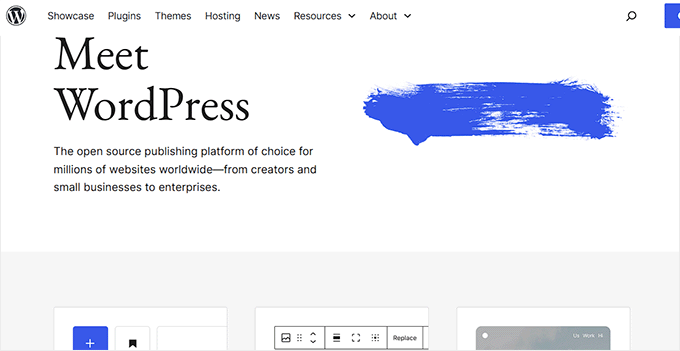
WordPress is the world’s most popular blogging and website building platform, powering over 40% of all websites. It’s also the platform we recommend to most readers because it offers the best balance of ease of use, flexibility, and long-term growth.
Whether you’re starting a personal blog, launching a company blog, or building a large online publication, WordPress can handle it.
That is why it’s trusted by well-known brands like TechCrunch, The Walt Disney Company, Sony Music, and, of course, WPBeginner.
Our Experience
Since WPBeginner has been running on WordPress for over 17 years, it’s the blogging platform we know best. We’ve used it to publish thousands of articles, grow our audience, and continuously improve our content strategy.
The biggest reason we keep recommending it is that it grows with your blog.
You can start with a simple blog today and add the features you need as your audience grows, whether that’s better SEO, email newsletters, sell courses, have private memberships, or even create an online store. You never have to switch to a different platform.
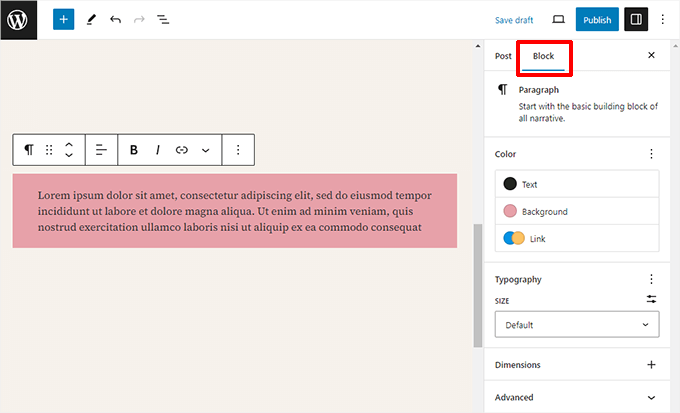
One feature we really like is the built-in block editor. It lets you create rich blog posts by simply adding and rearranging blocks for text, images, videos, buttons, galleries, and more.
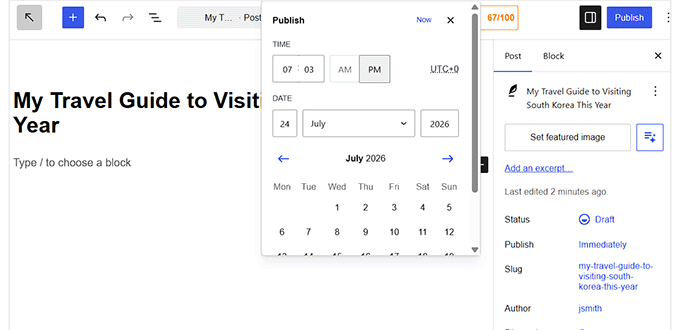
WordPress also supports the entire publishing workflow. You can save drafts, preview posts before publishing, schedule articles, and use revisions to restore earlier versions.
As our content library has grown, we’ve found WordPress just as easy to manage.
We use categories and tags to organize articles, while plugins help us optimize posts for SEO, recommend related content, grow our email list, and keep the comments section free of spam.
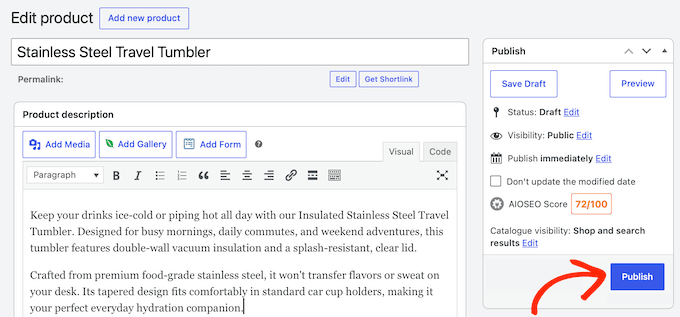
That flexibility also extends to monetization.
As your blog grows, you can add display ads, do affiliate marketing, sell memberships and online courses, create private communities, or even sell physical and digital products. The best part? Unlike other platforms, you keep 100% of what you earn, and there are no plan upgrades or platform approval needed.
Another advantage is the huge WordPress community. Whenever you get stuck, you can usually find a tutorial, official documentation, or forum discussion that helped us move forward.
The biggest trade-off is that WordPress.org is self-hosted, so you’ll need web hosting and a domain name. Plus, you’ll be responsible for updates, backups, and basic maintenance.
That might sound intimidating at first, but it really isn’t. Most beginner-friendly hosting providers let you install WordPress with just one click, and many also handle updates, backups, and security for you.
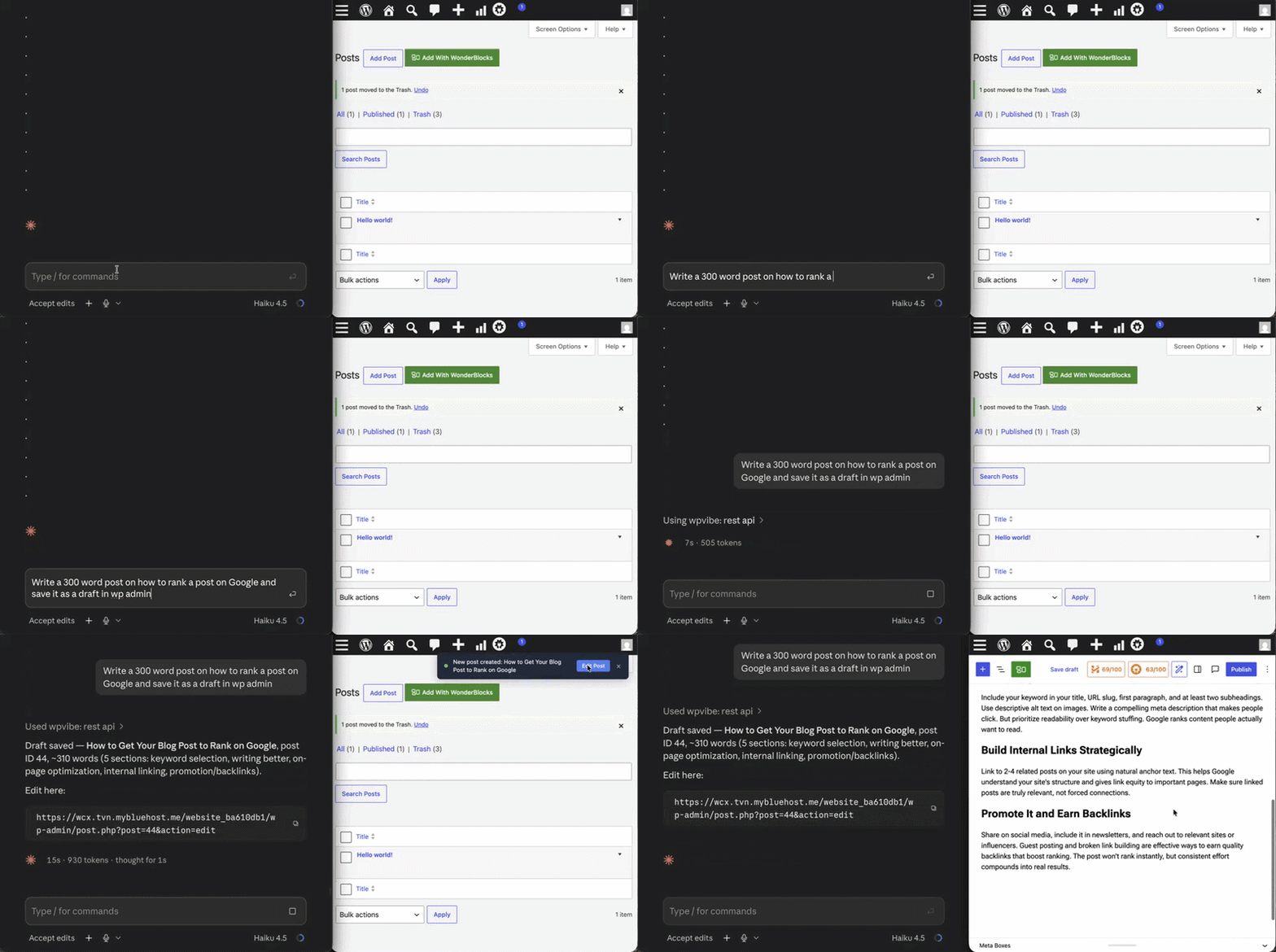
You can even connect WordPress with your preferred AI tool like Claude, ChatGPT, etc and build your site by simply prompting in the language you speak.
If you’d rather skip website maintenance altogether, then WordPress.com offers a hosted version of the same software. It also now includes plugin support on all paid plans, making it a much more affordable option than before.
Both platforms run the same WordPress software, so the main difference is whether you want to manage the hosting yourself or have it managed for you. You can also see our comparison of WordPress.com vs. WordPress.org to learn more.
2. Ghost – Best for Professional Publishers and Paid Newsletters
Testing process: We tested Ghost while researching this comparison, focusing on its writing experience, newsletter tools, memberships, and overall publishing workflow.
| Best for | Owning your publication while monetizing paid newsletters |
| Pricing | From $15/mo, or self-host for free |
| Pros | • Clean, distraction-free writing • Built-in newsletters, memberships, and paid subscriptions • Fast, lightweight performance • Native analytics and audience tools |
| Cons | • Smaller ecosystem than WordPress • Self-hosting is technical • Ghost Pro costs more than basic WordPress hosting • Paid plans cap your members, and pricing climbs as your list grows |
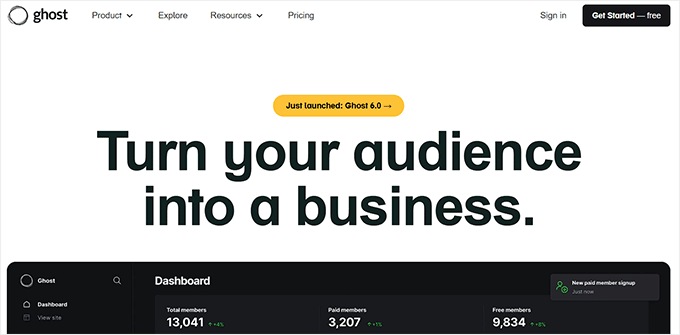
Ghost is a publishing platform built for writers who want to turn their content into a business.
Instead of trying to be an all-purpose website builder, it focuses on publishing, newsletters, and memberships, with all of those features built in from the start.
We recommend it for creators who want to grow a newsletter-first publication without relying on lots of third-party tools.
Our Experience
The first thing we noticed after signing up was how clean the Ghost dashboard felt.
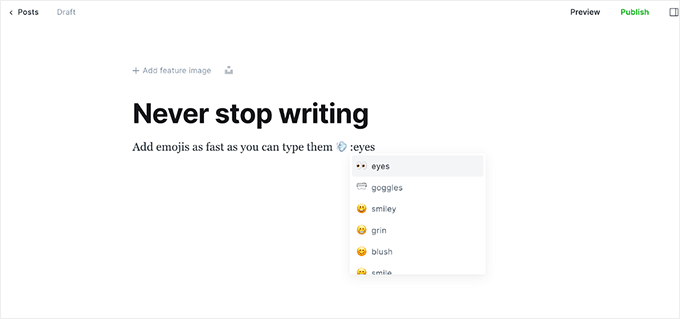
Unlike WordPress, there aren’t dozens of settings competing for your attention. We were able to start writing almost immediately, which let us spend more time creating content instead of configuring our website.
We especially enjoyed using the editor. It’s clean, responsive, and stays out of the way while you write. At the same time, it makes it easy to add images, videos, galleries, buttons, bookmarks, and other rich content without cluttering the interface.
Beyond the writing experience, what really makes Ghost stand out to us is that it gives you complete ownership of your publication.
You control your content, branding, and website, so you’re not locked into someone else’s platform as your audience grows.
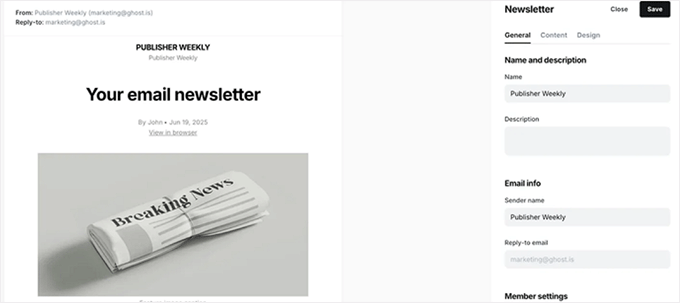
Ghost also includes newsletters and paid memberships out of the box. From the same dashboard, we could collect email subscribers, send newsletters, create members-only content, and accept recurring payments without installing extra plugins or connecting different services.
That meant we could build an audience first and then turn our newsletter or exclusive content into a recurring source of income when we were ready.
Even better, unlike Substack which we’ll cover later, Ghost doesn’t take a percentage of your revenue. Once you’ve covered your hosting or Ghost Pro subscription, the rest of your subscription income is yours to keep.
We also liked the built-in dashboard. Instead of switching between different analytics and email marketing tools, we could see our member growth, paid subscriptions, newsletter subscribers, engagement, and recurring revenue from one place.
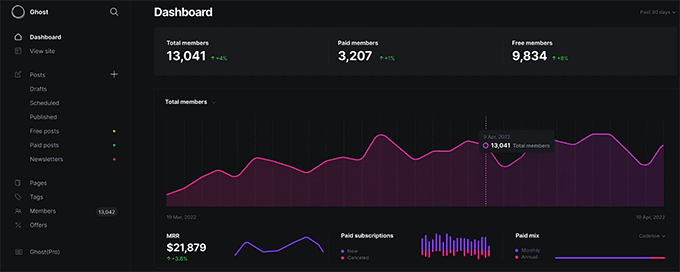
With all that said, Ghost isn’t as flexible as WordPress. It has a smaller ecosystem of themes, plugins, and integrations, so it’s best suited for publishers who value a focused writing experience over unlimited customization.
And while you can self-host Ghost to save money, setting it up is much more technical than installing WordPress. For a simpler experience, you would need Ghost Pro, which handles the hosting and maintenance, though it comes at a higher monthly cost.
If you’re still deciding between the two platforms, then check out our detailed Ghost vs. WordPress comparison to see which one is right for your needs.
3. Substack – Best for Newsletter-First Creators
Testing process: We tested Substack for this comparison, including its writing experience, newsletter publishing, subscriber management, and paid subscription features.
| Best for | Writers who want to publish by email and start charging quickly |
| Pricing | Free, but 10% fee on paid subscriptions |
| Pros | • Free to start, no hosting needed • Costs you nothing until you start earning • Recommendations and the Substack app help you find new readers • Email delivery, paid subscriptions, and payments built in |
| Cons | • Takes 10% of paid subscriptions, plus processing fees • Limited design and customization • Built for subscribers first, search traffic second • Your growth is tied to Substack’s network |
Substack is a publishing platform built around the email newsletter. Every post you write is emailed to your subscribers and published as a web page at the same time.
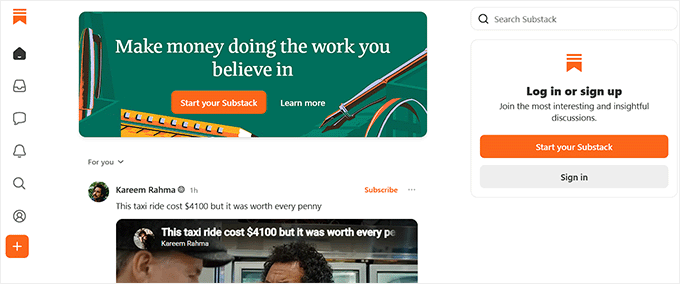
What makes it different from the other platforms on this list is that there’s nothing to set up. You sign up, name your publication, and start writing. There’s no hosting, no theme to choose, and no plugins to install.
We recommend it for content creators whose main goal is to build an email subscriber list and get paid for their writing as soon as possible.
Our Experience
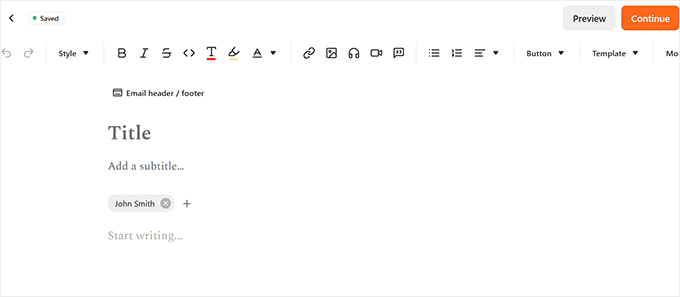
While testing Substack, one standout feature was that every post automatically doubles as an email newsletter.
Instead of using separate blogging and email marketing tools, you can write the content once and send it directly to subscribers.
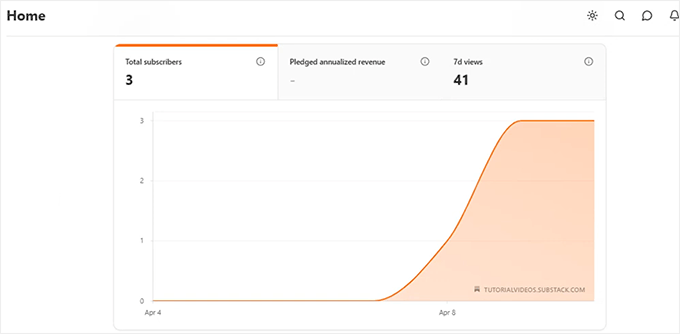
The subscriber dashboard is equally straightforward.
It gives you the option to import an existing email list or start collecting subscribers right away, which makes it easy to move an audience over or grow one from scratch.
Substack also helps with the hardest part of starting a blog, which is getting those first readers.
Other writers can recommend your publication to their subscribers, and your posts can be distributed to the Substack app and Notes. That built-in discovery is something a brand-new self-hosted blog simply doesn’t have on day one.
The trade-off is that convenience gets expensive later.
Substack takes 10% of every paid subscription, and payment processing fees come out on top of that. That’s a fine deal when you’re earning $100 a month. It’s a very different conversation at $10,000 a month, and there’s no plan you can upgrade to that removes the cut.
You’re also working inside someone else’s product. You can’t add features, redesign your site beyond a logo and colors, or control much of how your pages are structured for search engines. And while you can export your posts and subscriber list, the audience relationship largely lives on Substack’s network rather than on a site you own.
4. Medium – Best for Reaching an Existing Audience
Testing process: Some members of the WPBeginner team still publish essays and personal writing on Medium because it’s an easy way to reach readers without managing a website.
| Best for | Reaching an existing audience without running a site |
| Pricing | Free; optional Partner Program earnings |
| Pros | • Free, with no hosting or maintenance • Built-in audience helps you get discovered • Clean, distraction-free writing • Great for testing ideas and repurposing content |
| Cons | • Little control over design and branding • You don’t fully own your audience • Monetization limited to the Partner Program • Paywalled posts limit who can read your work |
Medium is a publishing network that thousands of writers post into, with a shared readership on top. It gives you access to an existing audience of readers who are already looking for interesting content.
You don’t build a website on Medium. You publish into an existing one, and readers discover you through the platform’s feeds, topics, and publications.
We recommend it for writers who care more about being read right now than about owning a long-term asset.
Our Experience
Medium has the best pure writing experience of any platform that we’ve tested so far.
The editor is a blank page. You start typing, and formatting options appear only when you highlight text or need them. There are no sidebars, settings panels, or notifications competing for your attention.
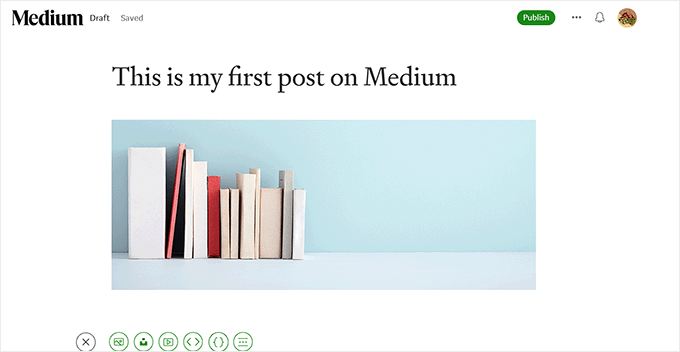
The published result looks good automatically. Typography, spacing, and mobile formatting are all handled for you, so a first-time writer’s post looks as polished as a professional’s.
The real benefit is its distribution.
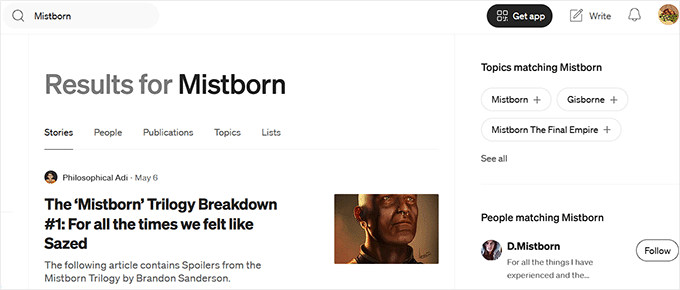
When we published a post, it could appear in the feeds of readers following that topic, without us doing any promotion. You can also submit your work to established publications on Medium, which puts it in front of an audience those editors have already built.
For a brand-new blog, that’s a meaningful head start. A self-hosted site earns its first hundred readers, but on Medium, some of them are already there.
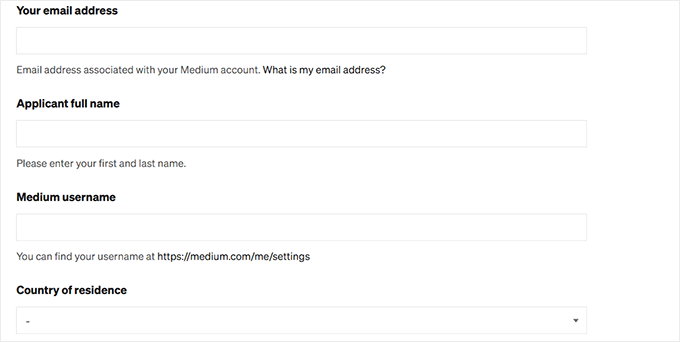
Medium also has a Partner Program that pays writers based on how much paying members read their work, and it can promote strong posts to a wider audience. You’ll need a minimum number of followers before you can join.
However, Medium isn’t the best choice if you want to build a long-term business.
On Medium, you’re building on rented land. Your posts live at a medium.com address, and new publications can no longer use a custom domain. If the platform changes how it distributes content or pays writers, your traffic and income change with it, and there’s nothing you can do about it.
Your monetization options are limited to what Medium offers.
You can’t freely add your own membership system, sell digital products, or customize the experience the way you can on a self-hosted website.
Our honest take is that Medium works best as a distribution channel rather than a home base. Many writers publish on their own WordPress site first, then republish a version on Medium to reach new readers. That way, you get the exposure without giving up ownership.
For more details, you can take a look at our WordPress vs. Medium comparison.
5. Wix – Best for All-in-One Business Websites With a Blog
Testing process: We focused on Wix’s AI website builder, blog features, templates, and built-in business tools.
| Best for | An all-in-one business website with a blog |
| Pricing | Free plan; premium from $17/mo |
| Pros | • Easy drag-and-drop builder • Professionally designed templates • AI builder speeds up setup • Built-in hosting, security, and marketing tools |
| Cons | • Blogging and SEO weaker than WordPress • Free plan caps storage at 500MB and bandwidth at 1GB • You can’t change your template once you pick one • Costs rise as you upgrade • Locked in, with no easy migration out |
Wix is one of the easiest website builders we’ve tested. It combines professionally designed templates, an intuitive drag-and-drop editor, and built-in business tools to help you create a professional-looking website without any coding.
We recommend it if your priority is building a beautiful website where blogging supports your business rather than being the main focus.
Our Experience
One of the things we liked most about Wix was how easy it was to start a blog. The setup process guided us through creating a website, and within a few minutes, we were ready to write and publish our first post.
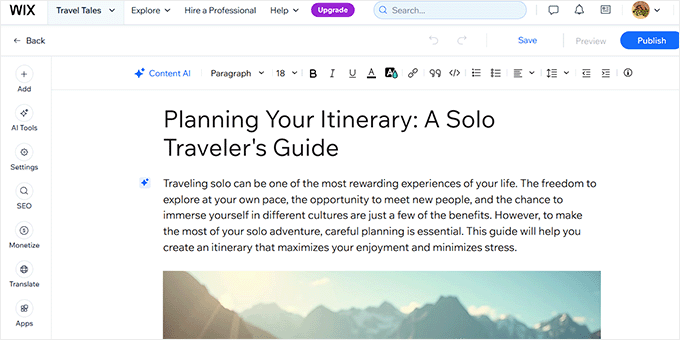
The blog editor covers the fundamentals well: writing and formatting articles, organizing categories, and dropping in images and video. While they aren’t as advanced as WordPress, they’re more than capable of supporting a business blog.
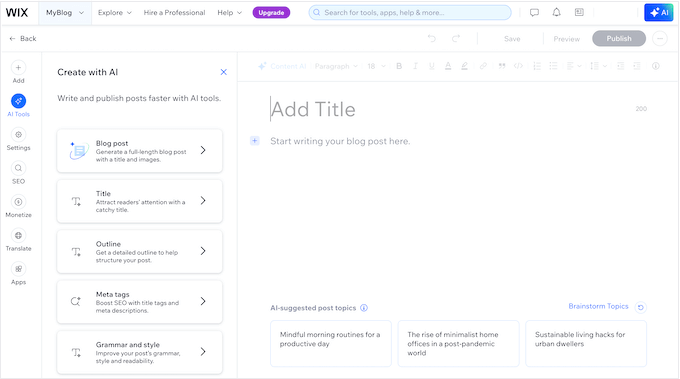
Wix’s AI website builder is the most interesting part. Answer a few questions about the type of blog we want, and it generates a whole site. It set up dashboard, recommended relevant built-in tools, and even created three sample blog posts based on the information we provided.
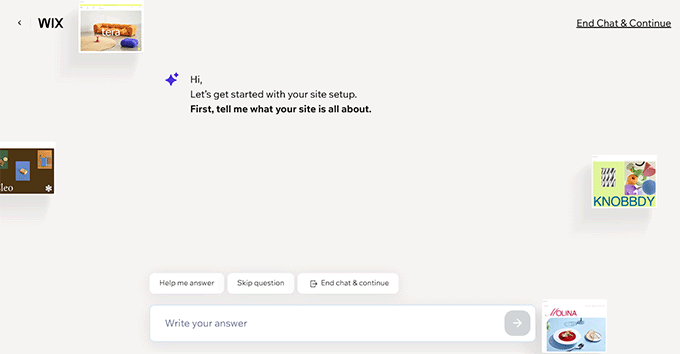
Even so, we noticed a couple of limitations. The AI website builder was a bit slow, and we couldn’t switch to another browser tab while it was generating our site.
We also found that the AI-generated blog posts were quite thin, so we’d recommend rewriting and expanding them before publishing if you want them to perform well in search results.
As your blog grows, Wix also gives you several ways to monetize it.
You can display ads, create membership plans, promote affiliate products, or sell physical and digital products without installing additional tools.
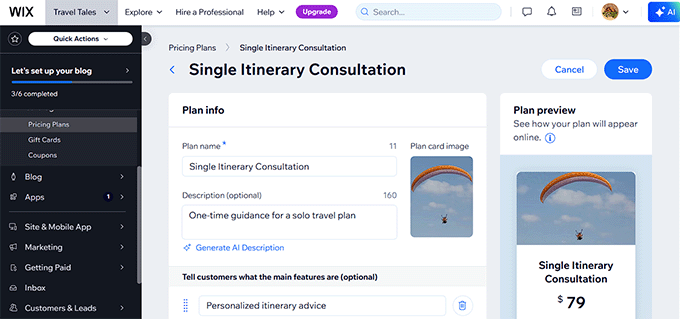
Still, Wix doesn’t offer the same blogging flexibility as WordPress. Its blogging features and SEO tools are more limited, so it’s a better fit if your blog supports your business instead of being the main focus of your website.
You should also remember that Wix is a closed platform. While that’s what makes it so beginner-friendly, it also means you’re committing to its ecosystem.
If you decide to move your website elsewhere in the future, then there’s no simple way to migrate everything, and your monthly costs can increase as you upgrade to higher-tier plans.
Overall, we think Wix is an excellent choice if you want an easy way to build a professional-looking website with a blog. For more details, you can check out our Wix vs WordPress review.
6. Squarespace – Best for Beautiful Portfolio Websites
Testing process: We tested Squarespace for this comparison, evaluating its templates, website builder, blogging features, and customization options.
| Best for | A beautiful, design-first website |
| Pricing | From $10/mo (billed annually) |
| Pros | • Beautiful, professionally designed templates • Easy-to-use visual editor • Great galleries and portfolio layouts • Built-in blogging, eCommerce, and marketing |
| Cons | • Blogging weaker than WordPress • Less SEO and customization control • Pricier than self-hosted WordPress |
Squarespace is a design-first website builder that makes it easy to create a professional-looking website. It’s quite popular among photographers and artists.
Their website templates are some of the best we’ve seen, making it an excellent choice if showcasing your work is more important than publishing lots of blog content.
Our Experience
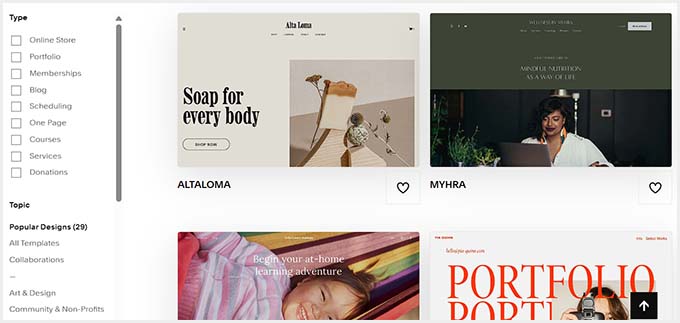
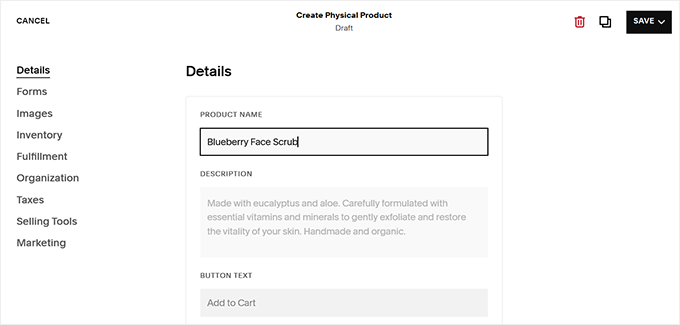
The first thing that caught our attention was the quality of Squarespace’s templates. We started with the Myhra template, and it gave our blog a polished, professional look right away.
Once we selected it, Squarespace quickly generated the website, so we could start replacing the demo content and publishing blog posts almost immediately.
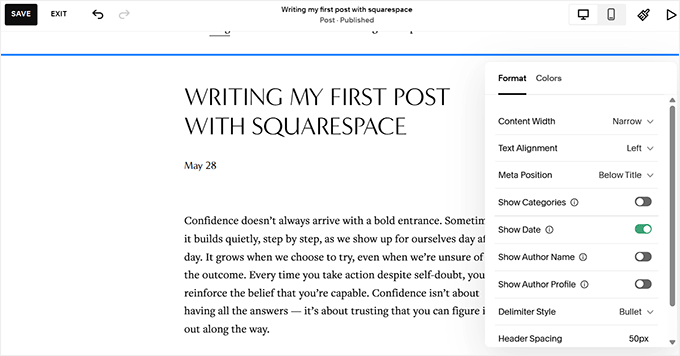
During testing, we found the blogging tools easy to use. We had no trouble writing posts, organizing content, and adding images, videos, and other media.
The editor felt straightforward, and the finished articles looked great on both desktop and mobile devices.
eCommerce features, email marketing, and analytics are built in as well.
That gives you room to grow the blog into a business over time by selling products, services, memberships, or online courses, without switching platforms.
Where Squarespace falls behind is long-term flexibility. While it’s a great platform for publishing a beautiful blog, you trade some blogging power, SEO flexibility, and ownership for that polished, all-in-one experience.
If your blog outgrows the platform, migrating to another platform isn’t nearly as smooth as moving a self-hosted site.
We still think Squarespace is a great option if you want a beautiful, design-focused website with a blog and don’t want to spend time on technical setup. For a more detailed comparison, you can also see our Squarespace vs WordPress comparison.
Which Is the Best Blogging Platform?
If you’re looking for the best blogging platform overall, then we recommend WordPress.
It’s easy enough for beginners to get started, yet powerful enough to grow with your website. Whether you want to publish a personal blog, business blog, build a business website, sell products, create online courses, or launch a membership site, WordPress gives you the flexibility to do it all.
Still, WordPress isn’t the right choice for everyone.
If you want a platform that’s built specifically for paid memberships, then Ghost is an excellent alternative. If you simply want the fastest way to start a newsletter, then Substack is a great place to begin.
For writers who only want to publish articles and reach an existing audience, Medium is worth considering.
And if your priority is creating a beautiful portfolio or business website with occasional blogging, then Wix or Squarespace may be a better fit.
Frequently Asked Questions About Blogging Platforms
Which is the best blogging platform for SEO?
WordPress is the best blogging platform for SEO. It includes built-in SEO-friendly features and works with powerful SEO plugins like All in One SEO, giving you much more control over your search rankings than most other platforms.
What platform do most bloggers use?
Most bloggers use WordPress. It powers over 40% of all websites, making it the world’s most popular blogging platform thanks to its flexibility, customization options, and large community. Many fortune 500 companies like Microsoft, Facebook, and others also use WordPress to power their business blogs.
How can I make my blog popular?
The best way to grow a blog is to consistently publish helpful content and promote it. Focus on solving your audience’s problems, optimize your content for SEO, and share it through email newsletters and social media. For more tips, see our guide on how to increase your blog traffic.
How long does it take for a blog to become popular?
Most blogs take several months to start growing. Many blogs start seeing steady traffic within 6-12 months, while significant growth often takes a few years of consistent publishing.
Is blogging dead because of AI?
No, blogging isn’t dead because of AI. People still search for helpful, trustworthy content every day. While AI can help you write faster, readers and search engines continue to value original experiences, expert insights, and useful advice that AI alone can’t provide.
We hope this article helped you find the best blogging platform for your needs. You may also want to see our ultimate WordPress SEO guide to improve your blog rankings.
If you liked this article, then please subscribe to our YouTube Channel for WordPress video tutorials. You can also find us on Twitter and Facebook.



FrankPereiro
Hi there, I have a huge problem with my WordPress hosted blog. Hackers can easily enter into my server and get rid of my blog files. It has happened several times already and it’s really frustrating.
Do you have any tips for this problem? I have to start a new blog, again.
Regards,
WPBeginner Support
For our security recommendations for WordPress, you would want to take a look at our article below: https://www.wpbeginner.com/wordpress-security/
Admin
anshula
This post was very helpful .
WPBeginner Support
Glad our guide was helpful
Admin
Osagie Iyayi
Great post !
I got value..
A question though ; does WordPress allow Google AdSense ?
WPBeginner Support
Glad our post was helpful, WordPress.org sites allow Google Adsense
Admin
B. Palmer
This article was extremely helpful. Also, thank you for the hyperlinks for extra information.
WPBeginner Support
Glad our recommendations were helpful
Admin
E Luis De La Rosa
This was a very helpful and informative article! I was just curious about which platform you would consider to be the best free alternative to wordpress.org. I would love to eventually use it but for now my finances don’t really allow for too much more. Thank you!
WPBeginner Support
For a starting point, you can look at WordPress.com as they are using WordPress but with more restrictions
Admin
Smishhra
Very informative post,really liked this post… Thanks for sharing.
WPBeginner Support
You’re welcome, glad you found our guide informative
Admin
S Mishra
Thank you for this wonderful & helpful post.
WPBeginner Support
You’re welcome, glad our guide was helpful
Admin
Sanjay Mishra
I just want to say thanks for your wonderful post…
WPBeginner Support
You’re welcome, glad you liked our post
Admin
Danny
Hi,
Thanks for sharing the information.
WPBeginner Support
You’re welcome
Admin
BoTree Digital
Thanks for sharing this. It will help us to publish content.
WPBeginner Support
Glad you found our content helpful
Admin
citcchandigarh
thank you for this article.
WPBeginner Support
You’re welcome
Admin
George
Great blog. Thanks for sharing.
WPBeginner Support
Thank you and you’re welcome
Admin
Robin
Very good porst.
WPBeginner Support
Thank you
Admin
Eemu
Amazing blog.
Its very useful.
WPBeginner Support
Thank you, glad you found our content helpful
Admin
Kara
So…. clearly this is geared toward wp. However, I find wp extremely clunky and difficult to make my blog as visually appealing as I would like. I don’t get it, I love the ease of drag and drop (I took coding classes in college, many moons ago) not interested in going back. I absolutely love wix for my business sites… but blogging is rough on that. I want the best of both worlds. Tips?
WPBeginner Support
For drag and drop control over your content with WordPress, you would want to take a look at page builder plugins: https://www.wpbeginner.com/beginners-guide/best-drag-and-drop-page-builders-for-wordpress/
Admin
Yoriko Otomo
Hi,
A very well written article, Easy to understand and helpful.
WPBeginner Support
Thank you, glad you found it helpful
Admin
Raphael Wichtl
Such a great and very much informative information. Thanks for this update and keep sharing this type of helpful article!
WPBeginner Support
Thank you, glad you like our article
Admin
Palash Moundekar
This information is very useful to me. I would like to implement this information for improve our work. Thank you for sharing crucial information with us.
WPBeginner Support
Glad you found our content helpful
Admin
Martha Santos
I have a question for you. Is there any blogging platform that is better for blogs with written text? I am currently using Tumblr and I like how easy it is to use but I find that most of what everybody posts there is images and very little text. I am not sure people are that interested in reading written texts. Do you have any advise on this? Or are all blogging platforms more oriented towards images than writing anymore?
WPBeginner Support
Most sites add the images to make sharing the content more social media friendly but any of the other platforms should be good for writing.
Admin
anishiiadm
As a matter of first importance, I might want to you rock for composing such informative content. I arrived, what I needed.
WPBeginner Support
Glad you like our content
Admin
Kyle
Thanks much for this
WPBeginner Support
You’re welcome
Admin
jenifferjack
thanks for sharing this information with us
WPBeginner Support
You’re welcome
Admin
Emily
Hello – Thank you for creating this article! I don’t have any real networking connections, so I’m wanting to build up my writer’s portfolio before making my freelancing website public and all that. I felt that blogging would be a great asset in that regard. Do you have any tips on how to spread or market a blog and gather a wider audience? And would it be smart as a beginner to have a few posts already written beforehand and post them at regular intervals as you write new material?
WPBeginner Support
For getting a larger audience you would want to take a look at our article here: https://www.wpbeginner.com/beginners-guide/how-to-increase-your-blog-traffic/
Having some posts prepared to allow you to keep a consistent posting schedule would be good for a beginner
Admin
Kim
Hi,
I’m currently using Wix and getting super frustrated, as I cant get any embeds or links to work, as of late. I also cant find where to contact them for help. Very frustrating!! I’m considering switching to a different platform. Is there one in particular that you suggest that will be relatively easy to transfer my content over to?
WPBeginner Support
We are a bit biased toward WordPress, if it helps we have a guide explaining the transfer process here: https://www.wpbeginner.com/wp-tutorials/how-to-properly-switch-from-wix-to-wordpress-step-by-step/
Admin
Kimo Paul
Such a valuable information in this blog its really help me in the future.
WPBeginner Support
Thank you, glad our guide can be helpful
Admin
robert
Thank you for comparing popular blogs. I have a somewhat granular question based on your analysis. The only blog you mention that is SEO friendly is Wordpress. I’m looking for the best blog platform for SEO – ease of tile tags, descriptions, on-page linking. Which platform do you recommend for SEO?
WPBeginner Support
As a WordPress tutorial site, our opinion is biased toward WordPress being the best solution for that
Admin
Divyang Bhuva
Hey,
I found all the discusions really useful in terms of applications for blogging that I haven’t really ever considered!
I found your write up really helpful, that I made a full note out of it. Thank you so much.
WPBeginner Support
Glad our article could be helpful
Admin
Terry Watkins
I like the idea of using WP.org but not the idea that WP.com would OWN my work. Please explain what this means. At some point I may want to publish my writing. How would that work?
WPBeginner Support
If you use a WordPress.org site then it is not a WordPress.com site. For some clarification, you may want to take a look at our article here: https://www.wpbeginner.com/beginners-guide/self-hosted-wordpress-org-vs-free-wordpress-com-infograph/
Admin
Raj Sinha Roy
Amazing write up. Eliminates the frustrating initial research and greatly facilitates in decision making.
WPBeginner Support
Thank you
Admin
Aisha sharma
Awesome blog. Thanks for sharing it.
WPBeginner Support
You’re welcome
Admin
yogesh
These post was really helpful for mo
Robby
This is what I’ve been searching and looking for. Thanks for the article, its really helpful.
WPBeginner Support
Glad our article could be helpful
Admin
Kamaljeet Singh
Finally, I found the perfect article that helped me choose the best blogging platform. Thanks to beginner.
WPBeginner Support
Glad our article could help
Admin
Lorna Pollock
I’m looking for a free blog – but I already have a domain name and a hosting company. Is there such a thing?
WPBeginner Support
If your host allows, you should be able to install WordPress for free and point your domain toward the site.
Admin
techsteeds
I want to big thanks for sharing wonderful list Nice work
WPBeginner Support
Thank you, glad you like our content
Admin
Nihal Singh
Great post!
It is most useful for the content writer to publish the article for the audience. The given blogging platform is very helpful for writing the best content. Thank you for sharing.
WPBeginner Support
Thank you, glad you find our content helpful
Admin
Dilip
Hi, so I am about to start blogging and I am working on my content to avoid any breaks later,however I am concerned about security of my blog. Its a Food Blog that I am working on. Please advice on security of my blog if I do go ahead with Wordpress.org or wordpress.com.
cheers.
WPBeginner Support
For a WordPress.org’s site security, you would want to take a look at our article here: https://www.wpbeginner.com/wordpress-security/
Admin
Johanna Oznowicz
I had to stop using blogger because I couldn’t get rid of the COMMENTS page for the content I had. So I ended up having to erase the whole post.
NOW, I live in fear of having to delete my Wordpress page because of the new format they’re going to, which will mess with paragraphs, to where I will lose at least half a post.
I am seriously considering just creating my own personal blog with Word . Just writing as a journal. But the whole point of having a blog is to make yourself heard. HOW can I do that when the changes botch up what work I’ve already done? FRUSTRATION!
WPBeginner Support
If how the blocks are styled concerns you, and you know about the classic editor plugin, you should still be able to use the classic block in your posts and pages to create content using that method
Admin
Sahil Singha
Hello Sweet,
I’m Very Happy to advice From you, To Choose Best One. I Gonna To start WordPress.org that it’s good Blog yeah!
Sorry, I start My Blog After Getting new smartphone last 2019 in it…
I hopefully to help me To grow
Thanks you, So much
☺☺See You later☺☺
WPBeginner Support
You’re welcome
Admin
Biprojit Deb
I choose blogger because its easy for me
WPBeginner Support
If you feel it is the best platform for you then great, glad you found the platform you prefer
Admin
Vero
Thank you so much for taking the time to write this blog. I am familiar with most of the platform as I have used it in the past. I am currently using WP.com, I don’t want to self-host. But I am wondering how do I start generating income on blogging with wp.com? I know it will take some time. But I wanted to make sure that I am using the right platform that will be generating income from my blog. It is a paid one, not a free one since I upgrade it.
WPBeginner Support
You would want to reach out to WordPress.com’s support for what monetization options they have available at the moment.
Admin
Hannah Carim
best blog ever thanks for sharing
WPBeginner Support
You’re welcome
Admin
cdsmythe
HI there
Im looking for a blog provider where I can restrict access – so I can issue usernames and passwords for access.
Which of the platforms you covered provide that as a feature?
WPBeginner Support
With WordPress you could use a membership plugin to do that: https://www.wpbeginner.com/plugins/5-best-wordpress-membership-plugins-compared/
Admin
Gail S
I’ve had a Blogger blog for a few years now. I’m now having to find another platform as we’ve been notified that Google’s Blogger (Blogspot) goes away April 2, 2019.
I’ve looked around and most of these free sites listed seem harder to figure out than Blogger did. I hope to find something I like soon. The info was good here, but over my head in many respects.
WPBeginner Support
Unless we hear otherwise, Google is not shutting down Blogger at the moment. They are removing Google+ and Google+ for comments from Blogger sites April 2nd, 2019. Your Blogger site will remain it will only lose Google+ comments.
Admin
Stuff Place One
good post and it really help
WPBeginner Support
Thank you, glad it could help
Admin
Al-Burraq Technologies
nice post thanks for sharing such a wonderful post
WPBeginner Support
Glad you like our content
Admin
kaalsatyanarayan ji
best site best blog thanks sir
WPBeginner Support
Thank you
Admin
Joe
well, I would like to know where WP is better than most. So far all I noticed was how quick we can install it. After that you are entirely on your own. No one (unless you pay large amounts of money) will support you and most themes I chose so far, unless I buy them outright, do not work properly. Perhaps that is good for rich people but not for people like me. I pay when I am happy with the goods I am using. If you buy a shirt you try it out. Works? Like it? Then you buy it. Although I also do not like WIX.com, I think it is still a much better option . All the rest are just plugins. the essence of Site building lies on the fact the it is all HTML.
Here your article is a sales pitch on your services and those of WP: bah shame on you!
WPBeginner Support
For receiving support for WordPress, you can contact us but for specific themes and plugins to understand why some of them require payments for support you may want to take a look at our article: https://www.wpbeginner.com/beginners-guide/how-to-properly-ask-for-wordpress-support-and-get-it/
The support forums on WordPress.org are where you would find free assistance for themes and plugins.
Admin
Laura
I think that’s the point of the blog; and the whole point of blogging. WP Beginne is obviously an expert in their field, an evangelical supporter of WP and happy to extend their knowledge and experience of the site to viewers and readers of their blog. Adding value to their business and extending that value to their consumers. No on asked you to read it love. Raise your vibe or move along.
Surya Singh
Very Useful sites thanks for sharing it
WPBeginner Support
Glad our article could be helpful
Admin
Asif
Nice post.
Thank you for sharing a informative information with us
WPBeginner Support
Glad you found our content helpful
Admin
Tony Loring
“Drag and drop”? Where does the user drag from, and drop where? Too many terms are bandied about NOT allowing ease to use the sites. How to upload text is a similar problem. Terms don’t correspond so the user is left staring blankly into space wondering “How do I resolve this dilemma?” One site says “Click to the left of the Editor”. Problem is, nothing happens on doing that. Another “suggestion” is “click on the black bar at the top of the page”. However, NO black bar is there!
Sensible directions must be explicit and clear. Example: “First click on this; then go to that etc.”
I sometimes feel, where literary sites are concerned, the idea is to shoo away the possible user! This is most frustrating!
Also, beware of “experts” or terms like “the best”. The first simply means gouger, and the 2nd term really means THE WORST!!
WPBeginner Support
For clarification, this is a comparison article, not an article explaining how to use the functions in each of these services. If you are looking for support for how to use something in WordPress you can reach out to us through our contact form.
Admin