


Affiliate marketing might seem complicated, but it’s actually simple. You recommend a product or service you like, and when someone buys through your link, you earn a commission. 💸
Think of it as sharing something useful and getting rewarded for it.
Most affiliate marketers start without a big audience or special skills, and you can, too. In this guide, I’ll show you how to pick the right niche, choose the best platform, join affiliate programs, and add links naturally without annoying your readers.
I’ll also share tips on creating content people trust, driving traffic, and avoiding common mistakes beginners make.
By the end, you’ll have a clear plan to start your own affiliate marketing journey—even if this is your first blog or social account.

💡Affiliate Marketing in a Nutshell: Quick Key Takeaways
If you’re new to affiliate marketing, here’s a quick snapshot before I dive deeper:
- What It Is: Earning a commission by promoting products or services, paid when someone buys through your link.
- Who It’s For: Beginners, bloggers, content creators, or anyone with an audience interested in a niche topic.
- Why It Works: Builds trust, provides value to your audience, and lets you monetize your content naturally.
- Getting Started: Pick a platform (blog, YouTube, social media), join affiliate programs, and start sharing links.
Here’s a quick overview of all the topics I’ll cover in this guide.
Feel free to use the jump links to go to your preferred section:
- What is Affiliate Marketing?
- Why Is Affiliate Marketing Worth Trying?
- Types of Affiliate Marketing
- Choosing the Right Niche for Affiliate Marketing
- How to Choose a Platform for Affiliate Marketing
- Join an Affiliate Program
- How to Add an Affiliate Link
- How to Write an Affiliate Product Review (Optional)
- Best Practices for Affiliate Marketing
- Common Affiliate Marketing Mistakes to Avoid
- Frequently Asked Questions About Affiliate Marketing
Ready? Let’s dive right in.
What is Affiliate Marketing?
Affiliate marketing is a way to earn money by recommending products or services you love. When someone buys through your link, you earn a commission, and it doesn’t cost them anything extra.
Think of it like sharing tips with a friend. You tell them about a product that makes their life easier, and if they buy it, you get rewarded.
At WPBeginner, we do this by recommending tools and plugins we actually use, like WPForms or MonsterInsights. You can do the same for your blog, YouTube channel, or social media.
Here’s how it works:
- Join an Affiliate Program: Many companies offer free programs. You sign up and get a special link that tracks your referrals.
- Share Your Link: Put it in blog posts, videos, emails, or social media. Make sure it’s helpful, not spammy.
- Earn Commissions: When someone clicks your link and buys the product, you earn money automatically.
To make it even easier to understand, I’ve created a simple visual showing how the affiliate marketing process works from start to finish:

For example, imagine you run a travel blog. You could write a post about planning a trip to Italy and recommend travel gear, booking websites, or tour services.
If someone buys a travel backpack, books a tour, or signs up for travel insurance through your link, you earn a commission. It’s really simple: share something useful → help your audience → earn money while doing it.
And the best part? Anyone can start, even if you don’t have a big audience or fancy tech skills.
Why Is Affiliate Marketing Worth Trying?
I recommend trying affiliate marketing because it’s one of the easiest ways to start earning online while helping your audience.
Here’s why it works so well:
- Low Startup Cost: You don’t need a big budget — a blog, website, or social media account is enough to get started.
- Passive Income Potential: While creating content upfront takes work, once your links are live, you can keep earning even while you sleep or travel.
- Flexible Work: You decide what to promote, when to create content, and how to share your links.
- Scalable Growth: The more helpful content you create, the more chances you have to earn. You can grow your income without increasing your hours.
- Learn Valuable Skills: Affiliate marketing teaches you about writing, marketing, SEO, and audience engagement, which are skills you can use in any online business.
That said, I recommend keeping your expectations realistic.
Your income depends on the traffic you get and the effort you put in. You won’t become rich overnight, but consistent, helpful content can turn into a steady income stream.
💡Pro Tip: Always put your audience first. Instead of chasing quick commissions, focus on creating content that genuinely helps your readers, viewers, or followers. Recommend products or services that solve real problems or make their lives easier.
When people see that you care about their needs and not just making money, they’ll trust you — and that trust turns into long-term income.
Types of Affiliate Marketing
Affiliate marketing isn’t one-size-fits-all. Depending on what you enjoy creating and who your audience is, you can promote products or services, or focus on creating content that naturally drives sales.
To make it easier to see the differences, here’s a simple comparison of the three main types and examples of each:
| Type | What You Promote | How You Share It | Example |
|---|---|---|---|
| Product-focused | Physical products like gadgets, books, or travel gear | Blog posts or social media (Note: Amazon does not allow email links) | Amazon Associates – recommend a travel backpack or camera |
| Service-focused | Online services, software, or subscriptions | Tutorials, reviews, webinars, or emails | Bluehost Hosting – recommended for building a website |
| Content-focused | Creating helpful content to drive affiliate sales | Blogs, YouTube videos, podcasts, or guides | YouTube travel vlogs reviewing travel insurance or tours |
Each type works a little differently, but all of them can help you earn commissions while providing value to your audience.
If you’re just starting out, I suggest picking the type that feels easiest or most natural for you. You can always explore the other types as you grow.
Choosing the Right Niche for Affiliate Marketing
Before you start affiliate marketing, it’s important to pick a niche. This is a specific segment of the market or a focused topic you’ll create content around.
For example, if you choose to build a fashion blog, your niche could be sustainable fashion or streetwear.
Once you have a niche, it’s easier to see what kinds of affiliate products or services you can recommend — like eco-friendly clothing, accessories, or online fashion subscription boxes.
This helps you build trust with your audience and makes it simple to recommend products that naturally fit your content.
Here’s why a focused niche matters:
- Build Authority and Trust: Focusing on a specific topic shows your audience you know your stuff.
- Higher Engagement And Conversions: Targeted content speaks directly to your audience’s needs, making them more likely to click your affiliate links.
- Avoid Spreading Yourself Too Thin: Covering too many topics can confuse your audience and reduce impact.
How to Pick Your Niche
After understanding why a focused niche matters, the next step is to choose the right niche for your affiliate marketing efforts.
This step is important because it determines the topics you’ll create content about and the products or services you can naturally recommend to your audience.
Here’s how to pick a niche:
- Interest: Choose something you genuinely enjoy or are passionate about. Creating content is easier and more fun when you care about the topic, and your enthusiasm will make your recommendations feel authentic.
- Knowledge: Focus on a niche you understand or are willing to learn deeply. The more expertise you bring, the more your audience will trust your advice. For example, at WPBeginner, we often recommend tools that we actually use and know well. Our readers trust these recommendations because we understand the products and provide honest guidance.
- Demand: Make sure people are actively searching for information, solutions, or products in your niche. Checking trends and popular topics ensures your content has an audience and real affiliate potential.
Research Your Niche for Affiliate Potential
Once you have a few ideas for your niche, the next step is to research their potential for affiliate marketing. I recommend starting by brainstorming three niches that genuinely interest you.
Once you have your list, use free tools like Google Trends to see how popular each topic is and whether people are actively searching for information on it.
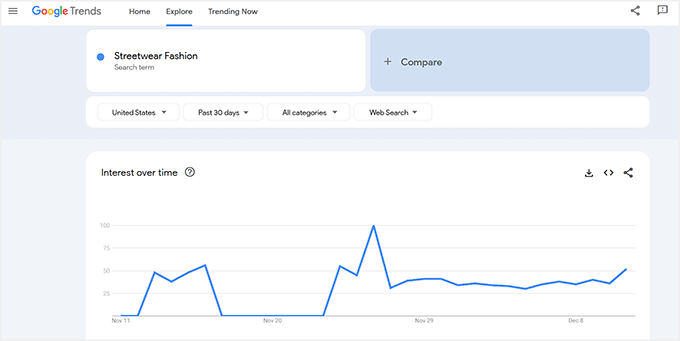
You can also check marketplaces like Amazon’s bestseller lists to spot products in demand that could be promoted through affiliate links.
This simple approach ensures you pick a niche that not only excites you but also has real affiliate potential.

How to Choose a Platform for Affiliate Marketing
Choosing the right platform is one of the first steps in affiliate marketing. The platform you use affects how content is created, how easily your audience can find it, and how affiliate links are shared.
That’s why I recommend picking a platform that fits your style and makes your earning process smoother.
For example, if your niche is streetwear fashion, you’re likely targeting Gen Z and Millennials who spend a lot of time on social media. So, social media platforms would be your best bet.
On the other hand, if your niche is WordPress tutorials or tech guides, your audience might prefer reading detailed blog posts or watching step-by-step YouTube videos.
Here are some popular platforms to consider for affiliate marketing:
1. WordPress Blog

| ✅ Pros of Using a Blog For Affiliate Marketing | ✅ Full control over content and design ✅ Excellent SEO potential and long-term traffic ✅ Easy to embed affiliate links naturally ✅ Great for detailed guides, tutorials, and reviews ✅ Build an email list directly from your site ✅ Full flexibility to monetize with multiple affiliate programs |
| ❌ Cons of Using a Blog For Affiliate Marketing | ❌ Slower initial growth (you have to get your own traffic) ❌ Requires consistent content creation ❌ Takes time to establish authority |
| Pricing | Starting around $50–$100/year for hosting and domain; costs increase if using premium themes or plugins |
| Best For | Niches that benefit from in-depth content, tutorials, product reviews, or guides. |
A blog is perfect for niches where readers are looking for detailed guides, tutorials, or in-depth product reviews.
For example, WordPress tutorials, tech gadgets, personal finance, or cooking guides all do well on blogs. At WPBeginner, we’ve built our affiliate marketing success around our WordPress-based blog by recommending plugins, themes, and hosting services.
Our readers trust these tutorials and reviews because we know the products and show exactly how to use them.
You can promote affiliate links on a blog by including them in product reviews, sharing step-by-step guides that highlight a product’s value, and promoting them through email newsletters.
If you’re interested in starting a blog for affiliate marketing, check out our guide on how to start a WordPress blog. It walks you through everything from hosting to publishing your first post.
2. YouTube Channel
| ✅ Pros of Using YouTube For Affiliate Marketing | ✅ Highly engaging and great for visual storytelling ✅ Huge audience potential through search and recommendations ✅ Can monetize directly through the YouTube Partner Program ✅ Great for building trust with a loyal subscriber base |
| ❌ Cons of Using YouTube For Affiliate Marketing | ❌ Video creation can be time-consuming ❌ Requires equipment like a camera, microphone, and editing software ❌ Needs consistency to grow subscribers |
| Pricing | Starting around $0-100 if using a smartphone and free editing software. Costs can rise to $300–$1,000+ for professional cameras, lighting, and advanced editing tools. |
| Best For | Niches that benefit from visual demonstrations, tutorials, or product reviews, such as tech gadgets, travel, fitness, or cooking. |
A YouTube channel works really well for niches where people like to watch videos and learn by seeing things in action.
For example, tech gadget reviews do great because viewers want to see how the product works, and travel content is popular because people enjoy experiencing destinations through videos.
I’ve seen many creators grow successful channels by making simple, clear tutorials and honest product reviews that people can trust.
Affiliate links can be added in video descriptions, shown in video demonstrations, or mentioned in end screens. I also recommend adding your link to a pinned comment. This keeps it at the top of the comment section, so more people see it.
If you want to start a YouTube channel for affiliate marketing, take a look at our guide on creating a YouTube channel.
3. Social Media

| ✅ Pros of Using Social Media For Affiliate Marketing | ✅ Quick reach and potential for content to go viral ✅ Direct engagement with your audience through comments, DMs, and shares ✅ Great for building a community and brand presence |
| ❌ Cons of Using Social Media For Affiliate Marketing | ❌ Algorithm changes can affect visibility and reach ❌ Shorter content lifespan compared to blogs or videos ❌ Requires frequent posting to stay relevant |
| Pricing | Free to start on platforms like Instagram, TikTok, or Pinterest. Costs increase if using paid ads, scheduling tools, or design software. |
| Best For | Niches that are visually appealing or trend-driven, like fashion, travel, lifestyle, fitness, or food. |
Social media works best for audiences who enjoy fast, visual content. For instance, Facebook tends to perform well if your audience is older and enjoys community groups or longer posts.
Instagram is ideal for lifestyle, fashion, travel, or food niches because it emphasizes highly visual content. And TikTok works best for younger audiences who love trends, short tutorials, and engaging videos.
Choosing the right platform for your niche and audience helps you reach people more effectively and make your affiliate promotions more impactful.
I also suggest combining social media with a blog to maximize reach and affiliate sales. For example, share your blog post on social media, highlight tutorials in short videos, or link back to detailed product reviews.
You can also embed your social feeds directly on your WordPress site, making it easy for visitors to follow you and interact with your content:
- How to show your TikTok feed in WordPress
- Beginner’s Guide to showing your Instagram feed in WordPress
- How to show your Facebook feed in WordPress
This approach lets your audience engage with content across multiple platforms while driving traffic to your blog and affiliate links.
Join an Affiliate Program
💡 Pro Tip: Before you apply to affiliate programs, I recommend creating 5-10 high-quality posts. Most programs review your site, and they want to see that it is active and has real content.
Once you’ve picked your niche and platform, the next step is joining affiliate programs.
An affiliate program is a system run by a company where you earn a commission whenever someone buys a product through your unique referral link. It’s a way to earn money by recommending products you trust without creating your own.
There are a few ways to find affiliate programs that fit your content and audience:
- Affiliate Networks: Platforms that host multiple programs in one place. They make it easier to discover and join programs. Popular networks include Awin, Impact, and CJ Affiliate. These networks handle tracking and payouts for you, so you don’t have to deal with each company separately.
- Direct Programs: These referral programs come straight from companies. For example, Bluehost, WPForms, and OptinMonster run their own affiliate programs. These are often easier to promote if you already use and trust the product.
- Amazon Associates: Amazon runs its own affiliate program. It lets you earn commissions by promoting products from the world’s largest eCommerce store. You simply sign up and start referring customers to a site they already shop on. For more details, check out our guide on building an Amazon affiliate store.
- Search Online: If you’re still unsure about which affiliate program to choose, try searching on Google by typing ‘[product] + affiliate program.’ This is a great way to find smaller or niche programs that may not appear in big networks.
What to Look For in an Affiliate Program
Now that you know how to find suitable affiliate programs for your niche, it’s important to evaluate them carefully.
Not every program is worth your time, so keep these key factors in mind:
- Commission Rate: Check how much you earn per sale. This can be a percentage of the sale or a fixed amount. Higher commissions are better, but make sure the product fits your audience.
- Cookie Duration: This is how long the tracking file (cookie) stays in the user’s browser after they click your link. Longer durations give you more time to earn a commission.
- Relevance: Only promote products that match your niche and truly help your audience. Irrelevant products won’t convert and can harm trust.
- Payment Threshold & Reliability: Make sure the program pays reliably and doesn’t have a very high minimum payout that’s hard to reach.
Checking these factors helps you pick programs that are not only profitable but also trustworthy and relevant to your audience.
How to Add an Affiliate Link
Once you have chosen an affiliate program and the products you want to promote, you’ll get unique affiliate links from them. The next step is to add those links to your content.
Adding affiliate links means placing them in posts, pages, or sidebars so your audience can click and make purchases.
When done correctly, it helps you earn commissions without annoying your readers.
The easiest way to manage and add affiliate links on a WordPress site is with ThirstyAffiliates, a top affiliate marketing plugin. At WPBeginner, we use it regularly to add and manage our affiliate links and have had a really smooth experience.
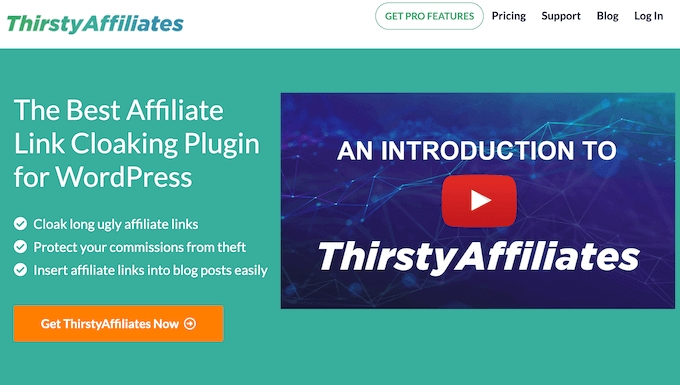
I’ve also tested it personally and found it makes organizing, cloaking, and tracking links simple.
You can attach images to links and create categories for different products. If you use the Pro version, you can even automatically replace keywords with affiliate links across your site.
📍Important: If you are using Amazon Associates, do not cloak your links. Amazon requires the full link to be visible. You can still use ThirstyAffiliates to manage them, but make sure to uncloak the links in the settings.
For a deeper look at all its features, check out our full ThirstyAffiliates review.
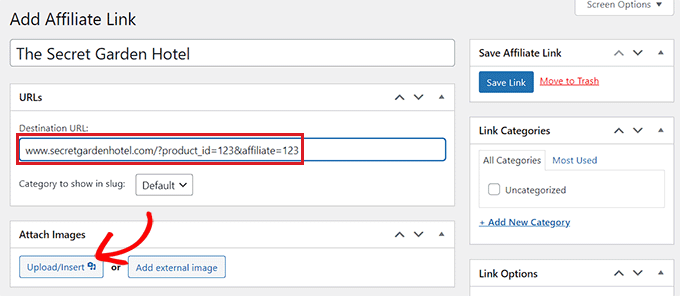
Upon plugin activation, adding a new affiliate link is simple. Just go to ThirstyAffiliates » New Affiliate Link in your WordPress dashboard.
Start by entering a name for your link in the ‘Add Title’ field. This will also be used in the cloaked URL, so it’s best to use the product or service name.
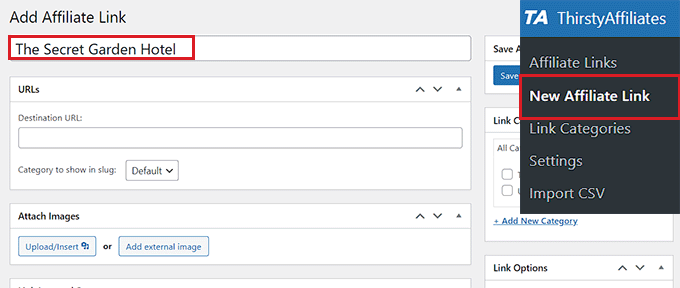
Then, paste the full affiliate link you received from your affiliate program into the ‘Destination URL’ field. Once that’s done, your link is ready to use anywhere on your site.
For step-by-step instructions, check out our tutorial on how to create affiliate links with ThirstyAffiliates.
You can also explore these guides to take your affiliate linking even further:
- How to Automatically Link Keywords with Affiliate Links in WordPress
- Pretty Links vs ThirstyAffiliates: Which is Right for Your Site?
- How to Cloak Affiliate Links on Your WordPress Site
How to Write an Affiliate Product Review (Optional)
If you decide to use a WordPress blog as your affiliate marketing platform, then writing dedicated product reviews is a powerful way to earn commissions.
At WPBeginner, we regularly create in-depth reviews for plugins, themes, and hosting services. These build trust, provide value, and naturally give readers a reason to click your affiliate links.
Here are some tips to keep in mind when creating a review:
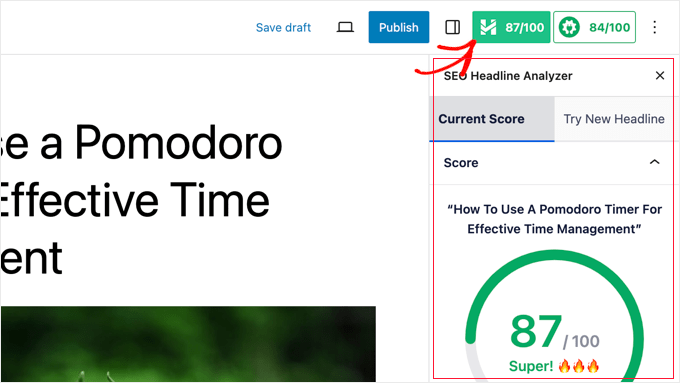
- Create a Catchy Headline – Use a headline that grabs attention and clearly explains the product. Include relevant keywords for SEO. I recommend testing your headlines with WPBeginner’s free Headline Analyzer to create titles that drive traffic.
- Add a Short Introduction – Give a brief overview of the product, its purpose, and the audience it’s best suited for. Include an image to visually showcase the product, but keep it concise so readers don’t feel overwhelmed.
- Highlight Key Features – List the product’s main features to help your audience decide if it’s right for them. Explain each feature briefly or use bullet points for clarity.
- Write Pros and Cons – Show both strengths and weaknesses to create an honest review that builds trust. You can also suggest an alternative affiliate product if one feature is lacking.
- Add a Call to Action (CTA) – End the review with a clear next step, usually encouraging the reader to buy or try the product. Keep the CTA natural, guiding readers to click your affiliate link without being pushy.
Following these steps helps you create product reviews that are informative, trustworthy, and optimized to drive conversions.
To get started, take a look at our guide on writing an affiliate product review in WordPress.
💡Pro Tip: If writing a full review feels too time-consuming, I recommend adding an affiliate product box. These boxes highlight the product, show key features, pricing, and a clear CTA in a compact, visually appealing format.
For step-by-step instructions on how to do that, see our tutorial on creating an affiliate product box in WordPress.
Best Practices for Affiliate Marketing
Before you start adding links everywhere, it’s important to follow a few best practices. These will help you earn more in the long run and keep your audience’s trust.
I use the same approach on my own site — simple, ethical, and focused on helping readers first.
1. Be Honest And Transparent
Honesty is the foundation of successful affiliate marketing. Always let your readers know when a post contains affiliate links. It’s not just good practice, but it is also required by the FTC.
Failing to disclose properly can lead to legal issues, loss of trust, and even penalties from affiliate programs that take compliance seriously.
At WPBeginner, we clearly disclose our affiliate relationships at the top of every relevant article.

Over the years, this transparency has actually strengthened our audience’s trust rather than hurting conversions. When people know you’re being upfront, they’re far more likely to act on your recommendations.
I highly recommend adding a clear disclosure to every post that contains affiliate links. And to make things easier, you can automate it.
For step-by-step instructions, see our guide on how to add affiliate disclosure automatically for each blog post.
2. Stick to Your Niche
Staying in your niche is one of the easiest ways to keep your affiliate marketing effective. When you promote products that your audience actually cares about, your recommendations feel natural, and your conversions increase.
But the moment you start promoting random or unrelated products, readers can get confused or lose trust.
At WPBeginner, we’re very intentional about what we recommend. Since our audience is looking for WordPress tools, tutorials, and website-building advice, we don’t promote products outside that world.
This keeps our content focused and ensures every recommendation feels helpful instead of forced.
And if you want consistent affiliate income, always choose products that solve problems your readers already have. It makes a huge difference.
3. Use Multiple Content Types
Don’t rely on just one type of content for affiliate marketing. Mixing tutorials, product reviews, comparison posts, and resource pages helps reach different readers and keeps your site engaging.
Some people prefer step-by-step guides, while others want a quick comparison or affiliate box before making a decision.
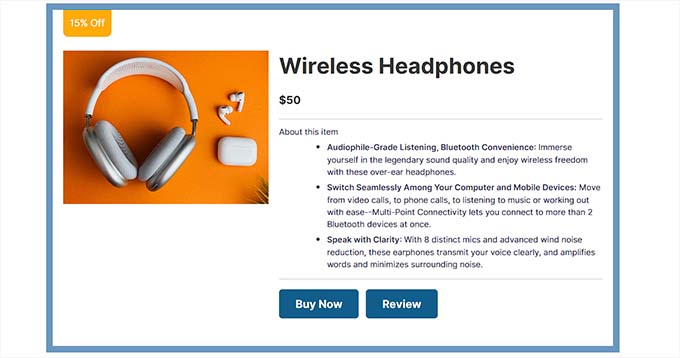
By offering multiple formats, you make it easier for your audience to interact with your content and click your affiliate links naturally.
4. Track and Analyze Performance
Tracking performance is key to knowing if your affiliate marketing efforts are actually working. By monitoring clicks, conversions, and top-performing content, you can see which products your audience loves and which strategies are driving revenue.
This is where MonsterInsights comes in. It’s the best analytics solution for WordPress and my preferred choice for tracking affiliate performance.
It makes it easy to see exactly which posts and links are generating clicks and sales, helping you focus on what works and adjust your content strategy accordingly.
By analyzing this data, you can optimize your affiliate campaigns, improve underperforming posts, and scale the strategies that bring results. Tracking performance ensures your efforts are efficient, measurable, and profitable.
To set it up on your website, take a look at our tutorial on how to install Google Analytics in WordPress.
5. Optimize Your Affiliate Blog for SEO
If you want your affiliate content to actually earn, people need to find it first—and that’s where SEO comes in.
For affiliate marketers, SEO isn’t just about getting traffic. It’s about attracting the right audience who are ready to click your links and make a purchase.
I recommend using AIOSEO, the best WordPress SEO plugin out there. It helps you optimize your posts and pages for search engines without overcomplicating things.
With AIOSEO, you can easily add meta titles and descriptions, structure your headings, and naturally include keywords that match your audience’s intent—like “best plugin for X” or “how to do Y.”
For affiliate content, focus on commercial intent keywords. These are phrases where people are actively looking to buy or compare products. Optimizing for these makes it much more likely your readers will click your affiliate links.
You can also use AIOSEO to preview how your posts appear in search results, making your links more appealing and trustworthy.
Remember, great SEO paired with high-quality, helpful content not only increases traffic but also drives conversions. For more tips and tricks, please take a look at our ultimate SEO guide.
6. Test And Update Regularly
Affiliate marketing isn’t a “set it and forget it” game. To keep earning, you need to make sure your links are working and your content is up to date.
Broken links, outdated pricing, or old product information can frustrate readers and hurt your credibility—and that means fewer clicks and sales.
Regularly check that your affiliate links remain active and correctly redirect to the product.
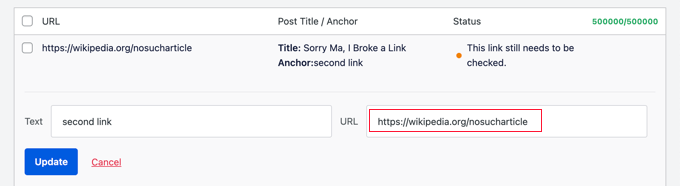
💡Pro Tip: Manually checking each affiliate link can be really time-consuming. That’s why I recommend using AIOSEO’s Broken Link Checker plugin.
I’ve used it myself, and it automatically scans your site, flags any dead links, and helps you fix them quickly. This keeps your content trustworthy, ensures readers never hit a dead end, and saves a ton of time.
If the product has changed, add new screenshots, update the features, or mention alternatives to keep your review relevant.
Staying on top of updates not only protects your commissions but also shows your audience that your content is trustworthy. This is a key factor in turning readers into repeat buyers.
Common Affiliate Marketing Mistakes to Avoid
When starting with affiliate marketing, it’s easy to make mistakes that can hurt your audience’s trust or reduce your earnings.
Being aware of these common pitfalls will help you build a credible, profitable affiliate business:
- Overloading Links: Placing too many affiliate links in a single post can overwhelm readers and make your content feel spammy. Focus on including only the most relevant links that add real value.
- Ignoring Disclosure Rules: Always let your readers know when a link is an affiliate link. Not disclosing properly can harm your credibility and may violate legal regulations.
- Copying Content: Using the same product descriptions from other sites or manufacturers can hurt your SEO and reduce your organic traffic. Write unique content with your own insights and experiences.
- Neglecting Tracking: If you don’t monitor clicks and conversions, you won’t know what’s working or how to improve. Tracking helps you optimize your content and increase earnings.
- Overhyping Products: Exaggerating benefits or making unrealistic promises can disappoint readers, reduce trust, and lead to lower conversions. Keep your reviews honest and transparent.
- Neglecting User Experience: Long blocks of text and cluttered links make it hard for readers to navigate your content. Use headings, bullet points, images, and clear CTA buttons to create a smooth, enjoyable reading experience.
By avoiding these common mistakes, you can protect your credibility, keep your readers’ trust, and maximize your affiliate earnings.
Frequently Asked Questions About Affiliate Marketing
Even after going through all the steps, I know beginners often have questions about affiliate marketing. In this FAQ section, I’ll answer the most common concerns—from choosing programs to adding links—so you can start confidently and avoid confusion.
Do I need a large audience to start affiliate marketing?
No. Quality beats quantity. Even a small, engaged audience, like a 500-person email list, can perform better than thousands of random followers. Focus on building trust with your audience first.
How long does it take to make money with affiliate marketing?
Most beginners earn their first commission in 3–6 months. Consistent income, like $500+/month, usually takes 6–12 months of regular effort and content creation.
Can I do affiliate marketing without a website?
Technically yes. You can promote products through social media, but having a website gives you ownership and long-term stability. WordPress is a beginner-friendly way to start.
What’s the difference between affiliate marketing and MLM?
Affiliate marketing means you earn commissions when someone buys a product through your link. MLM (multi-level marketing) focuses on recruiting people. Affiliate marketing is purely sales-based, so it is not MLM.
Do I need to pay to join affiliate programs?
No. Legitimate affiliate programs are always free to join. If a program asks for payment, that’s a red flag. You can learn more about that in our guide on common affiliate marketing scams and how to avoid them.
How do I disclose affiliate links properly?
Be transparent with your audience. For example: “This post contains affiliate links, which means I may earn a small commission at no extra cost to you if you make a purchase.”
What are the best affiliate programs for beginners?
Some beginner-friendly options include Amazon Associates (easy approval), Awin (wide variety of products), and Bluehost (high commissions). Start with programs that align with your niche and audience.
I hope this ultimate affiliate marketing guide for beginners helped you learn how to become an affiliate marketer. Next up, you may also want to see our guides on how to create an affiliate product box or explore our expert’s list of common affiliate marketing scams and how to avoid them.
If you liked this article, then please subscribe to our YouTube Channel for WordPress video tutorials. You can also find us on Twitter and Facebook.


Jiří Vaněk
I recently started using affiliate marketing through paid articles on my blog. I set a price, and based on that, I either publish a review article about a product or not. I carefully choose what I post on the blog and what I don’t. But since I’m still a complete beginner in affiliate marketing, I’m very grateful that I could read some great advice from you, experienced professionals in marketing. Thank you for covering this topic, which is still new to me. Sometimes, you don’t realize the risks involved until you read about them from someone who truly understands the field.
Dennis Muthomi
TOTALLY agree that as an affiliate marketer, it’s vital to only promote products I have tested and found valuable from personal experience.
For me when I recommend a new ai software tool on my blog, I always sign up to explore the features thoroughly as an actual user first.
If I don’t find the product provides value, I simply cancel the subscription and search for better alternatives that would truly benefit my audience.
THATS HOW IT IS!
Jiří Vaněk
Yes, I completely agree. It’s also about the fact that when you recommend something, you’re indirectly building your brand and reputation. If you promote low-quality products that you haven’t personally tested, you risk getting negative reviews on your brand and name over time, and that can be very hard to recover from. That’s why it’s especially important in affiliate marketing to know what you’re promoting and have some experience with it. After all, you only have one name and brand, and damaging it can be very easy. It’s also good to remind others of this fact.
Emmanuel
please which word press theme do you use, i want to know i love it
WPBeginner Support
Our theme is a custom theme that we created that is not publicly available at the moment.
Admin
Moinuddin Waheed
I want to know about the target audience while planning for an affiliate product.
so if I am in India and I want to target a product that is mostly used in United States or United Kingdom.
as these countries have a good affiliate commision structure.
is it viable as a blogger to make such an endeavour?
or it is always to target the local audience?
I mean thinking globally due to internet.
WPBeginner Support
You do not need to target a local audience when you set up an affiliate marketing site. As long as users can view your site you can target that audience
Admin
Moinuddin Waheed
It means as long as I do right content strategy and have content that aligns with the products, I can easily Target the global markets.
Thanks wpbeginner this clearly makes sense. I used to think that doing affiliate marketing locally only would be viable. but in reality due internet access all over the globe, there is no barriers as such.
Ahmed Omar
I am just starting my trial in affiliate marketing.
the post is quite useful and detailed.
but I have a question, Is it possible to affiliate similar products of two different companies on a single website?
Thank you
WPBeginner Support
You certainly can have similar products on one site even if they are from different companies.
Admin
Kabsha Majid
It’s a good idea to do affiliate marketing using WordPress.org. It’s a highly effective method for affiliate marketers. It’s the best way to create credibility among your audience.
Using affiliate links on Facebook, Instagram, etc. does not work much. Also, you can’t convince someone to take any action unless they trust you and the services you provide.
You have put a great deal of effort into this blog and provided us with a unique guide. Please tell me what I should do to rank my blog for investigational intent keywords. I request you to provide a complete guide about investigational intent keywords.
WPBeginner Support
We would recommend taking a look at our guide below for finding keywords no matter the niche
https://www.wpbeginner.com/beginners-guide/how-to-do-keyword-research-for-your-wordpress-blog/
Admin
Jon Weberg
By far, the most important aspect of affiliate marketing… Is treating it just like any other digital marketing business. People often think it’s as easy as becoming an affiliate, and just posting your link out there in content… When in reality, the most successful affiliate marketing form deadly efficient and great content, advertising, follow up, sales processes, and more.
But, taking it one step at a time first before one gets a better understanding, is more then acceptable!
WPBeginner Support
Thanks for sharing your opinions on affiliate marketing
Admin
Michael Mbwika Muli
Your opinion is very correct, thank you
Abdul Hanan
Is it possible to affiliate similar products of two different companies on a single website? Let suppose, clothing affiliate program of amazon and walmart on same site.
If yes, do you recommend it?
Biswajeet
Yes, you can in fact promote as many products you want from as many affiliate companies. However, it’s wise not to.
I would recommend sticking to 2-3 companies at a time and promote products only if it fits in your niche.
Abdul Hanan
Can I do both affiliate marketing and dropshipping on a single site?
WPBeginner Support
You could if you wanted to.
Admin
Alina
Such a great information. Been wasting time searching internet, till I found all the info I need in one place. Thank you!
WPBeginner Support
Glad our guide was helpful
Admin
Jaydeep b patil
Your blog is best
WPBeginner Support
Thank you
Admin
Kavita Podar
I just came across your blog post and must say that it’s a great piece of information that you have shared. This is really helpful content and must be shared across. Great blog post!
WPBeginner Support
Thank you, glad you found our content helpful
Admin
Ury
Hello: what are the best plug-ins for SEO Affiliate marketing?
WPBeginner Support
For SEO in general, we would recommend taking a look at our article below:
https://www.wpbeginner.com/wordpress-seo/
Admin
Neil
Hi
Need help.
Which to do first, create a blog about a product or apply for affiliate program?
Thanks!
WPBeginner Support
You would want to have a site with content before applying for an affiliate program
Admin
Farhan Jabbar
Thank you so much!
Such a wonderful write up; straightforward, easy to understand with deep insight!
This article really helped me to understand the core of affiliate marketing.
Keep it up!
WPBeginner Support
You’re welcome, glad you’ve found our article helpful
Admin
Hussnain Iqbal
Thank you for the article, I found it helpful. But a question remains in my mind: the affiliate program only works if you have enough traffic going through your website. Now, my website is new and my traffic is a desgrace. Any ideas on how to tackle that?
WPBeginner Support
For increasing your site’s traffic, you would want to take a look at our guide here: https://www.wpbeginner.com/beginners-guide/how-to-increase-your-blog-traffic/
Admin
Harish Kumar
such amazing ideas to start a blog on different niches. Really a useful post with clean and clear details. Thanks for sharing this post. Keep sharing.
WPBeginner Support
You’re welcome, glad you like our content
Admin
rajuchalna
affiliate marketing sense and also seems helpful for small business, Thank you for this information.
WPBeginner Support
Glad we could share it
Admin
John
Awesome post. Usually I never comment on blogs but your article is so convincing that I never stop myself to say something about it. You’re doing a great job Man,Keep it up.
can i use your website link and this information for my audience. i want to publish it to my people so that they can go deeper inside and for me it could be easy to convince them
WPBeginner Support
You can certainly link to our content if you wanted.
Admin
Sanjay Sajeev
Hi,
Very useful and informative post.
I have a doubt about affiliate link. How many affiliate link can I add in a blog post.
I have written a blog post that contains 1500 words. I need to add 13 affiliate links. If I add that much affiliate links, will it badly affect my site’s SEO? Please clarify my doubt
WPBeginner Support
It would depend on what you are writing about and how you are writing the article for how that would affect SEO, more links shouldn’t be a large factor unless it is adding no value to your users.
Admin
Cash Teachers
Thank you for this extremely helpful information! It’s a useful post regarding affiliate marketing & in fact, this is one of the best list & points on the subject.
WPBeginner Support
Thank you for your kind words
Admin
Grahame
Hello wpbeginner People,
Thank you for a very straightforward introduction to the world of Affiliate Marketing. I’m looking forward to the journey and just starting out. For me, I’m just as enthusiastic about the challenge of gaining success for its own sake, as the financial rewards it may hopefully bestow on me. There are so many variables involved and putting the whole thing together feels like attempting a 40,000-piece jigsaw puzzle with a hangover.
Keep up the good work and I wish you continued success, I’m sure you’ve earned it.
Grahame.
Angie Cox
I’m in the process of creating a new blog now and have decided on a niche to focus on. I’d like to implement affiliate marketing as soon as the blog launches. Was wondering if affiliate networks require those requesting to become affiliate marketers to have a certain number of followers before approving the request to join the affiliate program? Generally, what types of requirements have to be met when applying to join an affiliate network? I’d hate to apply then get rejected because I haven’t met the minimum requirements, if those exist. Thanks!
WPBeginner Support
Hi Angie,
These requirements may vary and you will have to review their program policies before applying.
Admin
Bob Schaffer
I have yet to implement all the tools you have shared and recommended in this article, but I really like the way you explain things. It is written in a very easy-to-read style, and ho hype or exaggerated comments. Now I have to get busy and take the necessary time to study, and implement, your recommendations. Thank you for all that you have shared.
Johnpaul onwueme
I really enjoyed this interesting article.
Keep it up.
David
Thanks. I looked into affiliate marketing once, and wanted to set up a product review site. I got stuck looking for a good theme – any suggestions for a WP theme (paid or unpaid) that plays well with product reviews?
And plays well with AdSanity – which looks interesting?
Looking at it from the other perspective – where would a product manufacturer go to find affiliates?
WPBeginner Support
Hi David,
There are many WordPress themes for affiliate marketers that you can start with.
Product manufacturers go to affiliate networks and join them as merchants.
Admin
Dhananjay Satanure
Hey Syed,
Do you have any Personal Experience that Affiliate Programs, PAY?
Or just this is fake program to, I mean the company tell us to Promote their product and do not pay to us?
WPBeginner Support
Hi Dhananjay,
Yes we have used affiliate programs, and yes they do pay. If you join a large affiliate network, then those payments are mostly automated.
Companies that don’t pay affiliate partners risk losing their reputation and will have hard time finding affiliate partners in the future.
Admin
Shahla Banu
Hi,
Affiliate marketing works well as long as one is getting good traffic. A lot depend on what percentage of US traffic does one get on his blog (in case he’s promoting products useful for US audience). So, it’s always good to choose right affiliate programs, write good content and do social media marketing.