Last month, a reader spotted a broken link in one of my posts on my personal site. By the time they emailed me about it, the post had already been live for three weeks. That experience made me wish there was an easier way for… Read More »
A WordPress comment section full of random clickable links can make your website look suspicious. For many site owners, that’s where the trouble starts. Spammers abuse it, search engines may flag it, and even genuine comments with useful links can end up looking suspicious. At… Read More »
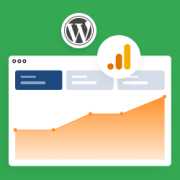
When it comes to tracking the performance of your marketing campaigns and website optimization, you will need to know how users interact with your site. The easiest way to do this is by using Google Analytics. However, many business owners only look at pageviews, referral… Read More »
Are you using Periscope? Recently, one of our readers asked if there was an easy way to show the Periscope on air status in WordPress. In this article, we will show you how to add Periscope on air button in WordPress. What is Periscope? Periscope… Read More »
Do you want to keep visitors on your website longer and increase your pageviews? Getting users to read more than one article is a challenge for every blogger. While many sites place related posts at the bottom of the page, I’ve learned that many readers… Read More »
When I first started blogging, I linked to everything. Helpful tools, cool articles, and products I loved. I didn’t realize that sharing too many links without the right settings could actually confuse search engines. Google gets picky when you link to sponsored content or affiliate… Read More »
Have you ever noticed how some tweets pop with big images while others look like boring plain text? It is frustrating when you work hard on a post, only for it to get lost in the feed because it lacks visual appeal. At WPBeginner, we… Read More »
Managing a WordPress site often involves making changes across many posts and pages. One common task is searching for specific content and replacing it with something new. We know firsthand how time-consuming it can be to search for and replace content manually. If you aren’t… Read More »
Making more money with Google AdSense isn’t just about adding more ads to your website. It’s about smart optimization and making the ads you already have work better. At WPBeginner, we’ve helped many website owners improve their AdSense earnings through simple but effective changes. While… Read More »
I was nervous attending my first WordPress event because I thought only developers were welcome. I quickly learned that this community values passion just as much as technical skill. You might feel like you need to be a coding expert to make a difference, but… Read More »
Used to store interaction and conversion data for campaigns in conjunction with Revenue Attribution.
1 year
_gat_omTracker*
Set, controlled and used by Google Analytics to collect and store data and then send that data to Google Analytics. OptinMonster provides the name if there is no existing tracker found on that page.
-
omCountdown-{id}-{elementId}
Used for countdown elements {elementId} in campaigns {id} to determine when it should complete.
-
om-{id}-closed / omSlideClosed-{id}
Used specifically with slide-in campaigns {id} to determine if it has been closed or not by a visitor.
30 days
om-success-cookie / omSuccessCookie
Used to determine if a visitor has successfully opted in to any campaign on your site to unlock content when using our Content Locking feature.
365 days
om-success-{id} / omSuccess-{id}
Used to determine if a visitor has successfully opted in to a campaign with the ID of {id} on your site.
365 days
omSeen-{id}
Used to determine if a visitor has been shown a campaign by the slug.
30 days
om-{id}
Used to determine if a visitor has interacted with a campaign ID of {id} on your site.
30 days
_omappvs
Used to determine when a new visitor becomes a returning visitor.