


Google is fundamentally changing how people discover information online. The experimental phase is over, and features powered by AI Search are now the default experience for millions of users.
“Google AI Overviews are the most significant shift in search history. With AI Mode now active on over 60% of U.S. queries, businesses must adapt to an ‘Agentic Web’ where zero-click answers are the new normal.”
Tomek Rudzki – SEO specialist, Head of R&D at Onely
 Tomek Rudzki – SEO specialist, Head of R&D at Onely
This shift toward “Zero-Click” searches can feel unsettling if you rely on organic traffic. We have been tracking these changes closely at WPBeginner to separate the hype from the reality.
The good news is that you still have options. By optimizing for the “Agentic Web,” your WordPress site can remain a primary source for these AI answers.
In this article, we will explain what Google AI Mode is and share 6 updated tips to prepare your site for the AI Search era.
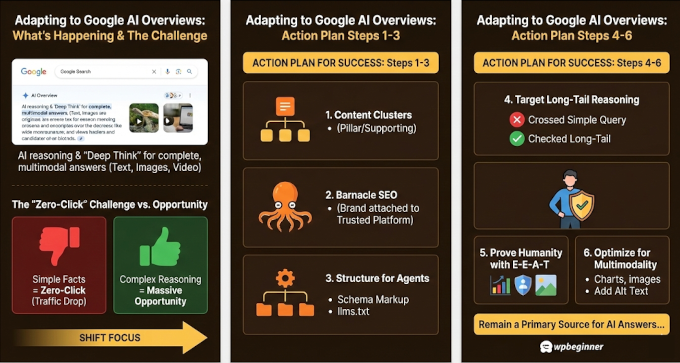
TL;DR: How to Adapt to Google AI Overviews
Quick Summary: Google AI Overviews (formerly SGE) uses Google’s AI to answer questions directly in search results. To stay visible, you must shift from simple keywords to “Consensus” and “Authority.”
Top Action Items:
1. Answer complex “reasoning” questions, not just simple facts.
2. Build “content clusters” that link related topics together.
3. Get your brand mentioned on trusted sites like Reddit and G2 (Barnacle SEO).
4. Use Schema markup to help AI agents understand your content.
What Is Google AI Mode?
Google has always added extras to search results, like answer boxes and knowledge panels. However, the new AI Overviews go much further.
Powered by the Gemini, Google now uses “Deep Think” capabilities. This means the AI doesn’t just match keywords. It reasons, plans, and “fans out” your query into multiple sub-questions to provide a complete answer.
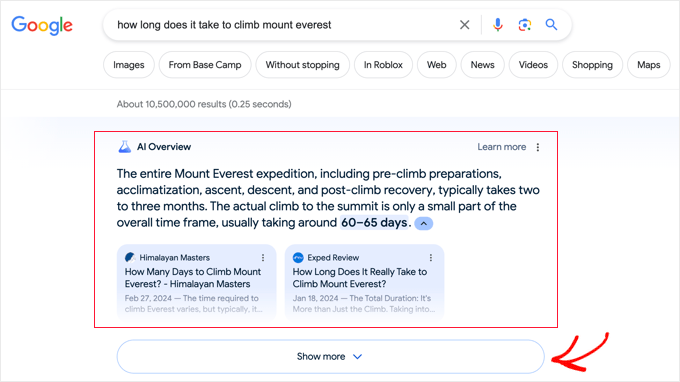
Here is an early example we captured. The AI pulls content from websites, videos, and its own knowledge base to answer the user immediately:
The system is also multimodal. This means it reads text, analyzes images, and watches videos to gather information.
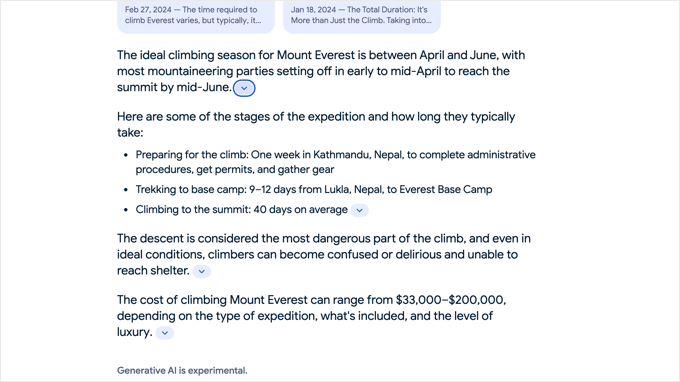
If your content is cited, it often appears in a carousel below the summary, like this:
Will This Hurt Your Rankings?
For simple informational queries (like “how tall is the Eiffel Tower”), traditional traffic will likely drop because the AI gives the answer instantly.
This is the “Zero-Click” reality.

However, for complex topics where users need advice, opinions, or in-depth guidance, AI Overviews are a significant opportunity. Being cited in that top box can drive highly qualified visitors to your site.
6 SEO Tips for the Agentic Web Era
To succeed with AI Overviews in Google Search, you need to move beyond basic keywords.
Here are 6 strategies to optimize your WordPress site for the new AI reality:
1. Optimize for ‘Query Fan-out’ with Content Clusters
When a user asks a question, the AI breaks it down into several sub-questions. This process is called “Query Fan-out.”
For example, if someone searches “How to start a photography business,” the AI knows they also need to know about camera gear, pricing, and finding clients. To get cited, your website cannot just be a single page. It needs to be a complete resource.
You should build “content clusters.” Create a main guide (the pillar) and link it to supporting articles that answer the logical follow-up questions. This helps the AI see your site as a comprehensive authority.
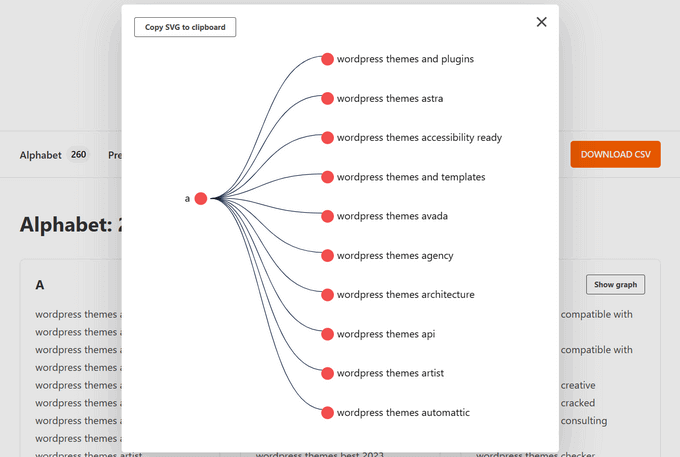
To find these sub-topics, you can use the WPBeginner Keyword Generator. Enter your main topic, and it will show you related questions users are asking.
2. Implement ‘Barnacle SEO’ on Consensus Platforms
Google’s AI trusts “consensus.” It checks multiple sources to verify facts. It places great trust in platforms like Reddit, Quora, and G2 because they host genuine human discussions.
This is where “Barnacle SEO” comes in. Instead of just trying to rank your own website, you should attach your brand to these large, authoritative platforms.
If your product or service is mentioned frequently on Reddit or has strong reviews on third-party sites, then the AI is more likely to mention you.
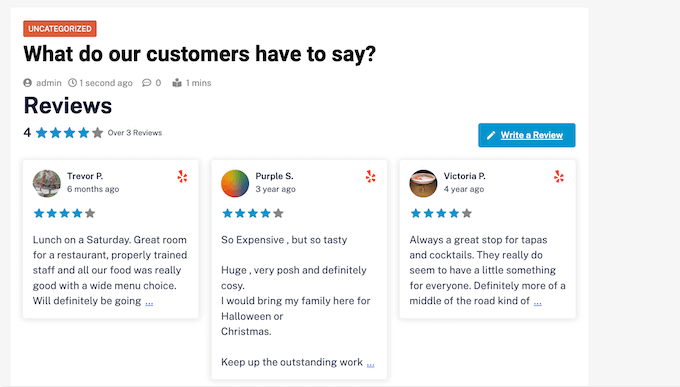
We recommend actively managing your presence on these sites. You can also use a tool like Smash Balloon to show testimonials from your own visitors and encourage happy customers to leave reviews on external platforms.
3. Structure for Agents (Schema & llms.txt)
AI agents are robots. You need to speak their language to avoid “hallucinations” (wrong answers).
The best way to do this is with Schema markup and a new file standard called llms.txt.
Schema Markup: This is code that tells the AI exactly what your content is. You should use specific types like FAQPage for questions, ProfilePage for authors, and TechArticle for tutorials.
llms.txt: This acts like a “Welcome Mat” for AI crawlers. It is a simple text file that tells AI bots which pages on your site are the most important to read. It gives you more control over what the AI learns about your brand.
We use All in One SEO for WordPress to handle these technical tasks. It automatically adds the correct schema markup to your content, so you don’t need to write code.
4. Target Long-Tail ‘Reasoning’ Queries
Simple question keywords are dying. If you write an article just to answer “What is a plugin?”, the AI will answer that directly, and you will get zero clicks.
The opportunity is now in “Complex Scenario Planning.” These are detailed, specific queries where the user needs expert help.
For example, instead of targeting “best meal plan,” you could target “meal plan for family of 4 with gluten allergy.”
These multi-variable queries require the AI to look for deep, expert content. By providing detailed, specific guides, you increase your chances of being the source that the AI cites.
5. Prove Humanity with E-E-A-T
With millions of AI-generated articles flooding the web, Google uses E-E-A-T (Experience, Expertise, Authoritativeness, Trustworthiness) as its main spam filter. AI search prefers content that clearly comes from a human.
To rank in AI Overviews, you must prove you are real:
- Use “I” and “We”: Share personal stories and first-hand experiences.
- Show Your Work: Mention that you “tested this” or “verified this.”
- Highlight Authors: Ensure your author bios are detailed and link to your social profiles.
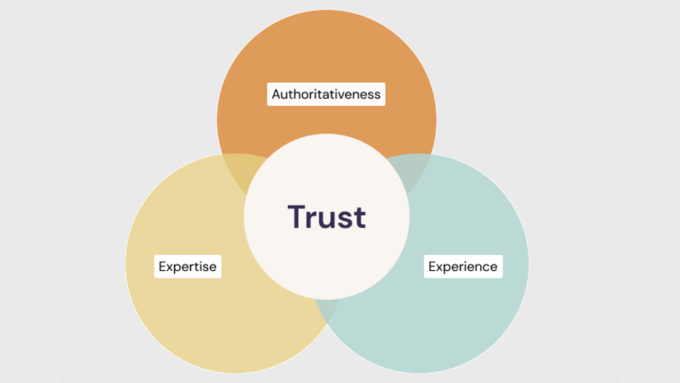
For more details on setting this up, see our guide on Google E-E-A-T for WordPress websites.
6. Optimize for Multimodality (Visual Information Gain)
Google’s AI search now “reads” images. It extracts data from charts, screenshots, and diagrams to answer questions. If you are only using stock photos, you are invisible to this part of the AI.
We recommend creating original images that add value. Use screenshots with arrows, custom charts that explain data, or photos of you actually using a product.
And always include descriptive “Alt Text” so that the AI understands exactly what the image shows.
Frequently Asked Questions About AI Overviews
Here are answers to some of the commonly asked questions about AI Overviews.
What is the difference between SGE and AI Overviews?
SGE (Search Generative Experience) was the experimental beta version. AI Overviews powered by Gemini is the live, official AI model that now powers Google AI Overviews. It is faster, multimodal, and capable of deeper reasoning.
Will AI Overviews kill my website traffic?
They will likely reduce traffic for simple, factual questions (like definitions). However, they can increase traffic for complex topics if you are cited as a source in the overview box.
Does llms.txt help with Google rankings?
Currently, llms.txt does not directly boost traditional rankings. However, it helps AI bots crawl your site more efficiently, which improves your chances of being cited correctly in AI answers.
Can I block Google AI from using my content?
Yes, you can use the nosnippet tag or specific robots.txt rules like User-agent: Google-Extended to block AI scrapers. However, we generally advise against this. Blocking the AI often reduces your visibility in standard search results and prevents you from appearing in the new “link cards” that drive high-quality traffic.
Do AI Overviews actually link back to websites?
Yes. While the summary answers the immediate question, Google includes prominent link cards and carousels below the text. In our testing, users who click these links are often “higher intent,” meaning they are more likely to engage or buy because they have already learned the basics from the AI.
Explore More AI and SEO Tips
If you want to dive deeper into using AI for your website, check out these resources:
- How AI is Reshaping SEO: 30+ Trends to Watch
- How to Use AI for SEO in WordPress (Tools)
- How to Write Content Using an AI Content Generator in WordPress
- What Is llms.txt? How to Add llms.txt in WordPress
We hope this article helped you understand Google AI Overviews and how to prepare your WordPress site for the Agentic Web. You might also want to see our list of the best ChatGPT plugins for WordPress.
If you liked this article, then please subscribe to our YouTube Channel for WordPress video tutorials. You can also find us on Twitter and Facebook.


Dennis Muthomi
Love this breakdown of Google AI Overviews! I’ve been playing around with these concepts lately, and they really work. We’ve added FAQ schema to several client sites and reorganized their content – already seeing some great results!
The tip about Q&A-style content is super helpful. We’ve noticed it’s not just good for AI overview visibility – it actually gets more people engaging with the content too. Here’s a cool bonus: when we add schema markup to these Q&A sections, they pop up more often in regular search results too. It’s basically a double win!
David Lim
In my opinion this AI overview was a very big blunder on Google’s part, because it can greatly reduce organic traffic and also the click-through rate of Google ads.
Fortunately, it has not been introduced in my country yet, but anyway the click-through rate is not the best, especially after this, I dare not even think about it.
Kzain
The idea of AI-generated summaries being displayed at the top of search results pages is definitely interesting. While it could be a great way for users to quickly learn about a topic, I can understand why some website owners are concerned about it potentially leading to less traffic to their sites.
Jiří Vaněk
Considering that Google largely relies on advertising revenue, I am curious about how they will implement this feature over time. If AI will be answering queries, many website owners might not see the need to invest in Google ads to secure top search positions. It will be very interesting to see how Google addresses this issue, as it will mean a significant decrease in organic traffic for many website owners.
Mrteesurez
Based on this, I have noticed something in some search results I received from Google, they showed me advertisement first before the AI overview. They don’t want to lose out the position with AI generative contents from chatGTP and others and still be benefiting from ads.
Jiří Vaněk
Hi, Mrteesurez,
It’s not just about paid advertising through search. Google needs people to continue visiting websites because they earn money from AdSense, which is advertising on websites. Typically, these are websites that are not at the top of the rankings. Therefore, Google still needs organic traffic to generate revenue from AdSense and to encourage website owners to use AdSense and pay for it. That’s why I don’t think Google will aggressively prioritize AI-generated results over organic traffic, unless they find a way to monetize this approach effectively.
Oyatogun Oluwaseun Samuel
You also note that many websites which rely on organic traffics from search engine do not place ad on their websites and I think they are in the majority. So google driving traffic to such sites do not benefit (in term ad revenue) from such sites. I think they will make more money from using AI to answer users’ query while they place AD relevant to the users at the tops of such answers.