


Watching your WordPress bounce rate climb while competitors effortlessly capture attention can be frustrating. Often, the difference comes down to one thing: movement.
Static pages struggle to hold interest, leaving visitors scrolling past without engaging.
One way to fix this? Adding a video slider.
Video sliders bring your content to life by combining motion, visuals, and storytelling. They help capture attention in ways static images simply can’t and encourage users to stay longer on your site.
In this tutorial, we’ll show you how to create a video slider in WordPress without any coding. By the end, you’ll have a dynamic homepage that makes your site more compelling and keeps visitors engaged. 🙌

📕 Quick Summary: The easiest way to create a video slider in WordPress without coding is by using the Soliloquy plugin. This tool allows you to embed optimized YouTube, Vimeo, or Wistia videos into mobile-responsive sliders.
Why Use a Video Slider in WordPress?
Video sliders are an easy way to make your WordPress site more engaging and memorable.
Unlike static images, videos grab attention immediately and can show more in less time, increasing time on page by up to 88%. A strong first impression can be the difference between a visitor sticking around and leaving your site.
Video sliders are also incredibly versatile. You can use them to highlight product demos, share customer reviews, or showcase promotional content.
For example:
- A travel website could highlight hotel recommendations, destinations, and tour experiences.
- A real estate website could feature virtual property walkthroughs.
At their core, video sliders are simply slideshows that use videos instead of images. This can make your site more lively and interactive.

Here are a few practical ways to use video sliders on your WordPress website:
- 🛍️ Showcase product or service reviews.
- 🧑🏫 Demonstrate features and how products work.
- 📢 Share short testimonials from happy customers.
- 📚 Highlight detailed case studies.
With that in mind, we’ll go over how you can easily create video sliders in WordPress so you can engage your audience.
Here’s a quick overview of all the steps we will cover in this guide:
Ready? Let’s jump right in!
Adding a Video Slider to Your WordPress Site
The easiest way to add video sliders to your website is by using a plugin.
We recommend Soliloquy because it’s the best WordPress slider plugin on the market. In my testing on a live WordPress site, I found Soliloquy to be exceptionally fast without hurting page load times.
It supports popular video platforms like YouTube, Vimeo, and Wistia, letting you simply paste a video URL to add it to your slider. It’s also fully mobile responsive, so your video slides will look great on any device.
Plus, you’re not limited to videos – you can mix in images and other content to create more engaging sliders. You can learn more about it in our complete Soliloquy review.
Now, the first thing you need to do is create a Soliloquy account through the Soliloquy website and upload the zip file to your WordPress site to install it.
💡 Note: There is a free Soliloquy plugin that allows you to create video sliders. But we will be using the Soliloquy Pro plugin for our tutorial because it has built-in support for YouTube, Vimeo, and Wistia, along with more video control settings.
For more details on installation, you can check out our post on how to install a WordPress plugin.
Upon activation, simply navigate to Soliloquy » Add New.
On the next screen, you’ll need to give your new video slider a title. Then, go ahead and click on the button that says ‘Select Files from Other Sources.’
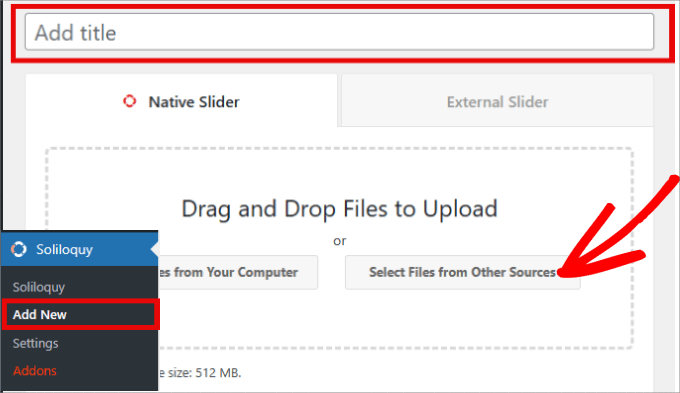
🧑💻 Pro Tip: Soliloquy allows you to upload videos directly, but this isn’t recommended. Uploading videos to your WordPress library can slow down your site, so it’s better to use a video hosting service like YouTube, Vimeo, or Wistia.
For more details, see our guide on why you should never upload a video to WordPress.
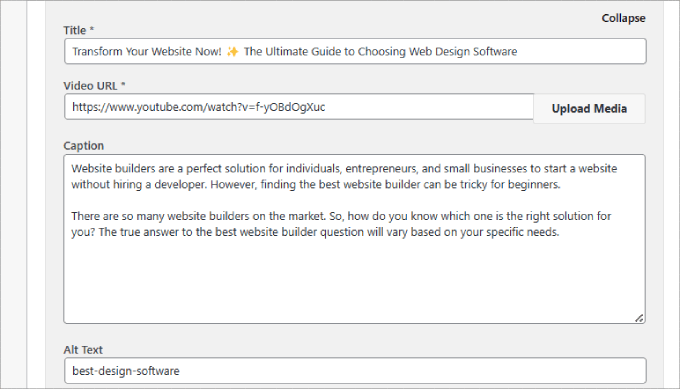
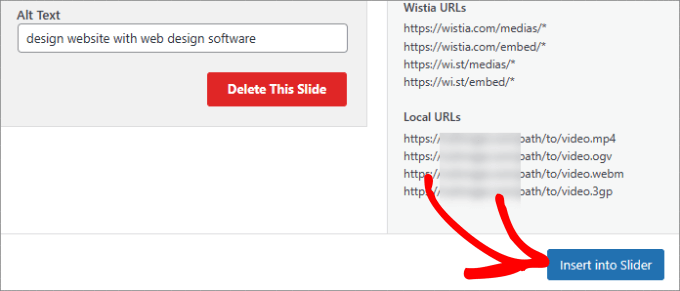
A pop-up window will appear where you need to click the ‘Insert Video Slide’ option. From here, you can add the title, video URL, caption, and alt text for your video.
You can start by giving your slide a clear name so it’s easier to organize later.
Next, enter your video link in the ‘Video URL’ field. You can use a link from your media library or, preferably, a video hosting site like YouTube, Vimeo, or Wistia. Simply paste the standard video URL from your browser – no embed code is needed.
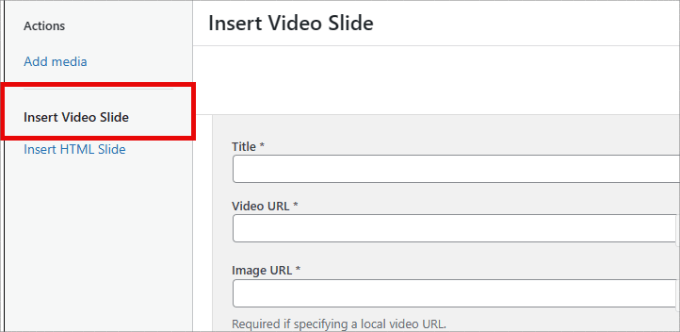
If you are using a video from your media library, then you’ll need to upload a cover image to the ‘Image URL’ field. This image displays before the video plays and helps improve performance by preventing the video from loading right away.
That said, if you’re using a YouTube, Vimeo, or Wistia link, then Soliloquy will automatically hide the ‘Image URL’ field for you.
You can also add a caption if you’d like. This is a great place to briefly explain what the video is about and encourage users to click play.
If you want to add another video slide, then just click on the ‘Add Another Video Slide’ button.
From there, you’ll need to upload the title, video URL, image URL, caption, and alt text of the next video.
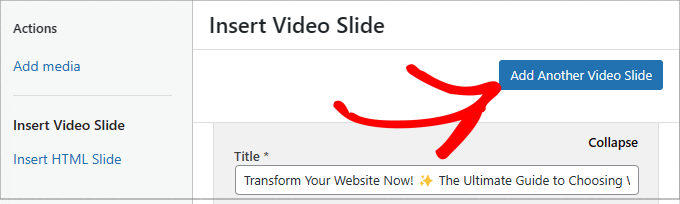
With that done, you can repeat the process for all of the video slides you want to add.
After that, simply click the ‘Insert into Slider’ button.
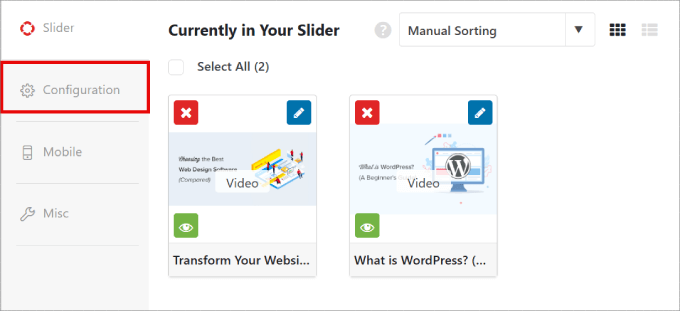
Your video slides will appear on the new slide screen like this.
If you need to make changes to them, you can always click the pencil icon to edit the video or click the ‘Inactive’ icon to make it inactive.
From here, you can go to the ‘Configuration’ tab to customize how you want your video slider to appear.
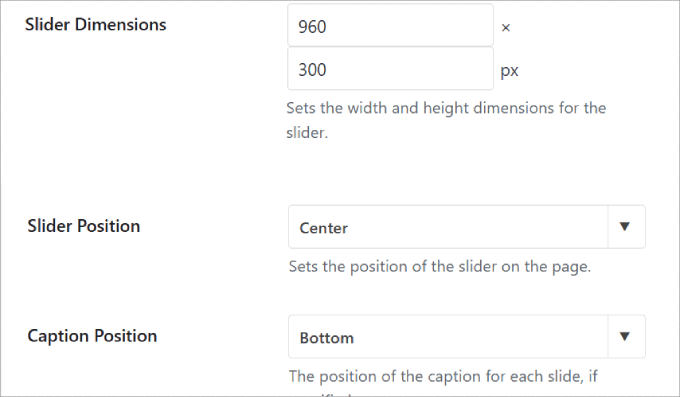
On this screen, you can toggle several settings.
For example, you can change the slide dimensions to fit your web design. You can also customize the slider and caption position so that they align with other elements on your page.
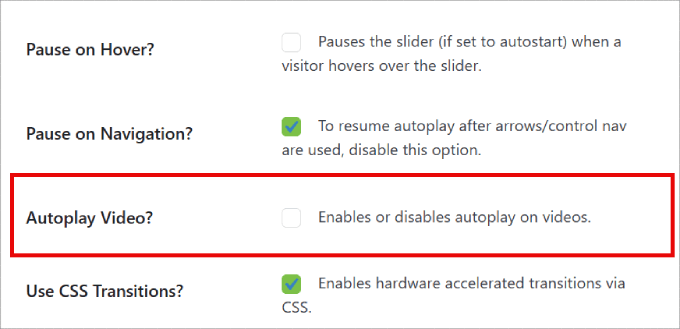
Another option you may want to consider is whether or not to allow video autoplay.
You can set the video slide to automatically play when a visitor lands on the page so that they are forced to watch your content.
However, please keep in mind that it could slow down the page speed since the browser also has to load the video. Plus, modern browsers frequently block autoplaying videos unless they are muted.
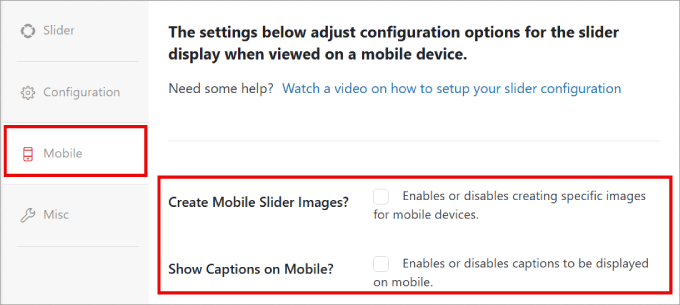
The good thing about Soliloquy is that the plugin can also optimize your video slider for mobile devices, but you will need to configure these settings manually.
To do this, let’s head to the ‘Mobile’ tab.
Once inside, you can create mobile slider images and show captions so that people know what they will be watching before they click to play.
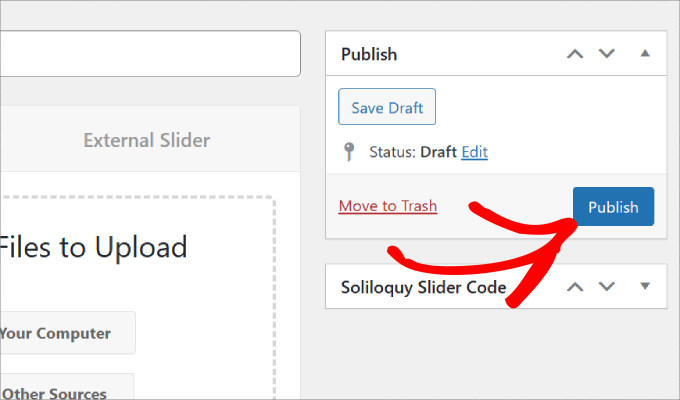
Now, you’re ready to add the slider to your WordPress blog or website.
Go ahead and click the ‘Publish’ button in the right-side panel.
Displaying the Video Slider in WordPress
To embed your slider, you might want to create or edit a post or page where you want to display it.
In the WordPress editor, you can click the ‘+’ button to add the Soliloquy block to your page. To make the process easier, you can type in ‘Soliloquy’ in the search bar.
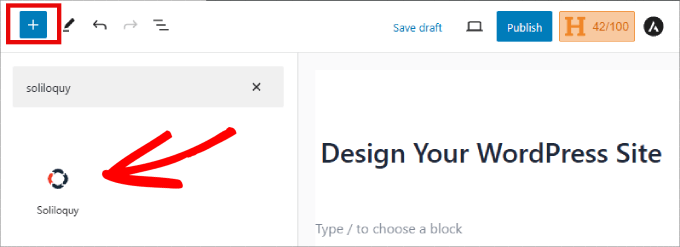
Then, let’s select the video slider you’ve just created from the Soliloquy widget and insert it into your page.
With that done, go ahead and click on the ‘Publish’ or ‘Update’ button at the top.
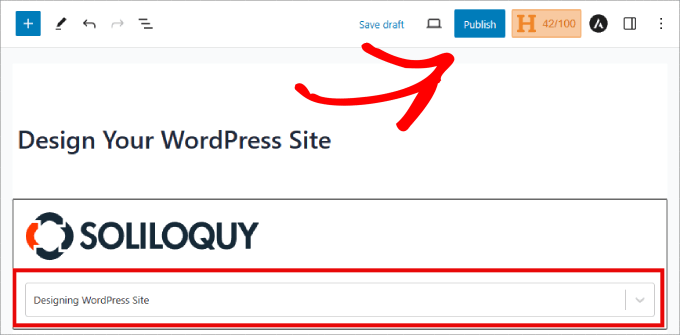
That’s all. You can now preview your post to see your video slides in action.
Here’s what it might look like:

If you are still using the classic WordPress editor, then you can also add a video slider to any WordPress page or post.
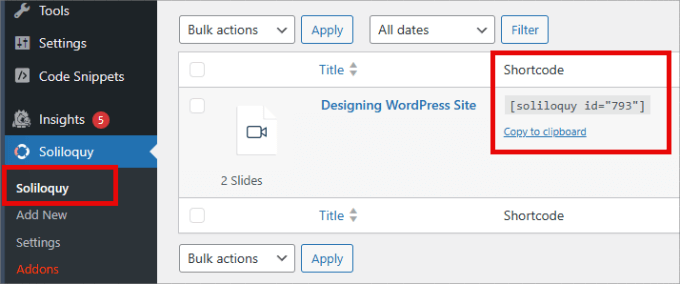
You will have to copy the shortcode located on the Soliloquy page, where all of your video sliders are stored. Then, simply insert that shortcode into your content.
For more information, you can check out our guide on how to insert a shortcode in WordPress.
Bonus: Adding a Featured Content Slider to WordPress
On top of adding video sliders to your website, you may also want to add a featured content slider to your WordPress pages.
Aside from showcasing your best blog posts, you can add featured content sliders to highlight featured products from your online store, share reviews, show off portfolio items, or display popular categories.
Unlike video sliders, a featured content slider can show a combination of images and links on the slide.
All you have to do is install the ‘Featured Content Addon’ in Soliloquy.
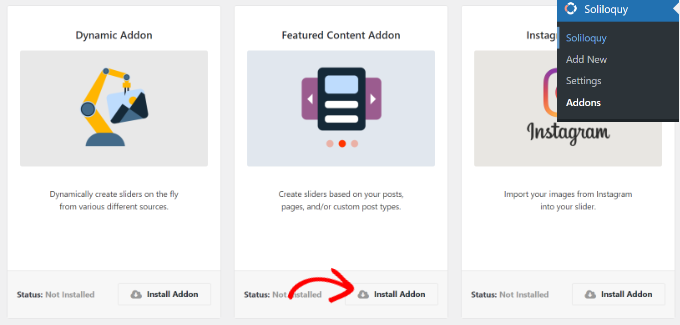
The next step is to add the content, links, and descriptions of your multimedia files by selecting your files, uploading them to the addon, and filling in the respective title and description fields.
For a more in-depth tutorial, you can check out our blog post on how to properly add a featured content slider in WordPress.
FAQs: Creating Video Sliders in WordPress
If you’re still wondering how video sliders affect your site or how to use them effectively, these frequently asked questions cover the key points.
Will a video slider slow down my website?
It can, but plugins like Soliloquy are designed for performance. They use lazy loading, so the video only loads when a user clicks play. Using a video hosting service like YouTube, Vimeo, or Wistia instead of uploading directly to WordPress also keeps your site fast.
Can I mix videos and images in the same slider?
Yes. Soliloquy supports multiple slide types, so you can combine videos, images, and even custom HTML content within a single slider.
For videos, you can provide a placeholder image (poster image) that displays before the video plays. This improves performance and ensures your slider looks good while loading.
Are Soliloquy video sliders mobile-friendly?
Absolutely. From our testing, Soliloquy is fully responsive, so sliders automatically adjust to fit desktops, tablets, and smartphones.
Do I need to know how to code to add a video slider?
Not at all. If you follow this tutorial, it will be completely code-free. This allows anyone, including first-timers, to build, customize, and add a video slider with ease.
Next Steps for Using Media Files in WordPress
We hope this article helped you add video sliders in WordPress using Soliloquy.
Next, you may also want to check out our guides on:
- Beginner’s Guide to WordPress Image Sizes (+ Best Practices)
- How to Add Multiple Post Thumbnails / Featured Images in WordPress
- How to Embed Apple Podcasts in WordPress
- How to Start a Podcast and Make it Successful
- Best Video Hosting Sites for Bloggers, Marketers, and Businesses
If you liked this article, then please subscribe to our YouTube Channel for WordPress video tutorials. You can also find us on Twitter and Facebook.


kzain
I’ve been wanting to add a video slider to my website but wasn’t sure where to start. The breakdown of different slider plugins and customization options is super helpful. Now I can create a visually appealing slider to showcase my video content. Thanks for sharing!
Moinuddin Waheed
This is very much needed for many websites to showcase short videos for instructions purposes such as product description, services offered and how to guide.
I have always skipped the idea of embedding video slider merely because of the speed of the website issue.
Since soliloquy takes care of the speed and allows YouTube video embed in the slider, it will make sense to use it in every website that requires it.
Thank you wpbeginner for this guide, I will definitely try this out.