


When you start a new website, a free plan seems like an easy way to save money. However, you’ll soon discover that free plans have many strict limits and missing features.
Most people who want a free website choose between WordPress.com, Wix, Google Sites, Blogger, or an anonymous free web host they find via search.
We’ve tested dozens of these platforms ourselves. We’ve also helped countless users migrate away from them once things broke, slowed down, or just stopped working. Because of this experience, we know exactly where these free plans fail.
In this guide, we’ll cover the main ways a free website limits your growth, which platforms have these problems, and the one situation where a free website is actually the right choice.
What Do We Mean by a Free Website?
When starting your first website, looking for ways to keep costs low makes sense. We felt the same way when we were just getting started.
However, the term ‘free website’ refers to two completely different setups, and confusing them often leads to costly mistakes. Understanding the distinction helps you choose the right path for your business, so let’s break down how both options work.
Established Free Plans
These are the free tiers offered by established companies like WordPress.com, Wix, Google Sites, and Blogger. They run legitimate businesses and keep your site online safely, but you trade away control, because most essential business features and custom plugins require a paid plan.
Anonymous Free Web Hosts
These hosts run anonymously, with no named owner, no valid support address, and no track record you can check. They’re the ones that inject intrusive ads, resell user data, or vanish without warning and take every site with them, so avoid any host that won’t tell you who runs it.
1. An Address Visitors Don’t Take Seriously
Free plans host your site on a generic platform subdomain like yoursite.wordpress.com, username.wixsite.com, or yourblog.blogspot.com. An address like that is hard to say out loud, hard to print, and easy to forget. It also tells every visitor that you weren’t willing to spend $10 on your website.
To be fair, this isn’t universal. Blogger and Google Sites both let you connect a custom domain name at no charge from Google, so you only pay your registrar the usual yearly cost of a domain. WordPress.com and Wix both require a paid plan first.
A free subdomain is fine for a temporary hobby site, but serious projects need a custom domain to build trust and brand recognition.
2. Forced Ads and Branding on Your Own Site
Free plans generate revenue by placing ads on your site. Free Wix sites display a prominent Wix banner at the top of every page and a Wix icon in the browser tab, and removing them requires a premium plan. WordPress.com does something similar by running third-party ads directly on free sites.
In both cases, you cannot choose the ads, adjust their placement, or earn revenue from them. Anonymous free hosts go further with intrusive pop-ups, automatic redirects, and even ads from your direct competitors.
Here’s the honest exception. Google Sites and Blogger place no forced advertising on your pages at all, so start with those two if you want a zero-cost option without third-party ads.
3. The Free Plan Funnels You Into Paid Upgrades
A free tier is a sales funnel. Platforms hold back the features you’ll need within a month, pushing you into upgrades that often cost more than regular web hosting. On WordPress.com, that means paying to connect a custom domain, install plugins, run ads, view analytics, and use advanced SEO tools.
Upgrading once rarely solves everything, because WordPress.com includes no custom business email with any plan and lifts its 1GB storage cap only on higher tiers. Searching for free hosting on Squarespace lands you in a 14-day trial instead, so cancel before it expires to avoid a charge.
Before committing, compare what a WordPress website actually costs to build, because managed WordPress hosting often costs less than these upgrades.
4. Slow Servers With Hard Resource Caps
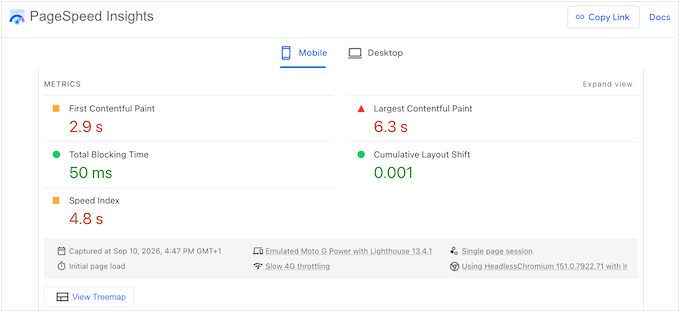
Every free plan limits your server resources. A free Wix account provides 500MB of storage and a free WordPress.com site offers 1GB, which a few dozen high-resolution photos can use up. Most plans also cap bandwidth, meaning the data your site can send to visitors each month, so check those limits before launching.
Anonymous free hosts crowd hundreds of websites onto a single server. When we tested WordPress on free hosts, we hit 500 internal server errors simply because the server ran out of resources.
A slow site drives away visitors and hurts your search rankings. On your own hosting you can work through a proper speed and performance guide and fix it, but on a free plan there’s little you can do.
5. A Design You Can’t Fully Make Your Own
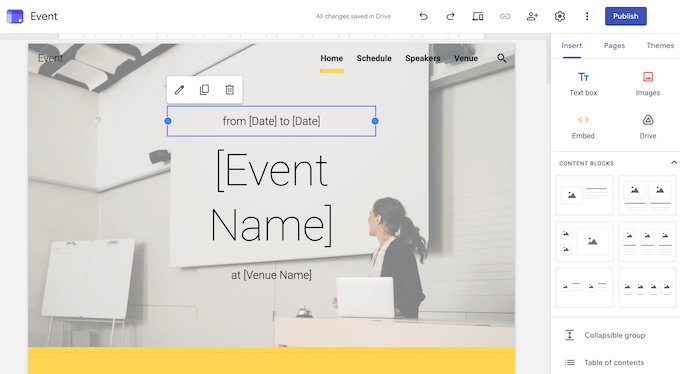
On most free platforms, you can’t use your own design. That means you cannot upload a custom theme or edit the underlying code. On WordPress.com, custom themes require a paid plan, which is an immediate roadblock if a designer sends you files to install.
With your own WordPress site, you can choose from thousands of WordPress themes, including many free themes that look premium. Picking from thousands takes longer than choosing from twelve, but you get complete control over your site’s appearance.
6. You Don’t Control or Own the Site
On a free plan, you’re a guest on someone else’s platform, and the terms of service reflect that. Every major free provider reserves the right to suspend or remove your site for rule violations without explaining the decision first.
Getting your content out is harder than expected, because free export tools move basic text while leaving media files, custom layouts, and comment formatting behind. Deleting an old account can be surprisingly hard too, since your archived content still earns the platform ad revenue.
We’ve helped a lot of readers move off these platforms, and the text always transfers while the design has to be rebuilt from scratch. Our guide on moving a blog from WordPress.com to WordPress.org walks you through it.
7. You Can Lose Your Address and Your Search Rankings

The address on a free plan isn’t yours to keep. When you move to your own domain, free platforms stop you from setting up redirects, so every existing link and bookmark breaks.
A redirect sends visitors from an old URL to a new one and passes your Google rankings along, so without it your new site starts from zero. On your own site, free plugins that handle redirects do this for you, and you can track progress in Google Search Console.
Anonymous hosts can shut down overnight and take your site with them. Established providers won’t disappear, but you’ll still rebuild your search authority if you leave.
8. Weak Security and No Way to Clean Up a Hack
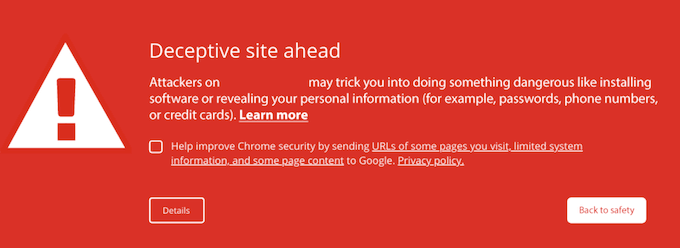
Anonymous free hosts carry real security risks. Because they rarely isolate sites on shared servers or run malware scans. An infected site can compromise every other site on that server, and without file access you can’t clean up an infection.
Many also monetize accounts by injecting hidden links onto your pages or reselling sites into link-building schemes, which triggers search engine penalties. Our guide on what the Google blacklist is and how to get off it explains how hard that is to undo.
Established platforms like Wix, WordPress.com, and Google maintain proper server security, so platform-level hacks are rare. Their free plans still block your own firewalls and security plugins, whereas on your own site you can follow our WordPress security guide without any issue.
9. No Backups You Control
Free platforms don’t give you full backups that you can download and restore elsewhere. Providers keep server-level backups for their own disaster recovery, but you can’t use those if you delete a page or overwrite your content.
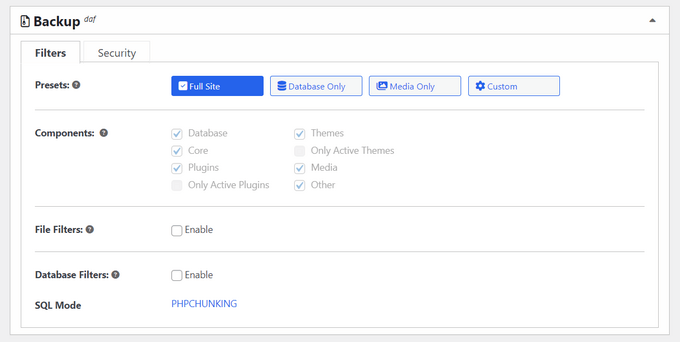
On our own sites, we use a backup plugin called Duplicator. This free plugin makes a complete copy of your site and restores it in a few clicks if something goes wrong.
10. No Easy Way to Extend Features
Platforms like WordPress or Shopify let you extend your site’s features by installing a plugin or apps. For example, with WordPress plugins, you can add contact forms, backups, SEO tools, security firewalls, and entire online stores without writing code.
Free website builders don’t support plugins, and neither does WordPress.com’s free plan. Installing them requires a paid upgrade, which is the single biggest difference between WordPress.com and the WordPress software itself. To learn more, see our comparison of WordPress.com versus WordPress.org.
11. Very Few Ways to Make Money
Most free plans run ads on your site while stopping you from running your own. On WordPress.com, you can’t join their ad program or add payment buttons, and on Wix, you must upgrade your plan before accepting payments.
Blogger is the exception, because Google built Google AdSense directly into it, so you can earn money on a completely free blog.
However, no free plan gives you a scalable business. You cannot run an online store, build a membership site in any of those free platforms.
12. SEO Controls Sit Behind a Paid Plan
Search engine optimization (SEO) helps your website rank higher on Google, and improving it means changing your page settings. Free plans block most of those settings, and WordPress.com restricts advanced SEO tools to Premium, Business, and Commerce plans.
This matters, because good SEO brings more visitors over time. A year on a free plan without SEO settings costs you a year of search growth. On our own websites, we manage this with an SEO plugin called All in One SEO (AIOSEO).
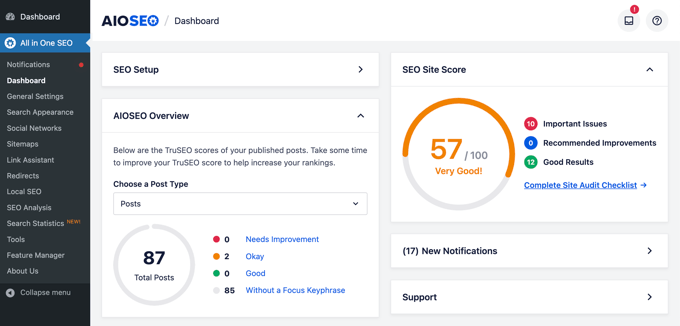
The free version of AIOSEO covers the essentials, letting you edit page titles, write meta descriptions, and build XML sitemaps for Google.
13. You Can’t Add Your Own Tracking or Marketing Code
Advertising and email tools work by placing a small snippet of code on your pages. That snippet lets you track which ad brought in a customer, or run retargeting campaigns that show ads to people who have already visited your site.
If you choose Wix, then you can’t add tracking scripts via custom code at all. This means you cannot manually add Google Analytics, Google Tag Manager, or tracking pixels for Facebook and TikTok. Instead, you must use Wix’s built-in marketing tools.
If you never plan to run ads or track campaigns, these limits won’t matter. But if you do, then a free plan will not work for you.
14. No Custom Contact Forms or Message Forwarding
Basic forms are usually included, and Wix offers them on its free plan. However, Squarespace disables submission emails on trial sites unless you connect a service like Google Drive or Mailchimp.
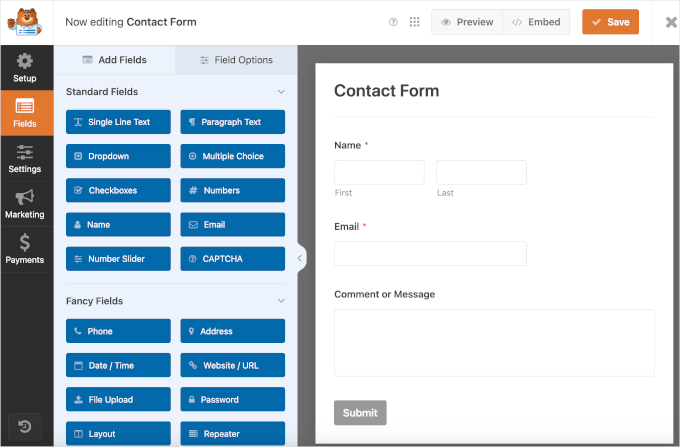
What free plans don’t offer are the features most businesses need. This includes conditional questions that change based on earlier answers, file uploads, multi-step layouts, and exportable entries. You also can’t forward submissions to specific team members, so every inquiry lands in one inbox.
On our own websites, we build forms with WPForms, whose drag-and-drop builder handles routing, multi-page forms, and conditional logic without code.
15. Your Data Is Part of the Business Model
A free plan still costs the platform money to run, so it’s worth knowing how each provider earns that back. The standard models rely on ads on your pages, marketing emails, or sharing analytics data with advertising partners.
Always read the privacy policy before signing up, paying attention to what the legal document allows rather than what the homepage promises, since it states whether the company can share or sell your personal details. You should also expect plenty of emails pushing an upgrade, because free plans exist mainly to sell paid ones.
On anonymous free hosts, be particularly careful. Since they have no corporate reputation to protect, treat any personal details you enter as information you no longer control.
16. No Real Support When Something Breaks
Free plans rarely include direct customer support. On WordPress.com’s free plan, your support options are limited to community forums. Only paying customers can contact the support team directly.
On anonymous free hosts, there is usually no customer support at all, and often no way to reach a person. That is a big risk, and most users only realize this problem once their website goes down or breaks.
To be fair, the official documentation and knowledge bases on established platforms are well-maintained. For a basic personal site, those resources might be all you ever need. The difference is that when you pay for hosting, the provider is contractually obligated to answer your support tickets.
When a Free Platform Is Actually Fine
Free website plans are not always bad. A free plan is a fine choice if you do not run a business and do not care about getting traffic from Google. Free is a sensible choice for a short hobby page, a family or event page you’ll share by link, a single-page portfolio you’ll never monetize, or a throwaway site you’re using to test an idea.
If you need a free website, we recommend Google Sites. It does not show ads on your page, and Google lets you connect your own custom domain for free. To see what Google Sites can and cannot do, check out our WordPress versus Google Sites comparison.
If you want to accept payments, build an email list, rank on Google, or run a business, a free plan will cost you more in the end. You will save money today, but you will waste a lot of time and effort moving your site later.
Ready to Build a Website? Here’s What You Need to Do Instead
If you’re serious about building a website that you can grow over time, the good news is that you don’t need to spend a fortune to get started.
To get started with a website, you will need a domain name and web hosting. A domain name is your website’s address, and web hosting is where your website files live.
You can choose any WordPress hosting provider that you want, like Bluehost or Hostinger. Both are officially recommended WordPress hosting providers and offer a free domain name for the first year.
We hope this article helped you understand why a free website is usually a bad idea, and where the honest exceptions are. If you’re new to making websites, check out our comprehensive guide on how to make a website (the right way).
If you liked this article, then please subscribe to our YouTube Channel for WordPress video tutorials. You can also find us on Twitter and Facebook.



Jiří Vaněk
Yes, free websites are a very bad idea. If you truly want to destroy your professional reputation and your company’s name, this is exactly the way to do it. Free websites are often paid for by displaying ads, so they’re not really free. You’re paying by having ads on your site, and you’re also paying with your reputation. Today, no one trusts such sites, and many users will immediately leave because if you’re cutting corners on something as affordable as a website, they’ll feel like you’ll cut corners on them too. Nowadays, professional hosting and a domain cost around $5 a month, sometimes even less. This is something you definitely shouldn’t skimp on if you’re serious about your work, reputation, and gaining new customers. You only have one reputation and can only make a first impression once.
kzain
This article hits the nail on the head! Free websites can be a good starting point to experiment, and I totally get it, that’s how I began my online journey too. But like you say, the limitations become painfully clear after a while.
No proper support, an unprofessional domain name, and ads that benefit them but not you – it’s all true! Eventually, everyone building something serious needs to make the switch to a professional website.
Dennis Muthomi
Excellent article.
I have used them when I was getting started in blogging, and can personally relate to the slow speeds and limited resuorces.
But, the biggest risk that I didn’t fully consider was losing all my hard work if the hosting company went MIA.
Mrteesurez
Well said, you have said it all. I don’t advise settling for a free website except for experiment, one will start from somewhere as I have also used free website in the initial days of my online endeavour.
The fact is you will finally migrate to a professional website no matter how long you used free website, you will be encountering more of the problems and limitations mentioned in this post.
The worst of it are, no help or support, ugly domain and they make money off you with advertisement but never allow you to make your own. lol.
Louis
Thanks mate. really useful information.
I lover this site ❤
WPBeginner Support
Glad you found our reasoning helpful
Admin
Hannah
Could you tell me what a key word is please and how it affects personal and meaningful conversations ??!
Thank you.
WPBeginner Support
For understanding what a keyword is, you would want to take a look at our article here: https://www.wpbeginner.com/beginners-guide/how-to-do-keyword-research-for-your-wordpress-blog/
Admin
Hannah
Could you give me some more information about the bluehost basic hosting account. I have chatted to them but don’t find I’m getting the right response.
Is it the best place to go for a web site total beginner.
Does it carry outside advertising ie from companies or services. I don’t want to have advertising if poss.
Do all hosting accounts charge the full term up front.
This is something I feel I might like to try but don’t want to get embroiled into a financial net.
Your information was really excellent about free web sites but I still like I’m at the beginning of a twisty labrynth.
WPBeginner Support
Where to start for a beginner is a large amount of personal preference. We have recommended hosts here:
https://www.wpbeginner.com/hosting/
Your site should only have ads that you place on it.
Not all hosts, you would need to check with the hosts for if they have a monthly plan.
Admin
Matt
Not everyone wants to start a blog to make money. In fact, real writers proabably do so to show off their work. Not for the money. This might be a reason why some people use free hosting sites.
WPBeginner Support
While not all sites are looking to monetize, 14 and 15 are major concerns for free hosting that is not official such as WordPress.com.
Admin
George
Hi Sir Thanks for sharing this post. I really need this. I am working on Blogspot and joomla demo version. I also WordPress site using free web host companies. I faced problems in installing plugins. I think that how they give us free hosting while bluehost, and other sites give us paid hosting then I searched it on google then I found your informative article.
Sir I have question…
Some companies also provide free domain .tk .cm, and many others but .com
.org are paid. Should I use their free domains..???
Sir Reply me must…plzzzzz
WPBeginner Support
Hi George,
No, such free hosting accounts are not good. Please see the article above for more details.
Admin
Jalu Kaba
If you want to be serious about blogging. To my knowledge, all professionals in the world of bloggers strongly recommend buying your own hosting and domain. Because each one is free, there is a risk in it.
I’ve read free domains sometimes used as mounts for farming cryptocurrency. And there are cases when your traffic is good, then your free domain will be claimed and you will be asked a high price if you want to have it.
It is safer and you are calm in blogging if you buying domain and self-hosting. Many trusted companies provide cheap packages, around $ 2- $3 / month.
Gareth
I’m just completely blown-away by the amount of people that have a website hosted on a free platform like Blogger/Wordpress.com and struggle to get traffic, make it successful, make money, etc.
I think it goes without saying; You get what you pay for.
I understand the need to be frugal and everything, but most of these people that start blogs on free platforms, are the same people that have read that you can make a living with a blog, simply writing dailyabout your passion. They don’t want to part wth any money.
That’s mind-boggling to me.
Here’s another relative saying; “You have to spend money to make money”.
Gareth
Hansama
thanks, it’s very good information, btw i’m using blogger so there is something that i don’t agree about your opinion. but i want to move to a self-hosted wordpress. which one must i do, blogger(free) or wordpress ? thanks before.
sorry for my english,
WPBeginner Support
Self hosted WordPress.
Admin
Ali
I try it free then if i really like it i will pay for it
Bcuz Good job deserve lot of money it is nothing to discuss about
Nessa
So I started a blog on wordpress.com about 2 years ago. For the content I deal with, it’s been fairly successful. At the time, I didn’t realize the perks to having a a wordpress.org site vs wordpress.com and would like to switch over. I’m worried that doing so will cause all of my stats and posts to get deleted though; is that the case? Will I have to copy and paste all of my posts and lose all of my comments/followers?
WPBeginner Support
You can easily move to a self hosted WordPress.org site. Please see our guide on how to move from WordPress.com to WordPress.org.
Admin
Nessa
Thanks so much! This is exactly what I need! I was worried about losing all my stats and comments! Wordpress.com already had a glitch that dropped some of them so I was was worried about it happening again!
George
No you can migrate your site wpbeginners also write article on it.
Goto the following link
https://www.wpbeginner.com/wp-tutorials/how-to-properly-move-your-blog-from-wordpress-com-to-wordpress-org/
Eric Snissaert
What about the free http://www.wordpress.com? I personally don’t use it. I own 2 paid WP websites which meet my needs fully. But I can imaging someone with a very low budget who want to build a website for a club or something like that could start off with wordpress.com. Or not?
WPBeginner Support
Moving websites is painful, specially if you are not a developer. Users could spend months building a following and search traffic and all of this could get affected during a move to self hosted WordPress. It’s best to start with the most flexible platform right in the beginning so that you have plenty of room to grow.
Admin
Bishal
Free Websites are need to use for only practice & Expriment perpose only..
Tejas Waghmode
How to use marquee in WordPress???
WPBeginner Support
See
Admin
GLGale
It shouldn’t surprise me that a site for Wordpress beginners which is heavily geared towards promoting nothing but Wordpress should be bashing free websites. There are probably plenty of bad free website companies out there but there are also some pretty damn good ones as well. I’ve designed professional sites using various software for over 15 years, from a basic text editor to Dreamweaver to Wordpress and many others I’ve forgotten. They all have their own quirks and bugs and different learning curves.
However, I’ve been running a number of free multi-page sites on Weebly for over 5 years now. I’ve had no problem with speed, upload limits, storage, visits, forms, customized pages or any of the numerous negatives you accuse free sites of. I’ve had almost 10x as much traffic on these sites as I’ve ever had on my Dreamweaver and Wordpress sites and I’ve had no problem setting my own SEO. I have one site that duplicates an older Dreamweaver site that gets even more traffic and both sites are still active and have the same SEO.
I don’t disagree with some of your points and they do offer fair warning to avoid free site builders with no history or track record, but I think you are unfairly tossing everyone but Wordpress under the bus for no reason. In truth I’ve found Wordpress to be far more unwieldy for handing over to clients who can’t handle the learning curve and then proceed to dismantle what was once a beautiful site. I’ve never had this problem with clients on a weebly site, they just work.
Editorial Staff
Thanks Gale. This article is for business owners who are about to start their site. Starting on a free hosting company or web page builder isn’t a good long term solution. That includes WordPress.com (free blog hosting) which we don’t recommend.
We are recommending the self-hosted WordPress and we have always done so.
Admin
Katharine
I know I should move my wp.com site over to blue, but I have a friend who did this and actually got the half price. I cannot figure out how to do that and there was not link to that info on your post. Help!
WPBeginner Support
Simply clicking on the BlueHost link in the post will give you a 50% discount.
Admin
Katharine
Thanks!
Ajmal Mp
That is regular price search on google
Why spamming?!
ZIS
Good article! Thats why I built my own website on paid domain and hosing.
Liz Bobeck
Great article, whole-heartedly agree with you, although the low cost options are really only low cost options for the initial period of time. Bluehost is bad about this, give you a deal, then screw you later by jacking up the prices. Then they screw with your site and never tell you. I’d rather use Siteground.
Dave Lum
For a small “mom and pop” business, free Wordpress.org websites are just fine. Our five pages had content uploaded from my computer, and would take about four hours to re-create. There is a free contact form, which works. There’s free Google Analytics to track activity. Yes, we do pay for a custom domain, but that’s peanuts. Free is great for some.
Your article should have a subtitle: “and ten situations where a free website is great.”
WPBeginner Support
Please see our guide on the difference between self hosted WordPress.org vs free WordPress.com blog.
Admin
Md Nazmul Islam
Thank you Syed Balkhi to find out and explain great things. So, what about the reusing themes?
Jacob Christian Glover
Excellent Article! I started out with my first WordPress website and hosting through ipage, nearly three years ago. It’s been a wonderful learning experience that I wouldn’t trade. I’ve always thought of the possible limits to having a “free website” and your article has more than confirmed some of my deepest concerns. Ten WordPress sites later and I don’t see any chance of slowing down in sight. It’s a great feeling to know that every site that I build is mine from A to Z! Thanks again, great information, be well Mr. Winney!
Jacob Christian Glover
Correction! I credited the wrong person in my comments, this is a great piece that many individuals seeking the personal gratification of building a website should read. Great job to the Editorial Staff, and many apologies for crediting the wrong person, be well!
Tim
Good article. We actually get free hosting from Bluehost, due to our nonprofit status. Had to jump through a couple hoops with Guidestar.org and update our info there, but overall, well worth it! Might be worth looking at Jason. http://www.bentleyvilleusa.org
Grant Winney
Great article. Lots of valid points here.
I use DigitalOcean with pretty low hardware specs to run a WordPress blog, and it’s been good. They’re getting paid, so they can actually offer help when people need it. If I need more bandwidth or memory or whatever, I can just up it… I’m not stuck with some bottom-of-the-barrel “free” service with a bunch of artificial limits.
The worst would be gaining some traction, attracting some traffic, having some conversations with people.. and then having the rug pulled out from under you, and the company disappears and takes your catspajamas.freewebhostproviders.com url with them. And now no one can find you.
Totally worth paying 5-10 bucks a month to save the headache. There’s more than one kind of “free”, and free providers are anything but.
Jeff Mills
Great article. I especially like the line in #10 “if you are not paying for it, then you are the product”.
Jason
Really, really great article. I’ve encouraged people to switch from these free hosting companies for quite a while. The only one I recommended to start was Wordpress.COM. However, it doesn’t pay to stay there–you’ll eventually need to move to self-hosted on Bluehost or someone similar.
The other thing I learned in the past couple years–don’t use website companies. They usually are not built on the Wordpress system and they control the site look/feel have their own tools that are proprietary to their organization.
I recently moved our church from a hosting site like mentioned above to Wordpress.ORG. It was like pulling teeth to get our domain transfered to Bluehost. They ended up selling our domain to another registrar–whom I didn’t know. It was rough.
I’m very happy with Wordpress for our church – if you want to check it out. I’ve been on Wordpress for a while – you can check it out below.
I’ll be sharing this article on my social networks. Thanks Syed for sharing this information.
Blessings,
Jason
Jan McClintock
Very nice roundup, thank you! I have a similar post from a while ago but this adds quite a few more reasons. Love this blog.
Amobi chuks
That really feel so bad. I’m running a wordpress site that always give me series of nightmares from memory limit to page not found. Currently using their shared hosting. Virtual hosting is really too high for students.
Angelica Costa
I was expecting something about a website that gives a away free stuff, but it its about a free hosted websited. My bad.
Nice article, indeed there is no reason today to to use free hosting. There are really cheap and good services out there.