


Can you build a serious university website on WordPress? The answer is yes.
In fact, our independent research identified more than 40 top universities using WordPress, including Harvard on its main harvard.edu homepage.
That level of trust makes sense when you look at the numbers.
According to latest W3Techs data, WordPress powers 40.8% of all websites and commands 59% of the content management system (CMS) market.
In the guide below, we explore which higher education institutions rely on WordPress and how they deploy it.

Use the quick links below to jump straight to the section you want to read first:
- Universities Running Their Main Website on WordPress
- University News and Magazine Sites on WordPress
- Campus-Wide WordPress Networks for Students and Faculty
- Department and School Sites on WordPress
- Why Universities Choose WordPress
- Universities That Moved Away From WordPress (and Why It Doesn't Change the Story)
- Build a University-Style Site With WordPress
- Frequently Asked Questions
Universities Running Their Main Website on WordPress
Some major universities use WordPress to power their flagship websites. Here are a few notable examples.
Harvard University

Harvard runs its main homepage on WordPress, and publishes the Harvard Gazette news site on WordPress too. This demonstrates how the platform easily scales to handle both high-traffic institution portals and large-scale digital publications.
Boston University

Boston University runs bu.edu on a centralized WordPress setup. This platform powers admissions pages, study abroad programs, and hundreds of departmental sub-sites.
Georgetown University

Georgetown serves its main university website on WordPress. Students, faculty, and prospective applicants can use this central portal to explore academic programs, review admissions requirements, and access key administrative resources.
Vanderbilt University

Vanderbilt runs both its main website and its news site, news.vanderbilt.edu, on WordPress. This setup allows the university to maintain a consistent, secure digital presence while seamlessly managing daily editorial coverage.
University of Central Florida

The University of Central Florida serves its main homepage on WordPress. As one of the largest universities in the United States, UCF relies on this setup to deliver campus news, program details, and student resources to a community of over 70,000 students.
University of Southern California

One of the largest private research universities in the United States, USC runs its main website at usc.edu on WordPress. The Los Angeles institution uses the platform to showcase its academic schools, research initiatives, and admissions information to a global audience.
University of Alabama

The University of Alabama runs its main website on WordPress. The university uses this central portal to publish academic program information, share campus news, and guide prospective students through the admissions process.
Georgia State University
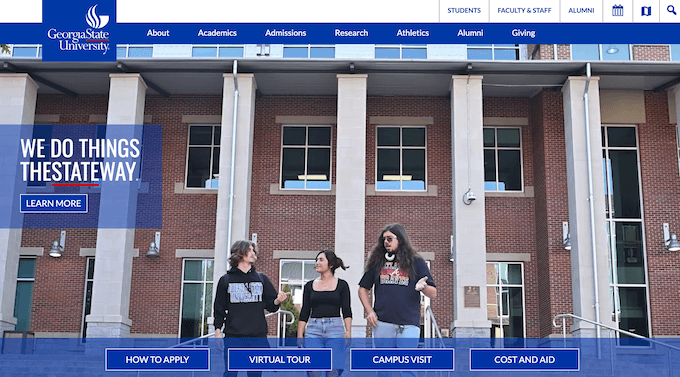
Georgia State University powers its main site on WordPress. As one of the largest public universities in the country, Georgia State relies on this platform to share degree program details, campus updates, and essential resources with its diverse student body.
Boise State University

Boise State University uses WordPress to manage its main website. It handles everything from virtual campus tours for prospective applicants, right through to athletic updates and academic calendars.
Washington State University
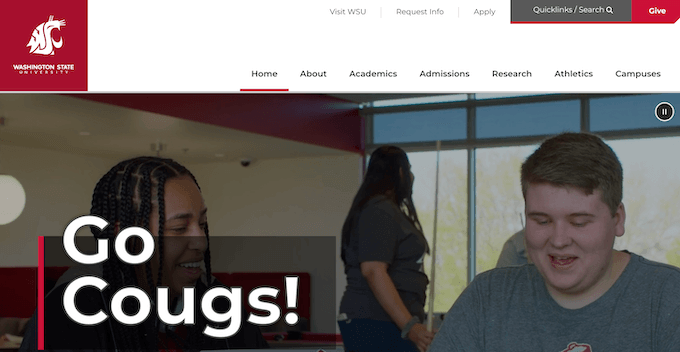
Spanning five physical campuses across the state, Washington State University serves its primary website on WordPress. This setup ensures the university can deliver a unified, consistent digital experience to thousands of students across all its locations.
Bates College
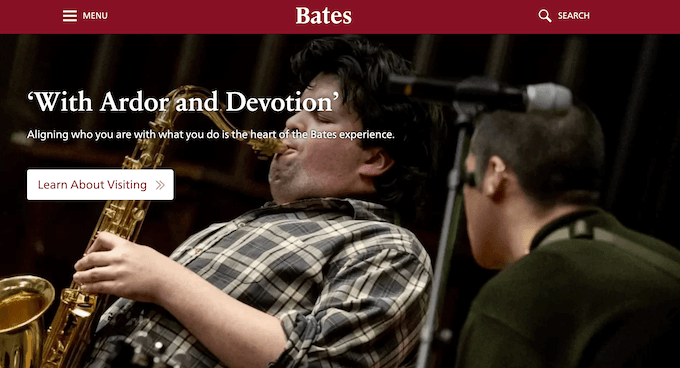
Consistently ranked among the top liberal arts colleges in the United States, Bates College uses WordPress to highlight undergraduate research and immersive learning opportunities.
Lafayette College
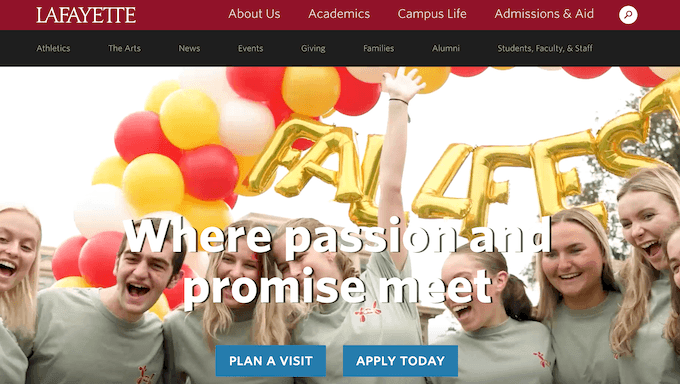
Founded in 1826 and renowned for blending liberal arts with engineering, Lafayette College hosts its primary domain on WordPress. The site immediately introduces visitors to undergraduate research projects and division athletic programs.
Drew University

Serving a diverse community of undergraduate and graduate students, Drew University relies on WordPress to power their main website. The site places specialized launchpad programs and NYC semester internships front and center for prospective students.
University of Mary Washington

The University of Mary Washington is known for its digital publishing initiatives and uses WordPress to power its main website. The institution has championed digital learning platforms for over a decade, and uses its flagship homepage to showcase student research and public liberal arts programs.
University of Maine
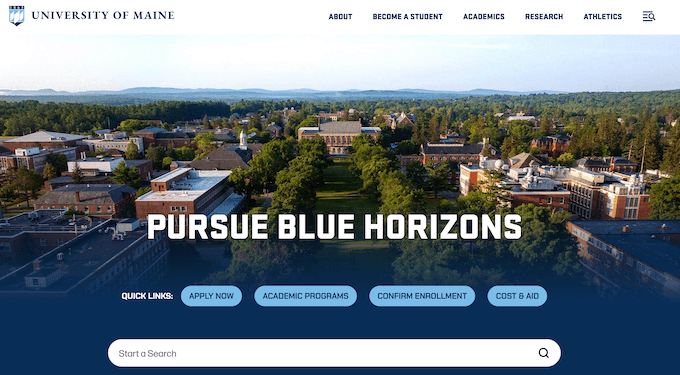
Recognized as Maine’s only public Land, Sea, and Space Grant university, UMaine trusts WordPress to manage its site. The homepage lets visitors quickly check admission deadlines, explore degree paths, or schedule a campus tour.
University of Arkansas at Little Rock
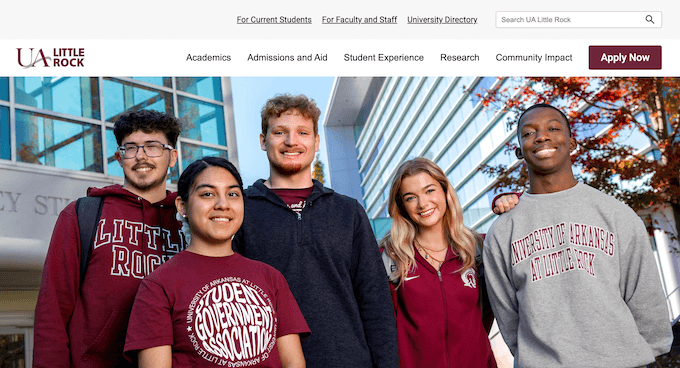
Situated in the heart of Arkansas, UA Little Rock uses WordPress to connect metropolitan students directly to internship pathways, research opportunities, and vibrant campus events.
Des Moines University
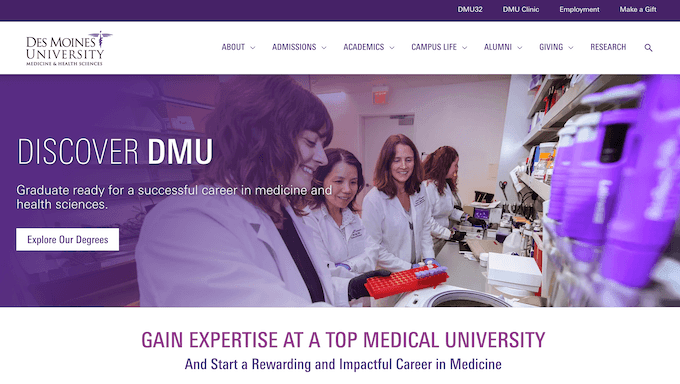
As a dedicated graduate medical and health sciences institution, Des Moines University trusts WordPress to power their flagship website.
Wheaton College

WordPress provides Wheaton College with a flexible foundation to support both prospective student recruitment and current campus operations.
University News and Magazine Sites on WordPress
WordPress started as a blogging platform, and that publishing-focused foundation still makes it a natural fit for university newsrooms, magazines, and other editorial websites. Here are some examples.
Nieman Lab (Harvard)
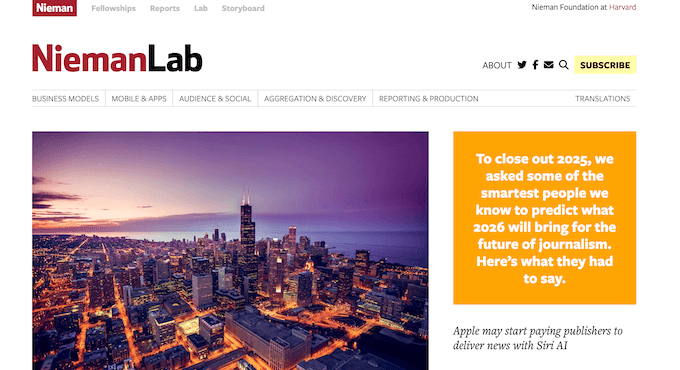
Covering the rapidly shifting landscape of modern media, Harvard’s Nieman Journalism Lab publishes its reporting using WordPress. The site reaches millions of journalists, editors, and media executives seeking analysis on the future of news.
University of Wisconsin–Madison News
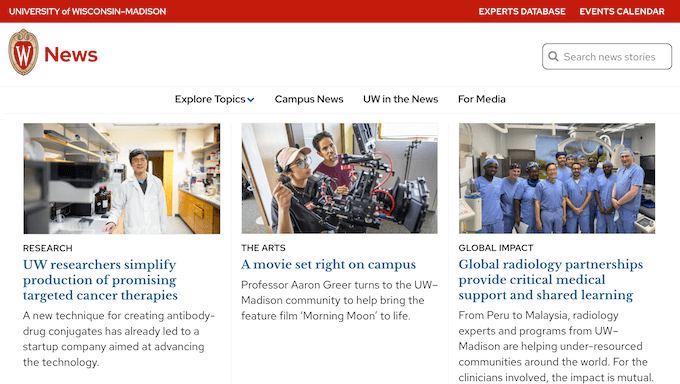
The University of Wisconsin–Madison uses WordPress to power its main website, which delivers daily updates to more than 50,000 students and staff.
Texas A&M Today

Texas A&M Today uses WordPress to handle high reader traffic and ensure enterprise-level security. The portal delivers rich photojournalism and official university updates to a massive statewide audience.
Carleton University Newsroom
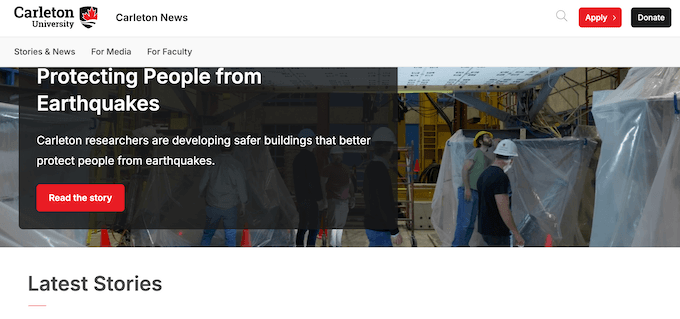
Highlighting the achievements of a vibrant academic community in Ottawa, the Carleton University Newsroom relies on WordPress to publish daily campus reporting.
University of Tennessee at Chattanooga Blog
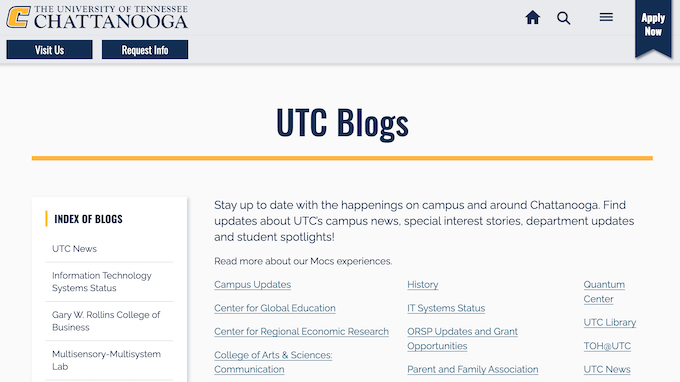
Serving as a primary storytelling hub for UTC, blog.utc.edu relies on WordPress to showcase individual student journeys. The site highlights experiential learning opportunities, local community partnerships, and campus milestones.
Campus-Wide WordPress Networks for Students and Faculty
Universities often need to give students, faculty, researchers, and academic groups a way to create and manage their own websites. WordPress Multisite makes this possible by allowing a single WordPress installation to power an entire network of independent websites.
Take a look at some examples.
Sites At Penn State
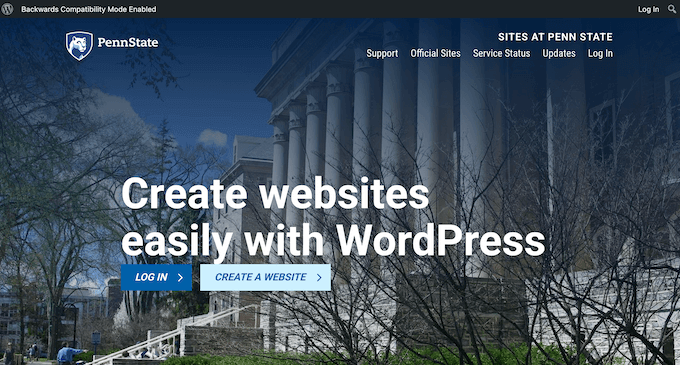
Empowering a massive community of over 86,000 students across multiple campuses, Penn State operates a university wide web network. The multisite platform allows students, faculty, and administrative staff to launch individual blogs, portfolios, and research pages instantly.
Cornell CU Blog Service
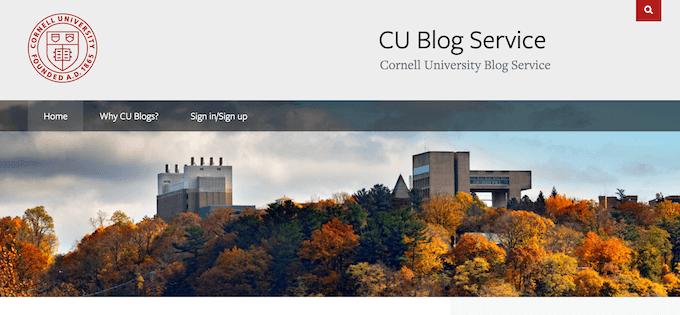
Cornell University deploys a WordPress multisite infrastructure to deliver secure, standardized web publishing. The platform allows IT staff to manage security patches and plugin access centrally, while providing instructors flexible tools for course management.
Duke Sites
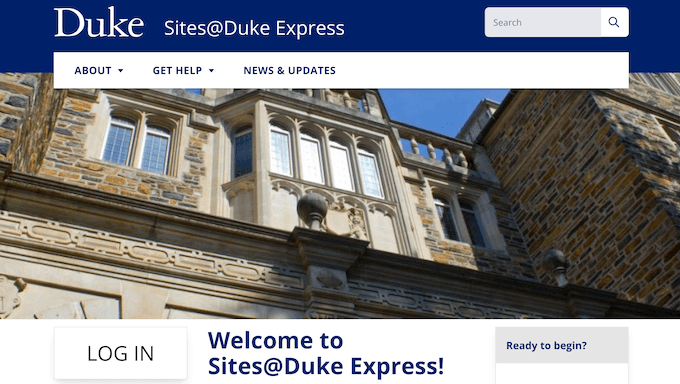
By running a managed WordPress setup, Duke gives non technical users the ability to build responsive web pages. The platform ensures all community sites automatically comply with institutional branding and web accessibility guidelines.
UBC Blogs
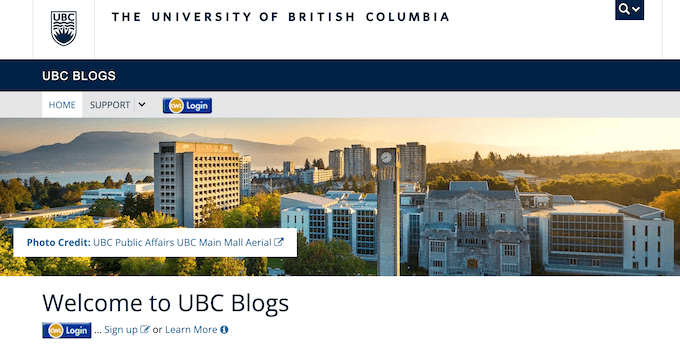
The University of British Columbia runs its campus wide teaching and learning network on WordPress at blogs.ubc.ca. Students and faculty use the platform to publish academic blogs, share course materials, and present personal portfolios.
University of Calgary Blogs
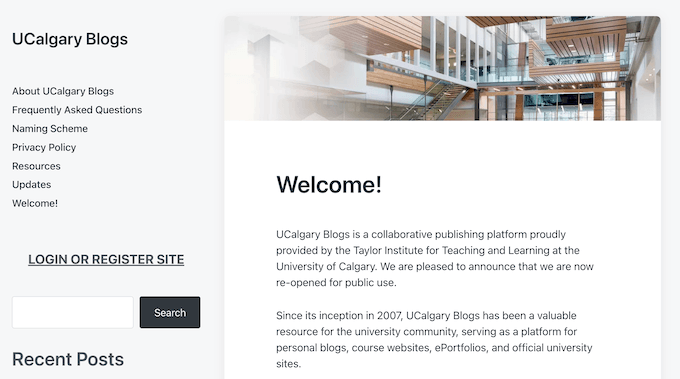
The University of Calgary uses WordPress to give students and staff their own academic blogs. The service provides a simple, accessible way for them to share their work with the public.
LSE Blogs

Recognized worldwide for shaping public debate on economic policy, the London School of Economics trusts WordPress to drive its influential blogging network.
Freie Universität Berlin Blogs
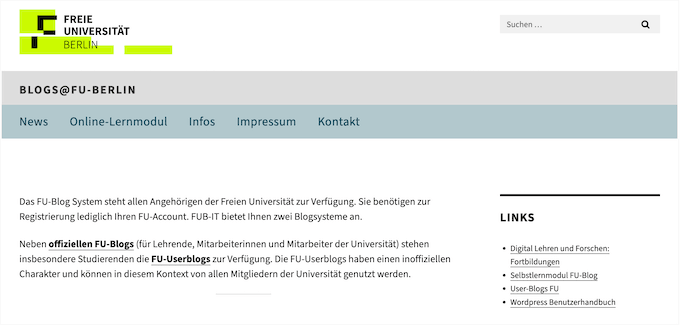
Recognized as one of Germany’s premier universities, FU Berlin relies on a WordPress multisite ecosystem. The service offers an accessible platform for community members to publish their research findings and academic reflections.
University of Melbourne Blogs
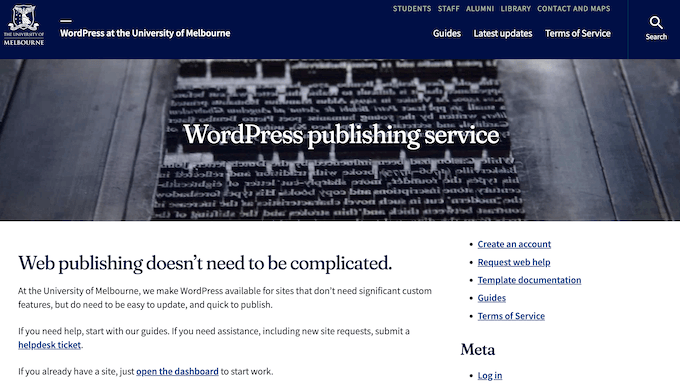
The University of Melbourne runs its primary academic blogging platform on WordPress. Students, instructors, and researchers can create custom digital spaces for course work, departmental news, and research projects.
University of Brighton Sites
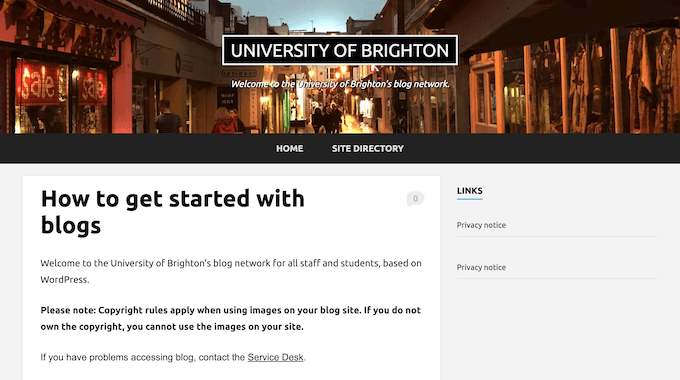
Rather than keeping student work locked inside a learning management system, the University of Brighton uses WordPress to turn coursework into public professional portfolios.
Oregon State Blogs
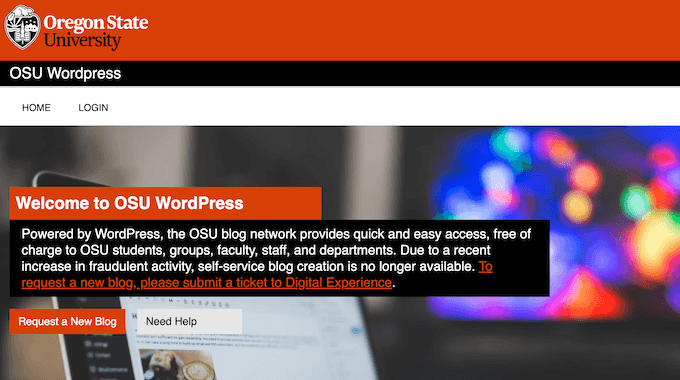
Oregon State University has a broad public mission that extends far beyond the traditional classroom.By running their network on WordPress, the university gives researchers, county extension agents, and forestry experts a direct, accessible channel to publish.
Bowling Green State University Blogs

At Bowling Green State University, the WordPress network gives students, faculty, and staff a place to create their own blogs and websites.
These sites can be used for sharing research, class projects, portfolios, podcasts, and other academic or professional work, while the university manages them as part of one WordPress multisite network.
Adams State University Blogs
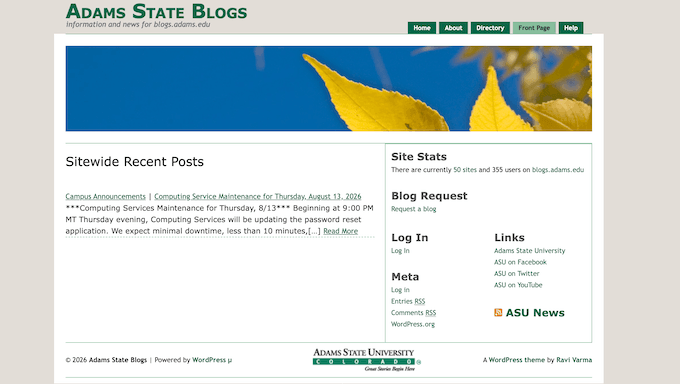
Adams State University uses blogs.adams.edu as a WordPress network where students, employees, and departments can create their own websites and blogs.
The network is used for everything from student publications and academic work to campus announcements, giving different parts of the university their own space to publish online.
Clark University
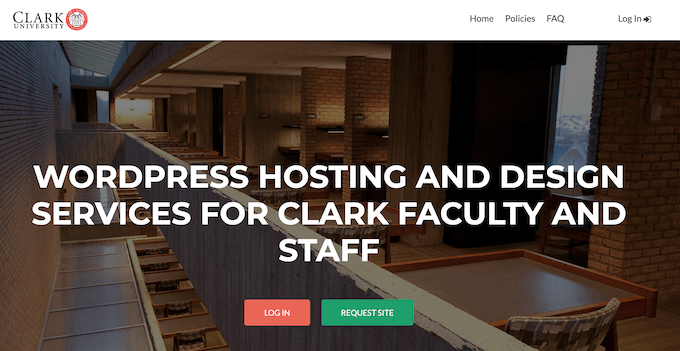
Clark University uses WordPress to give students and faculty a place to create and publish their own websites as part of their academic work. The platform supports the university’s liberal arts curriculum by giving the community a hands-on way to explore digital publishing and web creation.
Department and School Sites on WordPress
Even when a university’s main website isn’t built with WordPress, individual schools, departments, and offices may use WordPress to run their own websites.
Here are a few examples.
Missouri College of Engineering
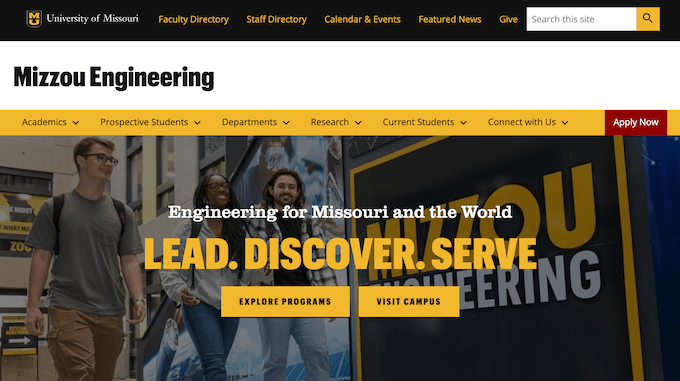
Instead of fitting into a standard higher ed template, Mizzou Engineering uses engineering.missouri.edu to highlight its hands-on STEM work.
UCF College of Medicine
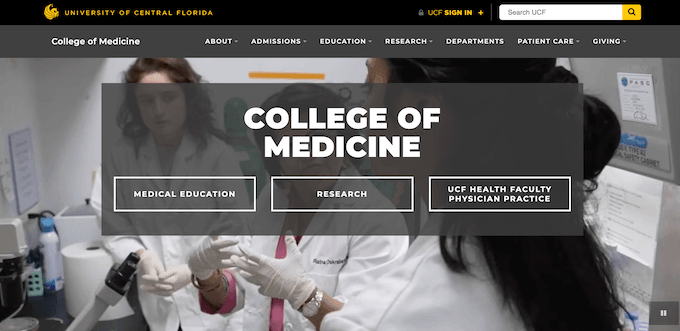
While the main university portal speaks to a broad student body, the UCF College of Medicine uses WordPress at med.ucf.edu to cater directly to future physicians, clinical researchers, and healthcare partners.
Northeastern University ITS
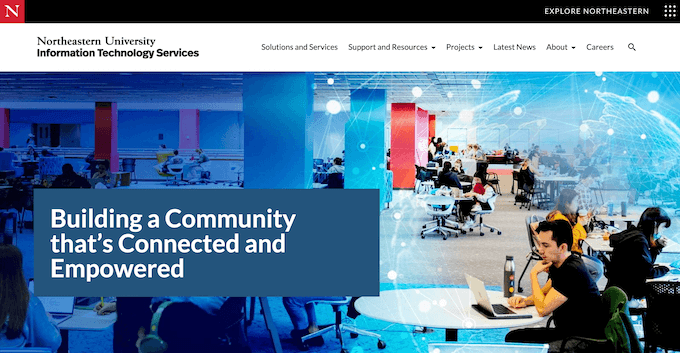
By running its.northeastern.edu on WordPress, Northeastern creates a clean, searchable portal where users can instantly submit help tickets, check network status, and discover new educational software tools without getting lost in broader institutional marketing copy.
Johns Hopkins Hub

Bridging a sprawling network of world renowned hospitals, research institutes, and academic divisions requires a flexible publishing hub. By hosting hub.jhu.edu on WordPress, Johns Hopkins combines stories from across its diverse campuses into a single, cohesive feed.
Queen’s College, Melbourne
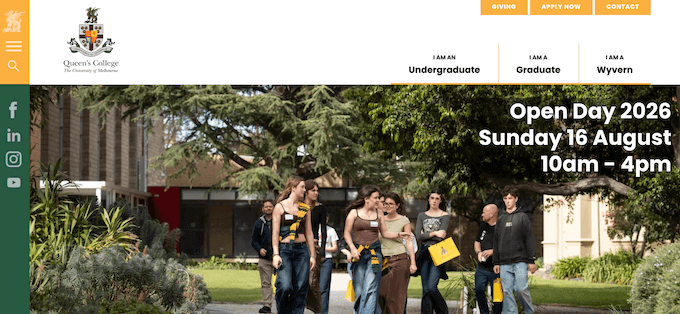
While the main university portal focuses on broad degree tracks, Queen’s College uses WordPress at queens.unimelb.edu.au to highlight its distinct residential community.
Oxford IT Services Blogs
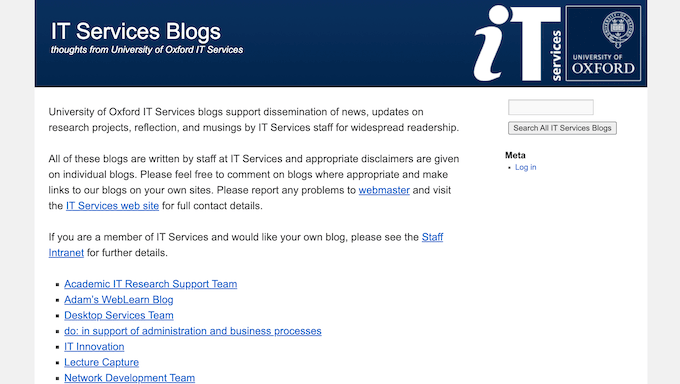
Oxford IT Services uses blogs.it.ox.ac.uk to share insights into the technology powering world-class research.
Wayne State University Library
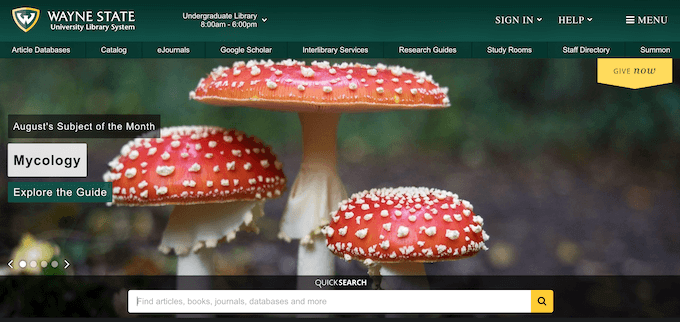
Wayne State University uses WordPress to power its library portal, making it easy for students to search digital archives, check out resources, and connect with librarians.
FIU College of Engineering and Computing

Florida International University uses WordPress to give its College of Engineering and Computing a dedicated, tech focused online hub.
Why Universities Choose WordPress
WordPress is open source, which means the core software comes with zero licensing fees. For a higher education institution managing hundreds of subdomains and departmental pages, removing proprietary software costs saves a massive amount of money every year.
Scalability is another major advantage thanks to the WordPress multisite architecture.
A single network installation can power an entire university, from individual research labs right through to student organizations. Central IT teams maintain global security policies, software updates, and brand guidelines, while faculty and student creators get full control over their daily content.
Compliance and accessibility also play a critical role. Federal guidelines require US public colleges to meet WCAG 2.1 AA web standards, which are rules that ensure websites are usable for people with disabilities, such as those using screen readers.
WordPress provides an ideal foundation when paired with accessible themes and smart design practices.
Additionally, because WordPress powers well over 40.8% of all websites, the global talent pool of developers, designers, and content managers is unmatched. That makes hiring, training, and support far easier compared to a niche platform.
If you want to build a similar high volume publishing site, check out our guide on how to make a news website using WordPress.
Universities That Moved Away From WordPress (and Why It Doesn’t Change the Story)
Higher education websites evolve constantly, so it is completely normal for schools to switch content management systems over time. For example, Cornell’s music department and Princeton University Press shifted to Drupal 10, while Harvard eventually archived its older campus blog network.
A number of top university homepages also rely on Drupal today, including Yale, the University of Texas at Austin, the University of Missouri, and Dartmouth. This kind of platform shifting is standard across large organizations.
In fact, most of these same institutions continue to rely heavily on WordPress across other parts of their campus. Cornell is a great example, as it still powers its massive, campus wide network at blogs.cornell.edu even while specific academic departments use other platforms.
Build a University-Style Site With WordPress
You do not need a massive higher education budget to build a professional website like the ones in this guide. If you are starting completely from scratch, our complete walkthrough on how to make a website guides you through the process.
If you need separate subsites for different academic departments, online courses, or student organizations, setting up a WordPress multisite network lets you manage everything effortlessly from a single dashboard.
Frequently Asked Questions
What famous websites use WordPress?
Many global brands, high-volume news organizations, and public figures depend on WordPress for their main digital presence.
You can see a full rundown in our showcase of big-name brands that use WordPress.
Is WordPress outdated in 2026?
No, WordPress is far from outdated. The platform continues to power roughly 40.8% of all websites and holds over 59% of the global content management system market.
Active development keeps the core software current, with multiple major releases each year. Recent updates focus on modern block editing, full-site design flexibility, improved performance, and native AI integration.
As shown by the higher education examples above, leading universities, research institutions, and major publishers regularly build new sites on WordPress. It provides a reliable, open source foundation with an unmatched ecosystem of support.
What is the most popular CMS for websites?
WordPress remains the most popular content management system by a wide margin. Market data shows that WordPress controls roughly 59% of the content management system market for websites with a known CMS, while powering 40.8% of all websites across the entire internet.
Its closest competitors operate on a much smaller scale. Hosted platforms like Shopify and Wix hold small single-digit percentages of the market, mainly serving specialized e-commerce or simple site building needs.
You may also want to check out our best WordPress LMS plugins and best WordPress themes.
If you liked this article, then please subscribe to our YouTube Channel for WordPress video tutorials. You can also find us on Twitter and Facebook.




Mrteesurez
People are seeing and realizing the easy of use and flexibility of Wordpress. I am happy see universities using Wordpress to power their school websites and that for some. In our region, we still have more universities that are using Wordpress. Thanks for sharing this information.
Jiří Vaněk
It is very interesting after the article and the biggest companies that use WordPress to see also the biggest universities that also use WordPress. This just goes to show how versatile this system is. An interesting look at who all uses this content management system. Certainly, the ability to expand WordPress into a membership site plays a significant role here, involving students more in the university’s daily activities. In this regard, WordPress is truly excellent.
Mrteesurez
You are correct role of Wordpress in membership. As more universities are adopting WordPress, there will be more support for membership activities like group chat and portal system, messaging system and more. The integrations might be through plugins or suggestions from the core members when the demand are more.
Andrea Hurtado
Hi:
Can we build an online school?
The students are going to be the ones login in and following the material thought out the different levels. Taking different kinds of exams, studying the material such as: videos, written articles and audios.
Is this possible?
WPBeginner Support
Hi Andrea,
It can be done using an LMS plugin like LearnDash.
Admin
Claudz
Hello! I just wonder… can we create an online school webpage where you can integrate all the lesson materials, where tutors can log into their account and use the full function of the webpage in their tutorials, like lesson materials, checking their students’ profiles, updating their tutoring schedule, etc. Thanks! ^_^
Abdurehim Nasir
It can be done using an LMS plugin like LearnDash.
Jules Webb
Don’t forget Washington State University!
WP core dev Jeremy Felt heads that up.
anis
I’d like to see an article with the top 40 news websites using wordpress
WPBeginner Support
Hi anis,
We will try to cover that soon. Meanwhile, check out our list of notable big name brands using WordPress. It has some famous news websites as well.
Admin
ROBERT KARL POPA
WordPress is infinitely more valuable for our Humanity than all the commercial, financial, services, industrial, energy and automotive companies alltogether.
Raichand Ray
Hi,
List of educational institution using wordpress provided above is great.
Please provide a good tutorial “How to create great educational websites with wordpress”.THat would be very much useful.
Thanks
Raichand Ray
WPBeginner Support
Thanks for the feedback, we will try to cover that in a future article.
Admin
Emmanuel Ike
Good day, I woul like to know to to design a registration portal with wordpress
Vitaliy Kolos
Great stuff. Does it also mean that those universities site’s are easy to hack for the people in the know? Just kidding.
I guess it’s pretty logical that those universities use WordPress because it’s super easy to setup. Is it me or more tech oriented universities tend to use Drupal for their sites?
Chris Raymond
And what would those universities be? I see MIT, Texas Tech, and FIU in a quick perusal. I’d love to see your list!