


When you’re launching a new WordPress site, there are few SEO decisions that are extremely important because they’re hard to undo later.
Your hosting, your theme, your permalink structure, and how search engines index your website can become very expensive to fix once your website is live. For example, change your permalinks six months in, and you’re dealing with dozens of broken links and lost rankings.
That’s why we created this WordPress SEO checklist for beginners to walk you through the exact steps that we take from SEO foundation to the last checks that we run on launch day to ensure your website can rank high in search engines.
Here are the six stages I’ll cover:
- Download Our WordPress SEO Checklist
- Stage 1: Website Foundations for SEO
- Stage 2: Configure WordPress for SEO (Basic Setup)
- Stage 3: Technical SEO Setup
- Stage 4: On-Page SEO Setup
- Stage 5: WooCommerce SEO for Ecommerce Websites
- Stage 6: Final SEO Checks Before You Launch
- Frequently Asked Questions About WordPress SEO Checklist
Download Our WordPress SEO Checklist
Want a copy to work through as you build?
Grab the free downloadable version of this checklist below and check off each step before your site goes live.
Stage 1: Website Foundations for SEO
Before you optimize anything else, you want make to sure your website has a strong foundation. Getting them right from the start goes a long way, because switching later can be extremely time-consuming.
1. Choose Fast, Reliable, SEO-Friendly Hosting
Your hosting company is the SEO foundation that everything else sits on. If your site is slow or frequently goes offline, it can hurt your search rankings no matter how well you optimize your site.
Since page speed is a confirmed Google ranking factor, you want to choose a WordPress hosting provider with fast servers, reliable uptime, and enough resources to handle your traffic.
After choosing a host, install a caching plugin to make your website load even faster. Caching creates ready-to-serve copies of your pages, reducing load times for every visitor.
See our comparison of the best WordPress caching plugins to pick one that fits your site.
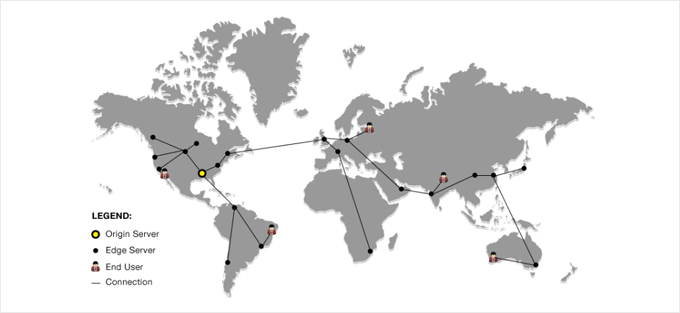
Finally, if you have visitors from multiple countries, use a CDN. It serves your site’s static files from the server closest to each visitor, reducing loading times around the world. Cloudflare’s free CDN is an excellent place to start.
For more on hosting, caching, and every other speed factor, see our ultimate guide to WordPress speed and performance.
2. Pick a Theme Built for Speed
Your theme is just as important as your hosting. A bloated theme slows down every page on your site, even if you’re using a fast hosting provider.
We recommend that you choose a lightweight, well-coded WordPress theme instead of one bloated with features that you’ll never use. Sydney, GeneratePress, and Ollie are three fast, well-coded WordPress theme options that we recommend.
All three keep their code minimal, work well with the block editor, and score well on speed tests without extra tuning. See our tested list of the fastest WordPress themes for more options.
Stage 2: Configure WordPress for SEO (Basic Setup)
With your hosting and theme in place, it’s time to configure the settings that tell search engines your site is trustworthy and ready to be indexed.
3. Enable SSL/HTTPS Across Your Site
HTTPS is a confirmed Google ranking signal, and it’s now a basic expectation for any site that wants to rank. Every major WordPress hosting company like Hostinger, Levamo, etc come with SSL by default.
To confirm HTTPS is enabled, look at the address bar in your browser. Most browsers show a padlock icon next to your URL when your SSL certificate is active. Chrome, on the other hand, shows a ‘tune’ (sliders) icon instead.
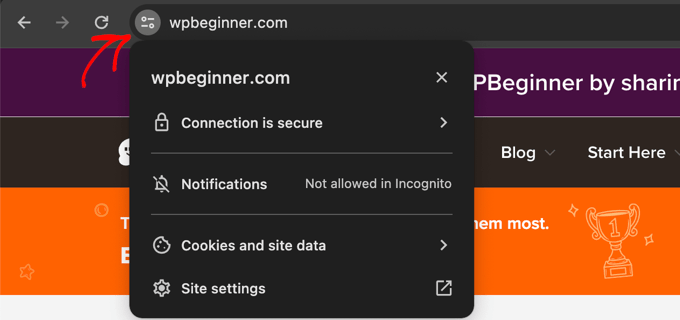
If your site still uses HTTP, then check with your hosting provider first. Most hosts include a free SSL certificate with every plan so you can activate it in one click from your account dashboard.
After activating SSL, you will also need to update your WordPress site URL and redirect all HTTP traffic to HTTPS. See our guide on how to add SSL and HTTPS in WordPress for the full steps.
4. Set an SEO-Friendly Permalink Structure
Your permalink structure determines how your website’s URLs are created. It’s important to choose the right permalink structure at launch because changing later will break existing URLs and lead to lost rankings.
We recommend using clean and descriptive URL structure because it’s easier for both search engines and visitors to understand.
Simply go to Settings » Permalinks in your WordPress dashboard and select the ‘Post name’ option. This creates short, readable URLs built from your page title instead of a random ID number.
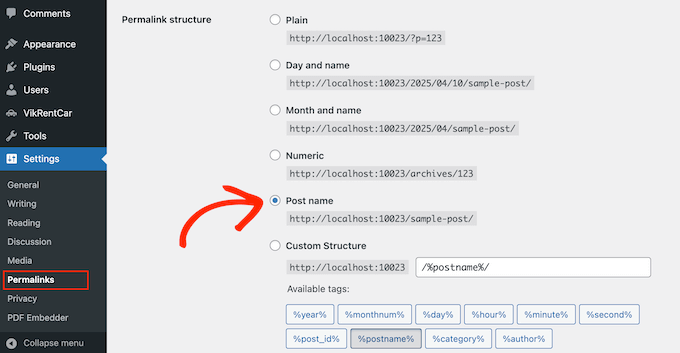
Here is what an SEO-friendly permalink should look like:
https://www.wpbeginner.com/start-a-wordpress-blog/
On the other hand, here’s what a URL that’s not optimized for SEO would look like:
https://www.wpbeginner.com/articles/651472
5. Install and Configure a WordPress SEO Plugin
WordPress has no built-in way to set a page’s title tag, meta description, or schema. These details are important because they appear in search results and can impact how many people click through to your site.
An SEO plugin lets you customize these details and gives you more control over how your pages appear in search results. You can also add a sitemap and manage the technical SEO settings you need to optimize your site for search engines.
We use and recommend All in One SEO (AIOSEO) on all of our own websites, and its free version covers every core setup step in this checklist.
If you would rather use a different plugin, Rank Math and Yoast SEO are two solid AIOSEO alternatives that cover the same core setup steps. You can see our review of the best SEO plugins for WordPress, where we break down the most popular options for beginners.
Once you have installed the plugin, take a few minutes to configure it. Simply follow our guide on how to set up All in One SEO for WordPress.
6. Connect Google Search Console and Bing Webmaster Tools
Next, you’ll need to set up webmaster tools for the search engines that matter most: Google Search Console and Bing Webmaster Tools.
These free tools help you track your site’s organic search performance. You can use them to see which keywords people are using to find your website. You can also check rankings, submit sitemaps, and uncover errors that might be preventing your site from ranking.
For example, Search Console helps you spot easy SEO wins, like pages sitting just a few positions away from the first page. This is one of the first reports we check on our own sites, because a few targeted improvements can often move those pages onto page one.
You can follow our guide on submitting your WordPress site to search engines.
7. Connect Google Analytics (GA4)
Google Analytics is Google’s free platform for tracking website traffic. We recommend connecting it before you launch so you have data from day one. It’s the clearest way to see whether your WordPress SEO efforts are actually working.
Here’s what Google Analytics helps you learn:
- Where your visitors come from – see the split between organic search, social media, and referral traffic, so you know which channels are actually working.
- What visitors do after they arrive – see which pages they view next, how engaged they are, and whether they complete important actions like making a purchase or filling out a form.
- Whether your content keeps visitors engaged – if people leave shortly after arriving, it could be a sign that the page isn’t meeting their expectations.
To set it up for your website, follow our step-by-step guide on how to install Google Analytics in WordPress.
Stage 3: Technical SEO Setup
This stage is about making sure search engines and AI tools can crawl your site, understand what’s on it, and cite it correctly so your content shows up in search results.
8. Generate an XML Sitemap
An XML sitemap tells search engines about all of the pages on your website so they can quickly discover new content and index it.
WordPress comes with a default sitemap built in, and it works fine for basic discovery. But an SEO plugin gives you more control: you can exclude specific pages, add sitemaps for videos, news, and images, and keep everything in sync with your other SEO settings automatically.
In AIOSEO, you’ll find the sitemap toggle under All in One SEO » Sitemaps.
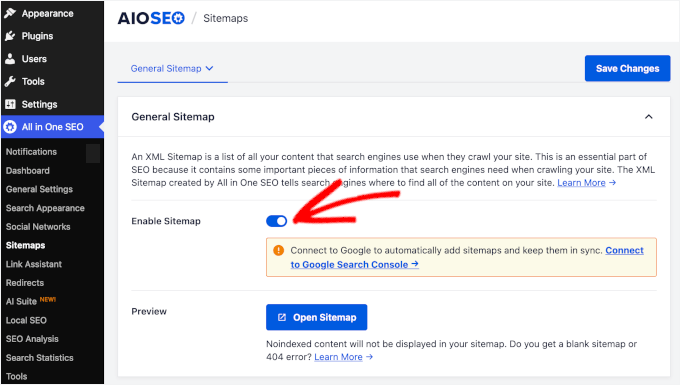
To learn how, just see our guide on how to create a sitemap in WordPress.
9. Add Schema Markup and Structured Data
Schema markup is structured data you add to your website to help search engines accurately understand your content.
This added context helps your pages qualify for visually appealing rich results in Google Search, such as the star ratings generated by Product and Review schema.
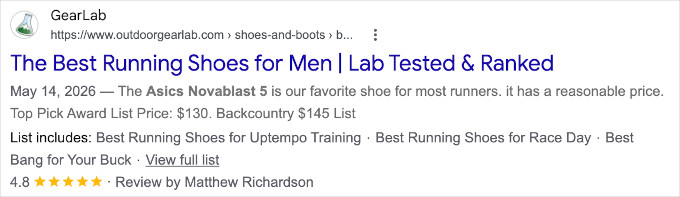
Some of the most essential schema types for standard WordPress sites are
- Article for blog posts and editorial content
- Organization to establish your brand’s identity, logo, and social profiles in Google’s Knowledge Graph
- LocalBusiness for business sites with a physical storefront
- FAQPage to mark up your Q&A content so search engines and AI tools can easily extract and cite your answers.
If you’re selling products, then add Product schema too. I will cover that in the WooCommerce section below.
For details on setting up schema markup, see our guide on adding rich snippets in WordPress.
10. Configure Your robots.txt File and llms.txt File
A robots.txt file tells search engine crawlers which parts of your site they can access.
Configuring this file blocks crawlers from visiting pages that don’t need to be indexed, like your admin dashboard or internal search-results URLs. This also prevents them from putting an unnecessary load on your server.
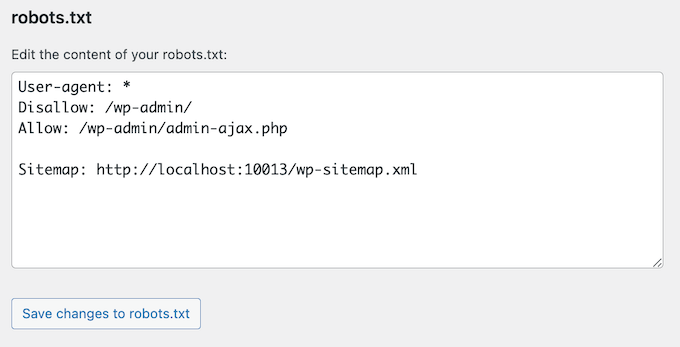
See our guide on optimizing robots.txt for SEO for more detail.
An llms.txt file works like robots.txt, but it is designed for AI models rather than traditional search engine bots. It tells AI crawlers which pages on your site are most useful to read.
Adding a llms.txt now is a low-effort way to help AI tools prioritize your most important content.
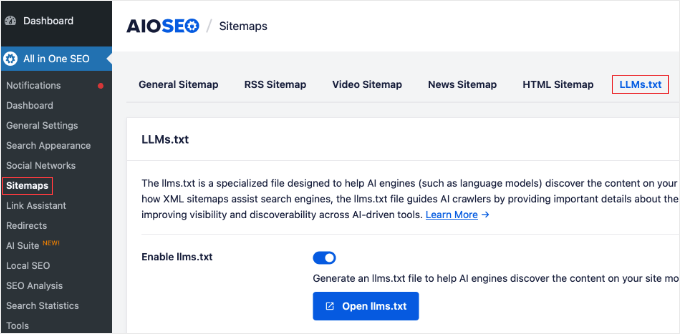
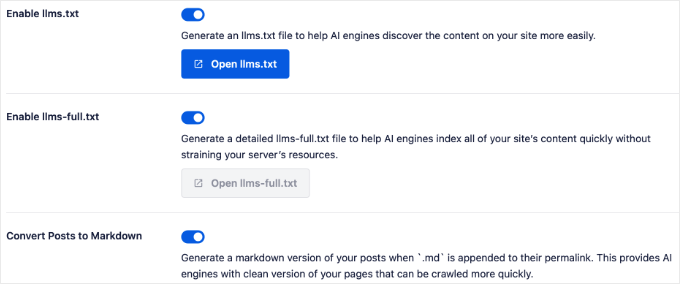
Most SEO plugins now let you easily add llms.txt file to your site with their free versions. Above is the screenshot from AIOSEO which is the plugin that we use, but others have similar settings.
11. Make a Markdown (.md) Version of Your Site Available
Markdown is simpler and more lightweight than HTML, so AI systems can process it using far fewer tokens than a full rendered page. That makes your content easier for AI tools to read, summarize, and cite.
If you’re using AIOSEO, you can simply go to All in One SEO » Sitemaps » llms.txt and turn on the toggles for ‘Enable llms.txt’, ‘Enable llms-full.txt’, and ‘Convert Posts to Markdown’.
While enabling llms.txt comes with the free version of the plugin, enabling llms-full.txt and converting posts to markdown file, require AIOSEO Pro.
Once you’ve generated a markdown version for your pages, you can access them by appending .md to the end of the URL.
Stage 4: On-Page SEO Setup
Your website SEO is now set up. From this point on, the SEO success of each page and post depends on how well you optimize the content before publishing.
12. Write SEO Titles and Meta Descriptions for Your Core Pages
Every page you publish needs an SEO title and a meta description to optimize your site on SERPs (search engine results pages). A great SEO title and meta description can mean the difference between an article that users click through to and one they skip right over.
The click through rate (CTR) in search is one of the SEO ranking factor that Google uses.
Every WordPress SEO plugin adds a metabox to your post editor where you can add your SEO title and meta description.
While the SEO title captures a searcher’s attention, the meta description gives them more details about the page. For the best results, make sure to include your primary keyword naturally in both the SEO title and the meta description.
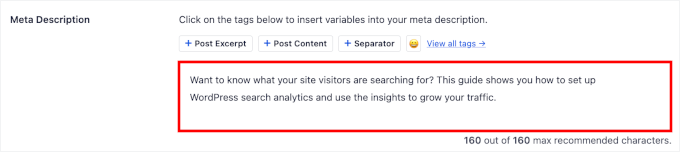
You also want to make sure to keep your titles under 55 characters and meta descriptions under 155 characters, or Google will truncate them. Google actually measures by pixel width, not a strict character count, but these numbers are a safe and reliable guideline.
13. Keep URLs Short and Keyword-Focused
Since we’ve already chosen an SEO-friendly permalink structure in a previous step, your new URLs will automatically follow a solid base format.
From here, these are our top tips for writing each individual URL as you publish
- Keep it short and descriptive – trim filler words and stick to the core keyword phrase, so the URL tells searchers what the page is about at a glance.
- Standardize on lowercase – mixed-case URLs can create duplicate-content issues on servers that treat uppercase and lowercase paths as different pages.
- Future-proof evergreen URLs – leave the year out of the URL for content you plan to keep updating, so the link doesn’t look outdated once that year passes.
14. Optimize Your Images for SEO
Google relies heavily on descriptive alt text, along with the image’s file name and the surrounding paragraph, to figure out what the image is about.
Before uploading, make sure to rename your image files to something descriptive, like red-running-shoes.jpg.
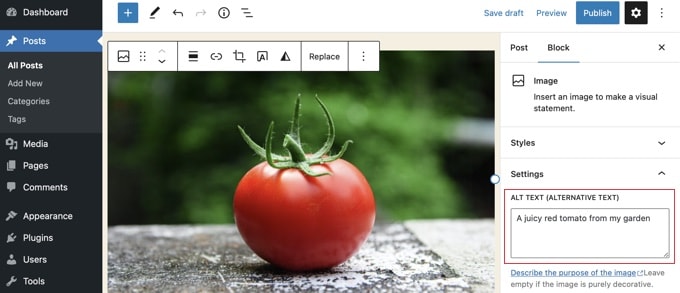
Once uploaded, you can easily add alt text to your images in WordPress. When you add a picture in the WordPress content editor using the Image block, you’ll see the Alt Text option in the settings panel on the right.
You can also use an image compression tool to reduce your photo file sizes, which helps your site load faster.
For more details, read our beginner’s guide to image SEO.
15. Plan Internal Links and Your Pillar Content
Internal links make it easier for search engines to crawl your site and understand how your pages connect. They also spread authority around your site and keep visitors reading longer.
To do this well, you need a clear way to organize your content. Start by choosing a pillar article. Think of this as the main hub for a particular topic that you really want to rank high in search results.
Whenever you write smaller articles about pieces of that topic, always link them to the main pillar page. Then, go to your pillar page and add links out to those smaller articles. This simple, back-and-forth linking shows Google that your pillar page is the ultimate guide, and it helps readers easily explore the topic.
For example, if you run a food blog, your pillar content might be a complete guide to meal planning, with supporting posts on grocery lists, budget recipes, and freezer meals all linking back to it.
When adding internal links, make sure to use descriptive anchor text instead of “click here.” For example, “our guide to meal planning” tells both readers and search engines what the linked page is about before they even click.
16. Run a Mobile-Friendly and Core Web Vitals Check
Page speed directly impacts your Google rankings. Google measures this using Core Web Vitals, which grades your site on three things: how fast the main content loads, how quickly the site responds to a user’s click, and whether the page jumps around while they are trying to read.
You can check both your speed and mobile-friendliness by running a speed test. Google’s own PageSpeed Insights tool scores your site on these metrics and gives you specific recommendations to fix poor results.
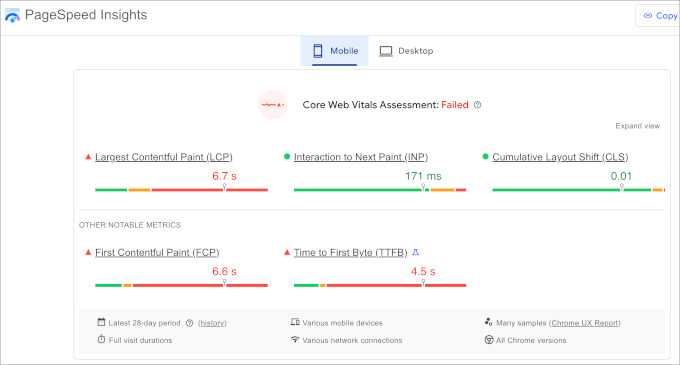
Google has also gone mobile-first, meaning it indexes your site’s mobile version instead of the desktop version. If your site isn’t mobile-ready, then you’ll lose out on higher rankings, so check the ‘Mobile’ scores in whichever tool you use.
You can also see our ultimate guide to WordPress speed and performance for all of our tips for speeding up your website.
Stage 5: WooCommerce SEO for Ecommerce Websites
Product pages are where shoppers decide to buy, so they need to both rank and convert. Optimizing them for SEO helps your products show up when people search for what you sell, and it gives shoppers the details and reassurance they need to check out.
17. Add Product Schema
Product schema tells Google the details of each product you sell, including its name, price, currency, stock availability, and any review ratings, so that information can appear directly in the search results. You can also add identifiers like SKU and brand.
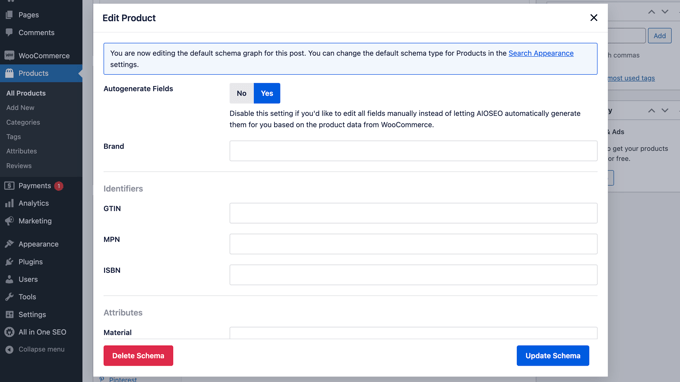
Make sure to keep this data accurate and in sync with your store, since Google can show a warning or drop the rich result if the price or stock status doesn’t match the page.
Most SEO plugins come with the option to add product schema. You can see our guide on adding schema markup in WooCommerce to set it up.
18. Write Unique, Benefit-Driven Product Descriptions
Google rarely ranks multiple pages with identical content, so a copied manufacturer description gives your store little chance of ranking at all.
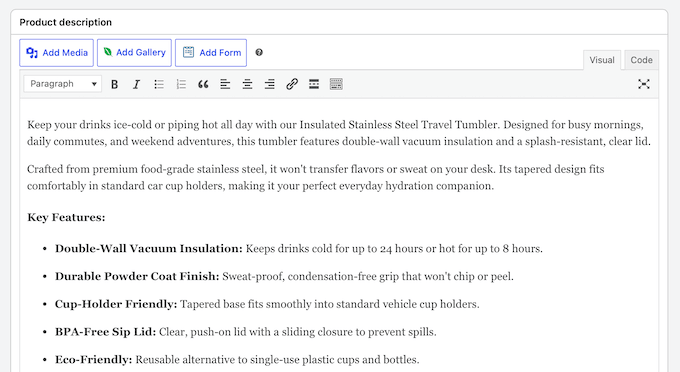
Instead, we recommend writing your own description that focuses on the benefit to the shopper, not just a spec list.
Lead with the problem the product solves and who it’s for, then work your keywords in naturally. Make sure to answer the questions shoppers actually ask, like sizing, materials, or what’s in the box, so the page does the selling for you.
19. Optimize Product Titles and URLs
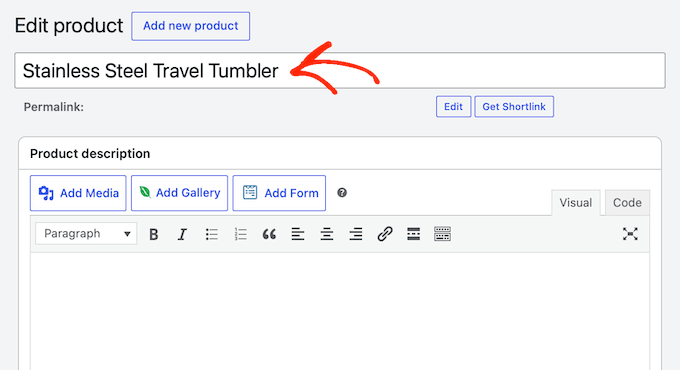
Your product title is one of the first things both shoppers and search engines see, so it needs to say what the product actually is. You should write clear, keyword-focused titles instead of a manufacturer’s model number, an internal SKU, or whatever your warehouse calls it.
A URL like /product/wireless-bluetooth-headphones/ tells both shoppers and search engines what the page is about. A URL like /product/?id=12345 tells them nothing.
You can see our ultimate WooCommerce SEO guide for a full walkthrough of product page optimization.
20. Optimize Product Visuals
Make sure to use descriptive alt text and file names for every product photo, and keep your naming pattern consistent across your catalog (for example, product-name-angle-1.jpg).
We also recommend showing each product from multiple angles. Include at least one lifestyle photo of it in use, since that’s what helps shoppers commit.
It’s also smart to keep all your product images the same shape and dimensions so your shop and category pages look tidy. And use high-resolution photos that shoppers can zoom into, but remember to compress them first so they don’t slow the page down.
You can use our image compression tool comparison to pick a plugin that fits your needs.
21. Display Reviews and Ratings
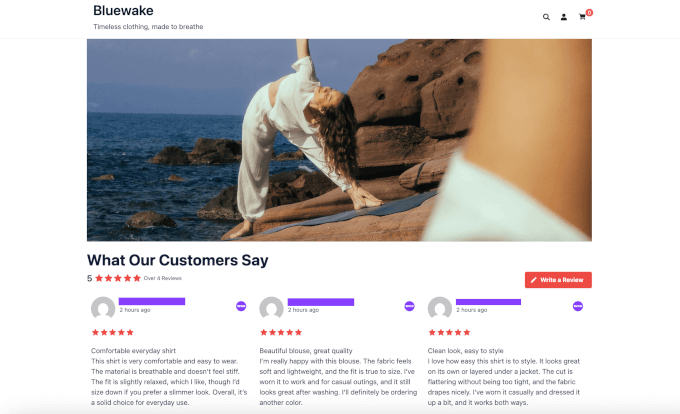
Showing star ratings and customer reviews on your product pages helps build trust with your shoppers. When you pair this data with Product schema, those same star ratings can appear directly in Google search results, helping your products stand out and get more clicks.
We recommend turning on WooCommerce’s built-in product reviews and encouraging buyers to leave their feedback after checkout. A steady stream of genuine reviews also keeps your product pages fresh with new, relevant content over time.
By default, though, those reviews only show up on the product page itself, so shoppers browsing your homepage or category pages never see them.
See our guide on displaying WooCommerce reviews anywhere in WordPress to show them wherever you like on your website as social proof.
22. Add Trust Signals
Shoppers look for reassurance before they enter payment details on a site they’ve never bought from before. These trust signals help reduce abandonment which is a SEO signal.
Here are some great ways to show that your store is trustworthy:
- Use a secure, SSL checkout – the padlock and HTTPS reassure shoppers that their payment details are safe.
- Publish clear policies – make your return, shipping, and privacy policies easy to find so buyers know what to expect.
- Show real contact details – a support email, phone number, or contact page tells shoppers there are real people behind the store.
You can also see our guide on adding trust badges to your checkout page for a step-by-step walkthrough.
Stage 6: Final SEO Checks Before You Launch
A single missed setting on your site, like an accidental noindex, can keep your whole site out of Google. So, it’s worth a few minutes to confirm everything is ready.
23. Confirm There Are No Broken Links or Leftover Placeholder Pages
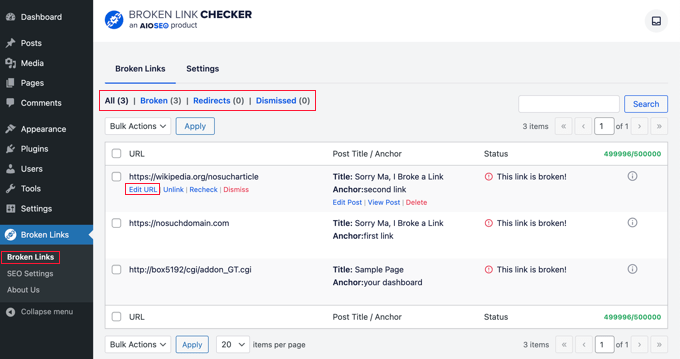
Before you launch, you should start by scanning your entire site for broken links and leftover “Lorem ipsum” or placeholder pages from when you were building the site.
Broken links and placeholder pages frustrate visitors and signal to search engines that your site is unfinished or poorly maintained.
The free Broken Link Checker by AIOSEO plugin makes this easy. It scans your site from the dashboard and flags broken links and images so you can fix them in a few clicks.
24. Make Sure Your Site Can Be Found on Search Engines
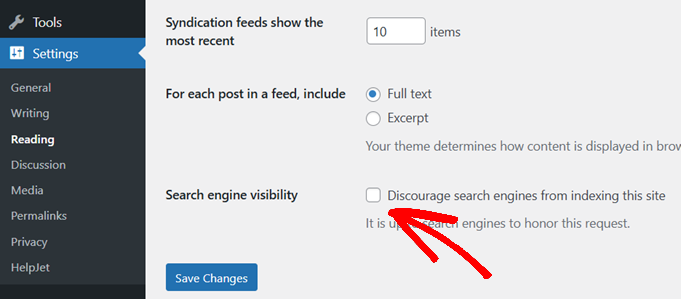
WordPress has a built-in option that asks search engines not to crawl your site, and it’s often left on by accident from the site’s staging or development phase.
Simply go to Settings » Reading in your WordPress dashboard and scroll to the ‘Search engine visibility’ section. Make sure ‘Discourage search engines from indexing this site’ is unchecked.
Also, we recommend removing any noindex tags or password protection left over from your staging site. Search engines can’t index a page behind a password, and a stray noindex tag will keep an important page out of Google without you realizing it, even after everything else is live.
Make sure to check each important page’s visibility settings in the editor, then review your SEO plugin’s search-appearance settings.
25. Submit Your Sitemap to Google Search Console
Submit your XML sitemap to Google and Bing so they can discover your pages faster and understand your site’s structure. While search engines can find pages by following links, a sitemap gives them a complete list of indexable URLs on your site.
See our guide on submitting your website to search engines for the full steps in Google Search Console and Bing Webmaster Tools.
That’s it! We’ve also put a summarized version of this guide into a free PDF. You can download and print it out to keep it handy while you work on your site.
Frequently Asked Questions About WordPress SEO Checklist
Here are answers to some of the most common questions we hear from our readers.
1. What should I do first if I’m launching a brand-new WordPress website?
Follow the checklist in order. Start with your site’s foundation, including hosting, your theme, and WordPress settings. Then move on to technical SEO, optimize your pages and images, and finish with the pre-launch checks before making your site public.
2. Can I do WordPress SEO without hiring an SEO expert?
Yes. Most WordPress SEO tasks don’t require technical expertise. With the right SEO plugin and a checklist like this one, you can handle the essentials yourself, including sitemaps, schema, metadata, internal links, and performance optimization. Many popular SEO plugins are also adding AI companion tools which are making SEO even easier for small business owners.
3. What’s the biggest SEO mistake people make before launching a website?
The most common mistake is accidentally blocking search engines from indexing the site. Other common problems include forgetting to submit a sitemap, launching with placeholder content, broken links, duplicate pages, or missing page titles and meta descriptions.
4. How long does it take for SEO to show results?
While you might see small improvements quickly, it typically takes three to six months to see a significant impact on your traffic and search rankings.
Consistent effort is what matters most.
I hope this checklist helped you get your WordPress site ready for search engines. For more details, see our ultimate WordPress SEO guide.
If you liked this article, then please subscribe to our YouTube Channel for WordPress video tutorials. You can also find us on Twitter and Facebook.


Olaf
SEO can be both fun and a real nightmare. The worst part is that Google often adjusts its algorithms, and what worked today might be completely different tomorrow. However, some basics remain the same, and I think those are nicely explained in this article. It’s a solid foundation to follow so that a website is much more easily indexable on Google. For example, I used to think that an SEO plugin wasn’t important because I could set everything up myself. But over time and with experience, I’ve come to realize that an SEO plugin like Yoast or AIO SEO is really a great tool that can help even someone well-versed in SEO to automate certain tasks and save a lot of time. What helps me, for instance, is the excellent monitoring of text and keywords. And we’re talking about free versions here, so no big budget or major investment is necessary. The rest is really about learning and sticking to the practices described in this article.
Moinuddin Waheed
I think the first and foremost thing after setting up a blog is to add it to webmasters tool.
This is like telling the different browsers that hey we have setup this business and please create awareness for anyone who is interested in my product.
All the seo stuff comes after this step.
I was struggling first to link to Google search console and then I found the solution in the form of AIOSEO plugin.
This makes the process of adding websites to webmasters tools and easy and smooth process.
really appreciate the breakdown of essential seo things to do.
Oyatogun Oluwaseun Samuel
Hmmm, This article has opened my eyes to something i have not thought about, that is the LSI (Latent search indexing) Using related keyword or phrase can offer immense benefit at improving the SEO of your site. I haven’t thought about this before now. Also the tips on using SEO plugins and optimizing meta descriptions were particularly useful. Thank you so much for this!
Dennis Muthomi
Regarding tip #10 about improving content readability – what readability level do you recommend?
WPBeginner Support
It would depend on your content and audience but the easier it is to read is normally better for your visitors.
Admin
Dennis Muthomi
Thank you for that.
I had read on Google that bloggers should aim for a readability level 60 or a grade 8 and grade 7 level.
But thankyou for replying back.
Jiří Vaněk
Thank you for the guidance on SEO. Do you plan to delve into the topic of keywords? How they work, using tools like Google Keyword Planner or SEMrush, etc.? This is a very challenging topic for me that I haven’t quite grasped yet. I think I have well-developed content on my website, but I struggle with this ‘problem’ that I don’t quite understand. SEO is a relatively complicated discipline.
WPBeginner Support
For understanding keywords we would recommend taking a look at our article below:
https://www.wpbeginner.com/beginners-guide/how-to-do-keyword-research-for-your-wordpress-blog/
Admin
Jiří Vaněk
Thanks for the link, I’ve read the article and it’s made me look into keywords and how they work a little more in depth. I’m finally starting to understand the role and function of KW a little more and hopefully this will affect the viewership as well. Thanks again.
Nick Scarpa
Thanks WPB! Very helpful article. I saved it for future builds.
WPBeginner Support
You’re welcome, happy to hear our guide is helpful!
Admin
Yasir Afzal
I have to learn these skills
WPBeginner Support
We hope our recommendations make the learning process easier!
Admin
huiyong luo
This article is very helpful for website managers!
WPBeginner Support
Glad you think so!
Admin