


Il traffico organico sta diminuendo per molti siti web e l'IA è una delle ragioni principali.
Strumenti come ChatGPT hanno completamente cambiato il modo in cui le persone cercano. Invece di cliccare su più siti, vogliono risposte rapide e chiare dagli strumenti di IA di cui si fidano già.
Google ha seguito questo cambiamento con le AI Overviews, che mostrano risposte generate dall'IA in cima ai risultati di ricerca.
Il risultato? Le ricerche zero-click sono in aumento. Molti proprietari di siti vedono più impressioni ma meno clic. Questo non è solo un piccolo calo, è un cambiamento importante nel modo in cui funziona la ricerca.
In questa guida, ti illustrerò le principali statistiche e tendenze SEO guidate dall'IA da tenere d'occhio nel 2026.
Ho raccolto oltre 30 punti dati chiave per aiutarti a capire cosa sta cambiando, su cosa concentrarti prima e come modificare la tua strategia SEO per rimanere avanti.
💡Statistiche rapide sulla ricerca AI che devi conoscere
Prima di addentrarci nella guida completa, ecco tre statistiche chiave che mostrano quanto l'IA stia rimodellando la ricerca:
- Le ricerche zero-click dominano: I dati indicano che il 60%-63% delle ricerche su Google non invia gli utenti a siti esterni e sui dispositivi mobili, la percentuale è ancora più alta, al 77%.
- Le AI Overviews favoriscono le pagine con il ranking più alto: Il 99% dei siti web citati nelle AI Overviews proviene dai primi 10 risultati organici, dimostrando che i ranking forti sono ancora essenziali.
- L'adozione globale della ricerca AI è alle stelle: Solo ChatGPT ha 800 milioni di utenti attivi settimanali.
Ecco una rapida panoramica degli argomenti che tratterò in questa guida:
- Come sta Rimodellando l'IA la SEO?
- How Often Do AI Overviews Appear in Search?
- What Triggers a Google AI Overview?
- How Are People Using AI Tools for Search?
- Come la Ricerca IA Influisce sul Traffico Organico e di Riferimento?
- Come la Modalità IA di Google Influisce sul Traffico?
- In che modo la ricerca AI influisce sui clic?
- Quali Sono i Principali Fattori di Ranking per la Ricerca IA?
- Come dovresti strutturare i tuoi contenuti per la ricerca AI?
- Punti Chiave: Come Possono le Aziende Ottimizzare per la Ricerca IA?
- Domande frequenti sulla ricerca AI e SEO
- Altre statistiche, tendenze e articoli di ricerca
Come sta Rimodellando l'IA la SEO?
Nel novembre 2022, OpenAI ha rilasciato ChatGPT, che ha cambiato significativamente il modo in cui le persone cercano contenuti online. A differenza della ricerca tradizionale di Google, gli strumenti di IA forniscono agli utenti risposte immediate alle loro domande senza la necessità di visitare più siti web.
Riconoscendo questo cambiamento nel comportamento degli utenti, Google si è rapidamente adattata introducendo Google AI Overviews nei risultati di ricerca. Ecco un esempio di come appare:
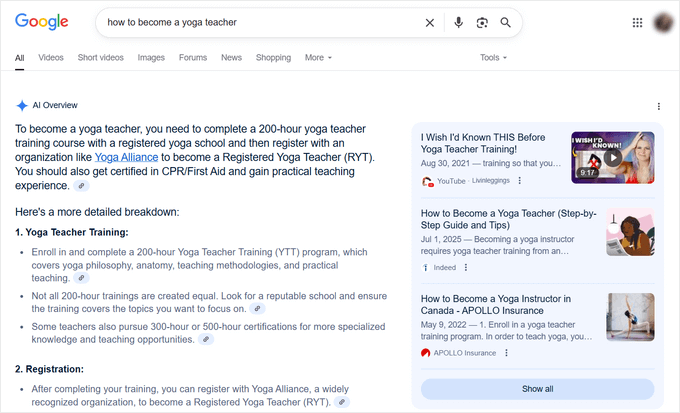
These AI-generated summaries typically appear at the top of search pages.
In fact, Google considers AI Overviews as a success, as it has actually encouraged users to search more often:
“Instead of searching less, people who use AI Overviews are actually showing an increase in their total number of searches.”
Sundar Pichai, CEO of Google
 Sundar Pichai, CEO of Google
Tuttavia, questo ha un grande impatto sui siti web. Quando le persone ottengono la risposta direttamente da Google, hanno meno motivi per cliccare sui risultati di ricerca, il che porta a un calo significativo del traffico organico per molti siti.
Preparare il tuo sito web WordPress per questa nuova realtà è essenziale, quindi immergiamoci nelle previsioni e nelle statistiche della ricerca AI per aiutarti a sapere cosa aspettarti.
How Often Do AI Overviews Appear in Search?
Le AI Overviews (AIO) compaiono sempre più spesso nei risultati di ricerca di Google, ma la frequenza con cui appaiono dipende dal tipo di ricerca e dal set di dati che si esamina.
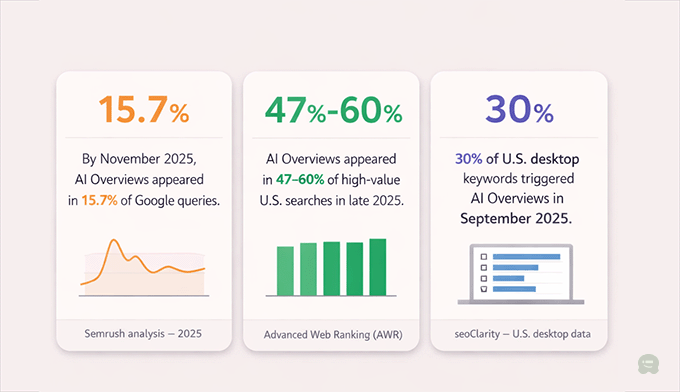
Diversi studi hanno misurato questo in modi diversi:
- Semrush ha monitorato tutte le ricerche e ha scoperto che entro novembre 2025, le AIO apparivano in circa il 15,7% delle query. Il numero era stato più alto all'inizio dell'anno, ma poi si è stabilizzato.
- AWR ha esaminato le ricerche statunitensi di alto valore e ha scoperto che le AIO sono apparse nel 47%-60% delle query per quel tipo di ricerche alla fine del 2025.
- seoClarity si è concentrata sulle ricerche desktop statunitensi e ha scoperto che circa il 30% delle parole chiave ha attivato un'AI Overview nel settembre 2025.
Quindi, cosa significa questo? Le AI Overviews sono in netta crescita, soprattutto per le ricerche informative, il tipo di ricerche in cui le persone desiderano una risposta chiara.
Ma non tutte le ricerche mostreranno un'AIO. La frequenza con cui appare dipende da fattori come la domanda, il dispositivo utilizzato dalle persone e da dove stanno cercando.
How Fast Are AI Overviews Dominating?
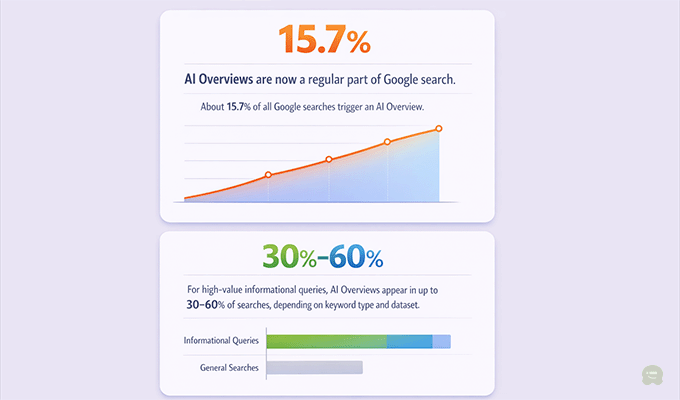
Le AI Overviews non sono più un piccolo test, sono ora una parte regolare dei risultati di ricerca di Google. Complessivamente, circa il 15,7% di tutte le ricerche attiva un'AI Overview.
Per alcune query informative di alto valore, quel numero può essere molto più alto (fino al 30%–60%), a seconda del tipo di parola chiave e del set di dati.
Argomenti diversi mostrano diversi livelli di attività delle Panoramiche AI. Sulla base di dati recenti, ecco quanto sono comuni le Panoramiche AI in alcuni settori principali:
| Settore | % Panoramica AI (circa) |
|---|---|
| Scienza & Informazione | 26% dei risultati delle parole chiave |
| Computer ed elettronica | 18% |
| Persone e società | 17% |
| Assistenza sanitaria | 16% |
| Cibo e bevande | 11% (aumento più rapido di recente) |
| Immobiliare e shopping | 2%-3% (copertura inferiore) |
Tieni presente che questi numeri non sono statici: cambiano nel tempo man mano che Google aggiorna come e dove appaiono le Panoramiche AI.
Settori diversi attivano le Panoramiche AI più spesso perché le loro query tendono ad essere informative e più facili da riassumere per l'IA.
🔮 Previsione: le Panoramiche AI continueranno a comparire spesso, quindi è importante preparare i tuoi contenuti per risultati compatibili con l'IA.
Alcuni settori, come le guide pratiche e gli argomenti informativi, vedranno più Panoramiche AI rispetto ad altri, il che significa che dovresti concentrarti sulle domande che le persone si pongono realmente.
La posizione delle Panoramiche AI continuerà a cambiare, quindi mantenere i tuoi contenuti aggiornati e pertinenti è fondamentale. Infine, risposte lunghe, chiare e dettagliate avranno più importanza che mai, poiché queste sono le pagine più probabili ad essere presentate dall'IA.
What Triggers a Google AI Overview?
Le Panoramiche AI non sono più solo per le ricerche informative.
Entro la fine del 2025, circa il 18,6% delle query commerciali (ricerca di prodotti), il 13,9% delle query transazionali (pronto all'acquisto) e il 10,3% delle query di navigazione (ricerca di un sito web specifico) hanno attivato una Panoramica AI.
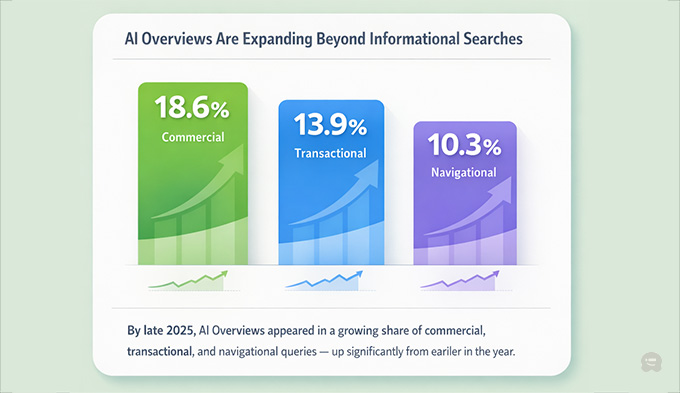
Ciò dimostra che l'IA di Google sta ora riassumendo i risultati per una gamma più ampia di intenti di ricerca.
Le ricerche informative, come ' come avviare un blog ' o 'quali sono i sintomi dell'influenza', costituiscono ancora una parte importante delle Panoramiche AI.
Ma ora, anche le persone che confrontano prodotti, gli acquirenti pronti all'acquisto e persino coloro che cercano marchi specifici stanno vedendo risposte generate dall'IA in cima ai risultati.
Per aumentare le tue possibilità di apparire, ti consiglio di concentrarti su contenuti di alta qualità che corrispondano direttamente a ciò che le persone cercano.
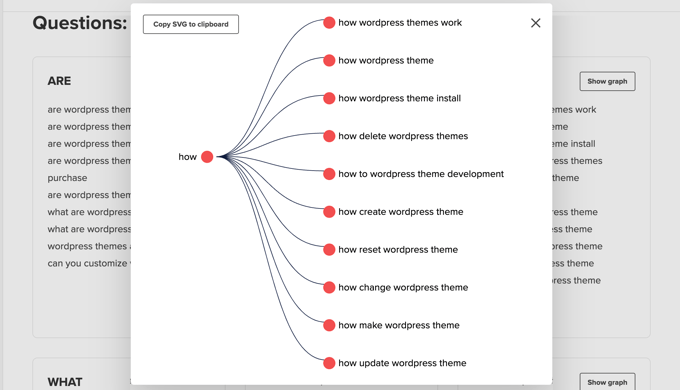
Uno strumento utile per questo è il Generatore di parole chiave gratuito di WPBeginner. La sua scheda 'Domande' mostra esattamente cosa chiedono le persone, in modo da poter creare contenuti che rispondano chiaramente alle loro domande.
La lunghezza di una query è importante per l'IA?
Più una domanda è lunga e complessa, più è probabile che riceva una Panoramica AI.
Una query con otto o più parole ha una probabilità 7 volte maggiore di ottenere una risposta generata dall'IA.
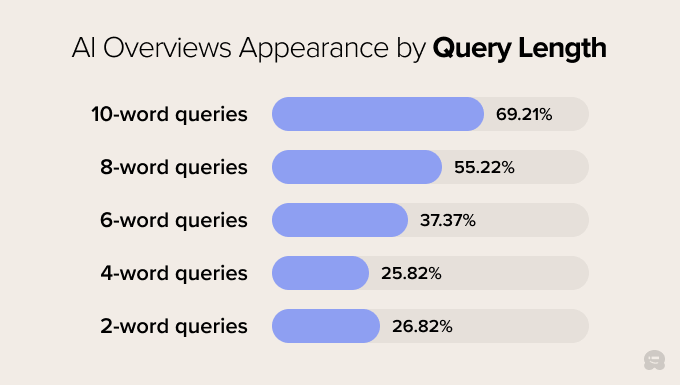
Non è una coincidenza. Si allinea perfettamente con lo scopo dichiarato da Google per la funzionalità.
In un tweet di maggio 2024, Google ha dichiarato che l'obiettivo delle AI Overviews è “rispondere ai tuoi problemi più complessi e aiutarti a portare a termine le cose.”
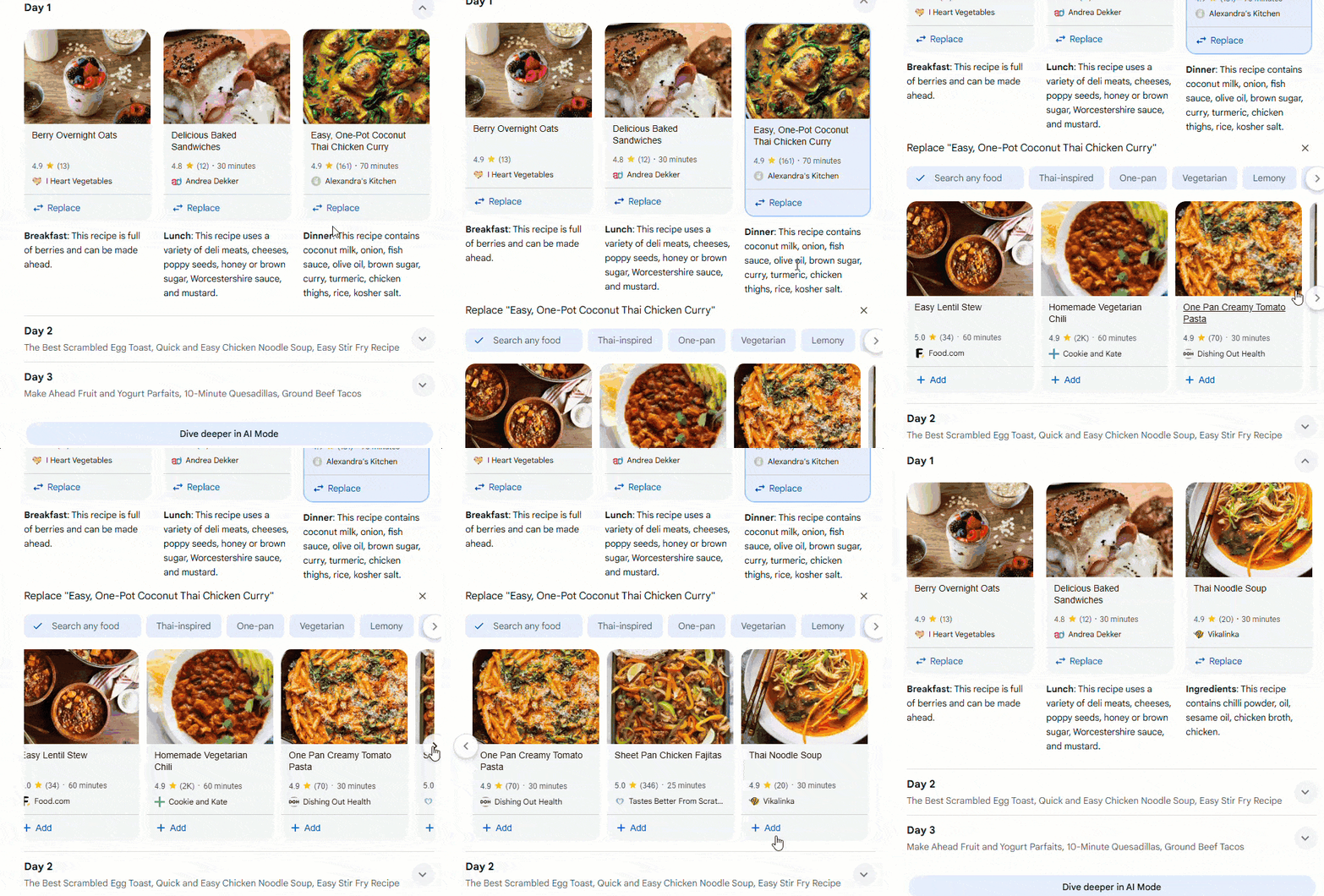
Ecco un ottimo esempio. Immagina di cercare “piano pasti facile di 3 giorni per un gruppo”. Vedrai un'AI Overview nei risultati di ricerca, come quella nell'immagine qui sotto:
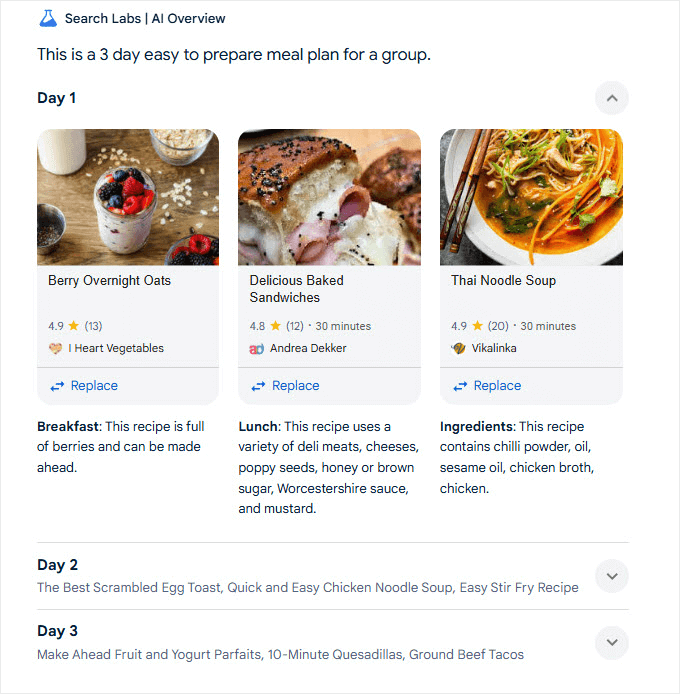
Per creare una risposta così utile e specifica, l'IA analizza contemporaneamente diverse parti chiave della tua query:
- Durata: 3 giorni
- Complessità: Facile (ad esempio, ricette semplici, tempo di preparazione minimo)
- Pubblico: Un gruppo (ad esempio, ricette scalabili o che servono più persone)
- Risultato: Un piano pasti strutturato per l'intera durata
L'AI Overview genera quindi un piano pasti completo e strutturato. Spesso presenterà suggerimenti per ogni giorno e pasto, completi di immagini e link alle ricette complete.
Ciò che rende questa funzionalità particolarmente potente è la sua interattività. Se non ti piace un suggerimento particolare, puoi semplicemente fare clic sul pulsante ‘Sostituisci’ sottostante.
Questa azione visualizza una varietà di piatti alternativi che corrispondono ancora alla tua richiesta originale, in modo da poter personalizzare il piano in base ai gusti del tuo gruppo.
Comprendendo e combinando tutti questi elementi, l'IA fornisce una risposta completa che in precedenza avrebbe richiesto ricerche multiple.
Questo fa anche risparmiare molto tempo perché, come utente, puoi trovare tutto ciò di cui hai bisogno in un unico posto, VELOCEMENTE.
💡Sebbene Google abbia introdotto le Panoramiche AI in molti paesi, alcuni di questi layout avanzati per i risultati AI sono attualmente disponibili solo negli Stati Uniti per le ricerche in lingua inglese.
Dove compaiono la maggior parte delle Panoramiche AI?
Sono principalmente una funzionalità mobile. Un enorme 81% delle query che attivano una Panoramica AI viene eseguito su dispositivi mobili.
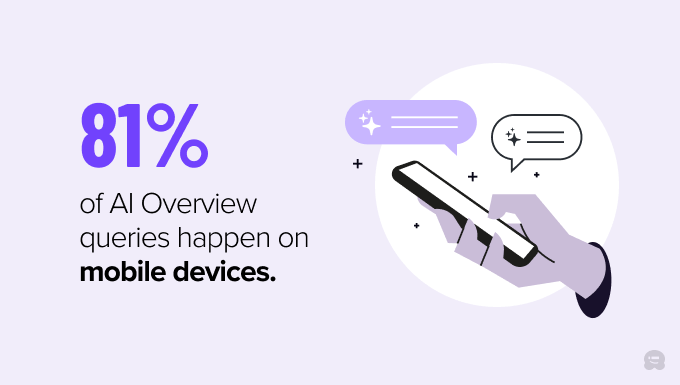
Ciò significa che se il tuo sito web non è ottimizzato per gli utenti mobili, stai perdendo la più grande opportunità di apparire nella ricerca AI.
🎁 Suggerimento Bonus: Per preparare il tuo sito web, consulta il nostro articolo su come creare un sito WordPress ottimizzato per dispositivi mobili.
Come influiscono la concorrenza delle parole chiave e la monetizzazione sulle Panoramiche AI?
Le Panoramiche AI compaiono maggiormente per le parole chiave di ricerca con concorrenza bassa o media (80% e 60%), e sono molto meno comuni per i termini più competitivi (10%).
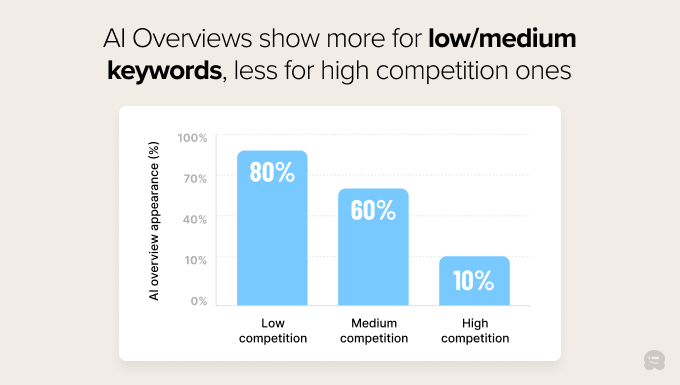
Ma questa non è una semplice opportunità per essere presenti. È una decisione strategica legata direttamente alle entrate di Google.
La realtà è che le Panoramiche AI sono più comuni per le ricerche che non generano entrate per Google. Oltre il 71% delle query che ottengono una risposta AI non ha costi pubblicitari associati.
Questo perché le parole chiave ad alta concorrenza sono spesso altamente commerciali e piene di annunci di valore. Sembra che Google stia proteggendo il suo principale flusso di entrate testando le Panoramiche AI in aree a minor rischio e più informative.
Come influiscono le Panoramiche AI sulle query locali?
Local search is less affected for now. AIOs appear less frequently for local search queries compared to general informational searches.
| Query Type | Share of Standard Search | Share of AI Overviews |
| Local Queries | 19.09% | 6.85% ⬇️ |
| Non-Local Queries | 80.91% | 93.15% |
For local businesses, this means traditional SEO is still your best friend.
Your main goal should be to rank high in the standard search results and in the Google Maps results. Our ultimate WordPress local SEO guide has all the steps you need to get there.
How Are Branded Queries Affected by AI Search?
Branded searches are far less likely to trigger an AI Overview, showing up in only 4.79% of cases.
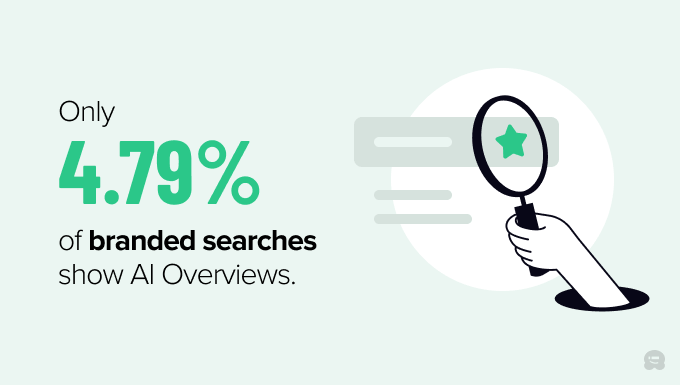
More importantly, when an AI summary does appear for your brand, it comes with a surprising advantage.
Research from Amsive shows these queries receive an 18.68% boost in click-through rate (CTR). This is likely because the user’s existing trust and familiarity with your brand make them more eager to click.
How Are People Using AI Tools for Search?
La ricerca AI sta diventando rapidamente un'abitudine diffusa.
A livello globale, ChatGPT ha ora 800 milioni di utenti attivi settimanali e strumenti come Perplexity gestiscono centinaia di milioni di query ogni mese.

Negli Stati Uniti, milioni di adulti utilizzano già l'IA generativa come modo principale per trovare risposte online, e questo numero sta crescendo rapidamente.
Sempre più persone si rivolgono a strumenti di IA come ChatGPT o Perplexity per ottenere risposte dirette e concise, invece di navigare su più siti web.
Questo cambiamento mostra una chiara tendenza: l'IA sta cambiando il modo in cui le persone cercano, e i siti web devono adattarsi per raggiungere gli utenti in questo nuovo panorama di ricerca.
Quali piattaforme le persone utilizzano effettivamente per la ricerca?
Anche con l'ascesa degli strumenti di IA, Google rimane la piattaforma di ricerca dominante.
Le ricerche giornaliere sono stimate essere tra i 9 e i 13,5 miliardi in tutto il mondo, conferendo a Google oltre il 90-93% del mercato globale della ricerca.
A confronto, strumenti di IA come ChatGPT gestiscono circa 37,5 milioni di prompt simili a ricerche al giorno, che rappresentano solo lo 0,25% dell'attività di ricerca globale.
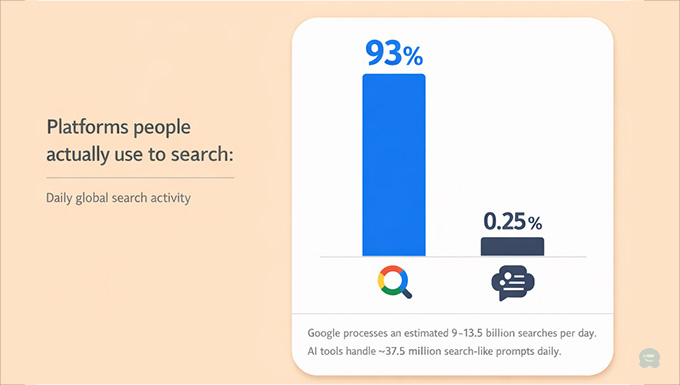
Questo è ancora meno di altre alternative come Microsoft Bing (4,1%), Yahoo (1,35%) e DuckDuckGo (0,73%).
Ciò dimostra che, sebbene la ricerca tramite IA stia crescendo rapidamente, la maggior parte delle persone si affida ancora a Google per la maggior parte delle proprie query. Questo rende fondamentale ottimizzare il proprio sito sia per la ricerca tradizionale che per i risultati guidati dall'IA.
Gli utenti leggono effettivamente le panoramiche dell'IA?
La maggior parte degli utenti (86%) scorre rapidamente le panoramiche dell'IA, cercando i punti chiave piuttosto che leggere ogni parola.
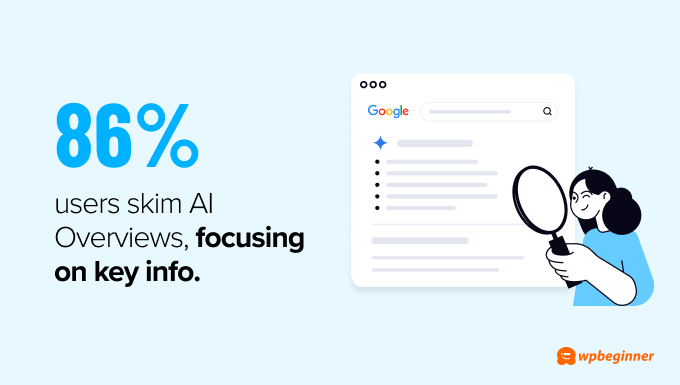
Questo comportamento non è nuovo. È esattamente il modo in cui le persone scansionano i post del blog, alla ricerca di risposte specifiche.
Questo porta a un vantaggio sorprendente. Sebbene tu possa ottenere meno clic in generale, quelli che ricevi dalle panoramiche dell'IA possono essere incredibilmente preziosi.
Poiché questi utenti scorrono per trovare informazioni specifiche, un clic segnala che ritengono che il tuo sito abbia la risposta esatta di cui hanno bisogno. Ciò si traduce in visitatori ad alta intenzione che hanno maggiori probabilità di convertire rispetto agli utenti medi provenienti dai risultati di ricerca tradizionali.
Se desideri ricevere consigli su come migliorare la SEO on-page dei tuoi contenuti, puoi utilizzare TruSEO all'interno del plugin All in One SEO.
La sua analisi TruSEO integrata controlla la tua scrittura per elementi come la lunghezza della frase e la chiarezza, fornendoti suggerimenti in tempo reale per rendere i tuoi contenuti più facili da capire.
Esiste persino una versione gratuita di All in One SEO con cui puoi iniziare.

🎁 Suggerimento Bonus: Se stai cercando altri consigli su come strutturare i tuoi contenuti, consulta la nostra guida su come scrivere un ottimo post del blog.
La tua posizione all'interno della Panoramica AI è importante?
La parte superiore della Panoramica AI è ora uno spazio privilegiato nella ricerca. Sia su desktop che su mobile, la funzionalità può occupare oltre 1.000 pixel, circa l'intero schermo iniziale sulla maggior parte degli smartphone, spingendo spesso i risultati organici tradizionali sotto la piega.
Ciò significa che essere semplicemente menzionati in una Panoramica AI non è sufficiente.
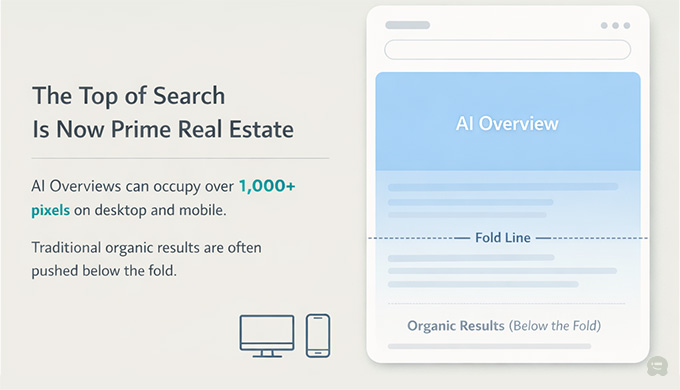
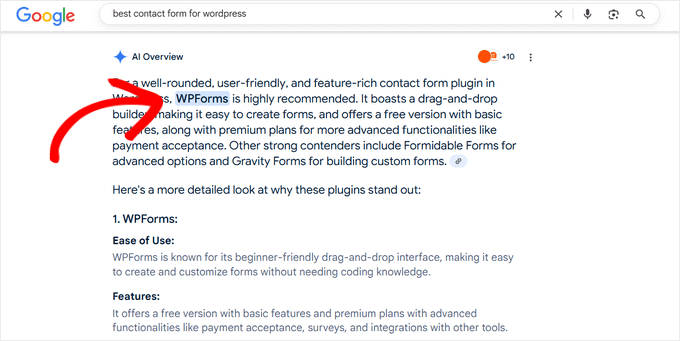
Per avere un impatto, i tuoi contenuti dovrebbero apparire presto nella panoramica, idealmente nelle prime frasi, in modo che gli utenti vedano immediatamente il tuo marchio.
Puoi vedere un esempio perfetto di questo di seguito, dove WPForms è presente proprio in cima alla risposta per "miglior modulo di contatto per wordpress".
Gli utenti si fidano dei risultati dell'IA generativa?
La relazione che gli utenti hanno con l'IA generativa è complicata. Da un lato, l'adozione sta avvenendo rapidamente, con il 70% dei consumatori che ha almeno una certa fiducia nei risultati dell'IA generativa.
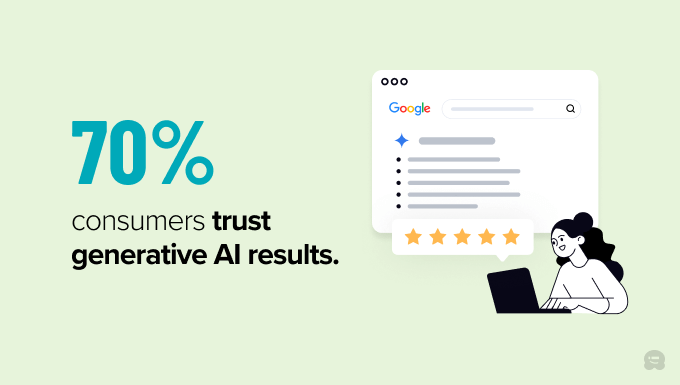
Questo dimostra che la maggior parte delle persone la considera già una fonte di informazione credibile.
Tuttavia, uno studio di Growth Memo ha rilevato che per il 38% delle ricerche, gli utenti sentivano ancora il bisogno di verificare la risposta dell'IA aprendo un link organico “giusto per essere sicuri”, specialmente per argomenti importanti come la salute o il denaro.
Questo crea una chiara divisione nel comportamento degli utenti. Per domande semplici, la risposta dell'IA è sufficiente.
Ma per argomenti importanti, l'abitudine di cercare una “seconda opinione” significa che un clic sul tuo sito web è incredibilmente prezioso. Segnala che l'utente sta attivamente cercando un'autorità per verificare i fatti.
Dove cliccano gli utenti dopo una panoramica dell'IA?
Quando gli utenti vogliono verificare una risposta dell'IA, non cercano solo un altro articolo; cercano la prova della community.
I dati dei clic post-AI mostrano che gli utenti si rivolgono a piattaforme come Reddit (18% dei clic) e YouTube (10%) per vedere cosa dicono le persone reali.
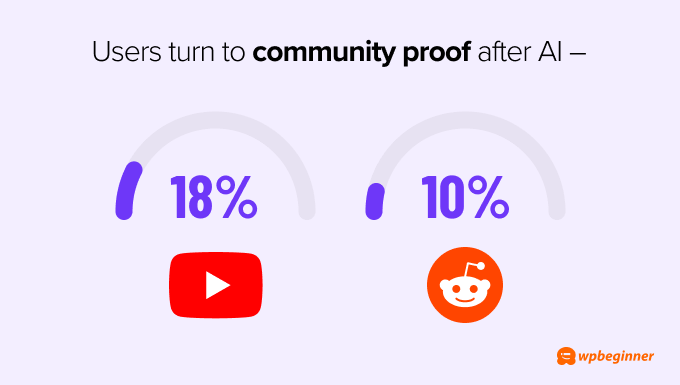
Questo comportamento segnala un cambiamento significativo. Per avere successo, devi incontrare il tuo pubblico dove si trova per costruire fiducia. Invece di scrivere solo della tua competenza, devi dimostrarla nei forum pubblici.
Ecco alcune strategie efficaci che abbiamo utilizzato su WPBeginner e sui nostri siti affiliati:
- Diventa una Risorsa: Partecipa attivamente a thread pertinenti su Reddit o a gruppi Facebook. Rispondi in modo approfondito alle domande degli utenti per costruire una reputazione di autorità fidata.
- Usa i Video: Crea contenuti video per YouTube che affrontino problemi comuni degli utenti o forniscano tutorial. Incorporare questi video nei tuoi post del blog aggiunge anche un potente livello di fiducia. Per saperne di più, consulta la nostra guida su come incorporare facilmente video nei post del blog di WordPress.
- Mostra le Recensioni sul Tuo Sito: Porta la prova della community sul tuo territorio. Metti in evidenza testimonianze di clienti, recensioni degli utenti e casi di studio sulle tue pagine di prodotto e di destinazione. Consulta il nostro tutorial su come aggiungere una pagina di recensioni dei clienti al tuo sito WordPress.
Essendo attivi in questi canali, non solo costruisci la fiducia nel tuo brand, ma crei anche percorsi per catturare quei preziosi clic dagli utenti che cercano di verificare informazioni generate dall'IA.
Come la Ricerca IA Influisce sul Traffico Organico e di Riferimento?
Il traffico di ricerca tradizionale è leggermente diminuito negli ultimi mesi, mentre il traffico di riferimento AI, ovvero i clic da chatbot come ChatGPT, Gemini e Copilot, è cresciuto rapidamente.
Infatti, alcuni rapporti mostrano che è aumentato di 10 volte da una base di partenza molto piccola, sebbene i riferimenti dei chatbot AI rappresentino ancora meno del 3% del traffico di ricerca totale.
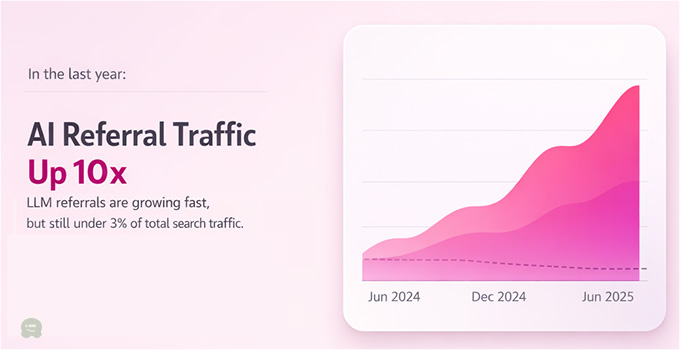
Il punto chiave? Anche se i clic guidati dall'IA rappresentano ancora una piccola fetta del traffico totale, stanno crescendo rapidamente e diventare una fonte attendibile per l'IA è fondamentale per catturare questi visitatori.
Per fare ciò, è importante segnalare chiaramente la tua credibilità attraverso E-E-A-T (Esperienza, Competenza, Autorevolezza e Affidabilità). I modelli AI utilizzano questi segnali per determinare quali fonti sono affidabili.
Un modo per mostrarlo sul tuo sito è con All in One SEO. Le sue funzionalità di Author SEO ti consentono di aggiungere facilmente caselle bio dell'autore con le credenziali, dimostrando che veri esperti sono dietro i tuoi contenuti.
Ecco un esempio di come appare:
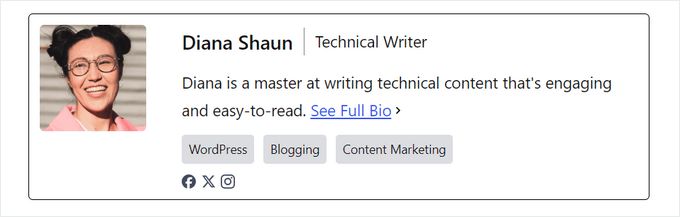
Questo invia una prova chiara sia agli utenti che ai modelli di IA che un vero esperto è dietro il tuo contenuto.
🔮 Previsione: Questa tendenza è destinata solo a crescere. Semrush prevede che entro il 2028, i visitatori della ricerca AI potrebbero superare il traffico di ricerca tradizionale, rendendo essenziale concentrarsi su E-E-A-T oggi per rimanere all'avanguardia.
Come la Modalità IA di Google Influisce sul Traffico?
La modalità AI sperimentale di Google va oltre le normali Panoramiche AI.
È un'esperienza di ricerca a pagina intera, opt-in, che funziona più come una chatbot, fornendo risposte complete senza richiedere agli utenti di visitare siti web.
Per questo motivo, i clic sui siti web sono molto più bassi nel complesso. Gli studi dimostrano che meno del 3% delle sessioni in Modalità AI porta a un clic esterno in media. Ma non è lo stesso per ogni ricerca.
Per le query transazionali ad alto rischio, come l'acquisto di un prodotto o la prenotazione di un servizio, iPullRank ha scoperto che il 69% delle sessioni ha comunque portato a un clic, con gli utenti che visitano in media 3-4 siti.
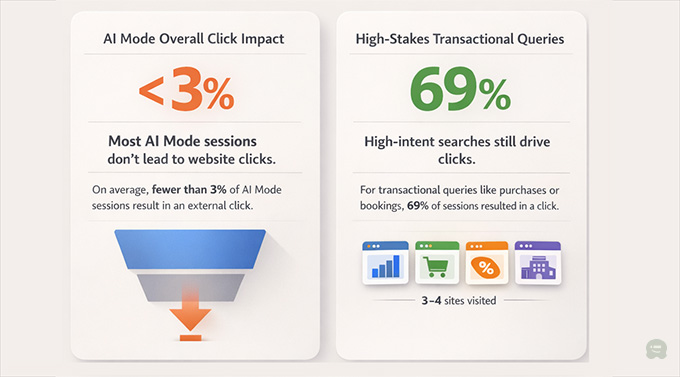
Quindi, mentre la maggior parte dei clic è rara in Modalità AI, quelli che si verificano sono molto preziosi.
Le persone che cliccano stanno attivamente cercando una fonte attendibile, il che significa che il tuo sito web può ottenere visitatori molto coinvolti e con alta intenzione.
La modalità AI offre uno sguardo sul futuro: i clic potrebbero diventare meno frequenti, ma quando avvengono, contano molto. Essere il sito citato dall'AI come affidabile sarà fondamentale per attrarre questi visitatori importanti.
In che modo la ricerca AI influisce sui clic?
Uno studio di Ahrefs ha rilevato che quando appare una Panoramica AI, la pagina che si posiziona più in alto può vedere il suo tasso di clic diminuire del 34,5% rispetto a ricerche simili senza AI.
Ma negli scenari reali, l'impatto può essere ancora maggiore. I dati di Seer Interactive mostrano che per alcune query ad alta impressione, i CTR sono diminuiti del 61%, passando dall'1,76% a solo lo 0,61%.
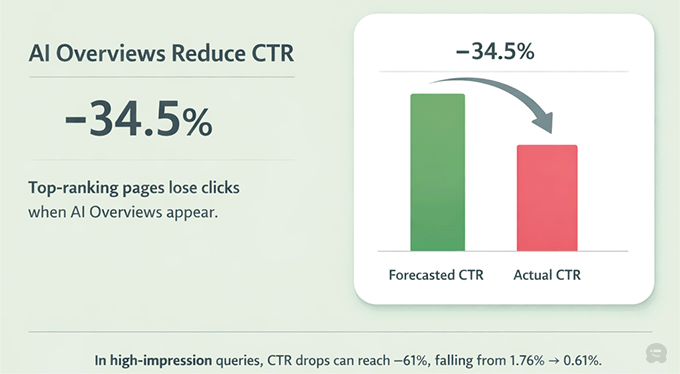
Questo dimostra un cambiamento importante: posizionarsi al primo posto non significa più automaticamente molto traffico. Poiché le Panoramiche AI forniscono risposte dirette, molti utenti non cliccano.
Ora, essere menzionati all'interno della Panoramica AI è diventato il vero premio. Il tuo posizionamento al primo posto è ancora importante, ma si tratta sempre più di essere una fonte fidata che l'AI può citare, non solo di numeri grezzi di traffico.
Is AI Creating More Zero-Click Searches?
Le ricerche senza clic sono ora la norma, non l'eccezione. Nel 2026, circa il 60%-63% delle ricerche su Google non comporterà un clic su un sito web esterno.
Su mobile, è ancora più alto: circa il 77% delle ricerche termina senza uscire da Google.
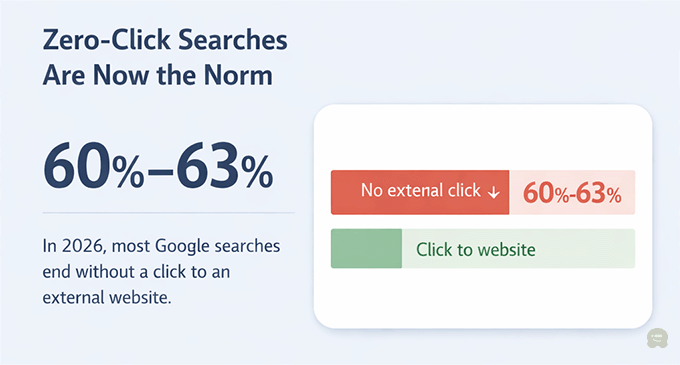
Ciò significa che la maggior parte dei ricercatori ottiene risposte direttamente su Google, tramite Panoramiche AI, snippet in primo piano, annunci o servizi di proprietà di Google come Maps e YouTube.
Nel complesso, meno del 40% delle ricerche invia effettivamente traffico a siti esterni.
Il cambiamento sta modificando il valore di un clic. Poiché meno persone cliccano, quelle che visitano effettivamente il tuo sito sono altamente motivate. Non stanno solo navigando; sono pronte ad agire.
Questo rende la tua strategia di conversione in loco fondamentale. Devi catturare ogni singolo visitatore di alto valore.
Strumenti come OptinMonster sono progettati per questo preciso momento, permettendoti di presentare offerte mirate che convertono questi visitatori altamente interessati in abbonati e clienti a lungo termine.

Se desideri altre idee, consulta la nostra guida sui suggerimenti avanzati per le landing page per aumentare le conversioni di WordPress.
Quali Sono i Principali Fattori di Ranking per la Ricerca IA?
I tre fattori con la più alta correlazione per essere menzionati in una Panoramica AI sono: menzioni web del brand (riferimenti testuali al tuo brand, anche senza link), anchor text del brand e volume di ricerca del brand.
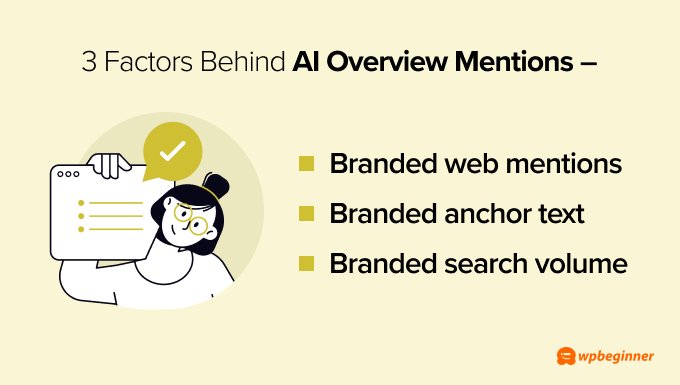
Questo è un enorme cambiamento. Ora, la reputazione del tuo brand conta più per l'IA di Google di quasi ogni altra cosa.
Pensala così: se del tuo brand non si parla online, sei praticamente invisibile all'IA.
I siti nuovi e piccoli nel loro studio hanno avuto una media tra zero e tre menzioni. Allo stesso tempo, i brand più popolari hanno ottenuto un enorme vantaggio, ricevendo 10 volte più funzionalità nelle Panoramiche AI rispetto al gruppo successivo.
🔮 Previsione: queste statistiche mostrano che la SEO in futuro assomiglierà più al brand marketing e alle pubbliche relazioni.
Invece di concentrarti solo sulla SEO tecnica, la strategia vincente sarà far menzionare il nome del tuo brand in podcast, articoli di notizie e report di settore. Costruire questo tipo di autorevolezza sul web è ciò che l'IA di Google valuta di più.
Come dovresti strutturare i tuoi contenuti per la ricerca AI?
La funzionalità "Le persone hanno chiesto anche" è apparsa nell'80,92% di tutti i risultati di ricerca delle query Panoramica AI. Anche gli snippet in primo piano, le miniature, le anteprime video e le discussioni sono stati prominenti nei risultati di ricerca AIO.
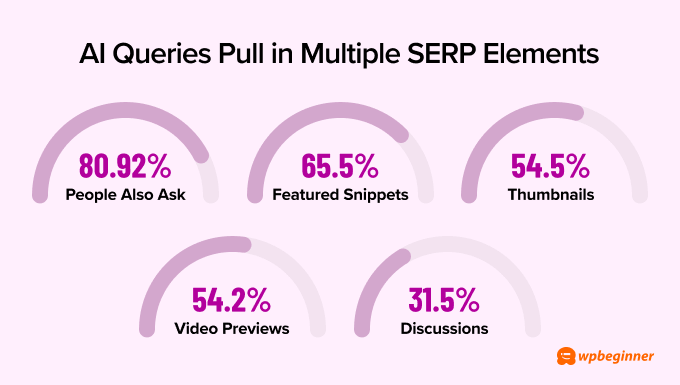
Questo dimostra che i futuri contenuti dovranno essere strutturati come una serie di "blocchi di risposta". I siti web di successo divideranno i loro articoli in sezioni chiare e concise che rispondono a una domanda specifica alla volta.
Questo rende facile per Google estrarre il testo per uno snippet in primo piano, il che a sua volta lo rende una fonte perfetta per una Panoramica AI.
Puoi rendere questa strategia ancora più efficace aggiungendo markup schema. Si tratta di uno snippet di codice speciale che aiuta i motori di ricerca a capire esattamente di cosa tratta il tuo contenuto, come lo schema FAQ per le domande e risposte o lo schema How-to per i tutorial.
Noi utilizziamo il All in One SEO plugin sui nostri siti perché rende facile aggiungere diversi tipi di markup schema, senza dover toccare alcun codice.
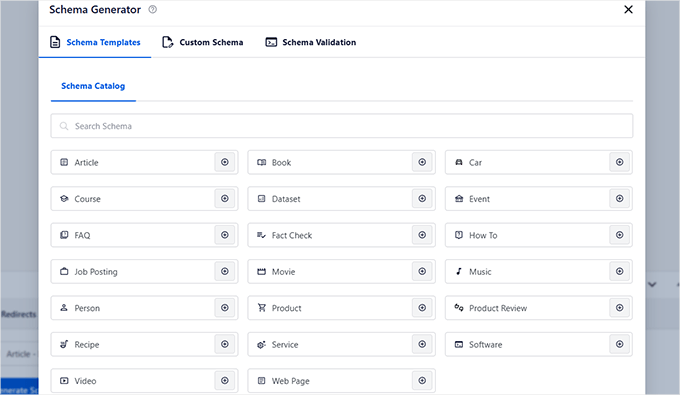
Questo segnala direttamente a Google di cosa tratta il tuo contenuto, aumentando le tue possibilità di essere presente.
Su WPBeginner e sui nostri siti partner, l'uso dello schema ci ha costantemente aiutato a comparire maggiormente nelle risposte AI.
I posizionamenti organici contano ancora per la ricerca AI?
Sì, assolutamente. Il 99% dei siti web citati nelle AI Overview proviene dai primi 10 risultati organici, dimostrando che l'IA si basa pesantemente sulle pagine con posizionamento elevato per le sue risposte.
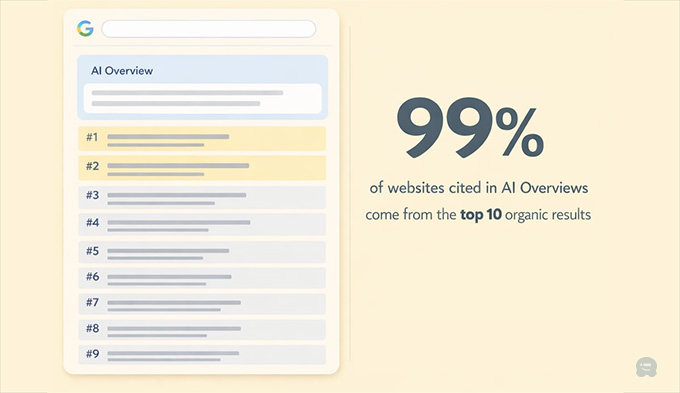
Questo rende il posizionamento organico il tuo primo passo. Senza una posizione solida nei primi risultati, le tue possibilità di essere presentato in un'AI Overview sono estremamente basse.
Vale la pena notare che la modalità AI si comporta in modo leggermente diverso, con solo circa il 32% di sovrapposizione con i primi 10 risultati organici, quindi le strategie per AIO tradizionale rispetto alla modalità AI possono variare.
Fonti: Ahrefs, Search Engine Land, Gartner, Growth Memo, Statista, SparkToro, Botify, DemandSphere, Semrush, SE Ranking, iPullRank
Punti Chiave: Come Possono le Aziende Ottimizzare per la Ricerca IA?
Ho analizzato molti dati, ma tutto si riduce a poche azioni chiave.
Se stai cercando una rapida checklist su cosa fare dopo, ecco i punti più importanti da queste previsioni e statistiche sulla ricerca AI:
- Concentrati sulle menzioni del brand, non solo sui backlink: la presenza e la discussione del tuo brand sul web sono ora più influenti delle metriche tradizionali di link-building.
- Crea contenuti che rispondono a domande informative: Sposta la tua strategia di contenuti per concentrarti sulla risposta a domande specifiche e a lunga coda che gli utenti pongono.
- Struttura i tuoi contenuti come “blocchi di risposta”: Per farti notare, struttura i tuoi articoli con titoli chiari e blocchi di risposta concisi che possono essere facilmente estratti sia per gli snippet in primo piano che per le Panoramiche AI. L'utilizzo dello schema FAQ o How-to rende questo ancora più efficace.
- Costruisci la tua presenza su piattaforme comunitarie e video: Essere attivi su queste piattaforme fornisce la “prova comunitaria” che sia gli utenti che i sistemi AI stanno cercando.
- Non abbandonare la SEO tradizionale, è la tua base: Il posizionamento conta ancora. Hai bisogno di un forte posizionamento organico per essere anche solo considerato dall'AI, quindi non trascurare la SEO di WordPress tradizionale.
- Costruisci un brand che le persone cercano direttamente: Costruire un brand di cui gli utenti si fidano e che cercano per nome è una delle strategie più efficaci per il futuro.
🎁 Suggerimento bonus: Pronto a mettere in pratica queste previsioni? La nostra guida per principianti sull'ottimizzazione dei motori generativi per WordPress fornisce le strategie pratiche e passo passo di cui hai bisogno per adattare il tuo sito.
Domande frequenti sulla ricerca AI e SEO
Ancora curioso? Ecco le risposte alle domande più comuni sull'AI search e su come influisce sul tuo sito web.
La SEO verrà sostituita dall'AI?
No, la SEO non verrà sostituita dall'AI. L'AI cambia il modo in cui le persone cercano e come vengono scoperti i contenuti, ma la strategia umana, la creatività e l'ottimizzazione del sito web sono ancora essenziali per posizionarsi bene e attrarre visitatori con alta intenzione.
In che modo l'AI aiuta nella SEO?
L'AI aiuta analizzando le tendenze, generando idee per i contenuti, ottimizzando la SEO on-page e fornendo approfondimenti sull'intento dell'utente. Accelera le attività aiutandoti a prendere decisioni basate sui dati per migliorare i posizionamenti.
In che modo ChatGPT ha cambiato la SEO?
ChatGPT ha spostato il comportamento degli utenti verso risposte dirette, riducendo i clic sui risultati di ricerca tradizionali. Ciò significa che posizionarsi al primo posto non è più sufficiente: essere citati come fonte attendibile dagli strumenti AI sta diventando più importante.
L'SEO esisterà tra 5 anni?
Sì, l'SEO esisterà, ma si evolverà. L'attenzione sarà sui contenuti adatti all'AI, sui blocchi di risposte strutturate, sull'autorità del brand e sulla fornitura di informazioni su cui fanno affidamento sia gli esseri umani che l'AI.
ChatGPT può fare SEO?
ChatGPT può assistere con la SEO suggerendo parole chiave, generando idee per i contenuti, ottimizzando la leggibilità e riassumendo ricerche. Ma non può sostituire la strategia, il link-building o l'ottimizzazione tecnica fatta da un essere umano.
Qual è il miglior strumento AI per la SEO?
Non esiste un unico strumento "migliore". Opzioni come ChatGPT, Perplexity, SurferSEO e Jasper aiutano tutti con diversi compiti SEO. La scelta giusta dipende dal fatto che tu abbia bisogno di generazione di contenuti, ricerca di parole chiave o ottimizzazione tecnica.
L'AI può migliorare la mia SEO?
Sì, l'AI può migliorare la SEO identificando lacune, ottimizzando i contenuti, analizzando l'intento dell'utente e semplificando compiti ripetitivi. Se combinata con le pratiche SEO tradizionali, può aumentare traffico e coinvolgimento in modo efficiente.
Spero che questo elenco di statistiche e previsioni sulla ricerca AI ti aiuti ad adattare la strategia SEO del tuo sito web ai cambiamenti imminenti.
Cerchi altre statistiche interessanti? Dai un'occhiata ai nostri altri articoli di ricerca qui sotto:
Altre statistiche, tendenze e articoli di ricerca
- Oltre 60 statistiche sorprendenti sull'IA – Tutto quello che devi sapere
- Oltre 120 statistiche e tendenze SEO sbalorditive (Elenco definitivo)
- Oltre 90 statistiche ed dati entusiasmanti sulla ricerca Google
- Statistiche, Tendenze e Dati sul Blogging – Elenco Definitivo (AGGIORNATO)
- Statistiche sulla Creator Economy che ti lasceranno a bocca aperta
- Oltre 80 statistiche sui social media (Elenco definitivo per blogger)
- 60+ statistiche sull'uso di Internet e ultime tendenze
Se ti è piaciuto questo articolo, iscriviti al nostro canale YouTube per tutorial video su WordPress. Puoi anche trovarci su Twitter e Facebook.


Hai una domanda o un suggerimento? Lascia un commento per iniziare la discussione.